Solo pleasure is one of the most universally practiced yet least openly discussed aspects of human health — and that silence has a real cost to mental wellness.
The numbers alone challenge the stigma head-on. According to Planned Parenthood, approximately 95% of men and 72% of women report engaging in masturbation, making it one of the most common human behaviors across all demographics. And yet, centuries of cultural shame have quietly convinced many people that something this normal couldn’t possibly be good for them.
Masturbation benefits for mental health are not a fringe theory — they are increasingly supported by behavioral science, sexual psychology, and neurological research.
That stigma is a genuine barrier. When a coping strategy gets wrapped in shame, people don’t talk about it, don’t explore it intentionally, and don’t apply it with the same mindfulness they’d bring to meditation, exercise, or journaling. The result is that one of the body’s most accessible tools for emotional regulation goes largely underutilized — or worse, becomes a source of guilt rather than relief.
The framing matters enormously here. Thinking about solo play not as an indulgence or a guilty habit, but as a proactive act of emotional self-regulation, changes everything. It shifts the conversation from morality to physiology. Modern wellness culture has finally begun taking male sexual health seriously as part of a broader self-care framework — and that evolution is long overdue for everyone.
What drives these mental health benefits isn’t mystical. It’s neurochemical. Your brain undergoes a cascade of measurable biological changes during and after climax — changes that directly influence mood, stress levels, and emotional resilience. Understanding that chemistry is where this conversation gets genuinely fascinating.

The Neurochemistry of Pleasure: Your Brain’s Natural Antidepressant
Solo play does more than feel good in the moment — it triggers a cascade of neurochemicals that actively work to stabilize your mood, sharpen motivation, and quiet the noise of chronic stress.
Your body’s response to sexual pleasure is essentially a built-in pharmacy. According to the Mayo Clinic Health System, masturbation prompts the release of dopamine, oxytocin, and endorphins — a trio that collectively drives cortisol levels down. Understanding how each of these chemicals functions helps reframe sexual wellness as self-care rather than indulgence. Here’s what the “Big Three” are actually doing:
- Dopamine — Often called the brain’s reward chemical, dopamine surges during arousal and climax, creating a powerful sense of motivation and accomplishment. It reinforces the behavior by making your brain associate the experience with something genuinely beneficial, which is why the post-orgasm state often feels clearer and more focused.
- Oxytocin — Frequently labeled the “bonding hormone,” oxytocin doesn’t require a partner to activate. During solo play, it rises significantly, generating feelings of safety, warmth, and reduced emotional isolation. If you’ve ever felt unexpectedly calm and connected after time alone with yourself, that’s oxytocin at work.
- Endorphins — These natural painkillers do double duty by elevating mood and reducing physical tension simultaneously, functioning much like a moderate workout in terms of their stress-buffering effect.
Cortisol — the hormone most associated with chronic anxiety and burnout — drops in response to all three of these chemicals. That biochemical shift isn’t trivial. It’s the same mechanism explored in practical approaches to using pleasure tools for stress, where the link between physical arousal and measurable anxiety reduction becomes difficult to ignore.
This neurochemical picture sets the stage for a deeper question: can solo play actually interrupt anxiety mid-spiral — and if so, how?
Breaking the Anxiety Loop: Masturbation as a Coping Strategy
Solo play is one of the most effective — and underutilized — tools for interrupting anxiety before it spirals into a full rumination cycle.
“Masturbation can be a form of meditation… it allows you to be present in your body and focus on the sensations you’re feeling in the moment.” — Dr. Logan Levkoff, via Healthline
Rumination — the mental habit of replaying worries on a loop — is anxiety’s core engine. Physical pleasure short-circuits that loop by demanding your full sensory attention. When the brain is engaged in processing the dopamine release during masturbation, it simply cannot sustain the abstract, future-focused thinking that feeds anxious spirals. The two mental states compete for the same neurological bandwidth, and sensation consistently wins.
Beyond interrupting thought patterns, solo play produces a measurable physiological shift. Anxiety activates the sympathetic nervous system — the classic “fight or flight” response — raising cortisol, tightening muscles, and accelerating heart rate. Orgasm triggers the opposing parasympathetic response, commonly called “rest and digest.” Heart rate slows, muscle tension releases, and the body recalibrates toward calm. This isn’t a metaphor; it’s a documented autonomic transition that happens within minutes.
What makes this coping strategy uniquely valuable is the element of control. Unlike social situations or external stressors, solo play is a self-directed environment where you set every variable — pace, intensity, and duration. That sense of agency matters enormously for people managing anxiety, because anxiety is fundamentally a response to perceived powerlessness. Reclaiming your body as a space of safe, intentional sensation reinforces the psychological truth that you have influence over your own state of being. So does masturbation help with anxiety??? The neurological and physiological evidence says yes — and that relief compounds when solo play becomes part of a consistent self-care rhythm. That rhythm, it turns out, also has powerful implications for something equally fundamental to mental health: sleep.
The Sleep Connection: How Solo Climax Combats Insomnia
Poor sleep and poor mental health are inseparable — and solo play sits at the intersection of both, offering a natural, hormone-driven path back to rest.
Prolactin is the key player here. According to the National Sleep Foundation, the hormone prolactin is released during orgasm and directly promotes deeper, more restorative sleep. It’s the same hormone that rises during sleep naturally, which is precisely why the post-climax state feels so physically heavy and calm. The body isn’t just winding down — it’s being chemically guided toward sleep.
People who wonder does masturbation help with anxiety?? often discover the answer is embedded in this very process. The anxiety-cortisol loop that keeps the mind racing at 2 a.m. is metabolically difficult to sustain in a prolactin-rich environment. One state essentially crowds out the other.
Stressed sleep vs. post-climax sleep aren’t just subjectively different — they’re neurologically distinct. Stressed sleep is characterized by elevated cortisol, fragmented REM cycles, and hypervigilance in the amygdala, which leaves you waking up emotionally raw. Post-climax sleep, by contrast, benefits from the combined sedative effect of prolactin, oxytocin, and endorphins — creating longer uninterrupted sleep windows and a more regulated emotional baseline for the next day. Better emotional processing, sharper decision-making, and lower reactivity the following morning all trace back to that deeper recovery state.
Bold callout: A single orgasm before bed can shift your nervous system from sympathetic overdrive into parasympathetic recovery — no prescription required.
What’s worth noting is that modern devices, designed for targeted and efficient stimulation, can help users reach this relaxed hormonal state faster and with less physical effort. For anyone curious about extending pleasure through thoughtful touch, that intentionality pays dividends not just in the moment, but hours later when your head hits the pillow.
This brings up an important question: what if you could deepen that experience further by staying fully present during it?
Somatic Mindfulness: Turning Physical Sensation into Mental Clarity
Somatic mindfulness is the practice of anchoring your full attention to what your body feels in real time — and it’s one of the most powerful pathways to genuine mental clarity.
Most mindfulness traditions ask you to focus on breath or a neutral point of sensation. Somatic mindfulness goes further by using the body’s own signals as the meditation object. When those signals are pleasurable, sustained, and rhythmically consistent, the mind has far less room to wander. This is precisely why masturbation as stress relief operates on a deeper level than many people recognize — it isn’t passive escapism, it’s active presence training.
Focused sensation displaces rumination. As Healthline notes, by concentrating on physical sensations and immediate pleasure, individuals can interrupt the cycle of repetitive, anxious thinking before it gains momentum. The body becomes the anchor the mind desperately needs.
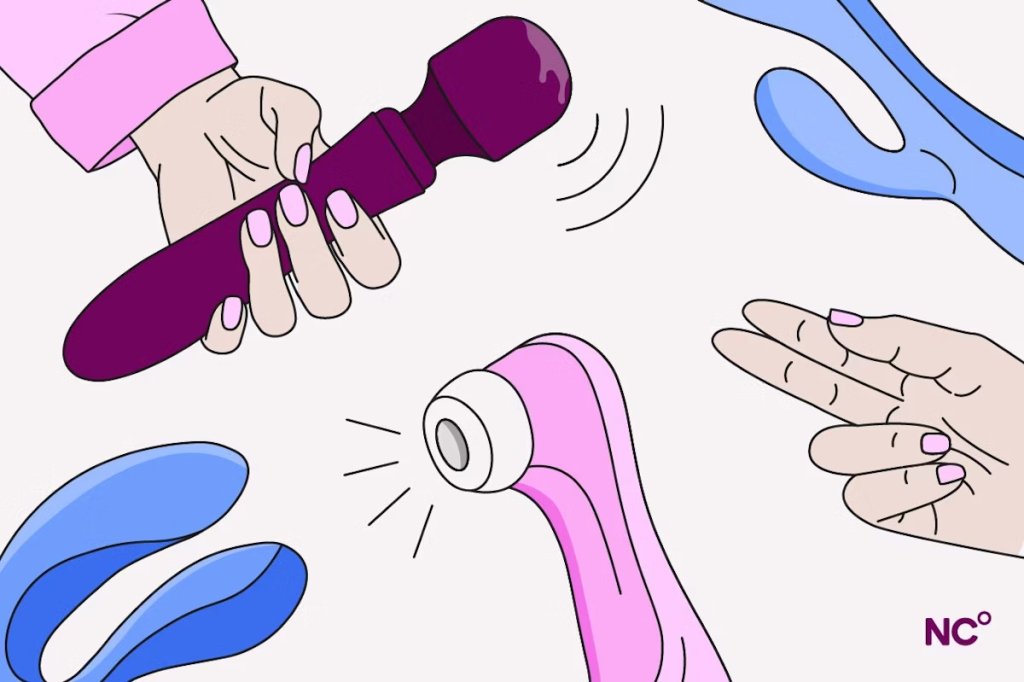
Automated or multi-functional stimulation — think consistent tapping, rhythmic pulsing, or synchronized movement — plays a surprisingly important role here. Because the stimulation is self-sustaining, the brain doesn’t need to divide its attention between generating sensation and processing it. That freed-up cognitive bandwidth flows directly into presence. The mind stops managing and starts experiencing.
This is how a flow state develops. Flow, famously described as being fully absorbed in an activity with no sense of self-consciousness or time pressure, emerges when challenge and engagement are perfectly balanced. Rhythmic, escalating pleasure creates exactly that balance — the stimulation is engaging enough to hold attention, predictable enough to feel safe, and progressive enough to build toward release. Exploring self-care through intentional touch is increasingly recognized as a legitimate wellness practice, not a guilty indulgence.
Technology isn’t a distraction from mindfulness — it can be its facilitator. When stimulation is precise and reliable, the user’s only job is to receive. That’s not laziness; that’s the optimal condition for somatic awareness. The next section explores exactly how advanced stimulation design makes that depth of focus achievable.
Why Precision Matters: The Role of Advanced Stimulation Technology
Advanced stimulation technology transforms solo play from a simple physical act into a genuinely therapeutic experience — one that delivers deeper relaxation and more consistent mental health benefits.
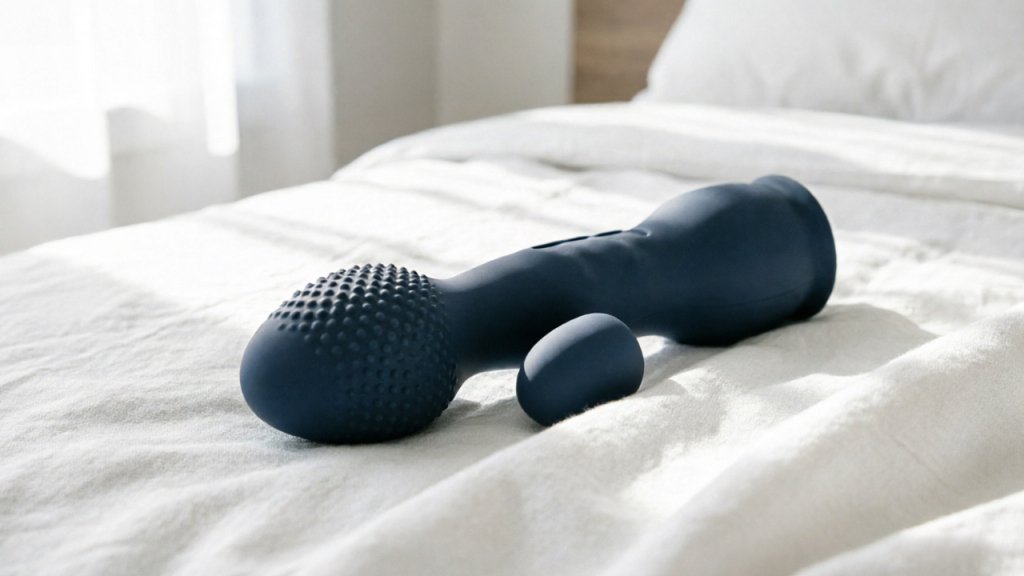
When your body does less work, your mind can do more healing. Manual masturbation requires ongoing physical effort and sustained focus on mechanics, which can quietly fragment the meditative state that makes solo play so powerful for stress relief. This is precisely where technology changes everything. Devices engineered with automatic thrusting or triple stimulation — targeting multiple erogenous zones simultaneously — remove the cognitive load of “doing it right” and replace it with full sensory immersion. Rather than directing the experience, you simply receive it.
Advanced mechanical designs, such as flapping vibration and automatic rotation, deliver layered sensory input that the body and brain process as genuinely novel stimuli. That novelty matters. The nervous system responds more completely to varied, unpredictable sensation than to repetitive manual patterns, which means a deeper parasympathetic response — the physiological state associated with calm, recovery, and restored mental clarity.
Material quality is equally non-negotiable. Body-safe, medical-grade silicone eliminates the background anxiety that comes with wondering whether a product is safe for repeated use. When you trust what’s touching your body, that worry disappears — and a worry-free body is a body that can actually relax.
Kissself positions its technology as a genuine wellness partner rather than a novelty item. Its suite of multi-function devices is designed around the principle that effortless, precise stimulation produces the most therapeutically rich experience. If you’re exploring how to treat sexual wellness as self-care, starting with purpose-built technology is a meaningful upgrade over improvised alternatives.
Still have questions about frequency, safety, or whether this all counts as real self-care? The next section addresses the most common ones directly.
Common Questions: FAQ on Masturbation and Mental Health
Solo play raises real questions — and the answers are more science-backed than most people expect.
Can masturbation actually relieve stress?
Yes, and the mechanism is biological. Orgasm triggers a measurable drop in cortisol, the body’s primary stress hormone, while simultaneously flooding the brain with dopamine and oxytocin. Research reviewed by NCBI confirms that masturbation functions as a reliable coping strategy for psychological well-being — not a guilty pleasure, but a physiological tool.
How often should someone engage in solo play for mental health benefits?
There’s no universal prescription. A common pattern is to treat frequency the way you’d treat any wellness habit — listen to your body’s signals rather than chasing a number. What matters most is intentionality. Compulsive, distracted solo play produces far fewer stress-relief benefits than a single mindful, present session.
Is there a downside to using pleasure devices for stress relief?
No evidence suggests that incorporating well-designed stimulation tools harms the experience — quite the opposite. Advanced devices allow for consistent, precise stimulation that helps the nervous system settle into a parasympathetic state more reliably than manual stimulation alone. Exploring options like thoughtfully designed self-care tools can deepen the relaxation response rather than diminish it.
Does solo play count as meditation?
In every meaningful sense, yes. When practiced with somatic awareness — tracking breath, sensation, and present-moment feeling — it meets the core criteria of mindfulness meditation. The body becomes the anchor, and focused attention on physical sensation quiets the default-mode network, the same mental chatter that fuels anxiety.
Together, these answers reinforce a single throughline: solo play is a legitimate, evidence-supported mental health strategy — and the way you approach it matters as much as the act itself. With that foundation established, it’s worth pulling the key takeaways together into a clear, actionable picture.
The Bottom Line: Key Takeaways for Your Wellness Routine
Solo play is one of the most accessible, scientifically grounded tools available for managing stress, stabilizing mood, and improving sleep — no prescription required.
As Planned Parenthood affirms, solo play is a normal, healthy component of human self-regulation. The research backs this up at a neurochemical level. Here’s what the evidence consistently points to:
- Cortisol reduction is real. Orgasm triggers a measurable drop in the body’s primary stress hormone, offering a biological reset that’s difficult to replicate through other passive coping strategies.
- The chemical cocktail works as a natural mood stabilizer. The surge of dopamine and oxytocin released during solo play doesn’t just feel good — it actively counters anxiety, loneliness, and emotional dysregulation in the short term.
- Prolactin is your sleep ally. Post-orgasm prolactin release signals the body to shift into recovery mode, which is why intentional solo play before bed is a genuinely evidence-informed sleep hygiene strategy.
- Technology amplifies the mindfulness benefit. Advanced, automated stimulation devices reduce the cognitive load of self-pleasure, allowing the mind to disengage from rumination and enter a more present, meditative state — deepening the therapeutic return.
When approached with intention, solo play isn’t just pleasurable — it’s a legitimate mental health intervention. Incorporating it into a broader self-care routine, alongside adequate sleep, movement, and stress management, creates compounding wellness benefits that accumulate over time.
Exploring wellness-focused pleasure tools designed for both function and intentionality can make this shift even more effective. The right tools aren’t a luxury — they’re part of building a self-care practice that actually delivers results, which leads directly to the question of how to choose them wisely.
Elevating Your Self-Care: Choosing the Right Tools for the Job
Sexual wellness has quietly crossed from taboo territory into mainstream mental health conversation — and the tools designed to support it have evolved to match.
The shift is genuine and measurable. What was once whispered about in hushed tones is now discussed openly in wellness communities, therapy offices, and health publications. Intentional pleasure is no longer a guilty indulgence; it’s a recognized strategy for managing cortisol, regulating mood, and supporting quality sleep. That cultural evolution has run parallel to a surge in sophisticated, purpose-built devices designed to maximize those benefits rather than simply exist.
Multi-functional devices matter here. When you invest in a tool engineered for layered stimulation — think triple stimulation combined with automatic thrusting technology — you’re not just upgrading novelty. You’re targeting more nerve pathways, potentially deepening the oxytocin and endorphin response, and making each session more efficient as a stress-management practice. The science of intimacy as self-care has moved well beyond basic vibration, and so should your toolkit. Likewise, if you’re curious about weaving pleasure into a broader evening ritual, exploring how devices fit into holistic routines offers practical, grounded starting points.
Kissself is built around exactly this philosophy — high-performance pleasure technology that doesn’t compromise on material safety or accessibility. With a clear commitment to thoughtful engineering, the brand bridges the gap between clinical understanding of sexual wellness and the real-world experience of using a product that actually delivers.
The dopamine reset you’ve read about throughout this article isn’t hypothetical. It’s available to you tonight, on your terms. Prioritize your mental health through intentional pleasure — your nervous system will thank you.