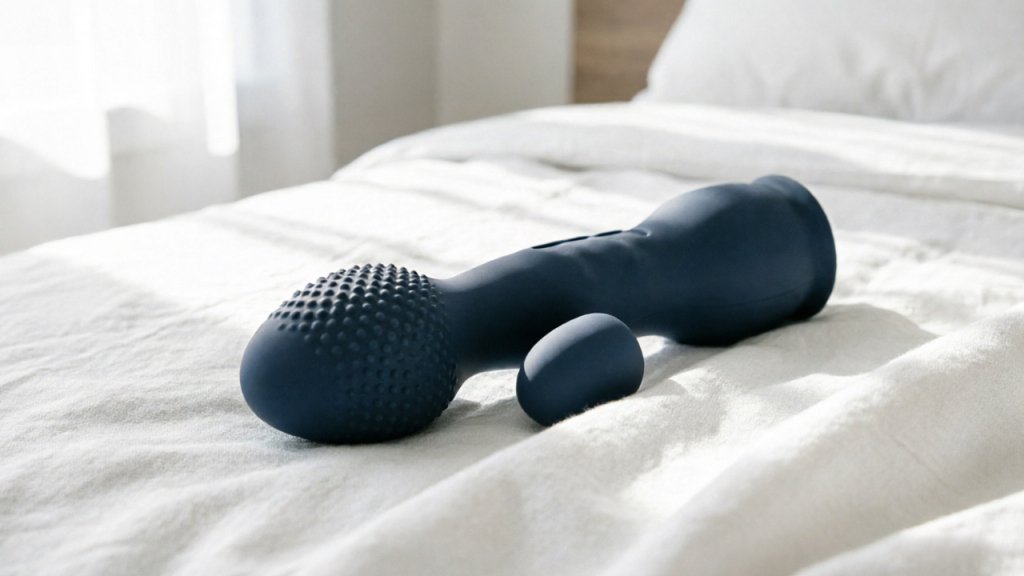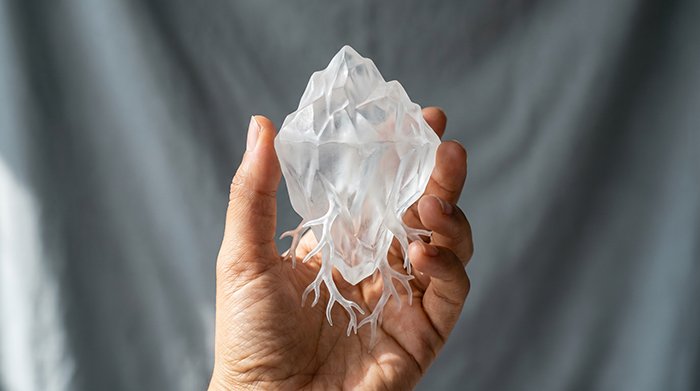
Most people can identify the clitoris — yet most people have never truly seen it. The small, hooded nub visible at the top of the vulva is only the beginning of a far more complex anatomical structure, and understanding this distinction is the foundation for understanding why clitoral stimulation so often falls short.
“The clitoris is an iceberg; what you see on the surface is only about 10% of the entire organ’s volume.” — Dr. Helen O’Connell, Urologist and Researcher
That insight didn’t become part of mainstream medical understanding until 2005, when Dr. O’Connell’s landmark MRI-based research revealed the full three-dimensional structure of the clitoris — including its internal roots, crura, and vestibular bulbs extending deep into the pelvis. Before that, anatomy textbooks routinely omitted or minimized these structures entirely. The visible glans, it turns out, accounts for roughly 10% of the organ’s total volume. This knowledge gap has significant practical consequences. When “clitoral stimulation” gets reduced to brief external touch, it bypasses the majority of the organ’s surface area. The internal clitoral complex — its crura wrapping around the urethra and its bulbs flanking the vaginal walls — remains largely unengaged. This is part of why so many women report dissatisfaction with conventional approaches to intimacy.
Modern pleasure technology is beginning to catch up to this anatomical reality. Devices designed with the iceberg model in mind don’t just target the glans — they account for depth, pressure, and the layered tissue beneath. That shift in engineering philosophy starts with a sharper understanding of the clitoris itself, including just how many nerve endings that largely hidden structure actually contains.
The 10,000 Nerve Ending Milestone: A New Standard for Sensitivity
Clitoris anatomy contains more sensory nerve endings than almost any other structure in the human body — and science is only now catching up to that reality.
For decades, textbooks cited 8,000 nerve endings as the defining figure for clitoral sensitivity. That number, while impressive on its own, turned out to be a significant undercount. Research from Oregon Health & Science University revised the estimate upward to more than 10,000 sensory nerve endings — a finding with real implications for how we understand pleasure, product design, and the body itself. For context, the fingertips — long considered the gold standard for tactile precision — contain roughly 3,000 nerve endings per square inch. The clitoris, in a far more concentrated area, surpasses that density dramatically.
Key Fact: With 10,000+ nerve endings packed into a structure roughly the size of a wishbone, the clitoris has a higher concentration of sensory nerve fibers than any other part of the human body, including the penis.
Pleasure is the primary function, not a byproduct. This nerve density isn’t incidental. Unlike most anatomical structures, the clitoris serves no known reproductive function — it exists specifically to generate sensation. That makes it biologically unusual and scientifically significant. A meta-analysis of clitoral anatomy published in Clinical Anatomy reinforces that the clitoral complex is purpose-built for sensory input, with innervation patterns that support nuanced, layered response rather than simple on/off signaling.
High-frequency vibration interacts directly with this nerve density. The nerve fibers most concentrated in the clitoris — particularly fast-adapting mechanoreceptors — respond preferentially to rapid, oscillating stimulation. This is precisely why vibrators designed around clitoral anatomy tend to produce more reliable responses than pressure alone. Frequency, not just intensity, becomes the operative variable when this many nerve endings are involved.
Understanding nerve density sets the stage for what comes next: mapping exactly where those nerves live within the clitoris’s full internal structure.
The Internal Architecture: Glans, Bulbs, and Crura
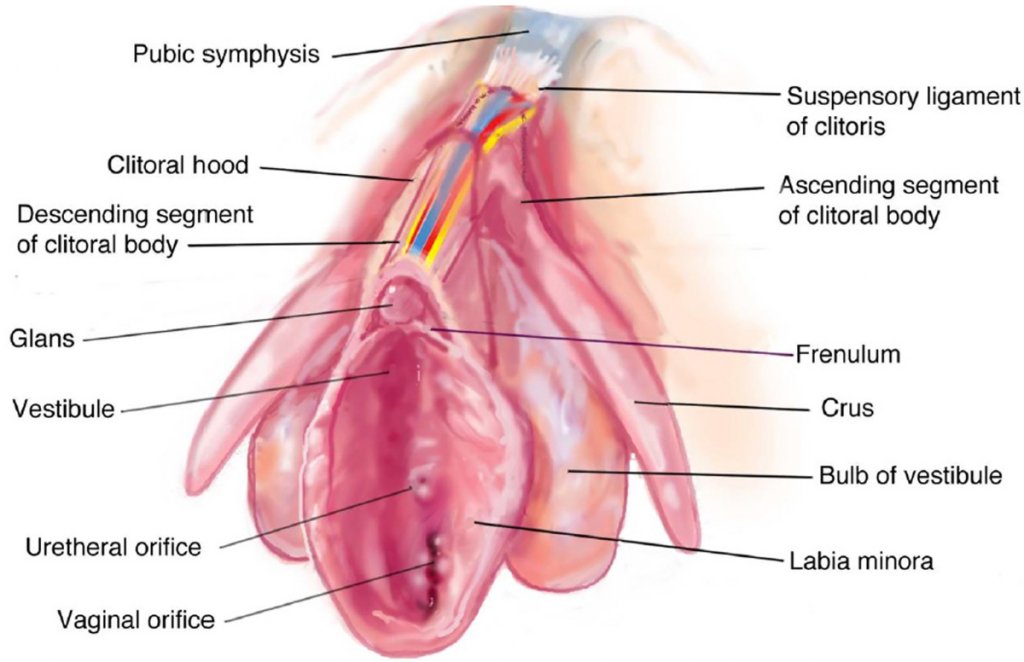
The clitoris extends far beyond its visible tip — it’s a three-dimensional structure with distinct components that extend deep into the pelvic region.
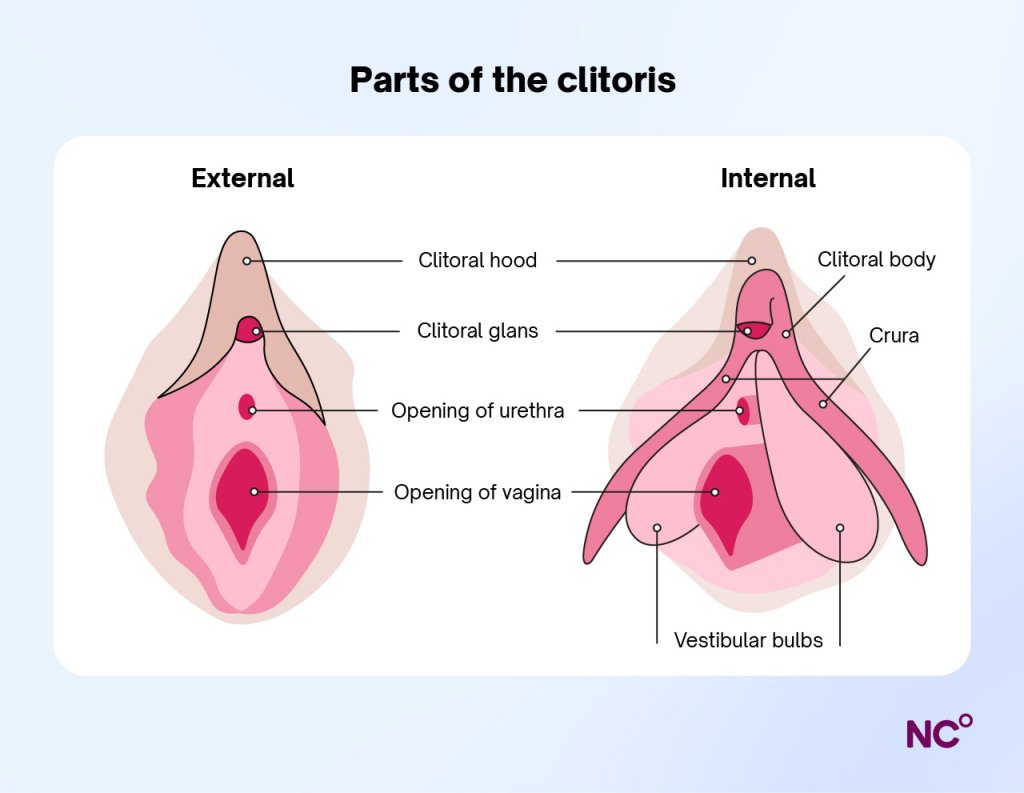
Picture a wishbone buried beneath the surface. That mental diagram captures the clitoris better than any diagram of a simple nub. The visible glans — the small, sensitive bump you can see just above the vaginal opening, tucked under the clitoral hood — is merely the starting point. From there, the corpus (body) extends inward before splitting into two elongated legs called the crura, which angle outward and downward along the pubic arch like the arms of that wishbone. Flanking the vaginal opening on either side sit the vestibular bulbs, two internal masses of erectile tissue that complete the picture.
When fully mapped, the entire structure resembles an internal embrace around the vaginal canal. According to research published by Cleveland Clinic, the crura and vestibular bulbs are composed of erectile tissue that engorges with blood during arousal — much like penile tissue does. This engorgement creates internal pressure, heightened sensitivity, and that characteristic feeling of fullness during penetrative activity.
This anatomy reframes a long-standing misconception. What’s commonly called “vaginal” stimulation is, in most cases, indirect stimulation of internal clitoral structures. Research from The Journal of Urology (Buisson & Foldès) confirms that the internal components wrap directly around the vaginal canal — meaning penetration compresses and stimulates the bulbs and crura from the inside. The clitoris isn’t separate from this experience; it’s central to it.
Understanding this architecture changes how pleasure technology needs to be designed — and sets the stage for why even the clitoris’s outermost layer, the hood, plays a more complex role than most people realize.
The Clitoral Hood: Protection and Indirect Stimulation
The clitoral hood acts as the unsung gatekeeper of pleasure — a flexible fold of skin that shields the hypersensitive glans while serving as a built-in mechanism for indirect stimulation.
The hood’s primary job is protection. Because clitoris nerve endings are densely packed in the glans, direct contact can quickly tip from pleasurable to overwhelming. According to the Cleveland Clinic, the hood functions specifically to protect the glans while providing a mechanism for indirect stimulation through movement. In practice, this means the tissue between the hood and the glans acts almost like a cushion — dampening raw intensity while still transmitting pressure and friction.
During arousal, the hood naturally retracts as blood flow increases, gradually exposing more of the glans. This retraction isn’t all-or-nothing. The hood slides and shifts with every movement, creating a layered experience: direct skin-on-hood contact generates friction that travels indirectly to the nerve-rich glans beneath. That translation of force — rather than blunt contact — is precisely why many people find indirect stimulation more sustainable and ultimately more satisfying.
The anatomy of the clitoral hood varies considerably from person to person. Some hoods fully retract during arousal; others remain partially draped regardless of engorgement. Hood size, tissue thickness, and positioning all influence how accessible the glans is and how intensely any given touch registers. This anatomical variation is a key reason that clitoral hood placement matters when exploring external stimulation.
This is also where modern tapping and flapping technology becomes especially relevant. Devices that use rhythmic, repetitive motion work with the hood rather than around it — transmitting pressure waves through the tissue rather than demanding pinpoint glans contact. Positioning such a device against the hood, rather than directly on the glans, is a practical starting point for flapping-style toys — and it reflects a design logic rooted in real anatomy. Understanding how the hood manages sensation sets the stage for what happens next: the dramatic physical transformation of engorgement.
Engorgement and the Physics of Arousal
Clitoral engorgement is not just a sensation — it’s a measurable physical transformation that reshapes pelvic anatomy and fundamentally changes how stimulation should be applied.
Arousal triggers a cascade of vascular activity. When the nervous system signals sexual excitement, blood flows rapidly into the erectile tissue of the clitoris — the corpora cavernosa and the vestibular bulbs. The glans becomes firmer and more prominent, the shaft stiffens slightly beneath the skin, and the clitoral hood function shifts from passive shielding to active mediator, drawing back just enough to expose the sensitized glans without overwhelming it.
The vestibular bulbs play a particularly underappreciated role in this process. According to the International Society for Sexual Medicine, these bulbs fill with blood during arousal, increasing sensitivity while simultaneously changing the physical landscape of the pelvic floor. In practice, this means the tissue surrounding the vaginal opening becomes padded and cushioned — a physiological response that heightens pressure sensitivity throughout the region.
Did You Know? The full clitoral structure measures approximately 9cm at rest — but during full engorgement, that figure can expand to around 12cm, a change substantial enough to alter how external pressure is perceived and where it lands.
This size shift matters enormously for stimulation. As the structure engorges, the internal roots and crura press closer to the surface, making the entire vulvar region more responsive to indirect contact. Understanding what stimulation actually reaches the clitoral body — versus just the surface — helps explain why technique timing is everything.
Rhythmic tapping becomes especially effective once engorgement is established. Engorged tissue is springy and vascular, responding to percussive motion in ways that flat or gliding pressure cannot replicate. Tapping at this stage sends repeated pressure waves through the swollen structure, amplifying sensation across a much wider anatomical footprint than the glans alone. That physiological reality — blood, pressure, and tissue density working together — is exactly what informed researchers began documenting in landmark anatomical studies, setting the stage for a rethinking of how science had been mapping this organ all along.
The 2005 Revision: Why Modern Science is Still Catching Up
For most of medical history, the clitoris was functionally erased from anatomical education — and that omission quietly shaped decades of inadequate pleasure technology.
Standard medical textbooks routinely omitted or misrepresented clitoral anatomy well into the late 20th century, reducing a complex, multi-component organ to a small external bump. Gray’s Anatomy described the structure incompletely for editions spanning more than a century. The consequence wasn’t just academic — it meant clinicians, researchers, and eventually product designers were working from a fundamentally broken map.
The turning point arrived in 2005, when Dr. Helen O’Connell published what became the first comprehensive 3D mapping of the clitoris in a urological context, drawing on MRI and dissection data to document the organ’s true dimensions. Published and later indexed through PMC / National Library of Medicine, O’Connell’s findings confirmed that the clitoris extends internally to surround the vaginal canal — the very anatomy discussed across earlier sections of this piece. What any standard clitoris anatomy diagram had long failed to show, her research made impossible to ignore.
The ripple effect on sexual wellness product design has been gradual but real. Once the internal bulbs and crura entered the clinical conversation, engineers and designers had a legitimate anatomical rationale for building technology that reaches beyond the glans. The shift from single-point vibrators toward devices engineered for deeper pelvic coverage reflects this revised understanding — a transition that understanding the full clitoral structure makes immediately intuitive.
Peer-reviewed data matters here because anecdote cannot substitute for anatomy. Without O’Connell’s evidence base, the sexual wellness industry had little scientific pressure to evolve beyond surface-level stimulation. Her work created accountability — a standard against which product claims could be measured. That standard is precisely why the next step in this discussion matters: mapping specific stimulation technologies directly onto the anatomical structures the science finally confirmed.
Multi-Functional Stimulation: Mapping Tech to Anatomy
Understanding the full clitoral system transforms how you evaluate pleasure technology — and exposes why so many single-point devices consistently underdeliver.
A conventional vibrator targets roughly 5% of the clitoral structure. The glans alone — the externally visible tip — receives stimulation, while the internal bulbs and crura remain entirely untouched. Given that Helen O’Connell’s clitoris research confirmed the internal architecture can reach 9–12 centimeters when engorged, that’s a significant amount of responsive tissue being ignored. It’s the anatomical equivalent of pressing one key on a grand piano and calling it a concert.
The logic behind “triple stimulation” is grounded directly in this anatomy. When a device simultaneously engages the glans, the internal bulbs, and the crura, it activates nerve pathways across the entire clitoral network — not just the surface. The internal bulbs flank the vaginal canal, meaning penetrative components can stimulate them from within, while external elements address the glans and hood. This multi-point contact isn’t a marketing concept; it’s a structural response to how the clitoris actually functions.
Automated thrusting and flapping motions take this further by mimicking the rhythmic pressure patterns that natural physiological arousal responds to. Rather than static buzz, these mechanisms create dynamic, wave-like contact that interacts with the clitoral hood and underlying tissue — the kind of escalating stimulation pattern many conventional toys simply can’t replicate. The clitoral hood itself acts as a pressure amplifier, and repetitive directional movement against it compounds sensation far more effectively than uniform vibration.
Choosing technology that genuinely respects the 10,000+ nerve ending density of the clitoris means looking beyond single-speed vibration toward devices engineered with anatomical specificity in mind. Once you understand the full scope of this system — the bulbs, crura, hood, and glans working together — the case for multi-functional design becomes impossible to overlook.
The Bottom Line: Key Takeaways for Sexual Wellness
The clitoris is not a button — it’s a system, and understanding that system changes everything about how pleasure works.
Every concept covered in this article circles back to one foundational correction: the clitoris extends roughly 10 centimeters or more inside the body, with internal bulbs and crura that wrap around the vaginal canal on both sides. What’s visible at the surface is, genuinely, just the tip of the iceberg. Most clitoral tissue is never directly touched by penetration alone — which is exactly why targeted, multi-point stimulation matters so much.
That internal architecture also explains the nerve-ending data. According to Oregon Health & Science University, the clitoris contains over 10,000 nerve endings — more densely packed than any other structure in the human body. Those endings aren’t concentrated solely at the external glans. They thread through the entire organ, meaning the bulbs and crura respond to pressure and vibration transmitted through surrounding tissue. Positions or techniques that create consistent pressure along the vaginal wall are, in effect, engaging clitoral structures most people don’t realize they’re stimulating.
Modern pleasure technology — particularly devices that use flapping or tapping motion — isn’t a novelty feature. It’s an engineering response to this anatomy. The clitoral hood acts as a natural buffer, and oscillating stimulation engages both the hood and the internal nerve pathways beneath it more effectively than static pressure. Solo exploration through varied self-stimulation approaches can help map how different types of contact translate to those deeper structures.
If questions remain about the specifics of clitoral location, internal versus external stimulation, or how the hood affects sensitivity, those details are worth examining closely — which is exactly what comes next.
- The clitoris is a 10cm+ internal organ, not a single visible point — most of its erectile tissue lies beneath the surface, surrounding the vaginal canal.
- With over 10,000 nerve endings, the clitoris is the most densely innervated structure in the human body, purpose-built for pleasure and nothing else.
- Internal clitoral bulbs and crura respond to indirect stimulation, meaning penetration alone is rarely sufficient — multi-point or angled pressure is anatomically necessary for full engagement.
- Modern oscillating and flapping vibration technology is designed to work with the clitoral hood, transmitting sensation to deeper nerve pathways that static vibration often misses.
- Understanding clitoral anatomy isn’t just academic — it’s the foundation for choosing techniques, positions, and tools that actually match how the body is built to respond.
Frequently Asked Questions About Clitoral Anatomy
Understanding clitoral anatomy doesn’t have to feel clinical — the right answers make everything about pleasure more intuitive and accessible.
Where exactly is the clitoris located?
According to the Cleveland Clinic, the clitoris is located at the top of the vulva where the inner labia meet. What’s visible externally — the glans — is only the starting point. The full structure extends internally, with two crura and two vestibular bulbs wrapping around the vaginal canal.
What is the difference between internal and external clitoral stimulation?External stimulation targets the glans and clitoral hood directly, typically producing fast, surface-level arousal. Internal stimulation — through the vaginal canal or perineal tissue — engages the deeper roots, crura, and bulbs of the same clitoral structure. Neither is superior; they activate overlapping parts of one interconnected system.
How does the clitoral hood affect sensitivity?
The clitoral hood is a fold of skin that shields the highly sensitive glans from overstimulation. During arousal, it partially retracts, increasing direct access. For some people, stimulation through the hood feels more comfortable than direct contact — which is why pressure-based and broad-coverage devices often outperform pinpoint vibration for sustained pleasure.
Can you stimulate the clitoris through the vaginal wall?
Yes — and this is one of the most misunderstood aspects of female anatomy. The anterior vaginal wall sits adjacent to the internal clitoral structures, meaning internal penetration can activate clitoral tissue indirectly. What’s commonly called a “vaginal orgasm” is, in most cases, internal clitoral stimulation by another name. Recognizing this reframes how both partners and product designers think about coverage, angle, and depth.
The clitoris extends far beyond its visible tip — and understanding its full anatomy is the foundation for every meaningful advance in sexual wellness.