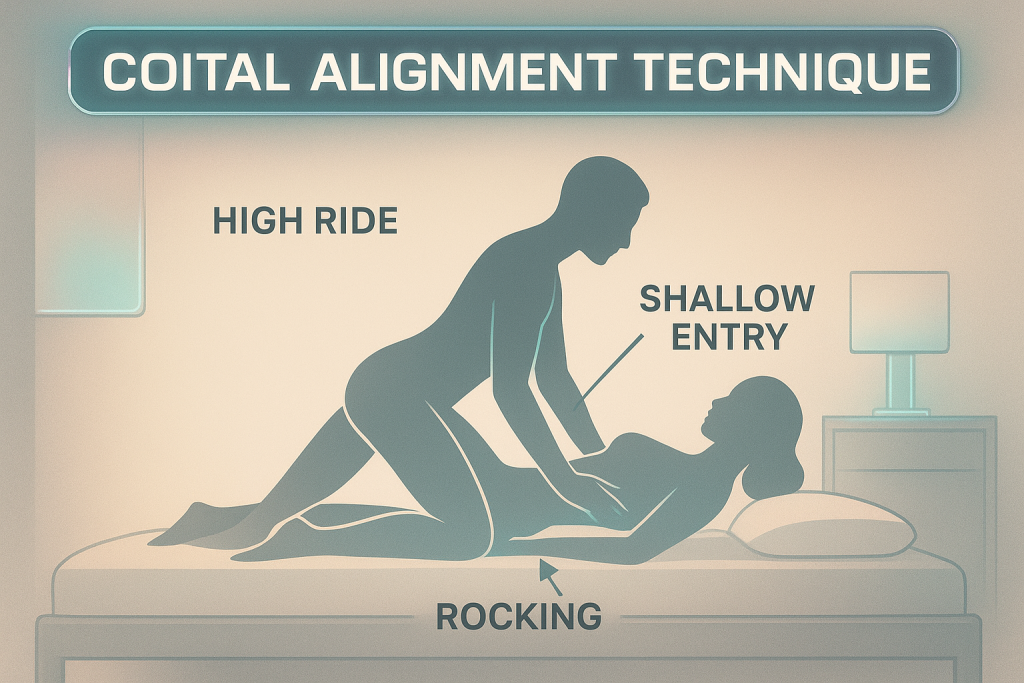
The Coital Alignment Technique (CAT) is a clitoral-forward variant of missionary that replaces deep thrusting with shallow entry, a higher “ride,” and steady rocking to keep pubic contact on the clitoral area. This guide is written for intermediate couples who already understand the basics and want practical, step-by-step coaching to make the Coital Alignment Technique more reliable—and to know exactly when and how a small vibrator can help close the orgasm gap.
You’ll find precise body cues, short practice drills, a troubleshooting matrix, and an evidence snapshot with sources. Throughout, I’ll use careful language—CAT may help many couples increase clitoral stimulation during penetration, but individual experiences vary and the research is limited.
Before You Start: Consent, Setup, and Comfort for the Coital Alignment Technique
- Align on consent and goals: Agree that tonight’s session is practice-focused, with permission to pause and adjust. Use brief check-ins every minute (“pressure 0–10?” “more/less/keep?”).
- Cushion and angle: Place a medium-firm pillow under the receiver’s sacrum (tailbone) to raise the hips about 2–4 inches; this improves the alignment window needed for CAT’s rocking.
- Lubrication: Use a generous amount of water-based lube on the vulva and shaft/toy; reapply when friction starts to catch. If pain or sharp discomfort appears, stop and reset.
- Safety notes: Persistent pain or pelvic-floor issues warrant an evaluation by a qualified clinician (for example, a pelvic floor physical therapist or sexual medicine provider). Postpartum or after surgery, wait for medical clearance and reintroduce penetration gradually with lots of lube.
For deeper background on why clitoral stimulation raises reliability during partnered sex, see our internal primer on blended stimulation in the article, How to Optimize Blended Orgasms with a G-spot Rabbit Vibrator.
Quick Anatomy Primer for the Coital Alignment Technique (CAT)
CAT aims to keep the dorsal (top) surface of the penis or an insertable toy pressed against the clitoral hood and pubic mound while you rock, not thrust. That steady, external contact is what many people find makes orgasm more accessible during penetration. A small hip lift helps the angle; the top partner rides slightly higher on the bottom partner’s torso so the shaft points a bit downward on entry and stays in contact during rocking.
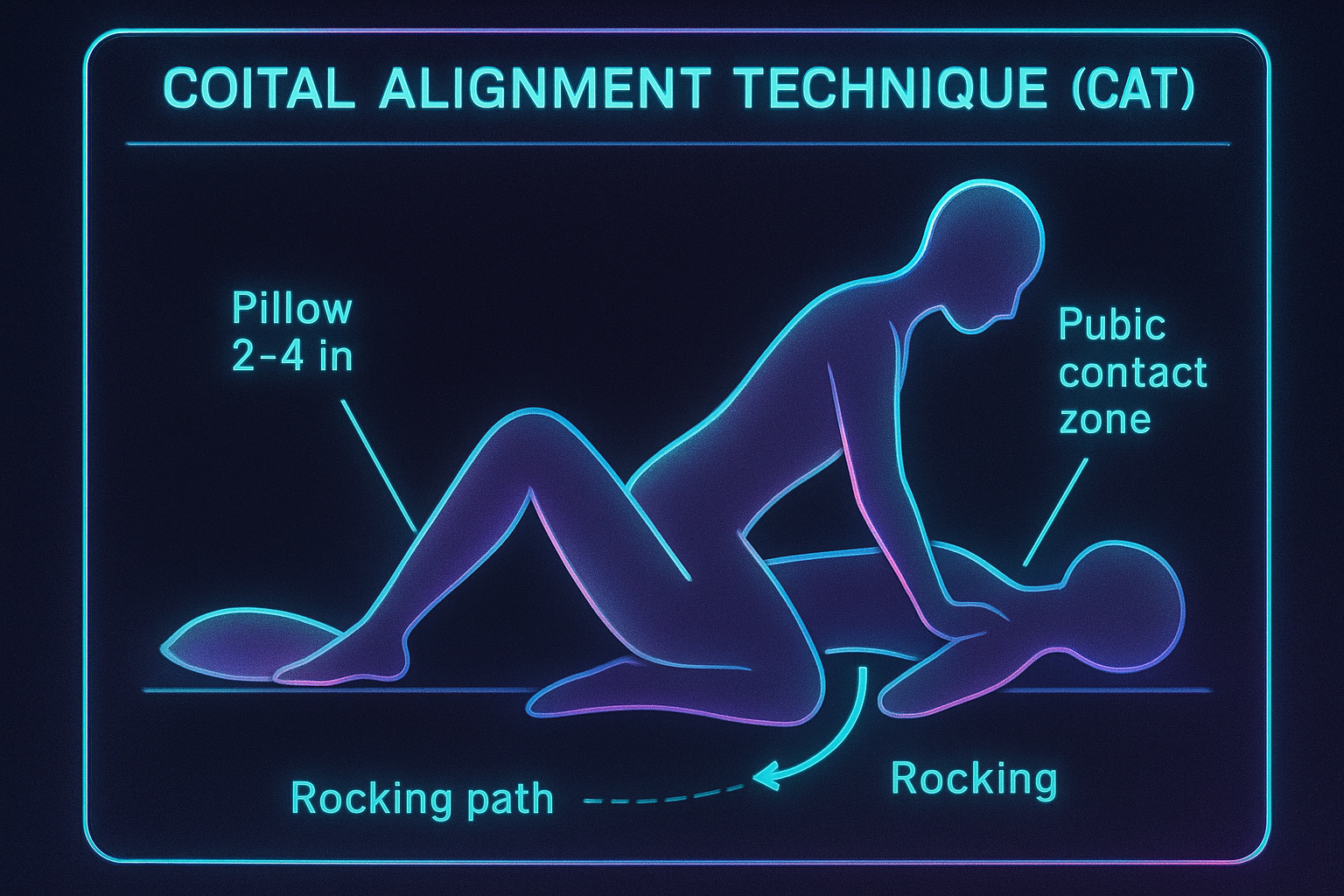
According to clinician-reviewed explainers, this “ride high + rock” approach is the signature of the Coital Alignment Technique, with slow, shallow movement prioritized over in–out strokes. See the clinician-reviewed overview in the Healthline guide to the Coital Alignment Technique (2019) for fundamentals, and a mechanics-focused article from Men’s Health on CAT’s rocking alignment (2021).

Step-by-Step: Coital Alignment Technique (CAT) for Reliable Clitoral Contact
- Set your base and lube generously. With the receiver on their back, slide a pillow under the sacrum to raise the hips 2–4 inches. Apply lube over the vulva and along the shaft/toy.
- Ride higher before entry. The penetrating partner shifts their chest toward the receiver’s shoulders. Keep arms extended enough to maintain that “high ride.”
- Enter shallowly at a slight downward angle. Think “glans only” or toy tip first. The goal is to press the dorsal shaft against the clitoral mound, not to go deep.
- Seal pubic contact. Press pubic bones together so the shaft rests on the clitoral hood area. The receiver can loosely wrap legs around the hips to help keep contact.
- Replace thrusting with rocking. Start slow, aiming for 60–80 BPM micro-rocks. Use small vertical rocks or gentle circles. Breathe together; exhale as you rock.
- Fine-tune pressure and tilt. Test tiny adjustments: a touch more pillow height, a millimeter tilt up or down, or legs in/out. Keep the shallow angle throughout.
How to know you’re aligned: The receiver feels steady, broad friction over the clitoral hood rather than intermittent “on/off” contact; the top partner notices less in–out travel and more gliding pressure along the pubic mound. If contact breaks, pause, slide up again, and reseal.
Practice Drills to Master the Coital Alignment Technique Rhythm
- Metronome Rocking (5 minutes): Set a phone metronome to 70 BPM. Hold shallow entry and rock to the beat for 60–90 seconds at a time, three or four sets. Debrief: rate contact consistency 0–10.
- Pillow-Height Lab (6 minutes): Try 2″, 4″, and 6″ elevations for two minutes each. Note which height keeps contact most reliably without pressure discomfort.
- No-Thrust Block (5–7 minutes): Commit to rocking only. If thrusting starts, stop, breathe, slide back up, and reseal. Track comfort/arousal on a 0–10 scale.
Pro tip: Think of CAT like learning a dance step—once the muscle memory of “ride high + rock shallow” clicks, your bodies will find the groove faster each session.
Vibrator Pairing Micro-Experiment with the Coital Alignment Technique (CAT)
Disclosure: KissSelf is our product. In the example below, we’ll show one neutral way to pair a compact vibrator with CAT to stabilize contact, then you can adapt as needed.
Trial plan (three short runs, 2–3 minutes each):
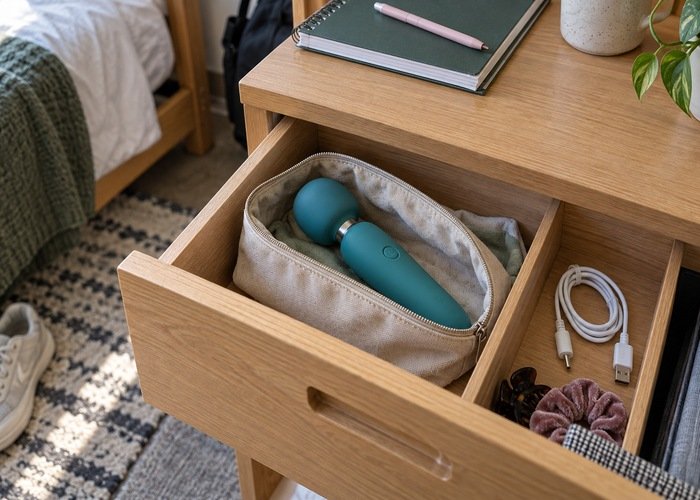
- Placement A: The receiver holds a small external vibe just above the clitoral hood while you maintain shallow rocking. Start at low intensity for 60 seconds, then medium for 60 seconds.
- Placement B: The penetrating partner stabilizes a slim vibe at the base of the shaft (external) so it touches the pubic mound during each rock. Keep the angle shallow.
- Placement C: Hands-free wearable or a palm-sized vibe tucked just above the clitoris, applied only after 2–3 minutes of warm-up rocking to avoid early overstimulation.
What to record together after each trial: contact reliability (0–10), comfort (0–10), and whether intensity felt numbing or enhancing.
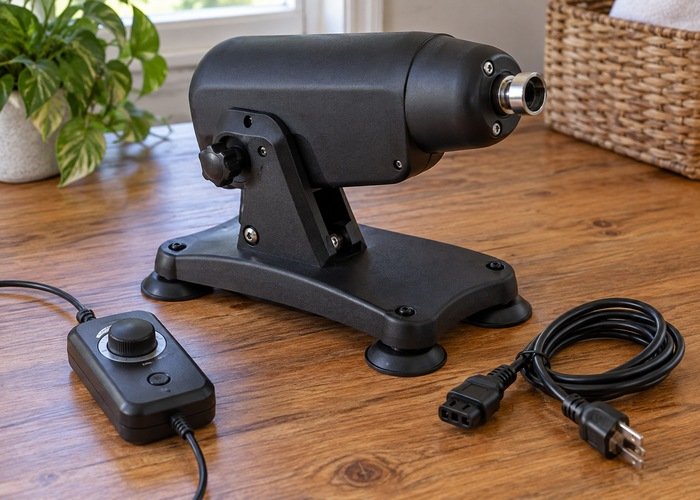
If you prefer a multi-function external toy that won’t obstruct rocking, consider a device like a thrusting and sucking vibrator for CAT—used externally at low settings, it can provide steady clitoral sensation while you keep the Coital Alignment Technique’s rhythm.
Troubleshooting the Coital Alignment Technique (CAT)
Problem → Likely cause → Try this fix
- Contact keeps slipping off the clitoris → Top partner drifted downward → Pause, slide higher toward shoulders, re‑seal pubic contact; add 1–2″ of pillow height.
- Reflexive thrusting breaks the rhythm → Habit loop kicking in → Agree on a reset word (“rock”); stop, breathe, then restart shallow rocking at 60–70 BPM.
- Pubic bone feels too hard/pointy → Excess pressure or low lube → Add a folded towel as a cushion; switch to small circles; re‑lube liberally.
- Timing goes out of sync → Two leaders at once → For 60 seconds, let the receiver lead the rock while the top partner follows.
- Height/size mismatch → Genitals not on the same plane → Adjust pillow height; try the receiver’s legs inside or outside the top partner’s to change angles.
- Dryness or chafing → Insufficient lubrication → Reapply water-based lube; take a 30‑second reset and resume more slowly.
- Sensory overload/numb clitoris → Intensity too high, too soon → Start low for 2–3 minutes; pulse intensity; take short breaks; avoid pressing directly on the glans.
- Hard to keep a compact vibe in place → Shape/position mismatch → Try a wearable or a palm-sized design; a tongue clitoral stimulator rabbit for CAT can be used externally for focused tapping while you maintain CAT alignment.
Adaptations and Comfort Notes for Different Bodies
- Larger bellies or chests: Elevate the receiver’s hips an extra inch or two and widen the top partner’s knee stance for space without losing the high-ride alignment.
- Strap-on/queer pairings: The same principles apply—ride higher, shallow entry, sealed pubic contact, and rocking. Adjust harness angle and belt tension to maintain the downward shaft angle.
- Pelvic floor tenderness: Keep pressure moderate, skip hard pubic contact, and prioritize circular rocking over vertical micro-thrusts. If pain persists, consult a qualified clinician.
- Postpartum or after pelvic surgery: Once medically cleared, restart with very generous lube, shorter sessions, and the No‑Thrust Block drill before adding intensity.
If you want more context about clitoral techniques and pressure progression, our in-depth primer, The Definitive Guide to Clitoral Stimulation and Squirting, expands on sensation mapping.
Lube & Toy Care for Coital Alignment Technique (CAT) Sessions
| Topic | Guidance |
|---|---|
| Lube choice | Water-based lube is the safest default with condoms and silicone toys; reapply as needed for smooth rocking. See the clinician-reviewed primer on lubricants and materials (Healthline). |
| Silicone-based lubes | Long-lasting and condom-safe but may degrade some silicone toys; check your toy’s manual and consider a patch test. Overview in Healthline’s lubricant compatibility guidance. |
| Oil-based lubes | Not compatible with latex condoms (can weaken/tear). Use cautiously and confirm material compatibility. See Healthline’s safe-use notes for context. |
| Cleaning | Wash toys with warm water and gentle soap after each session; dry fully before storage. Follow your device’s specific instructions. |
Evidence and Stats on the Coital Alignment Technique (CAT) and Clitoral Stimulation
The formal evidence on CAT is limited and includes older, small-sample work; however, contemporary research on penetration pleasure techniques supports related mechanics such as angling and pairing clitoral stimulation with penetration.
| Topic | Study/Source | Year | Sample/Type | Key finding | Limitations |
|---|---|---|---|---|---|
| CAT overview | Pierce, Journal of Sex & Marital Therapy (PubMed) | 2000 | Review | Technique training associated with improved coital orgasm for some couples | Dated; small samples |
| Penetration techniques | Hensel et al., Archives of Sexual Behavior (PMC) | 2021 | Surveyed women | 87.5% reported “Angling”; many used clitoral “Pairing” during PVI | Self-report; not CAT-specific |
| Position associations | Krejčová et al. (PMC) | 2020 | Population survey | Face-to-face/female-superior positions showed higher orgasm odds | Observational |
| Orgasm gap context | Gesselman et al. (PMC) | 2024 | U.S. adults | Persistent gap: men 70–85% vs women 46–58% orgasm rates | Survey; cultural variance |
For a clinician-reviewed overview of CAT basics and tips, see Healthline’s explainer on the Coital Alignment Technique (2019).
Helpful Video on the Coital Alignment Technique (CAT)
For a clinician’s perspective on alignment and rocking mechanics, watch this urologist-led overview: The ONE Position 89% of Women Prefer for Maximum… (YouTube). As always, pair video tips with your own comfort, consent, and pacing.
FAQs: Coital Alignment Technique (CAT)
What is the Coital Alignment Technique (CAT)?
The Coital Alignment Technique is a modified missionary position emphasizing shallow entry and a higher “ride” so the shaft stays pressed against the clitoral area while partners rock rather than thrust.
How is CAT different from standard missionary?
CAT trades deep in–out strokes for small, rhythmic rocks with sealed pubic contact and a slightly downward shaft angle. The goal is continuous clitoral friction, not depth.
Why focus on clitoral stimulation during penetration?
Many women report clitoral stimulation—alone or paired with penetration—as most reliable for orgasm. Contemporary research catalogs techniques like “Angling” and “Pairing” that align with CAT’s approach.
How long does it take to get good at CAT?
Most couples need a few practice sessions to build muscle memory. The metronome drill and no‑thrust block shorten the learning curve.
Can we use a vibrator during CAT—and how?
Yes. Add a compact external vibrator after 2–3 minutes of warm-up rocking, at low intensity. Try above the clitoral hood or along the base of the shaft (external) so it doesn’t interrupt alignment.
What if CAT feels uncomfortable?
Back off pressure, add lube, and try small circular rocking instead of vertical. If pain persists, pause and consult an appropriate clinician.
Does CAT help with premature ejaculation or pacing?
CAT’s slower, shallower rhythm can help some couples manage arousal pacing. Take breaks, breathe together, and resume at a lower intensity if needed.
Is CAT safe during menstruation or postpartum?
Menstruation is typically fine with your mutual consent and comfort (mind cleanup preferences). Postpartum or post-surgery, wait for medical clearance and restart gradually with abundant lube.
What if we keep losing clitoral contact?
Reset the high-ride position, raise the receiver’s hips 1–2 inches more, and reduce movement amplitude for a minute to re‑establish steady contact.
Will CAT work for strap-on sex?
Yes—the same alignment and rocking rules apply. Adjust harness angle and belt tightness to maintain the shallow downward shaft angle.
Next Steps
- Try one focused CAT practice session this week using the Step-by-Step and one drill. If you want a wearable-style external option for steadier contact, explore a clit sucking rabbit vibrator for CAT and adapt placement to your bodies.
- For position tweaks and rhythm ideas beyond CAT, see How the Butterfly Sex Position Redefines Bedroom Fun for angle variations and timing cues.
Remember: small, consistent adjustments beat big, dramatic ones. Keep the ride high, the entry shallow, and the rocking steady—and check in often.