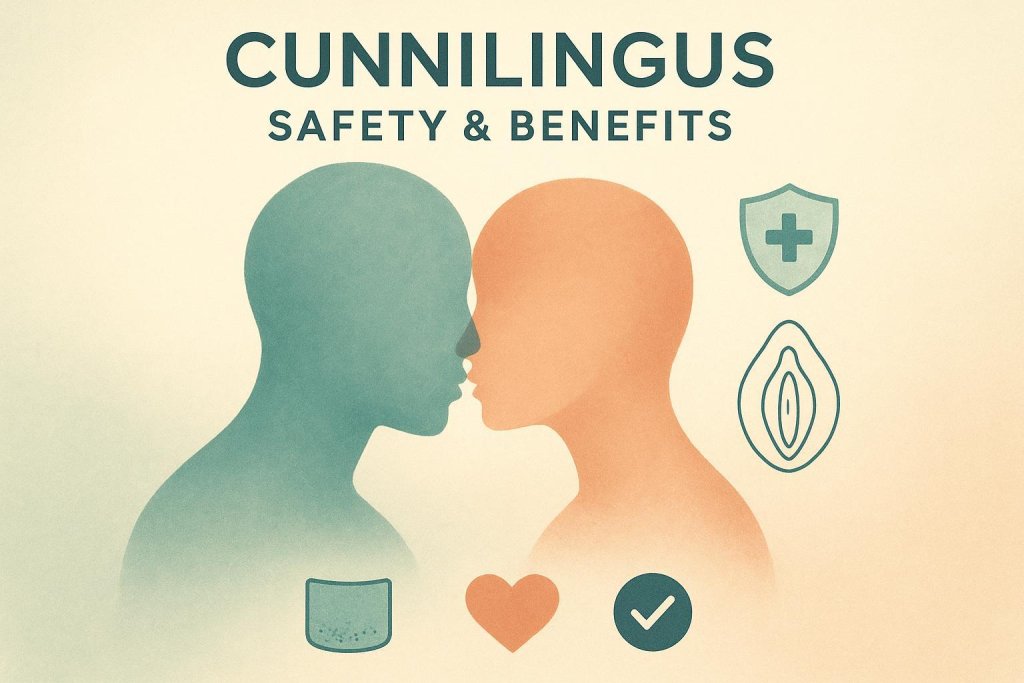
Pleasure and safety can go hand in hand. This ultimate guide explains the benefits of cunnilingus for many women and offers clear, authoritative safer‑sex guidance you can actually use. We anchor every claim in trusted sources and call out where the evidence is strong—and where it’s limited—so you can make informed choices as a couple.
Key takeaways
- Strong evidence: Many women are more likely to orgasm when clitoral stimulation (often via oral sex and/or hands) is included—compared with vaginal penetration alone. Evidence strength: Strong (large surveys in 2016, 2018, and 2024). Sources in text.
- Safety matters: Many STIs can spread through oral–genital contact; HIV risk from cunnilingus is characterized as little to no risk by public‑health guidance, but other STIs do transmit. Evidence strength: Strong (authoritative guidance).
- Barriers help: Dental dams or cut‑open condoms reduce exchange of fluids; they partially protect against skin‑to‑skin STIs (e.g., HSV/HPV) because not all skin is covered. Evidence strength: Strong for fluids; limited for complete skin coverage.
- Hygiene and timing count: Avoid oral sex with sores or right after brushing/flossing; clean hands and external genitals; replace any barrier that tears or slips. Evidence strength: Strong (authoritative guidance).
- Testing is proactive care: Ask about throat site testing if you give or receive oral sex; follow age- and risk‑based screening. Evidence strength: Strong (authoritative guidance).
A quick anatomy tour: what you’re actually stimulating
Think of the clitoral complex like an iceberg: the visible tip (the glans) is small, but internal structures branch like wishbones (the crura) and swell with arousal. Non‑explicit basics:
- Clitoral glans and hood: Highly innervated; gentle, consistent stimulation often feels best.
- Labia minora and vestibule: Sensitive tissues surrounding the urethral and vaginal openings.
- Labia majora: External folds with more protective tissue and fewer nerve endings.
- Vestibular bulbs and crura (internal): Engorge during arousal and can make pressure around the entrance feel fuller and more pleasurable.
Anatomy varies from person to person. The golden rule: communicate about what feels good and what doesn’t—then adjust.
Benefits of oral sex for women: what the evidence shows
The phrase “benefits of oral sex for women” covers pleasure, satisfaction, and sometimes claims about stress or mood. Here’s how the evidence stacks up.
Evidence snapshot
| Claim | Evidence strength | What studies suggest |
|---|---|---|
| Including clitoral stimulation in partnered sex increases orgasm likelihood for many women | Strong | A U.S. probability sample found most women need clitoral stimulation in addition to penetration; only 18.4% reported intercourse alone is sufficient. See the 2018 study by Herbenick and colleagues in Archives of Sexual Behavior: women’s orgasm experiences and behaviors (2018). A 2024 analysis reports a persistent orgasm gap across ages: Gesselman et al., Sexual Medicine Open Access (2024). A Finnish national survey series found 54% of women had an orgasm during their last intercourse, highlighting the gap and need for clitoral stimulation: FINSEX survey analysis (2016). |
| Better communication and responsiveness (often present during oral sex) relate to higher satisfaction | Moderate/indirect | Surveys link attentiveness to higher sexual satisfaction; oral sex itself may be a vehicle for that responsiveness, but causality isn’t proven. |
| Cunnilingus reduces stress or improves sleep via unique hormonal effects | Limited | It’s plausible via general arousal/orgasm physiology, but cunnilingus‑specific trials are scarce; avoid assuming a unique hormonal edge over other paths to orgasm. |
Bottom line: If your goal is to improve orgasm reliability and overall satisfaction, incorporating clitoral stimulation—by mouth and/or hands—often helps. Strong survey data support this; grand claims about unique hormonal benefits from cunnilingus alone aren’t yet backed by robust trials.
Oral sex safety 101: STI risk, barriers, and hygiene
Authoritative guidance is clear: many STIs can transmit during oral–genital contact. According to the CDC’s overview, infections such as gonorrhea, chlamydia, syphilis, herpes, and HPV can spread to the mouth/throat or to the genitals via oral sex, while HIV risk from oral sex is described as little to no risk compared with other sex acts. See the CDC’s summary on STI risk and oral sex (2024–2025 updates).
Quick risk and barrier notes
| Infection | Can it spread via cunnilingus? | Barrier notes |
|---|---|---|
| Gonorrhea, chlamydia | Yes; oropharyngeal and genital infections are possible | Dental dams or cut‑open condoms reduce exchange of fluids when used correctly. See CDC dental dam guidance. |
| Syphilis, herpes (HSV), HPV | Yes; often via skin‑to‑skin or mucous contact | Barriers reduce risk but cannot cover all skin. CDC emphasizes this limitation in its condom use overview. |
How to use (and improvise) barriers
- Use a new latex or polyurethane dental dam every time; check for tears; lay it flat before contact; don’t flip or reuse. Step‑by‑step instructions: CDC dental dam guidance.
- No dam on hand? The CDC notes you can cut open a condom into a square barrier for oral–vulvar contact; place it flat and hold edges in place during use. Guidance within CDC’s oral‑sex risk page.
- Lubes and materials: Use water‑ or silicone‑based lubricants with latex; avoid oils that degrade latex. This aligns with the CDC condom overview (linked above) and the Cleveland Clinic’s dental dam overview (2022).
- Evidence note: Direct real‑world effectiveness data for dental dams are limited and often extrapolated from condom research; see the 2022 peer‑reviewed review on dam use: dental dams in STI prevention.
When to pause or skip oral sex
- Visible sores or active outbreaks (oral or genital)
- Open cuts, gum bleeding, or right after brushing/flossing
- Recent dental procedures that caused bleeding
The NHS highlights increased risk with sores and gum bleeding and advises avoiding brushing/flossing immediately before sex; see NHS guidance on sex activities and risk.
A quick hygiene and safety checklist
| Step | What to do |
|---|---|
| Pre‑play | Wash hands and external genitals; set out a dam/DIY barrier and lube; avoid brushing/flossing right before. |
| During | Place the barrier flat; add a dab of lube on the receiver’s side for sensation; replace if it tears or slips. |
| After | Dispose of the barrier; wash up; notice any irritation or sores and pause sexual activity until healed. |
Techniques and communication (non‑explicit and consent‑first)
Technique without communication is guesswork. Here’s a simple, respectful way to co‑create great experiences:
- Start with feedback loops: “Slower or faster?” “More to the left?” Short questions lower pressure and increase clarity.
- Build gradually: Many people enjoy consistent, rhythmic stimulation with occasional variation—small adjustments beat big, sudden changes.
- Combine touch: Many women report higher orgasm likelihood with oral plus manual clitoral stimulation; align pressure with arousal cues like swelling and lubrication.
- Troubleshooting taste/odor worries: A quick, gentle wash beforehand can help. Flavored, water‑based lubricants exist; if using any flavored product with latex, confirm it’s water‑ or silicone‑based (not oil‑based) to protect the barrier.
- Comfort first: Any pain, numbness, or anxiety is a cue to slow down or pause. Consent is ongoing; anyone can change their mind at any time.
Testing cadence, throat swabs, and vaccination notes
If you give or receive oral sex, ask a clinician about throat (or rectal) testing based on your exposures; standard urine or vaginal swabs don’t catch every site. The CDC’s testing overview explains site‑specific screening and who benefits from annual—or more frequent—checks; see CDC: getting tested for STIs (2025).
Age and risk also guide screening frequency. Some groups are advised to test annually by default, with more frequent testing if risk is higher. Vaccination against HPV per routine schedules helps reduce HPV‑related risks; ask your clinician what’s appropriate for you given age, prior vaccination, and sexual history. See CDC’s overview about HPV and vaccination.
Special situations and practical scenarios
- Menstruation: Barriers can still be used; check comfort with taste/odor. Some couples prefer to wait or to switch to other activities; do what feels right for both of you.
- Oral lesions or recent dental work: Skip oral sex until healed. If you’re unsure whether a sore is contagious, get it checked first.
- Latex allergy or sensitivity: Choose polyurethane or other non‑latex barriers; confirm lube compatibility on the label.
- Anxiety about trying a dam: Practice placing it during low‑pressure moments. Fold a corner lightly to keep tension; a drop of lube on the receiving side can improve sensation.
Short scenario example
- Situation: One partner wants to use a dam; the other worries it will “ruin sensation.”
- Approach: Acknowledge the worry, offer a trial with lube on the receiver’s side, and agree on a pause word. Revisit after a few minutes and adjust.
FAQs
Q1: What are the top evidence‑based benefits of oral sex for women?
- Strongest support: higher orgasm likelihood when clitoral stimulation is part of partnered sex. See Herbenick et al. (2018) on women’s orgasm experiences, Gesselman et al. (2024) on the persistent orgasm gap, and FINSEX survey analysis showing 54% orgasm in last intercourse.
Q2: Is oral sex safe?
- Safer—not risk‑free. Many STIs can spread via oral–genital contact, while HIV risk from oral sex is described as little to no risk by public‑health guidance. Use barriers and follow testing recommendations. See the CDC’s oral‑sex STI risk overview.
Q3: Do dental dams really work?
- They reduce exchange of fluids and therefore lower risk for infections transmitted that way. They offer partial protection for skin‑to‑skin STIs (areas not covered remain exposed). How‑to steps: CDC dental dam guidance. Evidence synthesis: 2022 review of dental dam use.
Q4: Should I avoid oral sex after brushing my teeth?
- Yes—avoid right after brushing or flossing because gum micro‑bleeding can raise transmission risk. The NHS explains these triggers in its guidance on sex activities and risk.
Q5: Can oral sex cause pregnancy?
- No. Pregnancy requires sperm entering the vagina/uterus; oral sex alone cannot cause pregnancy. This is consistent with mainstream health guidance (see the NHS link above for risk context).
Q6: How often should I get tested if I have multiple partners?
- Many people benefit from at least annual testing, with more frequent screening based on risk, new partners, or symptoms. Ask about throat swabs if you give/receive oral sex. Overview: CDC: getting tested for STIs.
Q7: What if a dam tears mid‑play?
- Pause, replace it, and consider testing if there was potential exposure. If symptoms develop later (e.g., sore throat, lesions), seek care promptly.
You deserve pleasure and peace of mind. Keep the focus on consent and comfort, use barriers consistently, and pair your intimacy with smart, routine testing. That’s how couples enjoy the real benefits of oral sex for women—safely and confidently.