
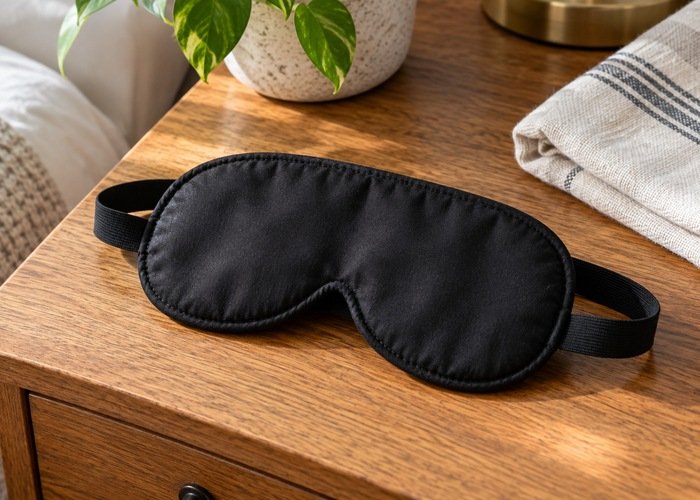
A useful blindfold buying checklist starts with three questions: can you remove it yourself immediately, does its construction avoid uncomfortable pressure around the eyes, and can you clean it according to clear instructions? A darker fabric or a thicker pad does not answer any of those questions. Choose the product by its actual construction and care requirements rather than by how dramatic it looks in a photograph.
This guide is for adults comparing simple fabric blindfolds and eye masks as personal accessories. It is a non-graphic consumer inspection guide, not a guide to sexual activity, restraint, or medical treatment. It does not cover gags, restricted breathing, weighted eye products, heated masks, or equipment that prevents independent removal. Products that cover the eyes still need sensible limits, even when they look as familiar as a travel mask.
Before choosing an accessory from the KissSelf shop, check its stated intended use and ask for its care instructions. A decorative blindfold is not automatically suitable for sleeping, and a sleep mask is not medical eye protection. Keep these categories separate. An attractive style is only useful if the person who will own it actually wants it and can care for it properly.
Identify the product before comparing materials
Listings sometimes use blindfold, sleep mask, eye cover, and relaxation mask interchangeably. Read beyond the name to identify what is actually supplied. Is the product a fabric shell with padding, a molded shape, or a piece of decorative fabric? Is the strap fixed or adjustable? Are any inserts removable? Clear answers make it possible to compare two products without assuming they perform the same job.
Ask for the dimensions of the whole mask and the manufacturer’s description of the adjustment range. Do not infer size from a model photograph or a hand holding it. Pictures can make a compact accessory appear much larger, and the visible outer shape may not reveal the area that contacts skin. A simple measurement description is more useful than a universal-fit claim.
Check that the model name on the instructions matches the item you intend to buy. A seller may carry several visually similar versions with different straps, linings, or washing restrictions. Save the exact listing and care information with your order details. If a later question arises, you can ask about the right item instead of searching for a photograph that merely looks close.
Read the inner construction as carefully as the outer fabric
The lining, seams, edging, and strap attachments all deserve attention because the decorative face is not the whole product. A smooth-looking satin surface might be backed by a different textile or foam. Ask what touches the skin and whether the padding composition is disclosed. The word silk in a title, for example, should not be assumed to describe every layer.
Look for a clear view of the inner face. A seam running across a contact area, a stiff edge near the nose, or exposed fastening material may matter more to a particular buyer than the color. Product photographs cannot establish comfort, but they can reveal questions worth asking. If the seller only shows the outside, request an inside photograph before making a decision.
Our fabric comparison guide explains general differences between textile descriptions. Apply those questions cautiously to an eye accessory rather than assuming that fabric suitable for a garment is automatically suitable near the eyes. Construction and the exact lining remain important, and no fabric name guarantees that an individual will tolerate a product.
Flat and contoured masks solve different fit problems
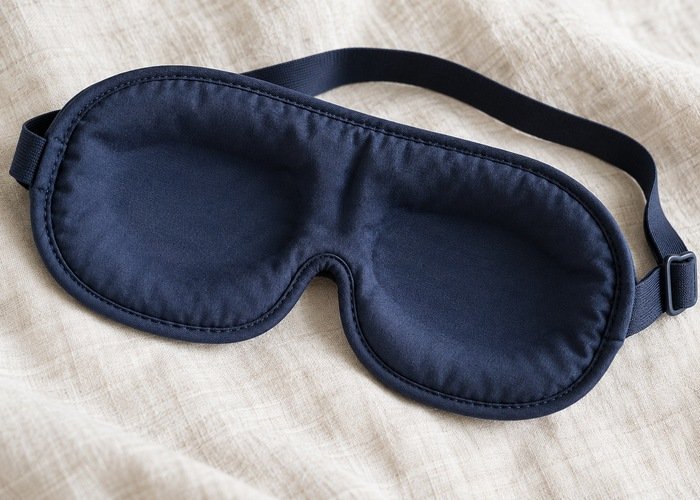
A flat mask generally relies on the fabric and strap to sit against the face, while a contoured design creates shaped space around the eyes. Neither shape is universally better. A contour may suit one person’s facial proportions and leave gaps or uncomfortable edges for another. Compare the actual internal shape rather than treating a molded cup as proof that there will be no pressure.
Do not pursue a complete blackout by tightening beyond comfort. Light at an edge may indicate that a different shape is needed, not that the strap needs more tension. A product that stays in place only when uncomfortable is a poor fit. There is no need to tolerate pressing, pulling, or a headache to justify a purchase.
A useful hypothetical comparison is between a soft flat mask with straightforward care directions and a deeper molded design with no lining information. The second may look more advanced, but it is harder to evaluate. Ask for the missing details before deciding. The additional shape is a feature to assess, not evidence that the product is safer or more suitable.
Inspect the strap and removal method while the mask is empty
Examine the adjustment mechanism with the mask on a table, not while someone is wearing it. Check whether the strap slides as intended, whether the fastening catches the lining, and whether the attachment stitching is intact. Follow the supplied instructions rather than forcing a buckle or stretching an elastic band to discover its limit.
Look at where a slider, hook-and-loop section, or other fastening would sit. A hard part near the temple or a rough section that catches hair can make an otherwise appealing mask inconvenient. Consider ordinary needs such as a hairstyle or hearing device without assuming a particular layout will work. Questions about compatibility are better resolved before purchase than by modifying the mask later.
For the simple accessories discussed here, independent immediate removal is essential. Do not add locks, knots, extra straps, or improvised attachments. Do not combine an eye cover with anything that restricts speech, breathing, hearing, movement, or the ability to remove it. This guide does not evaluate those arrangements, and an ordinary eye-mask inspection cannot establish their safety.
Keep choice separate from the accessory
Buying an accessory together, accepting it as a gift, or looking at it does not obligate anyone to wear it. Rape Crisis England & Wales explains consent as a freely made choice with the capacity to decide, including the right to change one’s mind. A previous agreement is not permanent permission.
Discuss whether the accessory is wanted before introducing it into a shared situation. Either adult should be able to decline without being asked to defend the decision. An eye cover is not a test of confidence, trust, or willingness to be adventurous. If someone dislikes having their view blocked, choose an alternative that leaves their sight unobstructed.
Keep ordinary communication available and respond to uncertainty by stopping. Do not insist on a special word before respecting a request to remove the mask. Silence or a lack of resistance is not a substitute for agreement. Where clear voluntary communication is not possible, leave the accessory unused rather than trying to interpret an ambiguous response.
Do not turn a shopping check into an obstacle course
Limiting vision changes awareness of the surroundings. Do not walk, use stairs, cook, drive, operate equipment, or navigate a bathroom while wearing an eye cover. Keep the product away from activities that depend on seeing hazards. A mask being sold as comfortable or lightweight does not make moving around without sight an appropriate test of it.
Do not use surprise handling or unexpected movement to demonstrate a product. The person evaluating it should stay in control of whether the evaluation happens at all. If wearing it feels disorienting, remove it. There is no need to keep it on to become accustomed to the feeling, and no universal trial duration establishes suitability.
The separate restraint inspection guide explains the limits of examining more restrictive accessories. It should not be read as a reason to combine them with an eye mask. Each additional restriction creates separate questions; a mask that passes an unloaded inspection does not approve any combined setup.
Recognize skin and eye concerns before blaming the fit
A rough seam or uncomfortable strap can be a straightforward product problem, but redness, itching, soreness, and other symptoms should not automatically be dismissed as a need for adjustment. Stop using an accessory that irritates you. Do not cover irritated or broken skin or use a mask to keep yourself from noticing an eye problem.
The NHS contact dermatitis overview explains that irritants and allergens can cause skin reactions and recommends assessment for persistent, recurrent, or severe symptoms. A label such as gentle or hypoallergenic cannot settle an individual’s response. Ask about the lining, dyes, finishes, and cleaning directions if you already know you react to a particular substance.
Eye symptoms need their own attention. The NHS dry-eye guidance describes symptoms such as grittiness, soreness, redness, and blurred vision, and identifies circumstances needing urgent help. Do not assume a new mask is a treatment for those symptoms. If you have an eye condition, recent procedure, or uncertainty about pressure near your eyes, ask an appropriate clinician before use.
For an injury, the NHS eye-injury guidance lists severe pain, changes in sight after injury, and chemical exposure among reasons for emergency assessment. In the UK follow its directions for A&E or 999; elsewhere use local emergency services. Do not continue experimenting with a product while trying to decide whether a serious symptom is only temporary.
Understand care symbols before adding water
Read the entire care label, including separate instructions for removable components. Washing, bleaching, drying, ironing, and professional cleaning are different decisions. GINETEX explains textile care symbols, which help interpret the operations allowed by a label. A washing symbol is not a general promise that every cleaning method is acceptable.
If the mask has no care directions, ask the seller or manufacturer rather than guessing from its color or softness. Similar-looking textiles can have different finishes, and assembled products may include padding or adhesives that need different handling. Do not apply a method meant for a silicone accessory to a layered fabric mask.
Use only the cleaning process permitted for that product, including its instructions about cleaning agents, rinsing, and drying. Do not improvise with bleach, disinfectant spray, perfume, or essential oils near a surface that will be worn around the eyes. Stronger-smelling is not the same as cleaner, and a fragrance can mask a problem without resolving it.
If washing is permitted, avoid assuming that aggressive rubbing, twisting, or added heat improves the result. Follow the specified method and inspect the item after drying. A changed shape, displaced padding, detached lining, or unreliable strap is a reason to keep it out of use. A freshly washed appearance does not cancel a structural defect.
Keep the clean side genuinely clean
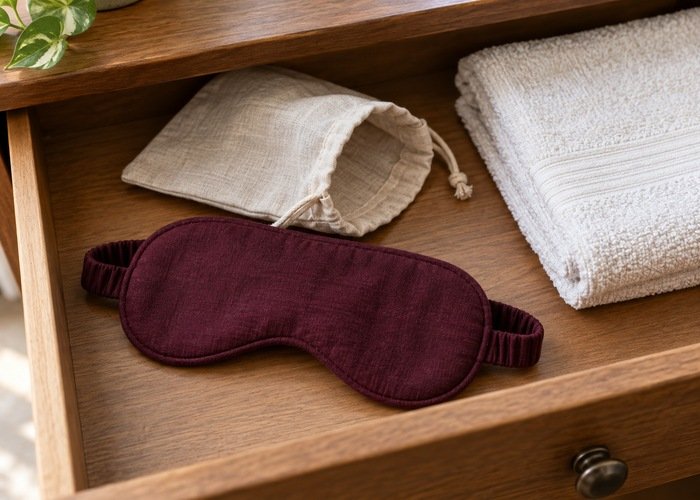
Store the mask only after it is dry according to its instructions. Choose a clean location where the lining will not rub against dirty objects, sharp fasteners, leaking toiletries, or loose cosmetics. A pouch can help organize the accessory, but the pouch also needs appropriate care. Putting a clean item into a dirty bag defeats the purpose of cleaning it.
Keep personal eye accessories separate instead of treating them as communal room supplies. If a mask has been used by someone else, do not assume shaking it out or spraying it makes it ready for you. Check whether the product can be appropriately cleaned and whether sharing is suitable at all. An item with uncertain care history may be better left unused.
Our general intimate-product storage guide covers organization, but the eye mask’s own textile directions take priority. Avoid crushing a shaped mask beneath heavier items or bending a rigid section to make it fit a small pouch. Storage should preserve its construction, not hide damage until the next time it is taken out.
A useful comparison table
| Detail to compare | Information worth having | Reason to pause |
|---|---|---|
| Intended use | A clear description of a simple fabric accessory | Unclear medical, sleep, or safety claims |
| Inner surface | Lining composition and photographs of seams | Only the decorative outer face is shown |
| Adjustment | A clear range and understandable mechanism | Fit depends on uncomfortable tension or improvised changes |
| Removal | Immediate independent removal | Locks, knots, or another person’s assistance are required |
| Care | Directions for the complete assembled product | Unclear washing or drying restrictions |
| Condition | Intact lining, stitching, and strap | Fraying, rough edges, shifted padding, or damage |
Use this table to compare evidence, not to assign a safety score. Several favorable features do not compensate for a serious unresolved problem. A beautiful lining does not make an unreliable closure acceptable, and an adjustable strap does not make unexplained care directions sufficient. Returning an unsuitable item is a valid outcome of careful shopping.
Ask about defects before you need to report one
Check how the seller handles a frayed seam, a broken adjuster, or an incorrect item before placing an order. Keep the receipt and model details. If a problem appears, a photograph of the equipment on a table should usually be enough to describe the visible construction issue. Do not send identifiable photographs of yourself wearing it when an object-only image can answer the question.
Clarify the difference between an ordinary change-of-mind return and reporting a faulty product under the seller’s current terms and applicable rules. Do not assume opening the packaging answers every return question. Ask for written instructions and avoid repairing a new defect yourself before discussing it, since modification can complicate both the condition and the support conversation.
Retire an item that cannot be cleaned as required or whose structure has deteriorated. Do not trim away load-bearing stitching, glue down the lining, or add a stiffer strap to prolong its life. A low-cost accessory can still cause an inconvenient or harmful problem when worn close to the eyes. Replacement is often more sensible than improvising a repair.
Frequently asked questions
Is a contoured mask always more comfortable?
No. Contouring provides a particular shape, not a universal fit. The internal dimensions, edging, lining, and strap position all matter. If a mask presses uncomfortably or must be overtightened to block light, consider a different design rather than assuming the shape needs to be forced into place.
Can I use a decorative blindfold for sleep?
Do not assume so. Check the stated intended use and directions for the exact product. Decorative fastenings or materials may not suit prolonged contact or sleep. This article does not assess sleeping safety or prescribe a wearing duration; ask the manufacturer and seek medical advice where an eye condition is relevant.
Does a care label prove the mask can be disinfected?
No. A care label tells you about permitted textile care, not necessarily a validated disinfection process. Do not substitute a stronger chemical or hotter wash to create a claim the manufacturer has not made. If suitable cleaning cannot be established, leave the item unused rather than guessing.
What if the person receiving it does not want it?
Respect that decision without requiring a trial. A gift is an invitation, not an obligation, and a product should not become a test of trust. If more research is wanted, browse the KissSelf product-care guides together, but make buying nothing an equally acceptable choice.
The strongest blindfold buying checklist is practical: clear intended use, an inspectable lining, comfortable construction, immediate removal, and care directions you can follow. Avoid exaggerated blackout or comfort promises, stop when something feels wrong, and keep medical questions separate from shopping advice. The right accessory is one that fits its owner without pressure or improvisation.