
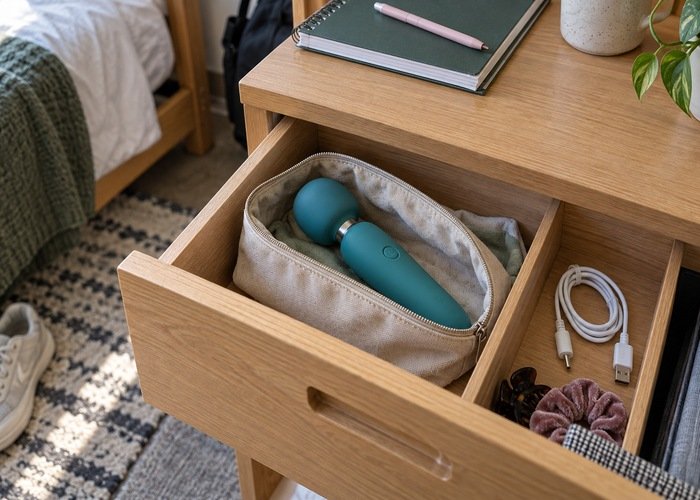
A dorm-friendly vibrator is not simply a small device with quiet in the description. For an adult living in university housing, it must fit a realistic ownership routine: private storage, a safe place to charge, access to proper cleaning and drying, and respect for everyone sharing the room. If one of those needs cannot be met, buying a more discreet-looking product does not solve the underlying problem.
This checklist is for adults aged eighteen and over. It covers consumer care and shared-living decisions, not sexual technique. Campus rules, room layouts, and personal circumstances differ, so check your own residence agreement rather than assuming any general guide overrides it. Privacy is important, but it should never require unsafe charging, rushed cleaning, or involving an unsuspecting roommate.
Before browsing KissSelf’s vibrator selection, mentally follow the product through an ordinary week. Where will the unopened parcel arrive? Where will you read the instructions? Can a clean device dry before being stored? What happens when the room must be packed for a holiday? Those questions often narrow a purchase more effectively than comparing the number of modes.
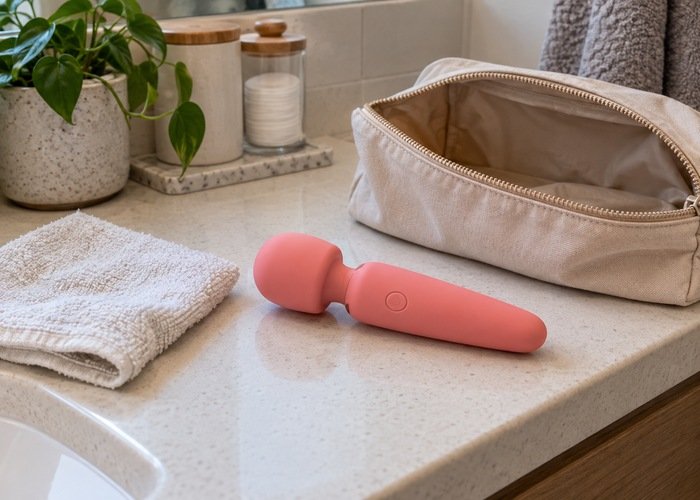
Map three places, not one hiding spot
Identify a storage place, an appropriate cleaning location, and a permitted charging surface. They do not have to be the same place. In fact, a closed drawer might work for a dry, switched-off product while being unsuitable for charging. A bathroom may allow cleaning but offer no appropriate electrical setup or private drying space.
Make the map specific enough to reveal friction. A clean personal pouch in your drawer is more useful than somewhere under the bed. Access to a bathroom at a quiet time is more realistic than assuming it will always be empty. If your plan depends on nobody ever entering a shared space unexpectedly, revise it before buying.
Do not borrow a roommate’s towel, cleaning products, chargers, or storage container without permission. A residence can have shared facilities without shared personal belongings. Keep the small supplies you need identifiable and separate. That reduces accidental mix-ups while also making it easier to notice when a cloth, pouch, or cable needs attention.
Choose for the care instructions you can actually follow
Read the cleaning directions before deciding that a particular shape is convenient. A smooth surface may be straightforward to inspect, but seams, detachable parts, charging contacts, and material restrictions still matter. A product that needs a care routine you cannot carry out privately and properly is a poor match for your current room, however appealing its other features.
Look for a clear model identifier, manufacturer contact, material information, and understandable directions. The Swedish Institute for Standards describes ISO 3533 as addressing design and safety requirements for products intended for genital or anal contact. Its existence does not certify every item in a store or establish that a vague listing meets the standard.
Ask a seller about missing information rather than treating small size as a safety credential. Can the complete product be washed as instructed, or must some components stay dry? Does its charging cover need a particular check? Which parts detach, and should they detach at all? A simple product with complete instructions can be easier to own than a more complex one with unanswered questions.
Our body-safe vibrator checklist provides broader purchasing questions. For dorm living, add one practical condition to each answer: can I do this in my actual accommodation without cutting corners? Do not buy on the assumption that you will invent a workaround after the parcel arrives.
Keep transport separate from clean storage
A toiletry bag can help carry an item to and from a shared bathroom, but carrying and storing are different jobs. If the bag has held a used product, treat the contact surface accordingly and clean it as its material allows. Do not place a freshly cleaned device into a dirty or damp pouch merely because the outside looks tidy.
Set a clean personal cloth on an appropriate dry surface rather than placing the device directly on a communal ledge whose condition you do not know. Keep it away from other people’s toiletries. After completing the manufacturer’s cleaning routine, allow the required drying before packing it away. A hurried wipe to avoid being seen is not a substitute for the specified method.
A shared room also makes it worth distinguishing personal ownership from sharing intimate products with a partner. Neither a roommate nor a partner should use your belongings without permission. The NHS STI guidance notes that infections can have no symptoms and testing is needed to know for certain. Appearance, trust, or a quick rinse cannot establish another person’s infection status.
If a health concern arises, contact an appropriate healthcare or sexual-health service rather than repeatedly changing cleaners. Pain, irritation, unexpected discharge, or uncertainty about an exposure is not a storage problem to solve with a different pouch. Keep the relevant product out of use until the situation is appropriately addressed.
A closed drawer is not a charging station
Privacy can tempt someone to charge beneath bedding, inside a bag, or behind a crowded drawer. Do not build concealment into the charging plan. Use the manufacturer’s charging equipment and directions on a suitable clear, dry surface, while following the residence’s electrical rules. If you cannot charge in an appropriate place, wait rather than hiding an active charging setup.
The U.S. Fire Administration’s college fire-safety advice warns against overloaded outlets and addresses safe use of power strips. This is general housing guidance, not approval of a particular intimate product or charger. In a room already serving a laptop, lamp, and other appliances, ask housing staff about permitted electrical arrangements instead of adding an improvised extension.
Keep the cable matched to its product. Similar magnetic ends or plugs can look interchangeable without having the required electrical compatibility. Do not force a connector, borrow a cable because it happens to attach, or use damaged insulation. If the supplied cable is missing, obtain the manufacturer’s specified replacement rather than guessing from a photograph.
Battery claims deserve the same care as material claims. UL Solutions explains battery safety testing across relevant standards and applications; a buyer still needs evidence for the exact product or component being discussed. A familiar connector or a generic battery symbol does not prove the whole device has a particular certification.
If a product becomes abnormally hot, swells, leaks, or behaves unexpectedly, stop using and charging it. Do not open a sealed casing or attempt a battery repair in the room. Keep clear of smoke or fire, alert others, and follow the building’s emergency procedure. Protecting your privacy should never delay an alarm or emergency assistance.
Quiet operation is a condition, not a guarantee
A noise claim may refer to one setting in one test environment. A small room can make clicks, a loose accessory, or vibration against furniture noticeable even when the motor itself seems subdued. Do not assume the word silent means nobody else will hear anything. Ask how a published sound claim was measured before comparing it with another product’s number.
You can inspect controls and listen briefly with an unused device in a private, appropriate setting, following its directions. That is not a soundproofing test, and it should not involve unsuspecting roommates. The purpose is to identify unexpected behavior or obvious contact noise, not to prove that a shared sleeping room becomes private whenever the motor sounds quiet.
Never cover a charging device with fabric to muffle sound or hide a light. Nor should you block ventilation, defeat alarms, or use loud masking audio that disturbs other residents. The practical answer to insufficient privacy may be postponing use. A quieter product cannot grant exclusive use of a room that someone else has an equal right to occupy.
For the broader difference between motor sound and transmitted vibration, see the quiet product shopping guide. Keep this dorm checklist focused on your actual constraints: house rules, shared schedules, and whether a private setting exists at all. Do not turn a product purchase into a plan for avoiding another person’s boundaries.
Discuss room privacy without disclosing intimate details
Roommates can agree on ordinary expectations about knocking, guests, quiet hours, borrowing possessions, and time alone without describing anyone’s sexual life. Keep the conversation mutual. A private-time request should not become a demand that another resident leave the room whenever you choose or lose access to essential belongings.
Agree how requests are made and how a person can say that a proposed time does not work. Avoid posting intimate details on a shared calendar or group chat. If the residence has a guest or privacy policy, use it as the baseline and resolve conflicts through the appropriate housing process. Do not assume a general roommate agreement overrides building access or safety rules.
Consider a hypothetical shared room in which both adults have irregular schedules. One usually expects privacy on a certain evening, but the other returns early after a canceled class. The sensible response is to stop and restore the shared room, not argue that a usual schedule amounted to permanent permission. A predictable routine is convenient, but it is not exclusive ownership of the space.
A small ownership kit can be more useful than extra features
Think in terms of necessary items rather than buying a large accessory bundle. The exact charging cable, an appropriate clean cloth, a suitable pouch, and access to the manual may be enough. Additional detachable pieces create more things to identify, clean, dry, and avoid losing during a room change. Purchase them only if they serve a real need.
Keep care products in their original labeled containers so directions and ingredients remain available. Transferring a liquid into an unmarked travel bottle may save space while making it harder to tell it apart from another toiletry. If you do decant an allowed product for travel, preserve accurate identification and do not guess at compatibility later.
A lockable container can protect personal belongings from casual access, but it does not make damp storage or charging inside it appropriate. Choose a container that allows a clean, dry, switched-off product to rest without crushing its controls or cable. Follow the manufacturer’s storage instructions and keep electronics separate from leaking liquids.
Use a room-specific decision table
| Your actual constraint | Useful buying question | Reason to postpone |
|---|---|---|
| Shared bathroom with little counter space | Can the prescribed cleaning and drying routine be completed without using others’ belongings? | No appropriate clean surface or drying arrangement |
| Very limited outlets | Is the specified charging setup permitted and practical? | Charging would require concealment or improvised electrical connections |
| Shared sleeping room | Is there a mutually acceptable private setting? | A plan depends on a roommate not noticing |
| Frequent room changes | Can the exact cable, manual, and clean product stay together? | Parts are easily mixed with unrelated equipment |
| Little storage space | Can a dry product fit without pressure on buttons or seals? | The only available space is damp or compresses the device |
Read the final column as a genuine option, not a challenge to overcome at any cost. A product may fit a future apartment better than your current dorm. Waiting can prevent buying something that spends the term unused or encourages unsafe shortcuts. There is no obligation to make the most feature-heavy model work in an unsuitable room.
Plan for maintenance visits and the end of term
Housing staff may need access under the residence’s established policies. Keep personal belongings organized without obstructing access, exits, alarms, or maintenance equipment. Do not hide electronics inside building fixtures or behind electrical panels. A normal personal-storage space is more sensible than a complicated hiding place that creates a hazard or damages property.
Before moving, clean and dry the product as directed, switch it off, and use its documented travel-lock feature if available. Keep its correct cable with it but disconnected. Check that a packed object cannot press its buttons. Our traveling with intimate products guide covers additional planning; airline and destination requirements need a fresh check for each journey.
Do not discard a rechargeable device in a communal rubbish bin out of embarrassment. The U.S. EPA’s lithium-ion battery guidance directs these batteries and devices containing them away from household rubbish and municipal recycling. Ask an appropriate local electronics or battery collection service what it accepts, and obtain specific instructions for a damaged battery. Do not dismantle a sealed product just to conceal what it is.
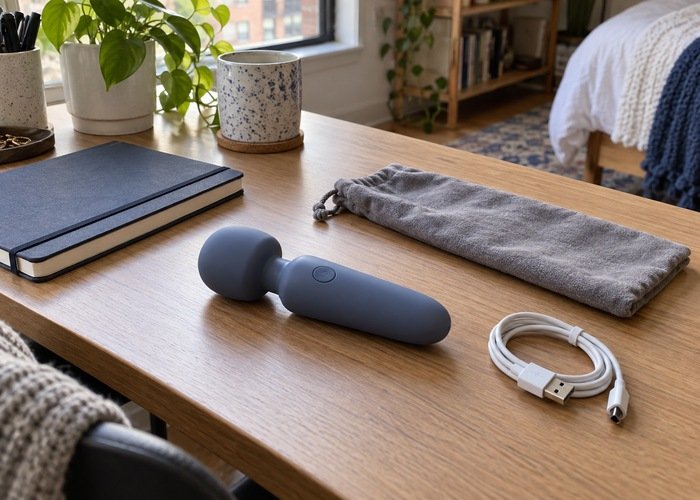
What to ask a seller before checkout
Ask for the device’s complete dimensions, including any case, not only the length of its main body. Check whether the cable or charger is included and what replacement support exists. Request the cleaning instructions and confirm which parts must remain dry. These answers help determine whether the product fits your room more honestly than a discreet label does.
If delivery privacy matters, read the current packaging and dispatch policy and ask about uncertain details. Do not assume the outer packaging, payment description, email receipt, and collection notification all use the same wording. A campus mailroom may have identification or collection requirements independent of the seller. Plan lawful, ordinary collection rather than inventing a false recipient.
Check return and defect-reporting terms before opening the package. Hygiene-related restrictions may affect an ordinary change-of-mind return, while damage or a malfunction can involve a different process. Obtain the seller’s current terms rather than assuming a general rule applies everywhere. Keep receipts and model details without leaving passwords or payment information in a shared folder.
Frequently asked questions
Is a charging case always better in a dorm?
No. A case may help organize parts, but its charging and ventilation directions still apply. It takes up space and adds another component to maintain. Compare the full ownership routine rather than assuming enclosed means safer or more private. A case also does not remove the need for a permitted charging location.
Can I store a just-cleaned product in its pouch immediately?
Only after completing the manufacturer’s drying requirements and ensuring the pouch is suitable and clean. Damp storage is not made appropriate by discretion. If your accommodation makes proper drying impossible, reconsider the product or postpone use rather than sealing it away wet to keep it out of sight.
Do I need to explain the product to my roommate?
You can discuss ordinary boundaries around belongings, guests, privacy, and shared facilities without disclosing intimate details. Respect their access to the room and their right not to be involved in sexual activity. If a conflict cannot be resolved mutually, seek appropriate housing advice rather than relying on secrecy or pressure.
What makes a product genuinely dorm-friendly?
Clear instructions, manageable care, appropriate storage, dependable controls, and a charging arrangement you can follow safely matter more than a marketing label. A suitable choice fits the room and its people without special exceptions. Keep the general storage checklist handy, but make the final decision using your actual residence conditions.
A dorm-friendly vibrator checklist should make ownership simpler, not make concealment more elaborate. For adult students, the strongest plan respects shared space, keeps hygiene and charging separate from secrecy, and includes moving and eventual disposal. If those pieces do not fit, waiting or choosing a different product is a practical decision.