
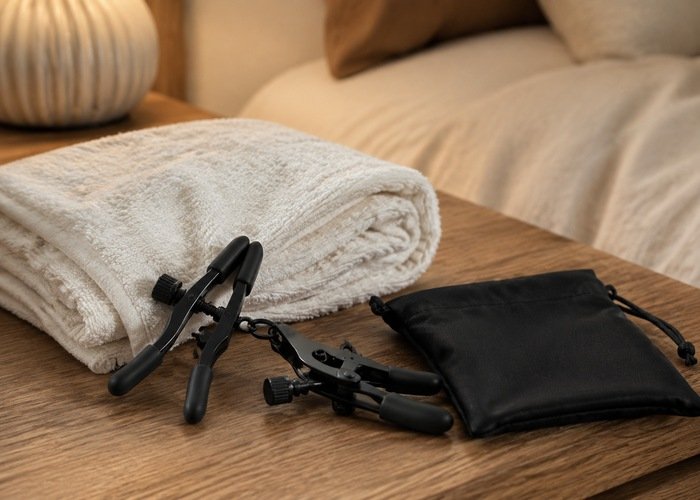
A nipple toy fit guide should begin with what can go wrong, not with a promise that a particular shape suits everyone. Before choosing a clamp-style product, confirm its contact materials, inspect the padding, understand the adjustment mechanism, and make sure the release can be operated easily. A small accessory still needs clear instructions. Soft-looking tips or a beginner label do not establish a safe pressure or guarantee comfortable use.
This is a product-selection and inspection guide for adults, not a set of instructions for increasing pressure or tolerating discomfort. It does not supply a universal wearing time, a number of screw turns, or a household test that proves a clamp is safe on tissue. If a product causes pain, numbness, unusual color change, swelling, bleeding, or other concerning symptoms, stop and remove it using its intended release. Seek medical advice for persistent or severe symptoms.
Use the KissSelf shop to identify the exact item, then compare the manufacturer information rather than choosing by photograph alone. A useful listing identifies the metal or other structural material, the contact-pad material, the adjustment method, and the care instructions. If those details are missing, ask before ordering. A low purchase price does not make undocumented construction a reasonable tradeoff.
Distinguish the contact surface from the mechanism
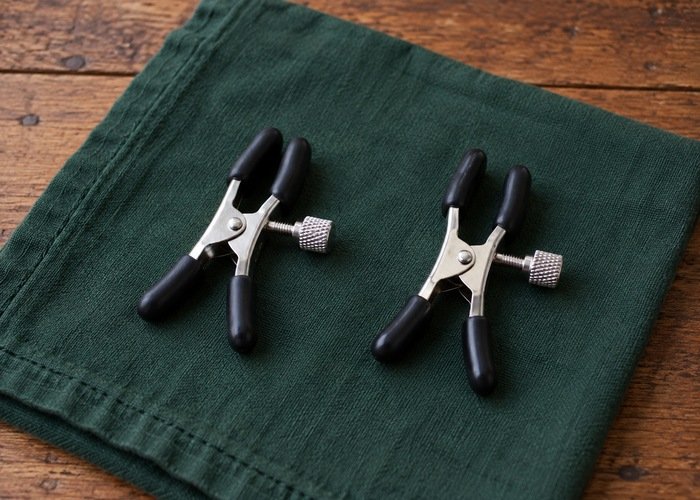
Look at the part that would touch skin separately from the part that creates or adjusts the grip. A product can have a smooth-looking padded tip attached to a rough edge, exposed fastener, or poorly aligned arm. The whole contact path matters. Ask for a close photograph of both sides of the tips and the release area if the listing shows only the decorative front.
Padding should be intact, seated as the manufacturer intends, and free from visible tears or loose edges. A cover that slides away can expose a different underlying surface. Do not assume a removable pad is optional, and do not operate a product with a missing pad unless its instructions explicitly describe that configuration. Replacements should be approved for the exact model rather than selected because they appear similar.
Check whether the product uses spring tension, an adjustable stop, a screw mechanism, or another arrangement. The adjustment control may limit movement rather than directly measure pressure. A numbered position, if present, is not automatically a calibrated force reading. Ask the manufacturer what the setting actually represents. The purpose of this distinction is to avoid treating a familiar-looking mechanism as a reliable measurement instrument.
Material names need to be specific enough to act on
Terms such as metal, soft rubber, premium finish, or skin friendly are incomplete descriptions. Ask what the structural metal is, what coats it if anything, and what material forms the contact pads. If an allergy or previous reaction matters to your decision, explain the relevant material concern to the manufacturer and your clinician rather than guessing from color or shine.
The American Academy of Dermatology advises people with nickel allergy to avoid nickel-containing objects. A shiny surface is not evidence of a nickel-free product, and a coating does not establish that every exposed component is suitable for someone with that allergy. Ask for a meaningful material answer. Do not use nail polish, tape, or an improvised coating as a substitute for choosing an appropriate product.
Material compatibility also affects cleaning. A metal frame, soft pad, decorative finish, and adhesive may have different limits. A method suitable for one part may be unsuitable for the assembled accessory. Our sex toy materials guide gives broader context, but the manufacturer must explain care for the actual combination of materials in the item you own.
Compare useful adjustment with merely visible adjustment
For example, imagine comparing two listings that both say adjustable. One supplies a close-up of the mechanism, names the contact material, and explains removal. The other supplies only a front view and a broad comfort claim. The second listing has not become equivalent simply because it uses the same adjective. Ask for the missing information before comparing appearance or included accessories. If the answer describes a different product, keep that discrepancy visible in your notes instead of filling the gap with assumptions from the better-documented model.
| Feature to inspect | Question to answer | Reason to reject or pause |
|---|---|---|
| Adjustment control | What changes when the control is moved? | The effect is unclear or the instructions contradict the mechanism. |
| Contact pads | Are they intact and correctly seated? | Missing, torn, displaced, or visibly deteriorated padding. |
| Alignment | Do the contact surfaces meet as the manufacturer describes? | Twisting, a sharp exposed edge, or unexpected unevenness. |
| Release | Can you identify and operate the intended release off the body? | Sticking, excessive difficulty, or a missing required component. |
| Decorative parts | Can they catch on clothing or obstruct access? | Loose pieces, damaged links, or anything that interferes with release. |
| Documentation | Does the manual match this exact product? | A generic diagram or instructions for a different mechanism. |
An adjustable design can offer a useful way to change its opening or limit, but the presence of an adjustment does not make it suitable for everyone. A very small screw may be difficult to handle. A smooth control may be hard to distinguish from nearby hardware. Think about whether you can operate the actual part accurately and release it without relying on someone else to identify an unfamiliar sequence.
Do not make a product fit by bending its arms, filing its tips, stretching a spring, or adding a homemade spacer. Those changes alter the mechanism and may create new edges or unpredictable movement. If the documented adjustment does not provide a suitable arrangement, choose a different product or do not use a clamp-style item. The correct response to an unsuitable design is not more improvisation.
Understand the release before considering use
Locate the manufacturer’s release instructions while the accessory is off the body. Identify which parts you are meant to hold and which action opens the contact area. Keep the check within the ordinary movement described in the manual. This is a familiarization step, not a stress test, and it cannot prove that a particular setting is safe on skin.
If the mechanism sticks, closes unevenly, or requires an unexplained amount of effort, stop the inspection and contact the seller. Do not add lubricant to the hardware unless the manufacturer specifically directs it; an improvised treatment may reach the contact pads or change how the mechanism behaves. A product that is difficult to release when you are simply inspecting it is not ready for use.
Any adult who may handle the accessory should understand the same release action and agree that stopping does not require debate. Keep the release accessible and avoid arrangements that block the owner’s ability to communicate or obtain help. Do not use a clamp-style product when intoxication, sedation, reduced awareness, or a medical condition prevents reliable recognition of a problem.
Do not use sensation loss as a sign of a better fit
Numbness and tingling are not useful targets for a fitting exercise. The NHS explains that pins and needles can involve tingling or numbness and advises medical review when it persists or recurs. That general guidance does not establish a safe clamping threshold. If altered sensation occurs in connection with a pressure accessory, remove the source of pressure and seek advice when symptoms do not settle or are concerning.
Do not borrow a wearing-time rule from an online comment or use a timer to override symptoms. The absence of pain does not prove that pressure is harmless, especially when sensation is reduced. If you have an existing condition affecting sensation, circulation, skin integrity, or healing, ask a qualified clinician whether this type of product is appropriate before considering it.
Similarly, do not use numbing products to make an uncomfortable accessory tolerable. They can interfere with the feedback you need to recognize a problem. An accessory should not require you to ignore discomfort, conceal injury, or keep testing an area that is already irritated. Choosing not to use it remains a valid outcome of a careful product assessment.
Separate irritation from a mechanical fit problem
Redness, itching, burning, and tenderness do not all have the same cause. Pressure, friction, a cleaning residue, a material reaction, or an unrelated health condition may be involved. Do not diagnose the cause by repeatedly trying the same product with slightly different adjustments. Stop exposure and keep the product and its packaging available so a clinician or the manufacturer can identify what was involved.
The NHS contact dermatitis guidance describes skin reactions caused by irritants or allergens and recommends medical assessment for persistent, recurrent, or severe symptoms. Use that information to recognize when a product-choice problem has become a health question. Replacing a pad or changing a cleaner without understanding the reaction is not a reliable way to identify its cause.
For owners comparing several accessories, keep the material information for each separate. A successful experience with one product does not establish compatibility with another that uses different pads or finishes. Our body-safe product information checklist concerns vibrators, but its documentation questions can help you distinguish a specific material statement from a vague safety claim. It is not a certification of clamp-style products.
Inspect new items before discarding the packaging
Check that the delivered model matches the order, that both items in a pair are present where applicable, and that the instructions identify the same mechanism. Inspect the pads, arms, hinges, and decorative connections under ordinary good lighting. You are looking for visible damage or inconsistencies, not trying to evaluate manufacturing tolerances without the manufacturer’s specifications.
If one item in a pair looks or moves differently from the other, photograph the difference and ask support whether it is expected. Do not assume that tightening both to the same position makes them equivalent. Separate mechanisms can behave differently, and a position marking is not a clinical pressure measurement. Keep any suspect item out of use until the question is resolved.
Retain the order reference and the supplied product information. Ask how missing pads, damaged finishes, or release faults are handled under the applicable terms. Do not assume opened intimate products are eligible for ordinary change-of-mind returns. Clarifying the fault-reporting route before discarding packaging makes it easier to obtain a precise answer if something is wrong.
Clean only as the manufacturer permits
Follow the product’s stated cleaning method for the complete accessory, including any restrictions on removable pads or decorative parts. Do not boil, soak, disinfect with a stronger chemical, or use abrasive tools merely because the frame appears to be metal. A finish, adhesive, or soft contact component may have different limitations from the material underneath.
Pay attention to the accessible areas around the pads and adjustment mechanism. If the instructions do not explain how to clean a relevant recess, ask the manufacturer rather than forcing a tool into it. Rinse or remove cleaning residue as directed and allow the specified drying process to finish before storage. Do not reassemble damp removable parts simply to keep the set together.
Cleaning does not repair damage. A pad that has split, a coating that is peeling, or a mechanism that has become unreliable needs an appropriate replacement or retirement decision. Keep care products in their labeled containers so they are not confused with lubricant or another liquid. The KissSelf care and buying guides are useful background, but product-specific instructions take priority over general advice.
Know when the question needs medical attention
New or unexplained nipple pain should not automatically be attributed to the last accessory used. Cleveland Clinic describes several possible causes of sore nipples and highlights associated symptoms such as discharge or a breast lump as reasons to seek care. Stop using the accessory and arrange appropriate assessment rather than treating a mechanical adjustment as a diagnosis.
If skin is broken, do not reapply the accessory over the injury. Follow appropriate wound care and seek help for concerning symptoms. The NHS cuts and grazes guidance identifies uncontrolled bleeding, significant loss of feeling near a wound, and large or deep wounds as reasons for emergency care; increasing pain, swelling, or pus also warrants medical attention. Use local emergency services when needed.
Keep the product details available when seeking advice, but do not delay care to find a receipt or contact the seller. A manufacturer can answer material or mechanism questions; it cannot assess an injury remotely as a substitute for a clinician. Persistent altered sensation, severe pain, or marked color change deserves urgent assessment even if the skin does not show an obvious cut.
A short decision record before buying
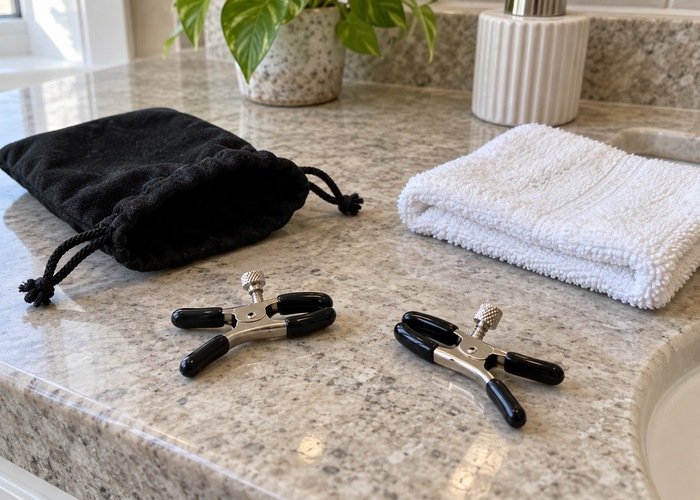
Store a cleaned, fully dry accessory where its pads are protected and the mechanism cannot catch on unrelated items. Keep it away from children and pets, and separate it from damaged or uncleaned products. The sex toy storage guide discusses drying and protective storage in more detail. A pouch is a storage aid, not a substitute for cleaning or a way to conceal an unresolved fault.
- Identify the exact frame, coating, and contact-pad materials.
- Confirm that the adjustment method and release instructions match the delivered product.
- Reject missing, loose, damaged, or deteriorated contact pads.
- Check that decorative parts do not obstruct handling or create snagging concerns.
- Obtain a complete cleaning and drying procedure.
- Keep replacement and fault-reporting information with the model reference.
- Choose not to use the product when health concerns or unclear instructions remain unresolved.
This record should not become a certificate of safety. It helps you notice missing information and decide whether a product is suitable to consider at all. If you cannot operate the release comfortably, do not understand the adjustment, or cannot obtain a meaningful material answer, those are sufficient reasons to choose another option.
Frequently asked questions
Does thicker padding guarantee a safer clamp?
No. Padding is only one part of the construction. Its condition, attachment, material, the underlying mechanism, and the owner’s health all matter. Soft appearance cannot establish a safe pressure or wearing time, and damaged or displaced padding should not be ignored.
Can I use a fixed number of turns to reproduce a setting?
Do not treat screw turns as a universal pressure measurement. Follow the exact product instructions, and do not assume a marking means the same thing across different models or individual mechanisms. A written number cannot override pain, numbness, skin changes, or difficulty releasing the product.
What if an accessory keeps slipping?
Do not automatically tighten it further or add improvised materials. Stop and review the manufacturer’s fit instructions. The design may be unsuitable, a part may be incorrectly seated, or the product may be damaged. A clamp-style accessory is optional; it does not need to be made to fit at any cost.
What is the most important buying check?
There is no single feature that replaces the others. A useful nipple toy fit guide combines clear materials, intact contact surfaces, an understandable mechanism, accessible release, and realistic health boundaries. Missing essential information is a reason to pause the purchase, not an invitation to experiment.