A confident intimacy tip can arrive in a thirty-second video, a group chat, or a beautifully designed article. Before acting on a health claim, find its original source, check who reviewed it, and ask whether it addresses your situation. A useful tip should survive those questions without demanding an immediate purchase or a change to your care.
This guide is for adults who want a practical way to read online intimacy advice. It is a source-checking routine, not a test of your intelligence. You do not need to become a researcher to decide that a claim needs more explanation.
First, write down the actual claim
Imagine a short video saying a particular routine will solve every couple’s intimacy difficulties. Before opening another tab, write one sentence describing what it promises. Is it offering a conversation idea, describing somebody’s preference, or claiming to prevent or treat a health problem? Those are different kinds of statements.
A conversation prompt can be something you choose to discuss. A treatment claim needs medical support. A personal success story tells you what someone reports experiencing; it does not establish what caused the result or what will happen for you. When a post mixes these categories, separate them before deciding what to do.
Keep the wording precise. “This person likes a small device” is different from “small devices treat discomfort.” Our guide to separating product features from promises addresses the shopping side of this distinction.
Follow the link beyond the screenshot
Open the source the post names. Does it lead to a complete health article, an actual research report, another influencer, or a store? Look for the sentence supporting the claim. If a link only reaches an organization’s homepage, search within that site for the specific topic instead of assuming the organization endorsed the post.
the National Library of Medicine’s source-checking tutorial explain why original sources, identifiable reviewers, and supporting references matter. Apply those checks to the precise statement you saved, rather than to the general reputation of the person sharing it.
For example, an article might discuss communication while the social caption adds a claim about curing pain. Finding the article does not validate the extra promise. Save the source title and the relevant passage together; this makes it easier to explain where the mismatch happened.

Check responsibility, review, and context
Find the author or organization, the review information, and the date. A professional title is a starting point for checking relevant expertise, not a reason to skip the rest of the page. Also ask what the page is trying to accomplish and whether commercial interests are clear.
MedlinePlus recommends checking ownership, evidence, review processes, and currency, then comparing with other reliable information. A polished layout and a recent-looking headline do not answer those questions by themselves.
Here is a simple note format you can use while reading. Leave a field blank when you cannot find the answer; the blank is useful information, not something to fill with a guess.
- Claim: What exactly is being recommended?
- Origin: Where was the supporting information first published?
- Review: Who prepared or checked it, and when?
- Scope: Which people or situations does it describe?
- Missing piece: What would I need to know before using it?
If the post cites a poll, separate the popularity question from the health question. Reading intimacy survey results carefully can help with that narrower task; a majority preference is not a personal requirement.
Notice when education turns into a sales pitch
A page can contain both useful information and a commercial recommendation. Read each part on its own terms. A product specification can describe a control or a charging method; it cannot establish a treatment benefit simply because it appears beside educational text.
NCCIH’s guide to news and advertising helps readers recognize commercial context. On a social feed, ask whether the post makes the relationship between the advice and the sale clear. You can pause a purchase while still keeping a useful question from the article.
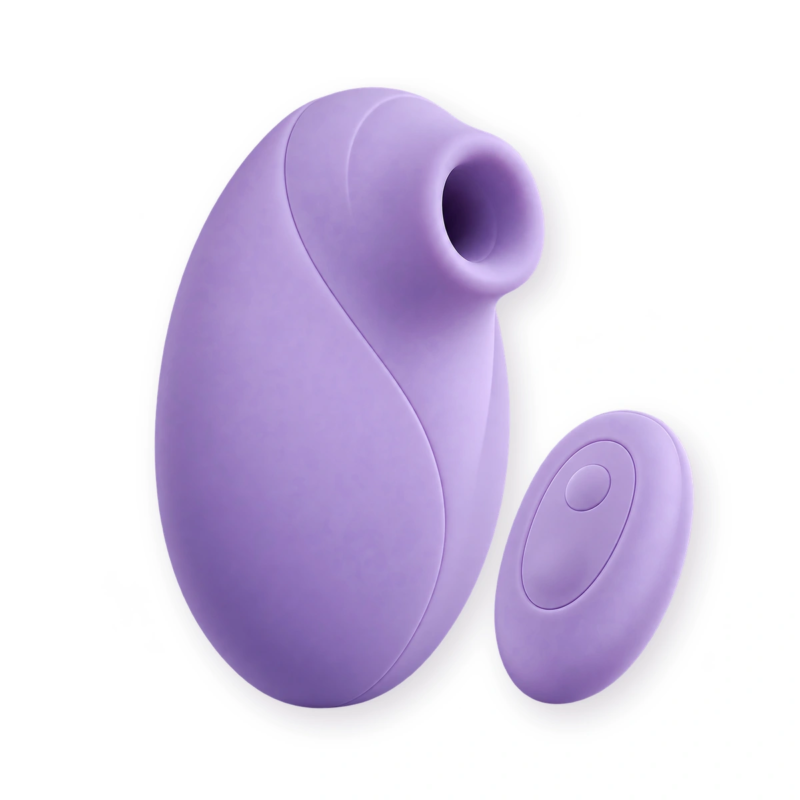
For a concrete shopping example, the item below is a commercial product reference from this store, not evidence for a health claim. Its listing describes remote control and rechargeable convenience. Those are details to verify against your practical needs, not proof that it will solve an intimacy concern.
A credible source still needs a personal question
Even a well-supported general explanation may not settle your decision. Write down the part that applies to you and the part that remains uncertain. You might ask, “Does this advice address my concern, or only a situation that sounds similar?” Avoid turning an online description into a diagnosis.
If your concern involves ongoing discomfort or a proposed change to medical care, bring the original link and your question to a qualified clinician. Our guide to preparing an intimacy-discomfort appointment offers a way to organize that conversation.

Share a question without creating pressure
When showing a partner something you found, try: “This raised a question for me. Would you like to look at the source together?” That invitation leaves room for curiosity, disagreement, or declining the discussion. A saved article is not an agreement to try what it describes.
You can keep an uncertain tip in a private reading list without adding it to a shared plan. If you use a shared intimacy wish list, distinguish “interesting to read” from “something we both want.” For more practical conversations, browse the Sex Education articles with the same critical questions you would bring to any commercial website, including this one.
Questions about checking online advice
A few decisions that often come up while checking a source.
Does a doctor appearing in a video make the advice reliable?
Check the claim and its supporting source as well as the speaker. Relevant qualifications help you evaluate responsibility, but a short clip may leave out the context needed for your decision.
What if the article has no references?
Look for an identifiable original source and an explanation of how the information was reviewed. If you cannot find support for a health claim, leave it unverified rather than treating confident wording as proof.
Should I send an uncertain tip to my partner?
You can describe it as a question rather than a recommendation, or wait until you find the source. Do not present an unverified claim as something your partner needs to follow.
Can a product page answer a medical question?
It can provide product facts and instructions. Those facts do not replace an individual clinical assessment. Keep a product decision separate from a question about symptoms or medical care.