Menopause intimacy doesn’t have to mean the end of a satisfying sex life — for millions of women, it marks the beginning of a more informed, intentional one.
The conversation around midlife sexuality is long overdue for a reframe. Too often, women encounter changes in their bodies and interpret them as personal failures or inevitable decline. The reality is far more clinical — and far less shameful. Vulvovaginal Atrophy (VVA) is a common physiological change, not a personal failing. It occurs when declining estrogen levels reduce the density and elasticity of vaginal tissue while simultaneously diminishing natural moisture production. The result is a cascade of physical changes — dryness, sensitivity, and discomfort — that directly affect intimate health. According to The North American Menopause Society, approximately 50% of postmenopausal women experience VVA, yet many never discuss it with a healthcare provider.
Estrogen depletion is the central mechanism driving these changes. As ovarian estrogen production slows during perimenopause and eventually stops post-menopause, vaginal tissues thin and collagen production decreases. Blood flow to the vulvovaginal region diminishes, reducing both natural lubrication and the body’s capacity for arousal response. Understanding this process helps women recognize that what they’re experiencing has a biological explanation — and, importantly, evidence-based solutions. Simple interventions, like choosing the right lubricant for comfort, can meaningfully reduce friction-related discomfort and restore confidence in intimate settings.
The broader reframe worth embracing is shifting the narrative from “loss of libido” to “change in physiological response.” Sexual wellness in midlife isn’t about restoring a younger version of desire — it’s about understanding a new physiological baseline and working with it. As Loyola Medicine notes, sexual health remains a vital pillar of overall wellbeing and longevity, connected directly to emotional resilience, relationship quality, and self-image. The next step is understanding exactly why these changes happen — and what drives them at a deeper biological level.
Why Intimacy Changes: The Science of Perimenopause and Sex Drive
Understanding why desire shifts during midlife is the first step toward reclaiming it — and the biology is more nuanced than most women are told.
Perimenopause and post-menopause affect desire in fundamentally different ways. During perimenopause, fluctuating estrogen and progesterone levels create an unpredictable hormonal landscape. Some women experience a surprising increase in libido during this phase — a “sex surge” often attributed to dropping progesterone levels, which can temporarily amplify testosterone’s effect on desire. Post-menopause, however, estrogen depletion becomes the dominant factor. As scientific research confirms, hormonal contributors to low sexual desire are closely tied to the physiological impact of estrogen depletion on vaginal health — thinning tissue, reduced lubrication, and diminished sensitivity.
The pain-desire feedback loop is one of the least-discussed but most damaging cycles in menopausal sexual health. Physical discomfort during intercourse — whether from dryness, thinning vaginal walls, or reduced blood flow — creates a conditioned psychological response. The brain begins to associate intimacy with pain, and avoidance becomes the default. Over time, that avoidance deepens the physical symptoms, because reduced stimulation further decreases circulation to vaginal tissue. Breaking this loop requires addressing both the physical trigger and the anticipatory anxiety simultaneously.
Blood flow plays a central, often underestimated role here. Estrogen actively supports vascular function in vaginal tissue; without it, engorgement during arousal becomes slower and less complete. Choosing the right lubricant for menopausal women — ideally hormone-free, pH-balanced options — can meaningfully reduce friction-related discomfort and help interrupt the pain cycle. A well-matched formula matters more than most people realize; our guide to selecting the right lube breaks down what to look for.
For women experiencing that perimenopausal sex surge, the priority is capitalizing on heightened desire before tissue changes accelerate. Regular arousal during this window isn’t just pleasurable — it’s protective. Which leads directly to one of the most compelling principles in midlife sexual health.
Insight: Pain during sex is not inevitable, nor is desire loss permanent. Both are physiological responses to hormonal shifts — and both respond to intentional, consistent intervention.

The ‘Use It or Lose It’ Principle: Maintaining Elasticity and Blood Flow
Regular sexual activity isn’t just about pleasure — it’s a clinically recognized strategy for preserving vaginal tissue health and sustaining menopause and sex drive well into midlife and beyond.
As the previous sections established, declining estrogen reshapes the vaginal environment in measurable ways. What’s equally important to understand is that consistent stimulation actively counters this process. Harvard Health Publishing notes that the ‘use it or lose it’ principle is well-supported: regular sexual activity and arousal help maintain vaginal elasticity and promote localized blood flow during the menopausal transition.
The biological benefits of consistent stimulation include:
- Improved circulation: Arousal triggers vasodilation in pelvic tissues, delivering oxygen-rich blood to the vaginal walls and helping counteract the atrophy that reduced estrogen accelerates.
- Maintained elasticity: Repeated, gentle tissue expansion during arousal preserves the natural stretch and suppleness of vaginal tissue, reducing the risk of micro-tears and discomfort during intercourse.
- Neurological responsiveness: Regular stimulation keeps nerve pathways active, supporting sensitivity and the body’s capacity for natural lubrication over time.
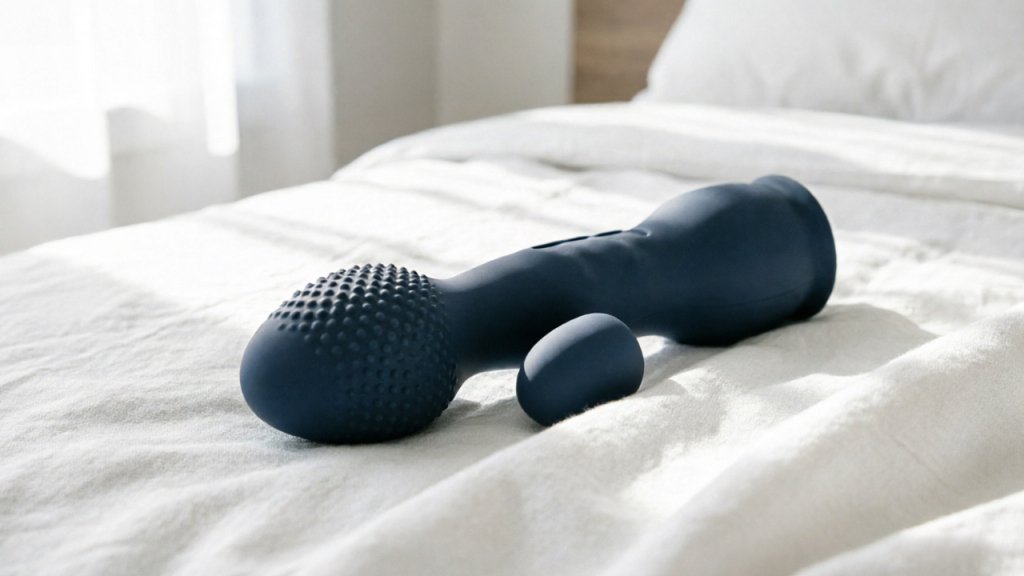
Pleasure, in this context, is a functional health requirement — not an indulgence to be deprioritized. One practical approach gaining clinical attention involves using devices that deliver consistent, high-frequency stimulation. Automated movement patterns can provide the kind of reliable, rhythmic engagement that manual stimulation alone may not sustain, particularly when fatigue or reduced grip strength becomes a factor. For women exploring this approach with a partner, using a vibrator together can feel more intuitive than expected and opens a new dimension of shared wellness.
Keeping stimulation consistent — whether solo or partnered — is less about frequency as a goal and more about maintaining the biological conditions that support comfort and pleasure long-term. That foundation becomes especially important when choosing the right supporting products, starting with something most women overlook: the lubricant itself.
Beyond Basic Lubrication: Selecting High-Performance Formulas
The lubricant you choose during menopause isn’t just a comfort measure — it’s a functional tool that can meaningfully protect vulnerable tissue and sustain intimacy through hormonal shifts.
Most standard drugstore lubricants are formulated for a general, pre-menopausal audience — and that’s a problem. Two metrics most consumers never see on the label — osmolality and pH — determine whether a product supports or quietly damages thinning vaginal tissue. Menopausal tissue is most comfortable at a pH between 4.5 and 5.5, mirroring the vagina’s natural environment. Many cheap, heavily marketed formulas run far more alkaline, disrupting the tissue’s fragile ecosystem and accelerating the irritation they’re meant to prevent.
Water-based vs. silicone-based is the first meaningful choice to make. According to the Mayo Clinic, both are clinically recommended as first-line non-hormonal treatments for dyspareunia — the painful intercourse that affects so many women navigating declining perimenopause sex drive. Water-based formulas are versatile and compatible with most intimate devices, but they absorb quickly and often require reapplication. Silicone-based formulas last significantly longer and provide a silkier, more sustained glide — beneficial for women who find interruptions disruptive to arousal.
What to look for on the label: Choose formulas that are glycerin-free, paraben-free, fragrance-free, and pH-balanced (4.5–5.5). Avoid anything listing propylene glycol in the first several ingredients.
Glycerin and parabens deserve particular attention. Glycerin, a common humectant, can metabolize into sugars and encourage bacterial or yeast imbalance in already-sensitized tissue. Parabens, widely used as preservatives, are increasingly scrutinized for their interaction with hormone-sensitive tissue — a genuine concern for women in midlife transition.
Framing lubricant as a passive fix undersells its role. Used intentionally, it enhances every aspect of the physical experience — and as we’ll explore next, pairing the right formula with today’s advanced pleasure technology unlocks a new dimension of possibility entirely.
Technological Solutions: The Role of Automated Pleasure Devices
High-tech intimate devices are rewriting what’s possible for sex during menopause — addressing biological changes that lubricants and lifestyle shifts alone can’t fully resolve.
As Dr. Lauren Streicher notes, “Sexual health is a vital part of overall well-being, and menopause should be viewed as a transition into a new phase of sexual exploration.” Modern pleasure technology makes that exploration genuinely practical.
Reduced nerve sensitivity is one of menopause’s most frustrating side effects — and 3-in-1 devices designed to combine tapping, vibrating, and suction functions are built specifically to counter it. Rather than relying on a single stimulus, these layered sensations reach nerve endings through multiple pathways simultaneously, increasing the likelihood of arousal response even when individual sensory thresholds have shifted. For many women, the redundancy of sensation is what finally moves the needle.
Automated thrusting mechanisms solve a problem that rarely gets discussed openly: physical fatigue. Whether solo or partnered, sustaining manual stimulation long enough to reach arousal during menopause can be exhausting. Devices engineered with rhythmic, consistent thrusting remove that barrier entirely — maintaining engagement without requiring continuous physical effort from either partner. Pair this functionality with evidence-based guidance on maximizing internal stimulation, and the results can be transformative.
Material matters as much as mechanism. Menopausal skin and mucous membranes are measurably more sensitive to irritants. Medical-grade silicone — non-porous, hypoallergenic, and body-safe — is the clinical standard for this demographic. Brands like Kissself have built their device line around this requirement, prioritizing skin compatibility alongside performance.
Kissself’s signature ‘flapping vibration’ technology adds another dimension entirely. Unlike standard oscillation, flapping vibration mimics a broader, wave-like motion that distributes sensation across a wider surface area — particularly useful when localized sensitivity has diminished. The effect is less targeted pressure and more full-contact stimulation, which many women find more satisfying at this stage.
Of course, technology is only part of the equation. How you bring these tools into your relationship — and the conversations that make it possible — matters just as much.
Navigating Intimacy: Communication and New Rituals
Menopause is a turning point for couples — and how partners talk through it together often determines whether intimacy deepens or quietly fades. The North American Menopause Society is clear on this: maintaining sexual health after menopause requires a deliberate shift toward proactive management and open communication. That starts with honest conversation — ideally outside the bedroom, where the pressure is lower and words come easier.
Timing and framing matter enormously. Bringing up why sex is painful during menopause doesn’t have to be clinical or mood-killing. A simple reframe — “I want this to feel good for both of us, so let’s figure out what works now” — centers the conversation on shared pleasure rather than physical limitation. Partners who approach these changes as a team, rather than as a problem one person owns, consistently report stronger emotional and physical connection.
Redefining foreplay is equally critical. Arousal during menopause typically requires a longer runway — more warmth, more touch, more time. This is an invitation, not an obstacle. Expanding the ritual to include massage, extended sensory play, or even exploring external stimulation devices together can shift the dynamic from performance-focused to experience-focused. High-tech devices, used as a shared tool rather than a solo workaround, become a bridge that brings partners closer.
Self-exploration is foundational here. Understanding your own updated pleasure map — what pressure, rhythm, and touch now feel good — is information only you can gather. That self-knowledge makes partner communication infinitely more specific and useful.
Pro-Tip for Couples: Schedule a low-stakes “curiosity session” — no pressure for a particular outcome — where both partners focus purely on discovering what feels new and good. Treat it like an experiment, not a performance.
For a helpful visual overview of how menopause affects sexual function and what couples can do together, this video on menopause and intimacy from a board-certified specialist is worth watching. The clinical and emotional dimensions of this transition deserve expert input — which is exactly what the next section explores.
Expert Perspectives: Clinical Management of Menopause Intimacy
Gynecologic sexual health during menopause is a legitimate medical specialty — and the range of effective treatments available today means no one has to simply accept painful or diminished intimacy.
As earlier sections highlighted, communication and technology play powerful roles. But clinical guidance ties everything together. According to PMC / NIH research, managing libido and intimacy concerns in menopause works best through a multi-modal approach — combining physical and psychological interventions rather than relying on a single fix.
Non-hormonal vs. hormonal options represent the foundational clinical fork in the road. Non-hormonal strategies include high-quality lubricants, vaginal moisturizers used regularly (not just during sex), pelvic floor physical therapy, and behavioral approaches like mindfulness-based sex therapy. For those who are candidates, hormonal options — including low-dose vaginal estrogen or systemic hormone therapy — can more directly reverse tissue atrophy. Loyola Medicine notes that local vaginal estrogen, in particular, carries minimal systemic absorption, making it an accessible option for many women previously hesitant about hormones.
Pelvic floor health is frequently underestimated in this conversation. Weakened or overly tightened pelvic floor muscles amplify pain during penetration — and no lubricant or device fully compensates for that. A pelvic floor physical therapist can assess tone, improve blood flow, and restore tissue resilience. Pairing that rehabilitation with regular stimulation (and properly matched lubricant) creates compounding benefits.
Knowing when to escalate care matters. A sexual medicine specialist is warranted when pain persists despite lubrication and moisturizers, when libido loss is causing relationship distress, or when initial interventions haven’t delivered relief within a few months. These providers can assess hormonal panels, screen for underlying conditions, and offer treatments like ospemifene or localized DHEA therapy.
The most important clinical takeaway: painful sex is a treatable medical condition, not an inevitable consequence of aging. Accepting it as “normal” delays treatment that genuinely works. That clarity — that solutions exist across every dimension of this challenge — sets the stage for understanding the full picture ahead.
The Bottom Line: What You Need to Know
Menopause reshapes sexual health, but with the right knowledge and tools, it becomes a launchpad for deeper intimacy rather than a dead end.
The key takeaways from everything covered here deserve to be stated plainly, because clarity matters when navigating a transition this significant.
- Physiological changes are real but manageable. Vulvovaginal atrophy, reduced lubrication, and hormonal shifts affect the majority of women in menopause — yet every one of these changes responds to targeted intervention, whether medical, behavioral, or product-based.
- Medical-grade lubrication is non-negotiable. Thinning vaginal tissue tears easily without adequate lubrication, turning what should be pleasurable into painful. High-quality lubricants — particularly water-based formulas compatible with most vibrators and toys — are a front-line defense against micro-tears and discomfort.
- Regular stimulation is a clinical health strategy. The “use it or lose it” principle isn’t a metaphor — it’s physiology. Consistent genital blood flow preserves tissue elasticity and moisture, making regular sexual activity a legitimate wellness practice, not a luxury.
- Advanced pleasure technology fills real gaps. Automated vibrators and other precision devices address the arousal gap created by hormonal decline. When natural arousal is slower or less reliable, technology provides consistent, targeted stimulation that the body still responds to.
- Sexual wellness in midlife is a proactive decision. As Harvard Health Publishing affirms, sexual health is integral to overall well-being and longevity — not separate from it. Choosing to prioritize intimacy after menopause improves quality of life in measurable ways.
The bottom line: menopause is not the end of a fulfilling sex life — it’s an invitation to build one more intentional and informed than before. The path forward involves open communication, clinical support when needed, and tools designed for this specific chapter of life. Still have questions about what works, what to use, and why? The next section addresses the most common ones directly.
Frequently Asked Questions About Menopause and Intimacy
Menopause raises real questions about sexual health — and having clear, direct answers makes all the difference between suffering in silence and reclaiming your comfort.
Why is sex suddenly painful during menopause?
Falling estrogen levels cause the vaginal walls to thin, lose elasticity, and produce less natural lubrication. According to experts, vaginal dryness and pain during intercourse are the most common sexual complaints during menopause. This is a physiological shift, not a personal failing — and it responds well to targeted treatment, including topical estrogen, moisturizers, and lubricants.
What is the best type of lubricant for thinning tissue?
Water-based lubricants are generally the safest starting point for sensitive, thinning tissue because they’re gentle, easy to clean up, and compatible with all toy materials. Silicone-based formulas last longer and require less reapplication, making them ideal for extended sessions — though it’s worth knowing how different formulas interact with various materials before you choose. Whichever you select, fragrance-free and pH-balanced options reduce the risk of irritation.
Can I regain my sex drive after menopause?
Yes — libido can absolutely recover after menopause, though it often requires a multi-pronged approach. Hormonal therapy, stress reduction, open communication with a partner, and addressing underlying mood changes all contribute to renewed desire. Research consistently shows that women who proactively engage with sexual health resources report stronger satisfaction and intimacy well into their post-menopausal years.
How do automated devices help with vaginal health?
Vibrating and automated devices promote pelvic blood flow, which supports tissue health and natural lubrication over time. Regular, gentle stimulation — even without a partner — helps maintain elasticity and nerve sensitivity in vaginal tissue. Many clinicians now recommend these tools as part of a broader wellness routine, particularly for women managing genitourinary syndrome of menopause (GSM).