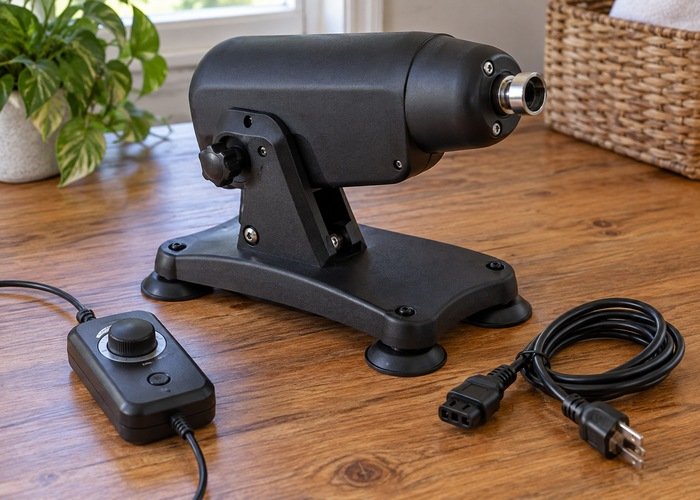
The wellness products you use intimately carry more risk from their materials than from anything else about them — and most consumers have no idea.
Body-safe means one thing: biocompatible and non-reactive. It’s not a marketing badge or a branding choice. A truly body-safe material won’t leach chemicals into tissue, won’t harbor bacteria in microscopic pores, and won’t trigger an inflammatory response after repeated use. As Dr. Evan Goldstein notes via Healthline, medical-grade silicone “is tested for biocompatibility and is designed to be used in the body for long periods of time without causing an allergic reaction.” That standard exists for a reason — and it’s the benchmark the intimate wellness industry should be held to.
The material matters more than the features. A device can vibrate at 10 speeds, connect to an app, and ship in premium packaging — but if it’s made from porous or chemically unstable materials, it becomes a vehicle for irritation, infection, or worse. A common pattern in the industry is brands emphasizing functionality while burying material specifications in fine print. The result is a significant gap between what “body-safe” means in marketing copy versus what it means in medical or manufacturing standards. Understanding how materials affect your experience is the first step toward making genuinely informed choices.
This is where platinum-cured silicone body-safe standards diverge sharply from cheaper alternatives. Unlike materials blended with fillers or plasticizers, platinum-cured silicone undergoes a curing process that fully consumes reactive compounds — leaving behind a chemically stable, non-porous surface. Factory-direct sourcing is what makes that consistency possible: when a manufacturer controls every step from raw material to finished product, there’s no room for substitution or cost-cutting that compromises biocompatibility.
Before exploring exactly why platinum-cured silicone sets the standard, it’s worth clarifying something that trips up even careful shoppers — the difference between silicon and silicone, and why that single letter changes everything.
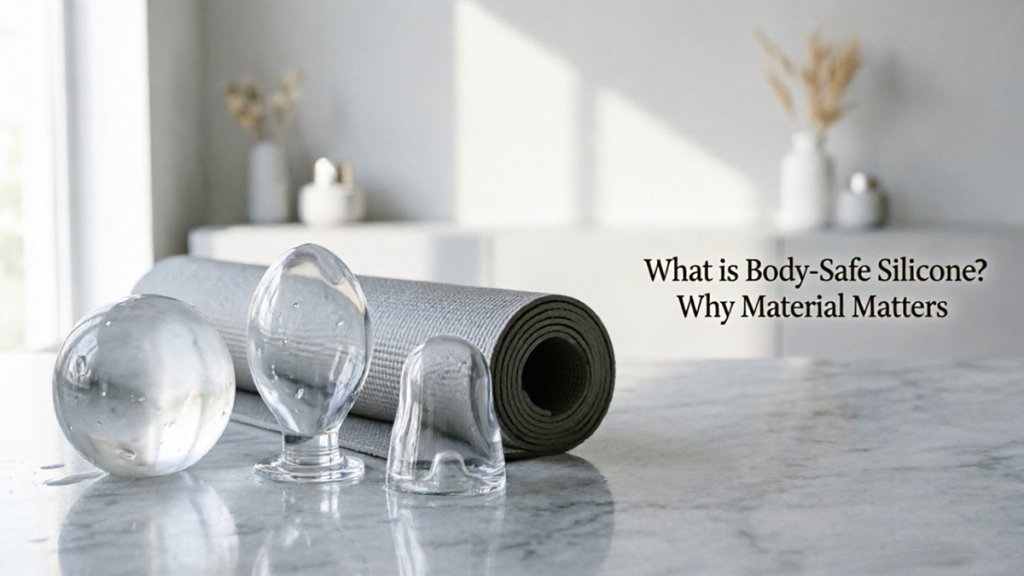
Silicon vs. Silicone: Clearing the Linguistic Confusion
One letter separates a computer chip from a body-safe wellness device — and understanding that difference is the foundation of every smart purchasing decision you’ll make.
Silicon (no “e”) is a naturally occurring chemical element — atomic symbol Si, number 14 on the periodic table — found abundantly in sand and quartz. Silicone, with that critical trailing “e,” is something else entirely: a man-made synthetic polymer built from silicon, oxygen, carbon, and hydrogen atoms bonded into a flexible, stable chain. As The Joy Factory’s research confirms, these two materials share a name root but almost nothing else.
Here’s a quick comparison to make the distinction concrete:
| Property | Silicon (Si) | Silicone (polymer) |
|---|---|---|
| Origin | Natural element | Synthetic polymer |
| Form | Solid crystalline | Flexible, rubber-like |
| Common use | Semiconductors, solar cells | Medical devices, wellness products |
| Body contact safe? | Not applicable | Yes, when properly cured |
Chemical stability is what makes silicone so valuable for intimate use. The Si–O backbone of the polymer chain is highly resistant to heat, moisture, and biological fluids. It doesn’t degrade easily, doesn’t harbor bacteria in a non-porous surface, and — critically — doesn’t leach chemicals under normal conditions. This structural integrity is precisely why medical-grade silicone is trusted in surgical implants and catheters, not just consumer wellness products.
For devices engineered with dynamic motion — the kind of high-friction flapping or rotation mechanics found in more advanced designs — the polymer’s flexibility is non-negotiable. Rigid materials crack under repetitive stress; silicone flexes and returns to form without compromising its surface integrity. That combination of softness, durability, and chemical inertness is exactly why body-safe silicone remains the industry benchmark for intimate wellness products.
Of course, not all silicone is created equal. The polymer itself is only part of the story — how it’s cured during manufacturing determines whether that chemical stability actually holds up in practice. That’s where the curing process becomes everything.
The Platinum Standard: Why the Curing Process Is Everything
How silicone is cured matters as much as the silicone itself — and platinum curing is the only process that leaves nothing harmful behind.
Platinum-cured silicone uses a platinum catalyst to cross-link polymer chains into a stable, inert material. According to Viper Performance, this reaction is essentially complete — the platinum catalyst is fully consumed during manufacturing, which means zero toxic by-products carry over into the finished product. That’s the core reason it’s recognized as the gold standard for body-contact applications, from surgical implants to intimate wellness devices.
Peroxide curing takes a different path. In this process, organic peroxides trigger the same cross-linking reaction, but the chemistry is messier. Residual peroxide compounds don’t fully break down, and they can migrate to the surface of the material over time. The visible result is often a phenomenon called “blooming” — a chalky white powder or film that appears on the device’s surface. That residue isn’t just cosmetic. It signals that reactive chemical compounds are present and available to contact sensitive tissue, sometimes accompanied by a sharp chemical odor that is itself a warning sign.
The distinction between silicon vs. silicone is worth recalling here: even within genuine silicone products, the curing method determines whether you’re holding an inert material or one that’s still chemically active at the surface.
This matters most for devices designed for high-friction movement. For a flapping or rotation-based vibrator, repeated mechanical action generates micro-heat and increases surface contact — conditions that accelerate leaching in peroxide-cured materials. Platinum-cured silicone remains dimensionally and chemically stable under this stress.
Factory-direct sourcing closes the final gap. Even platinum-cured formulations can be compromised if a device passes through multiple manufacturing intermediaries, where quality controls vary. Brands that source directly from certified silicone manufacturers can verify curing protocols and raw material purity at the point of production. That chain of custody is what separates a genuine safety claim from a marketing label.
These material differences become even more consequential when you consider what happens inside a porous material over time — which is exactly where the next conversation needs to go.
The Porosity Trap: Why ‘Jelly’ and PVC Are Biohazards
Porous sex toy materials aren’t just lower quality — they’re a genuine hygiene risk that no amount of washing can fully eliminate.
The microscopic architecture of “jelly” rubber, TPE, and PVC creates an environment where bacteria thrive. These materials contain thousands of tiny pores invisible to the naked eye. Every time a toy made from these materials is used, bacteria, dead skin cells, and bodily fluids work their way into those pores. Standard cleaning — even with soap and hot water — can’t reach deep enough to remove what’s trapped inside.
This is why these materials can never be truly sterilized. Unlike non-porous surfaces, which allow disinfectants to work across the entire material, porous materials have protected interior spaces that cleaning agents simply can’t penetrate. Boiling or using toy cleaner on a jelly rubber product creates a false sense of security. The surface may look clean, but the interior remains a reservoir for microbial activity.
The health consequences are real and documented. A common pattern among people who use porous toys regularly is a cycle of recurrent bacterial vaginosis or yeast infections — conditions that resolve with treatment, then return. According to the International Journal of Women’s Health, medical-grade silicone is non-porous, making it resistant to bacterial growth and significantly easier to sterilize than jelly or PVC alternatives. The bacterial risks of porous materials include:
- Biofilm formation — bacteria form protective colonies that resist standard cleaning
- Cross-contamination — sharing or reusing toys without full sterilization spreads harmful microbes
- pH disruption — residual bacteria alter vaginal flora, triggering recurring infections
- Chemical off-gassing — porous materials often contain unstabilized compounds that continue releasing over time
Understanding what is body-safe silicone starts here: it’s non-porous by nature. The dense molecular structure of platinum-cured silicone leaves no gaps for bacteria to colonize. You can choose toys for sensitive areas with confidence knowing that a non-porous surface supports long-term hygiene rather than undermining it. However, porosity is only part of the chemical safety picture — the plasticizers used in cheap PVC products introduce an entirely separate category of risk worth examining closely.
The Hidden Danger of Phthalates in Low-Cost Toys
Phthalates in adult toys represent one of the most underreported health risks in the wellness product space — and the danger is hiding in plain sight.
Phthalates are chemical plasticizers added to PVC and other rigid plastics to make them soft and flexible. They’re what gives cheap, rubber-like toys that squeezable texture. The problem is that phthalates don’t bind permanently to the plastic — they leach out continuously, especially when the material warms to body temperature. According to Greenpeace Research Laboratories, phthalates can account for up to 40% of a low-cost toy’s total product weight — a staggering proportion for a chemical class linked to endocrine disruption.
That disruption isn’t abstract. Mucous membranes — the tissue lining the vagina, rectum, and urethra — are among the body’s most absorptive surfaces. Unlike skin, they offer very little barrier protection. Chemicals that make contact with these tissues enter the bloodstream quickly, where phthalates can interfere with hormone signaling, particularly estrogen and testosterone pathways.
The smell test is a practical first filter. If a toy smells strongly of chemicals — that sharp, plasticky odor reminiscent of a new shower curtain or inflatable pool toy — that’s off-gassing in action. You’re literally inhaling the same compounds your body would absorb during use. No amount of washing removes this risk because the chemicals are embedded throughout the material itself, not just on the surface. This is a concern worth factoring in whenever you’re comparing materials before buying.
Kissself eliminates this risk entirely by using only platinum-cured, body-safe silicone — a material that contains no plasticizers, no fillers, and no chemical softeners of any kind. The result is a product that stays chemically inert against the body’s most sensitive tissue, use after use.
That chemical stability isn’t just about safety in a passive sense. It also has real implications for how high-performance devices hold up under intense mechanical stress — which is exactly where the next consideration becomes critical.
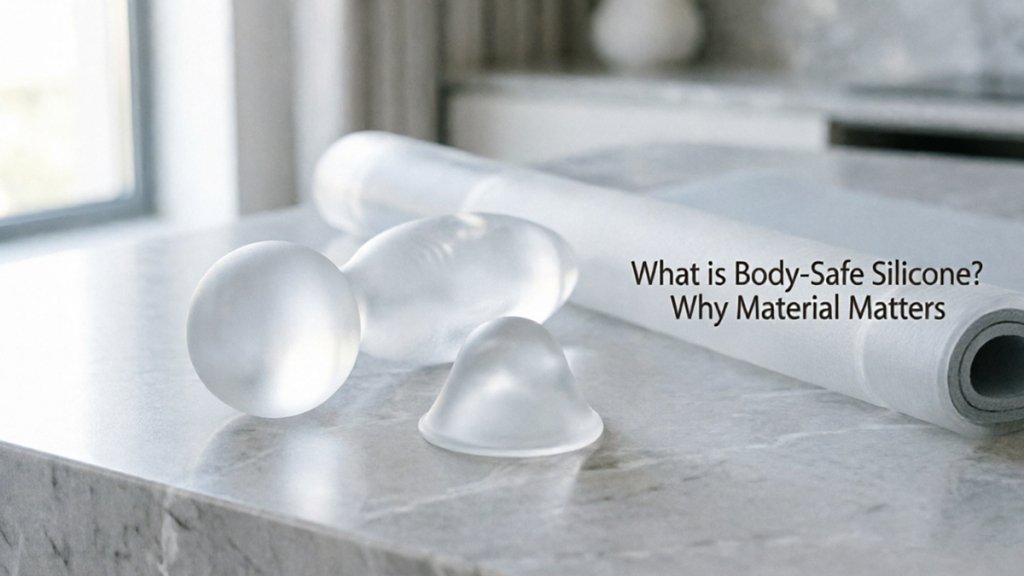
High-Tech Performance Meets Medical-Grade Safety
Advanced intimate devices demand more from their materials than almost any other consumer product — and the medical-grade silicone benefits become most apparent when engineering meets anatomy.
Material stability under mechanical stress isn’t optional — it’s the baseline requirement for any device designed to perform at intensity.
Vibration and suction dynamics place enormous repetitive strain on a toy’s outer sleeve and internal components. Cheap materials flex, compress, and heat up under that load, accelerating the breakdown of molecular bonds — the same process that releases VOCs and plasticizers discussed in earlier sections. Platinum-cured silicone resists this cycle entirely. Its cross-linked polymer structure maintains dimensional integrity even under sustained high-frequency vibration, meaning the surface your skin contacts stays chemically inert session after session.
Heat resistance is a similarly underappreciated factor in automatic masturbators. Motors generate friction heat, and sleeve materials that soften or become tacky at elevated temperatures create both comfort and contamination issues. As Dr. Evan Goldstein of Bespoke Surgical has noted, material must remain stable under the mechanical stress of flapping or rotation without degrading or releasing VOCs — a standard that silicone meets and jelly or PVC categorically fails.
Flapping and tapping modes represent the most mechanically demanding application. These motions apply directional, repetitive force across the full sleeve surface. A material that can’t absorb and return that energy without fatigue will micro-tear over time, creating exactly the porous surface conditions described earlier. Medical-grade silicone’s elasticity allows it to deform and recover thousands of times without structural compromise. This is why proper long-term care matters — even durable silicone benefits from correct storage to extend its performance lifespan.
The intersection of automation and material science ultimately comes down to one principle: a device is only as safe and effective as the material wrapping its technology.
Communication and Consent: What ‘WYW’ Means for Your Journey
Knowing what you want is the foundation of every safe, satisfying intimate experience — and that clarity starts long before any product enters the picture.
In digital communication, “WYW” typically stands for “What You Want” — a shorthand that surfaces frequently in intimate texting as a way to open a conversation about desires and boundaries. It’s a small phrase with significant weight. Whether it appears in a message or in a quiet moment of self-reflection, asking “what do you want?” is the first act of informed consent.
That question deserves a serious answer. What you want, at its core, is safety. When someone searches “what does wyw mean from a girl,” they’re often navigating the early stages of expressing needs — and that same energy applies directly to how people should approach intimate wellness products. Knowing what you want means knowing what you won’t compromise on: body-safe materials, transparent sourcing, and products designed with your health in mind. Resources like this guide for beginners exploring safer options reinforce exactly that point — material choice isn’t a minor detail, it’s a non-negotiable.
Consent extends beyond people — it extends to products. Every time you choose an intimate device, you’re entering into a kind of agreement with the manufacturer. Are they being transparent about what’s inside? Are they prioritizing your wellbeing or their margin? Secure communication in any relationship, digital or physical, requires honesty. The same standard applies to the brands you trust.
The bridge from “what you want” in a text message to “what you need” in a wellness product is shorter than it seems. Both conversations ask you to articulate your standards clearly. And as the next section will show, the ultimate standard in intimate wellness comes down to one thing: the material itself.
The Bottom Line: Why Material is the Ultimate Luxury
The material your intimate device is made from isn’t a minor detail — it’s the single most consequential choice you’ll make for your long-term wellness.
Non-porous and bacteria-resistant by nature, platinum-cured silicone creates a surface that simply won’t harbor the pathogens, mold, or residue that porous materials trap between uses. Unlike jelly or PVC toys — which can leach phthalates and other endocrine-disrupting chemicals directly onto sensitive tissue — platinum-cured silicone remains chemically inert throughout its entire lifespan. The stakes here aren’t abstract: phthalate exposure through mucous membranes is a documented health concern, and no fragrance or packaging makes a PVC product safe for repeated intimate use.
Purity starts at the source. Factory-direct sourcing of platinum-cured silicone ensures no volatile organic compounds (VOCs) are present in the final product — a standard aligned with FDA material guidelines and rigorous quality control practices. What this means in practice is that the silicone touching your body hasn’t passed through unnecessary supply chain steps where contamination or substitution can occur. When a brand controls its sourcing directly, the chain of custody for material integrity stays unbroken.
Intimate health is genuinely an investment. Cutting corners on material to save $20 upfront can mean repeated exposure to harmful compounds, a device that degrades and becomes a bacterial breeding ground within months, or skin reactions that are difficult to trace back to their cause. As covered earlier in this article, the science of platinum-curing exists precisely because standard methods leave behind residual catalysts — and your body deserves better than residual risk. Choosing body-safe materials isn’t a premium upgrade; it’s the baseline standard every informed buyer should demand.
The right device starts with the right material — and knowing how to verify that before you buy is exactly where confidence enters the picture.
Key Takeaways
- Platinum-cured silicone is non-porous and bacteria-resistant, making it fundamentally safer for repeated intimate use than porous alternatives like PVC or jelly.
- Phthalate exposure is a real, documented risk from low-grade intimate devices — avoiding PVC and jelly materials is a non-negotiable health decision.
- Factory-direct sourcing eliminates VOCs and maintains an unbroken chain of custody for material purity, aligning with FDA material safety standards.
- Material quality is a long-term health investment, not a luxury add-on — cheaper materials degrade, harbor bacteria, and can cause cumulative harm.
- The platinum-curing process removes residual catalysts that standard silicone production leaves behind, producing a truly inert, body-safe surface.
Choosing Your Next Device with Confidence
Every smart purchase decision starts with knowing how to verify what you’re actually buying — and with intimate devices, that verification protects your health directly.
The simplest quality check costs nothing: the pinch test and the smell test. To perform the pinch test, firmly pinch and twist a small section of the device. Genuine platinum-cured silicone returns to its original shape without any white stress marks appearing in the material. If white shows through, the product is likely a blended or counterfeit material. For the smell test, hold the device close and inhale — real silicone has virtually no odor. A chemical, plastic, or rubbery smell signals the presence of fillers, plasticizers, or phthalates, all of which are exactly what you’re trying to avoid.
Material integrity and technology should never be a trade-off. Kissself builds multi-functional devices that combine flapping, suction, and rotation within a medical-grade silicone body — proof that sophisticated stimulation engineering and body-safe construction belong together. Choosing a device from a brand that treats both as non-negotiable means you’re never compromising your health for a feature set. Whether you’re exploring options suited to beginners or seeking advanced multi-mode experiences, the material standard should remain constant.
Accessibility matters, too. Worldwide shipping means that premium, platinum-cured technology isn’t gated by geography — wherever you are, the same body-safe standard reaches you. As Intimate Rose notes, medical-grade silicone is non-porous and hypoallergenic, making it the benchmark for long-term intimate wellness.
Your body deserves nothing less than that benchmark. Choose platinum-cured silicone, verify before you buy, and invest in devices that honor both your pleasure and your health.