The anal region is one of the most nerve-rich areas of the human body — and yet it remains one of the most misunderstood when it comes to intentional, wellness-focused pleasure. Understanding why this area responds so powerfully to stimulation isn’t just academic; it’s the foundation for choosing tools that actually deliver.
“The anus is surrounded by a complex network of nerve endings, and the use of graduated beads allows for a controlled, incremental stretching that can significantly enhance the intensity of an orgasm.” — Dr. Evan Goldstein, Anal Surgeon
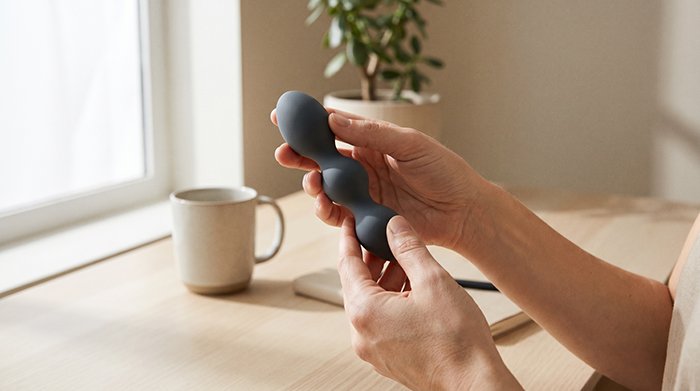
The anal canal and its surrounding tissue contain a dense concentration of both somatic and autonomic nerve fibers. Two key structures are at play: the internal anal sphincter — an involuntary muscle that responds to pressure and fullness — and the external anal sphincter, which is under conscious control. Graduated anal beads are uniquely engineered to engage both. As each progressively larger bead passes through, it creates a rhythmic dilation that sends pulses of sensation through these layered sphincters in a way that no other form of stimulation replicates.
This is where the famed “pull-out” sensation earns its reputation. The moment each bead withdraws, the sphincters respond with a reflexive contraction, amplifying sensitivity at the exact point of release.
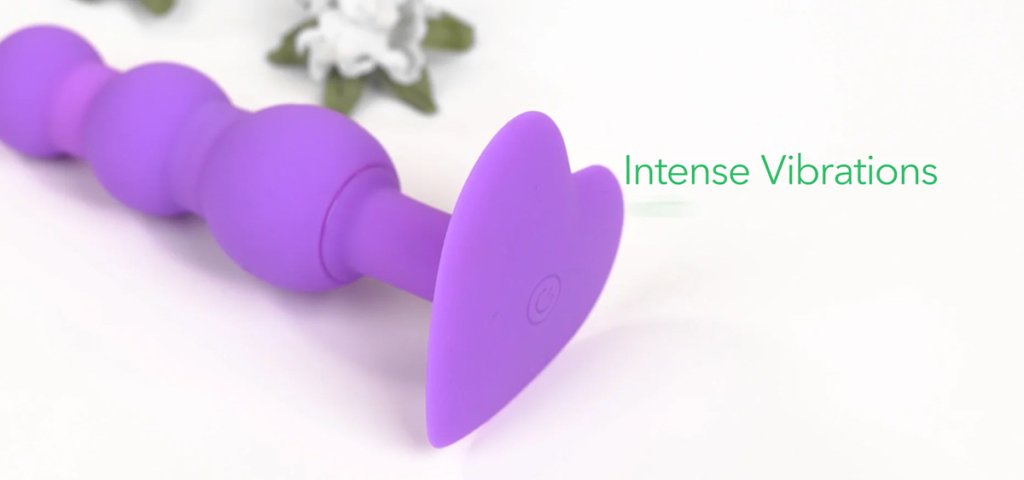
Modern vibrating silicone anal beads take this further by introducing a second sensory dimension: vibration. While the beads target internal nerve clusters, the vibrational frequency simultaneously stimulates the richly innervated perianal tissue externally. This dual-channel stimulation creates what practitioners of anal wellness describe as “fullness” — a deeply satisfying sense of internal presence that’s entirely distinct from surface-level stimulation.
The material these devices are made from shapes that experience just as profoundly as the design itself — something worth exploring closely.
Why Material Matters: The Case for Medical-Grade Silicone
| Material | Porosity | Safety Level | Sterilization Method |
|---|---|---|---|
| Medical-grade silicone | Non-porous | High | Boiling, bleach solution, or dishwasher |
| ABS plastic | Non-porous | High | Soap and water |
| PVC | Highly porous | Low | Cannot be fully sterilized |
| Jelly rubber | Highly porous | Low | Cannot be fully sterilized |
| Cyberskin/UR3 | Highly porous | Low | Cannot be fully sterilized |
Medical-grade silicone anal toys represent the gold standard in anal wellness — and the table above makes it clear why the material you choose is a genuine health decision, not just a preference. The anal canal lacks the natural self-cleaning mechanisms present elsewhere in the body, which means the surface of any toy used internally matters enormously.
Porous materials like PVC and jelly rubber contain microscopic channels that trap bacteria, bodily fluids, and lubricant residue. No amount of surface cleaning eliminates what’s embedded deeper. Over time, these materials can harbor pathogens capable of causing infections, irritation, or worse — a risk made even less acceptable given that body-safe non-porous materials are now widely available and increasingly affordable.
Non-porous silicone eliminates that risk entirely. According to the International Society for Sexual Medicine (ISSM), medical-grade silicone is the industry benchmark because it resists bacterial buildup and is hypoallergenic — meaning it won’t trigger skin reactions in users with latex sensitivities or chemical sensitivities. For anyone with sensitive skin or allergy concerns, silicone is not just preferred — it’s the responsible choice.
Beyond safety, silicone offers a tactile advantage worth noting: it gradually warms to body temperature during use. That adaptive warmth creates a more natural, less clinical experience — a subtle but meaningful quality that PVC simply can’t replicate. It’s a property that makes silicone feel intentionally designed for the human body, which of course it is. As vibration technology evolves, the material housing it matters just as much — a point that connects directly to how those vibrations are ultimately delivered and sustained.
Overcoming Sensory Habituation with Advanced Vibration
Understanding why your body stops responding to stimulation is just as important as understanding what feels good in the first place. As we covered in the previous section, material quality sets the foundation — but the type of stimulation delivered through that material is what determines whether an experience stays engaging or fades into the background.
The Problem: Habituation
Sensory habituation is a well-documented neurological response where repeated, identical stimulation causes nerve receptors to gradually reduce their firing rate. In plain terms: the body gets bored. A single, unchanging vibration frequency — no matter how powerful — will eventually register as background noise to your nervous system. This isn’t a personal quirk; it’s basic neuroscience. In the context of anal pleasure technology, it’s also one of the most overlooked design challenges in the industry.
The Tech: Flapping and Tapping
This is where modern engineering steps in. According to research published in the Journal of Sexual Medicine, advanced models featuring tapping or flapping technology mimic manual movement, providing a more dynamic experience than static vibration alone. Rather than delivering a continuous hum, these mechanisms generate rapid, rhythmic pulses — a physical push-and-release motion that closely resembles the tactile quality of a human touch.
Where older devices vibrated around tissue, flapping motors actively engage it in a directional, percussive pattern. The mechanical difference is significant. Think of it as the distinction between a monotone sound and a rhythm — one fades from awareness, the other keeps your attention.
The Result: Dynamic Stimulation
Multi-frequency vibration patterns build on this foundation by cycling through varied intensities and rhythms in deliberate sequences. This constant variation prevents the nervous system from habituating, sustaining arousal more effectively over time. Devices offering multiple stimulation modes allow users to alternate patterns before the body adjusts — keeping each session physiologically novel.
The result is stimulation that feels organic rather than mechanical. Dynamic motion patterns don’t just feel better; they work with the body’s neurological responses rather than against them. Knowing how the technology performs, however, is only half the equation — the physical design of the device itself shapes the entire experience, which is exactly where the next consideration begins.
The Anatomy of Choice: Selecting Your Device
Now that you understand how vibration patterns work against sensory habituation, the next challenge is identifying which device is actually built to deliver those benefits safely and effectively. Not all vibrating anal beads are created equal, and the gap between a thoughtfully engineered device and a poorly designed one can mean the difference between a rewarding experience and a preventable injury.
The global sexual wellness market is projected to reach $112.36 billion by 2030, reflecting a decisive consumer shift toward premium, technology-forward devices—and that investment only pays off when you know what to look for.
Essential Features Checklist
Before purchasing, evaluate any device against these non-negotiables:
- ✅ Flared base — This is the single most critical safety feature for any anal toy. Unlike the vaginal canal, the rectum creates suction that can draw objects inward. A broad, stable flared base prevents full insertion and makes retrieval reliable.
- ✅ Graduated bead sizing — Beginners benefit from progressively sized beads that allow the pelvic floor to adapt incrementally. Experienced users may prefer uniform or more aggressively sized beads for targeted intensity, particularly for prostate stimulation.
- ✅ Internal motor placement — Motors housed within the bead cluster transmit vibration directly to the tissue, rather than diffusing it through an external handle. In practice, this distinction produces noticeably more focused sensation where it matters most.
- ✅ IPX7 waterproofing or higher — Full waterproofing isn’t a luxury; it’s a hygiene requirement. Devices sealed to this standard can be properly cleaned and sanitized without water damage compromising the motor or seams over time.
- ✅ USB rechargeable power — Disposable battery compartments introduce potential weak points for moisture ingress and inconsistent power output.
- ✅ Body-safe material certification — Confirm 100% medical-grade silicone with no fillers, as covered in earlier sections of this guide.
A design that ticks every box isn’t just more pleasurable—it’s genuinely safer for long-term use. Once you’ve identified the right device, the real results come down to how you use it, which is exactly what the next section addresses in detail.
Step-by-Step: Maximizing the Vibrating Bead Experience
With the right device selected, technique becomes everything. A high-quality multi-frequency device used carelessly will always underperform a mid-range one used with intention. These four principles close that gap.
1. The Golden Rule of Lubrication
Water-based lubricant is non-negotiable with silicone toys. Silicone-on-silicone contact degrades the material’s surface over time, creating micro-pores where bacteria can accumulate. Water-based formulas preserve the integrity of your device and keep the experience comfortable from start to finish. When choosing body-safe toy materials, lubrication compatibility is just as critical as the material itself — don’t overlook it.
2. Preparation and Pelvic Floor Relaxation
Rushing insertion is the most common beginner mistake. In practice, spending five to ten minutes on deep diaphragmatic breathing significantly reduces involuntary pelvic floor tension. A warm bath or shower beforehand works equally well. The sphincter relaxes in response to slow, deliberate pressure — never force.
3. Integrating Vibration Strategically
Start with the device fully inserted before activating vibration. This allows the body to adjust to the physical presence first. Then cycle through lower-frequency patterns before escalating. Switching patterns every two to three minutes actively counters sensory habituation, keeping nerve endings responsive and preventing the plateau effect discussed in earlier sections.
4. The Slow-Release Technique
The slow-release technique is the single most effective method for amplifying intensity: activate the highest vibration pattern, then withdraw each bead incrementally over 20 to 30 seconds.
Each bead passing through the sphincter during peak vibration triggers a concentrated nerve response. Timing the final withdrawal with peak arousal creates a compounding sensation that static use simply cannot replicate.
Pro Tip: Pair the slow-release technique with a pattern change at the moment of withdrawal. Switching from a steady buzz to a pulsing rhythm at that exact moment introduces a novel stimulus, preventing the nerve adaptation that dulls intensity.
Technique covers the how — but practical questions about safety, cleaning, and limitations come up just as often. The next section tackles those head-on.
Common Questions & Expert Answers (FAQ)
Even after exploring device selection and technique, a few practical questions tend to surface before someone feels fully confident. Here are direct answers to the ones that matter most.
How do I clean my silicone beads properly?
Rinse with warm water immediately after use, then wash thoroughly with unscented antibacterial soap or a dedicated toy cleaner. For non-motorized sections, boiling or running through a dishwasher (top rack, no detergent) works well. For devices with motors, avoid full submersion unless the product is rated waterproof. As noted in guides on body-safe material care, medical-grade silicone is non-porous, meaning bacteria can’t embed in the surface — making thorough cleaning genuinely achievable.
Can I use these for prostate stimulation?
Absolutely. Multi-frequency devices, particularly those using flapping vibration technology, generate wave-like motion that reaches deep internal tissue effectively. Curved bead designs or progressive sizing can position vibration directly against the prostate, making these among the most versatile tools available for that purpose.
What should I do if the vibration feels too intense?
Drop to the lowest frequency setting immediately and allow your body to adjust. Intensity tolerance builds gradually — starting at the lowest setting for the first several sessions is standard practice, not a beginner shortcut. If discomfort persists, remove the device and rest.
How long can I safely leave them in?
Most practitioners recommend sessions of 20–30 minutes for beginners, extending to 45 minutes as comfort grows. Prolonged use beyond an hour raises the risk of muscle fatigue and reduced sensitivity. Listen to your body — discomfort is always a signal to stop.
The most overlooked principle in anal wellness is simple: informed use consistently outperforms uninformed use of even the most advanced device.
Start with the right product, apply the right technique, and let the results follow.
Key Takeaways
- ✅ USB rechargeable power — Disposable battery compartments introduce potential weak points for moisture ingress and inconsistent power output.
- ✅ Body-safe material certification — Confirm 100% medical-grade silicone with no fillers, as covered in earlier sections of this guide.
- Medical-grade silicone anal toys
- Non-porous silicone eliminates that risk entirely.
- Multi-frequency vibration patterns