A cock ring sizing guide should start with safety, not bravado. A ring that is too loose may not stay in place. A ring that is too tight can cause pain, numbness, discoloration, swelling, or difficulty removing it. The right fit is secure enough to stay controlled and loose enough to remove calmly without a struggle.
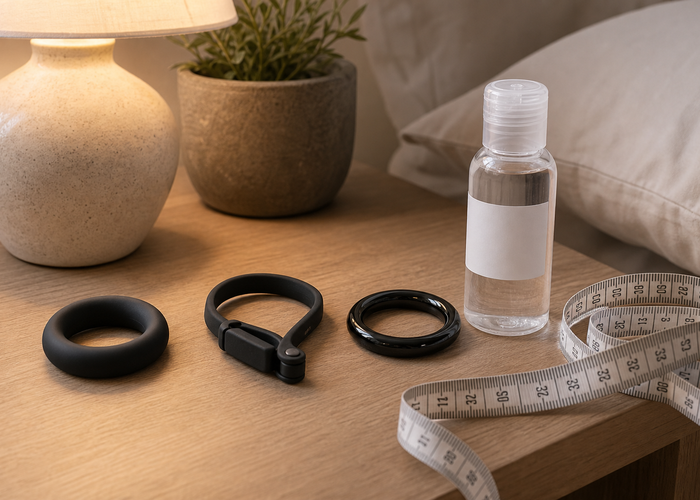
Cock rings vary widely: adjustable loops, stretchy silicone rings, vibrating rings, double rings, and rigid designs. They do not fit the same way, and they do not carry the same risk profile. Healthline’s safety overview of cock rings and Medical News Today’s discussion of cock ring safety both emphasize sensible fit, limited wear time, and removal if discomfort occurs. Those basics are not optional.
This article compares adjustable, stretchy, and rigid designs in practical language. It is not medical advice and does not replace care from a clinician, especially for anyone with circulation issues, reduced sensation, blood-clotting concerns, diabetes complications, nerve problems, or medication questions. The NHS overview of erectile dysfunction is also worth reading if a ring is being used as one part of a bigger blood-flow or stamina conversation.

What good sizing feels like
A good fit should feel snug, stable, and removable. It should not cause sharp pressure, coldness, tingling, numbness, or visible discoloration. If you cannot remove a ring easily when relaxed, it is not a safe everyday fit. If you need panic, force, or complicated tricks to remove it, the design is wrong for your current experience level.
Fit can change with arousal, temperature, lubricant, body position, and time. A ring that seems fine for one minute may feel too tight after ten. That is why first use should be brief and cautious. Test the ring before relying on it during partnered sex or a longer session.
Use a timer. It sounds unromantic, but it prevents guessing. Many safety guides recommend limiting wear time; if your product instructions give a stricter limit, follow that. Never sleep with a ring on.
Adjustable rings
Adjustable rings are often beginner-friendly because they can loosen quickly. They may use snaps, sliders, lariat-style loops, or soft straps. Their advantage is flexibility. You can start looser, check comfort, then make small changes. Their disadvantage is that hardware or sliders can pinch if poorly positioned.
When trying an adjustable design, place the adjustment point where you can reach it easily. Practice loosening it before use. If the mechanism is confusing while calm, it will be worse when rushed. Avoid overtightening just because the product allows it. The goal is gentle restriction, not maximum compression. For a product-level example of this more forgiving approach, compare the advice here with KissSelf’s guide to silicone cock rings for beginners.
Adjustable designs are also useful when you are comparing fit across different positions. If one position increases pressure, loosen the ring rather than forcing your body to adapt.
Stretchy silicone rings
Stretchy silicone rings are popular because they are simple, washable, and usually more forgiving than rigid rings. The stretch can make them easier to put on and remove. However, “stretchy” does not automatically mean safe. A ring can stretch during application and still compress too much once in place.
Choose soft, flexible materials from a trustworthy product source. Inspect for tears, tackiness, or permanent deformation. If the ring has become sticky, cracked, or overly loose, replace it. Material aging changes fit. If you want more context on how fit affects erection support rather than only sensation, KissSelf’s article on cock rings for stamina is a helpful next read.
Water-based lubricant can help placement and removal. Public health guidance from the City of Long Beach Health Department notes that water-based lubricant is compatible with latex condoms. If condoms are involved, avoid oil-based products with latex.
Rigid rings
Rigid rings require the most caution. They do not stretch, so sizing must be more exact and removal planning matters more. A rigid ring that is too tight can become difficult to remove quickly. Rigid designs are not the best first choice for anyone unsure of their size, sensitivity, or comfort cues.
If you choose a rigid ring, test it while completely calm and use a conservative size. Practice removal with lubricant nearby. Do not use a rigid ring if you cannot remove it easily before arousal. Do not improvise with hardware-store rings or objects not designed for the body. Edges, materials, and emergency removal all matter.
Where the ring sits changes sizing
Some rings sit around the shaft only. Some sit behind the scrotum. Some double-ring designs separate areas. A ring placed around more tissue needs different sizing than one placed around only the shaft. Do not assume one size translates across placement styles.
Start with simpler placement if you are new. Shaft-only adjustable or stretchy designs are easier to understand and remove. More complex placements should wait until you understand how your body responds to time and pressure. If you eventually build a broader solo kit, keep placement choices separate from other variables by introducing accessories like penis sleeves or prostate massagers on a different day.
Comparison table
| Design | Best for | Main caution | Removal advantage |
|---|---|---|---|
| Adjustable | Beginners and variable fit | Can still be overtightened | Loosens quickly if mechanism is reachable |
| Stretchy silicone | Simple use and easy cleaning | Stretch does not guarantee safe pressure | Can usually be rolled off with lube |
| Rigid | Experienced users with known sizing | No stretch and higher removal risk | Only safe if correctly sized and removable |
| Vibrating | Partnered or external stimulation | Bulk can change pressure and placement | Depends on base material and shape |
Warning signs and stop rules
Remove the ring immediately if you notice pain, numbness, coldness, tingling, blue or purple discoloration, swelling, or anxiety about removal. Do not wait to see whether discomfort improves. A ring should never trap you into continuing.
If removal is difficult, use water-based lubricant and stay calm. Try to reduce arousal, breathe slowly, and loosen any adjustable mechanism. If a ring cannot be removed, or if swelling or discoloration persists, seek urgent medical help. A safety plan is not dramatic; it is responsible.

Cleaning and storage
Clean rings according to material instructions. Smooth silicone is typically easier to clean than textured or motorized designs. If the ring vibrates, do not submerge unless the product instructions say it is waterproof. Healthline’s sex toy cleaning guide explains why material and water resistance matter for cleaning.
Dry fully before storage and keep rings away from sharp objects, lint, and other soft materials that might stick. Store different styles separately so you can quickly identify the adjustable, stretchy, or rigid option you intend to use.
How to choose your first ring
For most beginners, an adjustable or soft stretchy ring is the cautious starting point. Choose a design that can be removed quickly, use lubricant, set a timer, and keep the first test short. If you are unsure between two sizes, choose the more forgiving design rather than trying to make a tight fit work. If you are also working on control and pacing more generally, this KissSelf guide on lasting longer adds useful context.
If you already own water-based lubricant and other intimate accessories, keep ring care with the rest of your hygiene routine. Clean, dry, and inspect the ring after every use. Replace it if the material changes.
A first-use checklist
Before first use, inspect the ring in good light. Look for cracks, rough seams, sticky areas, sharp hardware, weak snaps, or a slider that does not move smoothly. Practice putting it on and removing it while completely calm. If the product is adjustable, practice loosening it with one hand. If you cannot do that easily, do not use it during partnered sex yet.
Place water-based lubricant nearby, set a timer, and agree that removal is allowed at any moment. Keep the first test short. Do not combine first-time ring use with alcohol, numbing products, or anything that reduces your ability to notice pressure. Sensation is your safety system.
Fit can change during the same session
A ring may feel comfortable at the start and tighter later. Arousal, position, temperature, and time can all change pressure. That is why repeated check-ins matter. Ask yourself: is the area warm, comfortable, and normal in color? Can I still remove the ring calmly? Am I ignoring any tingling or numbness because I want the session to continue?
If any answer worries you, remove the ring. A good session can continue without it. A ring is an accessory, not a requirement. Removing it early is a normal adjustment, not a failure.
Choosing between beginner and advanced designs
Beginner-friendly rings usually share a few traits: soft material, visible stretch, simple shape, and an obvious removal method. Advanced designs may add rigidity, double loops, vibration modules, or tighter placement. Extra features can be enjoyable, but they also create more fit variables. Add one feature at a time instead of jumping from no ring to a complex design.
Vibrating rings deserve extra attention because the motor housing adds bulk and weight. That bulk can change pressure depending on position. Make sure the vibrating section does not create pinching or twist the ring into an uncomfortable angle. If the ring uses batteries or charging contacts, follow cleaning instructions carefully and do not submerge unless clearly rated for it.
Measuring without false precision
Measuring can help, but bodies are not fixed cylinders. A flexible measuring tape can give a starting point, yet arousal and placement change the real fit. Use measurements to avoid obvious extremes, then rely on comfort and easy removal. If a size chart and your body disagree, believe your body.
Do not stretch a small ring aggressively just to make it fit. A ring that barely goes on may be much harder to remove. Do not choose a rigid ring based only on curiosity. Rigid designs need confidence, correct sizing, and a clear removal plan.
Aftercare and inspection
After removal, check the skin for lingering marks, soreness, numbness, or discoloration. Temporary light pressure marks can happen with many accessories, but pain, swelling, or unusual color is a warning. Wait until everything feels normal before considering use again.
Clean the ring according to material instructions and dry it before storage. If a soft ring remains stretched out or a rigid ring develops rough edges, retire it. Safe sizing is not just about the first day; it is about whether the product remains predictable over time.
A first-use checklist
Before first use, inspect the ring in good light. Look for cracks, rough seams, sticky areas, sharp hardware, weak snaps, or a slider that does not move smoothly. Practice putting it on and removing it while completely calm. If the product is adjustable, practice loosening it with one hand. If you cannot do that easily, do not use it during partnered sex yet.
Place water-based lubricant nearby, set a timer, and agree that removal is allowed at any moment. Keep the first test short. Do not combine first-time ring use with alcohol, numbing products, or anything that reduces your ability to notice pressure. Sensation is your safety system.
Fit can change during the same session
A ring may feel comfortable at the start and tighter later. Arousal, position, temperature, and time can all change pressure. That is why repeated check-ins matter. Ask yourself: is the area warm, comfortable, and normal in color? Can I still remove the ring calmly? Am I ignoring any tingling or numbness because I want the session to continue?
If any answer worries you, remove the ring. A good session can continue without it. A ring is an accessory, not a requirement. Removing it early is a normal adjustment, not a failure.
Choosing between beginner and advanced designs
Beginner-friendly rings usually share a few traits: soft material, visible stretch, simple shape, and an obvious removal method. Advanced designs may add rigidity, double loops, vibration modules, or tighter placement. Extra features can be enjoyable, but they also create more fit variables. Add one feature at a time instead of jumping from no ring to a complex design.
Vibrating rings deserve extra attention because the motor housing adds bulk and weight. That bulk can change pressure depending on position. Make sure the vibrating section does not create pinching or twist the ring into an uncomfortable angle. If the ring uses batteries or charging contacts, follow cleaning instructions carefully and do not submerge unless clearly rated for it.
Measuring without false precision
Measuring can help, but bodies are not fixed cylinders. A flexible measuring tape can give a starting point, yet arousal and placement change the real fit. Use measurements to avoid obvious extremes, then rely on comfort and easy removal. If a size chart and your body disagree, believe your body.
Do not stretch a small ring aggressively just to make it fit. A ring that barely goes on may be much harder to remove. Do not choose a rigid ring based only on curiosity. Rigid designs need confidence, correct sizing, and a clear removal plan.
Aftercare and inspection
After removal, check the skin for lingering marks, soreness, numbness, or discoloration. Temporary light pressure marks can happen with many accessories, but pain, swelling, or unusual color is a warning. Wait until everything feels normal before considering use again.
Clean the ring according to material instructions and dry it before storage. If a soft ring remains stretched out or a rigid ring develops rough edges, retire it. Safe sizing is not just about the first day; it is about whether the product remains predictable over time.
Situations where a ring is not the right tool
Sometimes the safest sizing choice is not using a ring at all. If you are already sore, irritated, swollen, or anxious about removal, wait. If sensation is reduced because of medication, alcohol, nerve issues, or numbness from another product, skip the ring. If you are using a new toy, new lubricant, and a new ring in the same session, simplify the setup so you can tell what your body is responding to.
People with medical questions should ask a healthcare professional before experimenting. This is especially important for circulation concerns, bleeding disorders, diabetes-related nerve changes, recent surgery, or medications that affect blood flow or clotting. A ring changes pressure; if pressure is already a health concern, get personal guidance.
How to shop without being distracted by intensity claims
Product copy often emphasizes stronger sensation, stamina, or enhanced performance. Those claims can be tempting, but sizing should be judged by control. Can the ring be loosened? Can it be removed quickly? Is the material smooth? Is the diameter realistic? Does the design match your experience level? A simple soft ring that fits safely is a better purchase than a dramatic design that makes you nervous.
For first purchases, prioritize a smooth finish, soft stretch, and a clear removal path. Once you understand your fit and timing, you can compare vibration, double loops, or firmer materials more thoughtfully. Safe progression keeps experimentation enjoyable.
FAQ
How tight should a cock ring be?
Snug enough to stay in place, but never painful, numb, cold, or difficult to remove.
Are adjustable rings safer?
They are often more forgiving because they can loosen quickly, but they can still be overtightened.
Can I sleep with a cock ring on?
No. Remove it before sleeping and follow the product’s wear-time limit.
What should I do if a ring will not come off?
Use lubricant, stay calm, loosen any adjustment, and seek urgent medical help if removal remains difficult or swelling/discoloration persists.
A cock ring sizing guide is really a control guide. Choose a design you can understand, place, time, clean, and remove without drama. Secure is good. Too tight is not. Comfort and an exit plan are what make the right size right.