
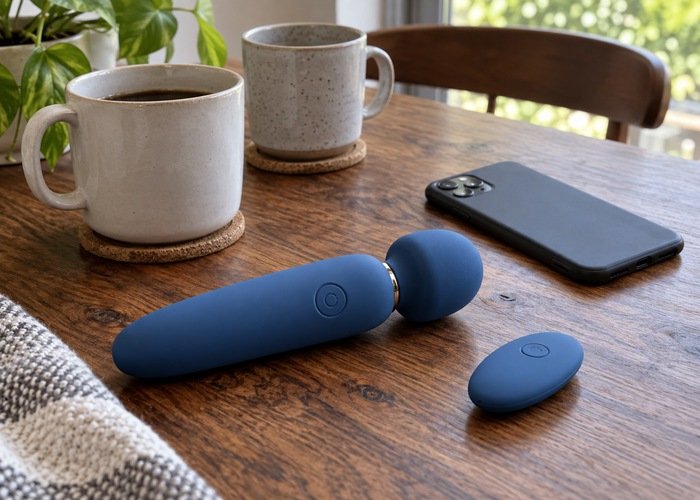
A connected toy can remember a paired phone long after the people involved have changed their minds. That is why remote control is not consent: a working connection only shows that a command can reach a device. It does not show that the person affected wants that command now. Shared access needs a present, voluntary agreement, a clear way to stop, and respect for changing boundaries.
This is a non-graphic guide for adults discussing app-connected or remotely controlled intimate-wellness products. It focuses on decision-making, not sexual technique or technical pairing instructions. The useful question is not how much control a product offers. It is whether both people can choose what happens, understand what they have agreed to, and end participation without pressure.
If you are still comparing devices, the remote versus app-control comparison explains the hardware distinction. Neither arrangement automatically provides healthier communication. A nearby remote can be misused, and a sophisticated app can obscure a simple misunderstanding. Start the conversation with the device switched off and the expectation that declining is an acceptable outcome.
Keep four permissions separate
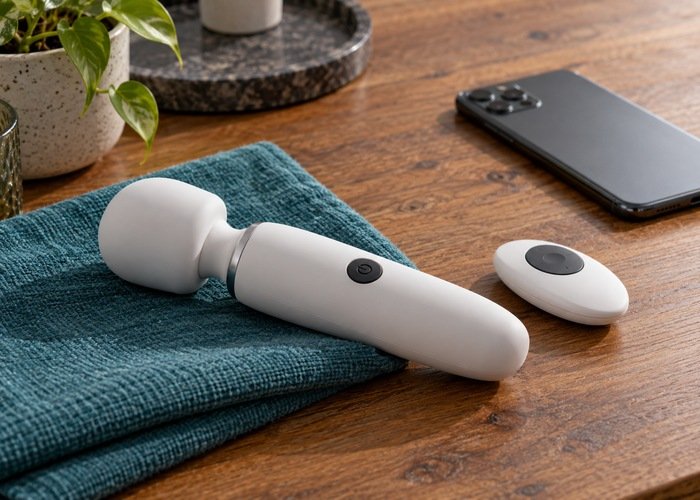
There are several different decisions hidden inside the phrase connect with me. Someone might agree to install an app, add a contact, test a connection with the product resting on a table, or share control at a particular moment. These are not interchangeable permissions. Treating one as approval for all the others is where a convenient feature can become an unwanted experience.
Rape Crisis England & Wales explains consent in terms of choice, freedom, and capacity, including the right to change one’s mind. Applying that principle to connected products means asking about the specific action rather than relying on an old invitation. A saved contact, an active subscription, or a previously enjoyable experience is not a standing instruction.
For a simple distinction, agreeing to learn the buttons with an unused device on a table is a technical test. It need not involve anyone’s body, a video call, or private photographs. Keep the test within that description. If either person proposes something different, stop the test and discuss the new proposal rather than letting the situation drift into it.
Have the conversation before there is something to lose
Talk before buying an expensive product or arranging an elaborate evening. Money, anticipation, and travel can create a feeling of obligation even when nobody intended that pressure. A useful opening is that the product is optional and the plan can remain a conversation. Avoid presenting a purchase as proof that the other person should at least try it.
Discuss what each person wants to keep private, whether shared control is interesting at all, and what would make the experience unsuitable. Someone may prefer local controls, dislike app accounts, or not want a device associated with a relationship. Those preferences do not need a medical reason or an argument strong enough to satisfy the purchaser.
A hypothetical example makes the distinction clearer. One adult is comfortable reading a manual together but does not want to install the app. The successful outcome is understanding the product without installing it, not finding a persuasive demonstration. Both people have learned something useful: this feature is not currently a shared preference, regardless of how attractive the product looked online.
Make the current agreement specific and small
Specific does not mean complicated. Decide who is participating, which device is involved, whether control stays local or is shared, and whether any change requires another question. Avoid broad statements such as anything is fine when the person has not seen what the interface can do. A setting name or slider position may mean different things on different devices.
Do not describe a maximum setting as something to work toward. An agreed limit is a boundary, not a target, and agreeing to one function says nothing about another. There is no requirement to explore every mode because it is available. If the app offers saved patterns or other unfamiliar options, leave them unused until both people understand and actually want them.
A short statement might be: we are only checking the connection with the device off the body; ask before sending any command; either person can end the check. That describes a limited equipment test, not permission for later activity. Keep the distinction visible even if the app uses enthusiastic language about joining, accepting, or becoming a partner.
Check unfamiliar words before agreeing to a feature. If one person calls an option a pattern and another thinks it means a single button press, they have not yet described the same action. Ask each person to explain what they believe will happen without sending a command. When explanations differ, leave that option unused until the manual and the conversation resolve the difference; do not learn by surprising the person affected.
Choose stop language that does not require interpretation
Agree that ordinary words such as stop, pause, no, and not now will be acted on immediately. A specially chosen word must never invalidate ordinary refusal, hesitation, or distress. Do not require someone to remember an exact phrase while uncomfortable. If you are unsure whether a message means stop, stop first and clarify only after the device is no longer active.
Check that both people can communicate in a way that works for them. A voice call may not be suitable for every disability, living arrangement, or preference. Text may be convenient, but delayed delivery and missed notifications make it a poor sole channel for immediate safety. If reliable communication is not available, do not share control; choosing another activity avoids the problem entirely.
Agree on an uncomplicated response to a pause: stop commands, allow the person affected to use the local stop, and do not restart until there is a new clear agreement. Do not send repeated questions demanding an explanation. Sometimes the most useful reply is simply confirming that control has ended and giving the other person space to decide what they need.
Local control should not depend on a remote partner
The person with the device needs to know its actual power-off procedure and be able to reach it. Read the model’s instructions and test the controls with the product unused. Do not assume closing an app, muting a call, or locking a phone stops the hardware. Different products can respond differently to disconnection, and an animated screen is not proof of the physical state.
Our guide to startup memory and controls covers questions about device behavior. Here, the relevant boundary is simpler: if the person affected cannot independently stop the equipment, do not hand control to someone elsewhere. Technical convenience should not make basic autonomy depend on another person’s attention.
Never use a worn device to investigate uncertain reconnection behavior. Put it aside, turn it off according to its instructions, and resolve the equipment question separately. If the local stop behaves inconsistently or a product starts unexpectedly, discontinue use and contact the manufacturer. A partner’s reassurance cannot substitute for a dependable control.
Treat interruptions as an end, not an invitation to guess
A dropped call, frozen picture, unanswered message, or newly interrupted room changes the situation. Stop remote commands and do not assume the other person is still participating because the app says connected. Presence indicators can remain visible while someone is away, and a delivery receipt does not show that a person is willing or able to respond.
If communication returns, first establish that everyone is comfortable and wants to continue the conversation. Reconnection should not silently restore the previous plan. A technical timeout is not the same as a mutually agreed break, and neither carries an automatic right to restart. If restarting feels like a burden, end the activity without turning the interruption into a relationship test.
For example, imagine a housemate unexpectedly entering one person’s room. The appropriate response is to stop, protect privacy, and let that person decide when to reconnect. It is not to demand a camera view proving who arrived. Connected products belong in private, consenting situations, not in activities that expose unsuspecting people to sexual behavior.
A decision table for ambiguous moments
| What happens | What it does not establish | Respectful response |
|---|---|---|
| An old contact remains available | Permission to send a command today | Ask whether a new conversation is wanted; leave the device inactive |
| A message is marked read | Agreement, attention, or physical readiness | Wait for a clear response rather than assuming |
| The call freezes but the app stays connected | Continuing communication | Stop and do not restart on reconnection alone |
| Someone wants a different limit | An invitation to debate their earlier choice | Honor the new limit immediately |
| A person agrees to control but not recording | Permission for screenshots or saved video | Keep recording off and respect the separate boundary |
| Someone declines after receiving a gift | A debt or broken promise | Accept the decision without pressure |
The table is a communication aid, not a contract or a legal checklist. It cannot establish consent on someone else’s behalf. Its purpose is to prevent the interface from making decisions for the people involved. Whenever a device status and a person’s words conflict, the person’s boundary takes priority.
Recording is a separate conversation
Agreeing to share control does not include agreeing to photographs, video, audio, screenshots, or forwarding a conversation. Do not record secretly to remember which settings worked. A private preference can be written down without capturing anyone’s body, voice, name, or messages, and even that note should be something the relevant person is comfortable retaining.
Think beyond the original recording. A file might appear in a shared photo library, a backup, another signed-in device, or a notification preview. The absence of an obvious sharing button does not establish confidentiality. If the privacy consequences are unclear or one person is uncomfortable, do not create the file in the first place.
Private browsing is not a universal privacy shield. Apple’s Safari private-browsing guide describes specific protections, such as not saving browsing details or sharing visited websites with other Apple devices. These are browser features, not a promise about a separate app. A private window cannot prevent another participant from recording a call, so do not promise a connected interaction will leave no trace.
End access as deliberately as you begin it
In an ordinary, non-abusive situation, ending shared use should include stopping the hardware, ending the active session, and checking the product’s actual shared-access controls. Do not assume a contact disappears because a call ends. Agree whether a standing contact relationship is wanted at all. Temporary access can be appropriate even in a long-established relationship.
The app permissions and account checklist addresses the technical review separately. Removing shared access is not an accusation or a request for permission from the other person. It is an ordinary ownership decision. Neither partner needs to keep a channel open as proof of trust.
If a relationship changes, avoid improvising through several settings while assuming that every service works the same way. For supported iPhones, Apple’s Safety Check guide explains tools for reviewing sharing and access. It is not a reset button for every third-party toy service. Read its limitations and the relevant app’s own documentation before drawing conclusions.
When this is not an ordinary settings disagreement
If declining causes threats, punishment, pressure for passwords, or fear, the issue is not a missing conversation technique. You do not have to keep negotiating shared control with someone who refuses your boundaries. The NHS domestic abuse support page describes emotional abuse, controlling behavior, and ways to seek help; abuse does not have to involve physical injury.
Consider personal safety before changing accounts or devices if someone may be monitoring you. A visible loss of access can be noticed, and a monitored phone may not be a safe place to research support. Seek individualized advice from an abuse support service using a safer device where possible. Do not confront a person or conduct a covert test merely to confirm a technical suspicion.
The NHS guidance after sexual assault explains that help is available without an obligation to report to police and that what happened is not the survivor’s fault. If you are in immediate danger, contact local emergency services. A device guide cannot assess your personal risk or replace medical, specialist, or legal support.
Review the conversation without scoring performance
After an ordinary mutually wanted experience, ask about communication rather than whether the product delivered a particular outcome. Was it easy to decline a suggestion? Was the pause understood? Did either person feel rushed to answer? These questions can identify a practical change without turning someone’s comfort into a rating of the relationship or device.
Keep any agreed changes simple. You might decide to avoid remote features, keep all controls local, or discuss a product only when neither person is tired. None of those choices is a failure. A preference does not need to become more adventurous over time, and greater familiarity should not mean fewer opportunities to say no.
Product care is a separate responsibility. Follow the manufacturer’s cleaning and drying instructions and use the storage guide for general organization. Do not let a disagreement about who cleans or stores a shared purchase become leverage for continued participation. Ownership of the object and control over a person’s body remain distinct.
Frequently asked questions
Does accepting an invitation mean accepting all future control?
No. The invitation establishes whatever technical connection the app describes, not a permanent personal agreement. Discuss the present situation separately. A person may keep an account but decline shared use, accept an equipment test but nothing else, or remove a contact at any time. Do not treat the interface as a substitute for asking.
What if my partner likes surprises?
A general preference for surprises does not authorize unexpected device activation. This guide recommends no unannounced commands. Keep the equipment inactive until there is a current, clear agreement about what is wanted. If asking seems to undermine the plan, choose a different plan rather than weakening the other person’s ability to decide.
Can a written agreement prevent misunderstandings?
A short note can help remember preferences, but it cannot make consent permanent or require someone to continue. It should never become evidence used to argue against a changed mind. Do not keep sensitive records unnecessarily, and do not request a signature or recording as a condition of respecting a boundary.
Should we buy a different device if this feels complicated?
Possibly, but buying is not the only answer. Local controls, no connected features, or no product at all may better match both people’s preferences. Browse the other KissSelf product guides only if further research is genuinely wanted. More features cannot repair a lack of respect for a clear refusal.
Remote control is not consent, even when the connection works perfectly. The most useful agreement keeps choices specific, treats interruptions conservatively, separates recording from participation, and makes ending access ordinary. A successful conversation can end with the device unused. What matters is that both adults retain the freedom to choose without pressure.