Morning Sex Ideas for Couples: Quick Comfort Tips, Lube, and Low-Effort Positions works best when the reader treats it as a practical comfort problem rather than a performance contest. Morning intimacy often succeeds or fails on small things: dry mouths, stiff hips, cold rooms, missing lubricant, and positions that demand more energy than the body has at that hour. The best version of morning sex ideas is usually the version that makes setup, cleanup, and communication feel easier, not more dramatic.
That practical approach matters because intimate products and routines live in the real world. They happen in bedrooms that need quick cleanup, in bathrooms where towels and bottles compete for space, and in bodies that respond differently day to day. Public guidance from sexual-health services and related health sources is useful here because it frames toys and lubricant as tools that work better when sensation, hygiene, and consent are planned together.
If you browse the KissSelf guide archive or compare options in the shop, start with the same question a careful buyer would ask before spending money: which choice will still feel calm, controllable, and easy to maintain after the first burst of curiosity passes? That question turns out to be more useful than chasing extremes.

Start with the real goal, not the loudest claim
Readers usually get better outcomes when they define the job before they define the product. In this case the job is hydration, temperature, pillows, quick lubricant access, and positions that do not require a full workout before breakfast. That may sound obvious, but many bad experiences begin with a mismatch between the reader’s actual goal and the feature that got the most attention. A toy that promises more pressure or more reach can still feel wrong if the routine around it is clumsy, dry, overcomplicated, or hard to stop.
That is why internal context matters. A reader comparing related KissSelf products should think about how the body will meet the product, where the lubricant will sit, what the towel and cleanup plan look like, and whether the next step is obvious if something feels off. In practice, the body rewards routines that stay predictable. Predictability is not dull. It is what lets curiosity remain enjoyable.
There is also a mental side to comfort. People relax when they do not have to search drawers, guess at compatibility, or push forward just because everything is already open. A bottle within reach, a towel that is already folded, and a product that can be reset without embarrassment all make better decisions more likely. That is part of why so many practical guides feel repetitive: the boring setup habits are usually the ones that protect the good part.
Build a setup that is easy to pause, adjust, and repeat
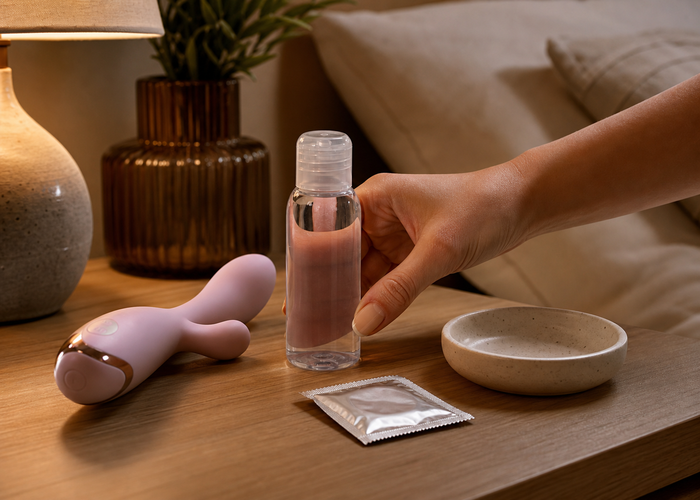
The fastest way to improve most intimate routines is to make them easier to interrupt. Place lubricant where a hand can reach it without twisting. Decide where the toy will rest if you need a pause. Keep a towel under the product if wash-off or grip may matter later. When appropriate, check whether the material is better served by the closest related KissSelf category or by a milder starting choice. Small setup details keep the body from having to compensate for preventable friction.
Lubricant belongs in that setup conversation from the beginning. The Long Beach public-health fact sheet on lubricant basics and other health explainers keep returning to compatibility because the feel of a product depends on the match between formula, surface, body area, and barrier plan. If the bottle only enters the picture after friction already feels distracting, the routine has usually been allowed to drift too far.
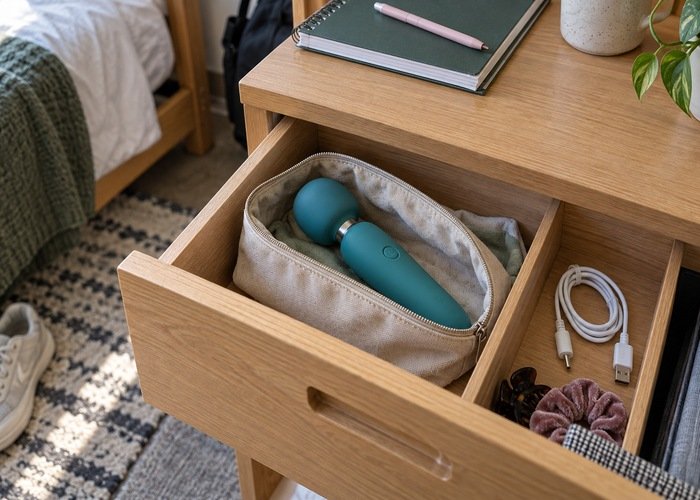
The other useful habit is to prepare for the finish while you prepare for the start. A clean cloth, rinse plan, or discreet storage pouch means the brain no longer treats cleanup as a problem waiting at the end of the session. That makes it easier to stay present. It also makes a second session more likely, because the memory attached to the routine is not just about sensation. It is also about whether the whole thing felt manageable.
Three variables that change the experience faster than people expect
The first variable is simple: how awake or stiff the body feels changes which angle is realistic before coffee. Readers often notice this only after a poor first try, because the difference between an okay setup and an irritating one can arrive much faster than expected. Bodies usually interpret surprise friction or surprise pressure as a reason to tense up. That tension then gets blamed on the toy or the idea when the real problem was the setup variable that changed too quickly.
The second variable is just as important: a small amount of lubricant early usually feels better than waiting until friction starts to distract from the moment. Control is often the line between a routine that feels exploratory and a routine that feels like it is dictating the pace. When readers have to make huge adjustments instead of small ones, they lose the chance to learn what actually helped. Small adjustments teach the body. Big corrections usually just create a yes-no loop.
The third variable is easy to underestimate: low-effort positions work because pillows, mattress edges, and body weight do part of the job. Fit is more than numbers on a product page. It includes the hand, the surrounding props, the pace, and whether the product still feels easy to steer after the surface becomes slicker or the body becomes warmer. Once readers start paying attention to fit as a full routine rather than a single dimension, a lot of buying and use decisions become clearer.
A practical decision table
| Decision point | What to check | Why it matters |
|---|---|---|
| Body energy | How awake, flexible, and hydrated both people feel | It shapes whether the best move is a cuddle-based position or something with more angle |
| Lubricant access | Bottle within reach on the bedside table | Morning dryness is common and easier to solve early than later |
| Pillow support | Hips, knees, or lower back supported | Simple props reduce strain and make slow positions feel better |
| Noise and privacy | Door, blankets, and quick cleanup plan | Less mental friction often means more relaxed pleasure |
| Aftercare | Water, wipes, towel, or quick bathroom plan | Knowing the finish is easy makes the start easier too |
Do not ignore comfort signals just because the setup is technically working
One of the most common errors in intimate-product use is assuming that a working setup is the same thing as a good setup. A product can be running, sealed, aligned, or paired with enough lubricant and still be asking the body to tolerate more than it wants. That is why the stop-sign part of sexual-health guidance matters. safer-sex guidance and care-focused articles are useful because they describe discomfort as information, not as a challenge to be defeated.
Pain, numbness, burning, persistent dryness, obvious skin irritation, abrupt color change, or the feeling that a product must be forced into usefulness are all reasons to slow down or stop. Those signals do not make the reader inexperienced. In many cases they show exactly the opposite: the reader is paying attention early enough to protect the next session too.
That same logic applies after the session ends. If the product, bottle, or body area still feels annoying half an hour later, there is usually a lesson hidden in the aftercare. Maybe the first layer was too thin. Maybe the pressure ramped too quickly. Maybe the cleanup routine needs more airflow or less residue. These are not dramatic revelations. They are the details that turn a one-off experiment into a repeatable routine.
Common mistakes that make the topic harder than it needs to be
The first mistake is starting fast before the body feels physically awake. People naturally shop or improvise toward the detail that looks most memorable, but the body usually remembers comfort and control more clearly than novelty. A setup that photographs well but feels awkward will not become useful simply because the idea looked exciting at the start.
The second mistake is assuming morning sex must be spontaneous enough to skip comfort prep altogether. This mistake matters because it often turns a correctable issue into a discouraging one. When a product or routine starts to feel wrong, the better move is usually a smaller reset: more lubricant, less pressure, a slower pace, a different angle, or a pause long enough to notice what changed. Doubling down rarely teaches anything worth keeping.
The third mistake is choosing a position that looks playful in theory but asks too much from tired hips, wrists, or lower backs. Storage, noise, cleanup, and the time needed to get everything back into order are not boring administrative details. They shape whether a reader will keep using the product responsibly. Readers who plan for the quiet parts of the routine tend to enjoy the exciting parts more because there is less hidden resistance around them.
Cleaning, storage, and material care are part of the same decision
Readers often separate buying from cleaning, but that split usually creates headaches. The product you choose is really a package deal with its care routine. The cleaning guidance in care and hygiene references matters because surfaces, seams, and airflow determine what happens after the session. A product that is easy to rinse and dry often feels more beginner-friendly than a product that looked more exciting but traps residue.
Storage affects performance too. A sleeve that stays damp, a bottle that rolls behind a nightstand, or a toy that sits uncovered in a dusty drawer can quietly damage the routine that felt fine the first time. The best habit is to return the product to a place where the next setup can start cleanly. That may mean a pouch, a separate drawer area, or simply a towel and drying rack kept in the same predictable spot.
If the product no longer cleans easily, feels sticky on the surface, shows cracks, or starts to smell wrong even after correct care, treat that as useful evidence rather than as a challenge to overcome. Materials age. Products wear out. Replacing a product before it becomes irritating is part of responsible use, not wasted effort.
How to make the next session better than the first one
Progress usually comes from remembering one useful detail at a time. Did more lubricant help? Did a smaller angle change make control easier? Did a different towel placement or bedside layout remove a point of awkwardness? Readers who treat each session as a chance to learn one repeatable comfort habit usually end up with better routines than readers who keep chasing a perfect moment from the start.
This also makes communication easier in partner contexts. Instead of talking in vague terms about whether something was good or bad, couples can talk about what specifically improved control, softness, reach, pacing, or cleanup. That kind of language turns intimacy into a collaboration rather than a guessing game. It also leads naturally to better internal linking choices on the site, such as moving from this article to the closest practical follow-up guide when the next question becomes more specific.
The best outcome is not a dramatic one. It is a routine that feels clear enough to repeat, flexible enough to adjust, and gentle enough that the body is willing to come back to it. That is usually what practical readers were looking for all along, even if the initial search query sounded more urgent or more technical.
A short checklist before buying or starting
Before buying, confirm the actual job the product needs to do. Before starting, confirm where the bottle, towel, and storage plan sit. Before continuing, confirm that the body still feels willing rather than merely committed. These three checks remove a surprising amount of friction, especially for readers who are trying to improve a routine without turning it into another complicated project.
They also keep the reader from solving the wrong problem. A person who really needs easier cleanup should not buy mainly for novelty. A person who really needs more glide should not answer that need with more pressure. A person who really needs a smaller, calmer start should not let ego choose the largest option in the category. Asking the right question first usually makes the rest of the routine simpler because the product stops carrying unrealistic expectations.
The same checklist helps during a repeat session. If something felt slightly off last time, choose one detail to improve instead of redesigning everything. A different amount of lube, a shorter timer, a steadier pillow stack, an easier-to-rinse surface, or a less ambitious starting angle often delivers more progress than buying a new item immediately. Practical users improve their routines the same way good cooks improve a recipe: by changing one variable at a time and noticing what actually helped.
Use the easiest version first, then earn complexity
People often assume a better experience must involve more features, more intensity, or a more elaborate setup. In reality, the easiest version of the routine is usually the best teacher. A soft towel instead of a crowded bedside table, one compatible lubricant instead of several bottles, one toy that is fully charged and clean instead of three half-prepared options, and one clear stop signal instead of vague hope can make the whole experience feel more intentional. Once that simple version feels trustworthy, complexity becomes a choice rather than a rescue plan.
This mindset is especially useful when a routine involves a partner, a new product category, or a body area that has already been frustrated once before. Starting with the easiest version protects confidence. Confidence matters because people make better decisions when they do not feel rushed to prove something. They pause sooner, reapply sooner, and stop before minor discomfort becomes the headline of the session.
That is the larger point of reader-first content on a store blog. It should not just help someone buy something. It should help someone avoid buying or using the right thing in the wrong way. When the article gives the reader a calmer starting point, a cleaner finish, and a more realistic sense of what to adjust next time, it has done real work.
For clear public-health reference points on condoms, lubricant use, and STI prevention, see the CDC condom guidance and the ACOG STI-prevention overview. Those reminders support the same slow, comfort-first approach described above.
FAQ
Why can morning sex feel different from nighttime sex?
Bodies can be stiffer, drier, and less warmed up, so comfort prep matters more than trying to force instant intensity.
Is lubricant still useful if the session is short?
Yes. A quick session often benefits even more from easy glide because there is less time to build comfort gradually.
What positions usually work best in the morning?
The easiest options are usually the ones that use pillows, side-by-side contact, or a stable mattress edge rather than complicated leverage.
How do couples keep it from feeling rushed?
Prepare a small bedside setup and agree that a slower, shorter, more comfortable session still counts as a good one.
Morning Sex Ideas for Couples: Quick Comfort Tips, Lube, and Low-Effort Positions becomes much easier once the reader stops asking which option sounds most intense and starts asking which setup stays clean, controllable, and worth repeating. Comfort is rarely separate from pleasure. In most cases it is the condition that lets pleasure last long enough to matter.