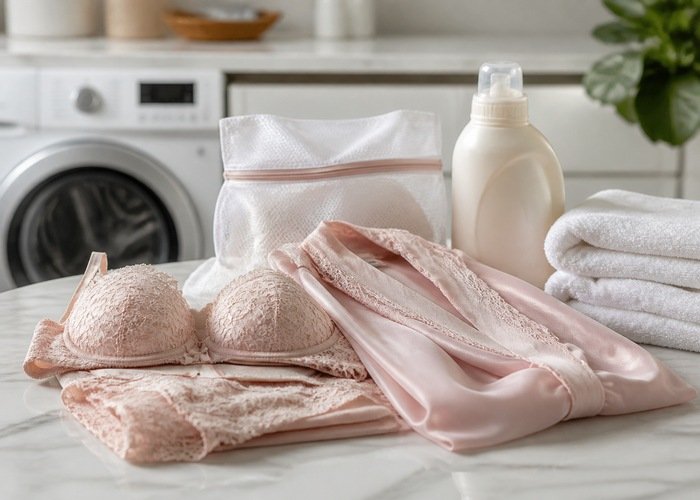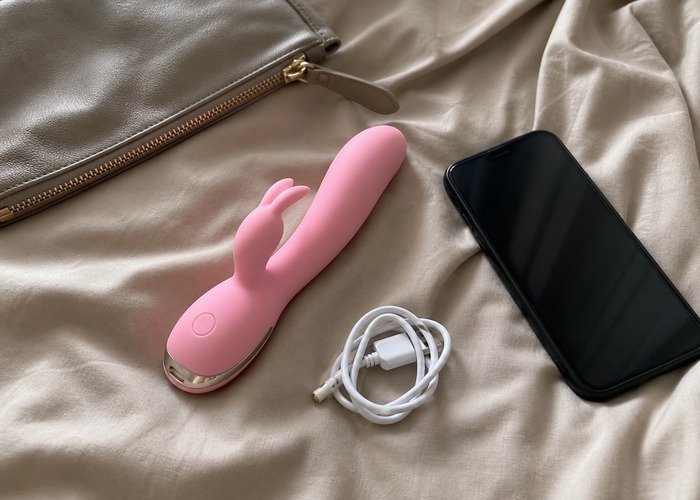
If you advise clients with sensitive skin or a history of contact dermatitis, material choice and fragrance exposure are not small details—they’re the difference between comfortable exploration and days of irritation. This ultimate guide translates standards, dermatology insights, and practical hygiene into clear steps you can share. We center the discussion on non-porous silicone vibrators while also covering stainless steel, glass, and ABS.
Nothing here is a diagnosis or substitute for care. If a client experiences persistent irritation, swelling, pain, or suspected allergic contact dermatitis, recommend they consult a licensed clinician.
Key takeaways
- Non-porous materials—especially non-porous silicone vibrators, stainless steel, and borosilicate glass—are easier to sanitize and typically better tolerated by sensitive skin.
- Fragrance-free beats “unscented.” Fragrance mixes are among the most common allergens in contact dermatitis.
- With silicone toys, pair a fragrance-free, water‑based lube; avoid silicone‑based lubes on silicone.
- Clean before and after each use; sanitize when indicated; use barriers if sharing or switching orifices.
- Retire toys that smell, feel tacky, discolor, crack, or have tears—especially important for sensitive users.
Why material matters for sensitive skin
For clients with sensitive skin, porosity is the first safety checkpoint. Porous elastomers (e.g., some TPR/TPE and “jelly” blends) can retain moisture and microbes, are harder to sanitize thoroughly, and may harbor residues. University health education and disability health charities recommend non-porous materials for easier cleaning and lower sharing risk, and suggest condoms if porous toys are used or shared. See guidance from the University of Rochester UHS on toy hygiene and sharing, and the disability charity Enhance the UK’s Sex Toy Safety briefing, which distinguishes porous from non-porous options and when to use condoms on toys. Those resources emphasize why non-porous silicone vibrators are often the safer default for sensitive users.
- According to the University of Rochester UHS, cleaning before and after use and using barriers on shared toys reduces transmission risk; their pages consistently favor easily cleaned materials (University of Rochester UHS guidance on materials and cleaning).
- Enhance the UK’s 2024 safety guide explicitly recommends non-porous options (silicone, ABS, stainless, glass) and condoms with more porous TPR (Enhance the UK Sex Toy Safety PDF, 2024).
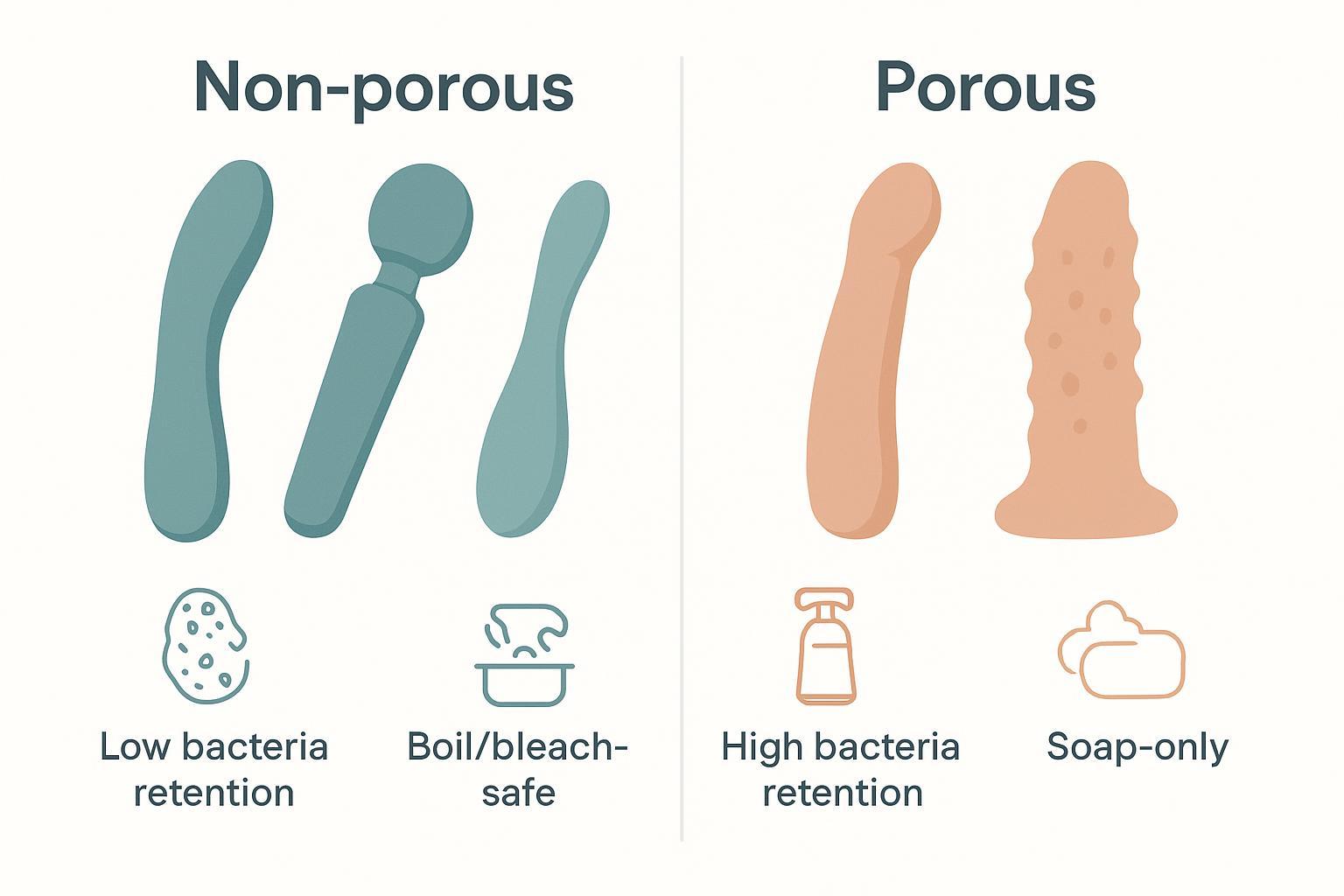
Materials at a glance for sensitive clients
| Material | Porosity | Typical additives | Lube compatibility | Cleaning/sterilization | Sharing risk | Notes for sensitive skin |
|---|---|---|---|---|---|---|
| Medical‑grade silicone | Non‑porous | Very low additive migration | Water‑based (avoid silicone‑based) | Soap/water; boil 3–5 min if non‑electronic; 10% bleach rinse | Low when sanitized | Primary focus: non-porous silicone vibrators are widely tolerated and easy to sanitize |
| Stainless steel (304/316) | Non‑porous | None | Water‑ or silicone‑based | Boil/bleach/dishwasher (non‑vibrating) | Very low | Excellent option for severe sensitivities |
| Borosilicate glass | Non‑porous | None | Water‑ or silicone‑based | Boil/bleach/dishwasher | Very low | Inspect for chips; otherwise smooth and inert |
| ABS plastic | Non‑porous surface | None | Water‑based preferred | Soap/water; avoid harsh solvents | Low | Common in handles/casings |
| TPR/TPE/jelly blends | Porous | Plasticizers, residual monomers | Water‑based | Soap/water; condoms if shared | Higher | Consider upgrading to non‑porous materials |
Why standards matter: In clinical contexts, biocompatibility for mucosal-contact devices is evaluated against endpoints like cytotoxicity, sensitization, and irritation. The FDA’s biocompatibility framework (aligned to ISO 10993 categories) helps explain why “medical-grade” silicone is widely used for internal-contact devices—though the ultimate safety depends on the finished product and its testing (FDA biocompatibility overview for mucosal-contact devices).
How to verify non-porous silicone vibrators (and comparable non-porous options)
For educators vetting products:
- Read the materials line for “silicone,” “platinum‑cured silicone,” and “non‑porous.” Cross‑check care instructions; if the listing warns against boiling and the toy is not motorized, clarify why.
- Look for complete material stacks: silicone plus ABS in the handle is common and acceptable.
- Examine surface finish: a smooth, matte silicone surface without tackiness is typical for non-porous silicone vibrators.
- When sensitivity is extreme, consider stainless steel or borosilicate glass for maximal inertness, and remind clients to inspect for chips (glass) or scratches (metal).
Disclosure: KssSelf is our product. For educators comparing examples of non-porous silicone vibrators, review the product details and care instructions on KssSelf listings such as the non‑porous silicone vibrators with multi‑function suction and tapping and a rabbit‑style option with sliding beads. Product pages typically specify silicone and ABS components and provide basic care guidance. Always verify material statements on-page before making sensitive‑skin recommendations.
Fragrance‑free in practice: toys, cleaners, and lubricants
“Fragrance‑free” means no fragrance chemicals are added; “unscented” can include masking fragrances. Dermatology literature shows fragrance mixes are among the most frequent allergens in allergic contact dermatitis. A 2024 review summarizes population‑level fragrance contact allergy around the mid‑single digits, with higher rates in dermatitis clinic cohorts (peer‑reviewed fragrance allergy review, 2024). Regulators are also sharpening label transparency; Health Canada’s policy will list certain fragrance allergens when above low thresholds in leave‑on or rinse‑off products, helping consumers identify triggers (Health Canada labeling guidance for fragrance allergens).
Data snapshot: Fragrance contact allergy appears in roughly 4–5% of general population patch testing in Europe, with clinic populations reporting higher positivity to specific markers such as linalool or limonene hydroperoxides (varies by series) (broad ACD overview with common allergens).
Implications for educators:
- Steer clients toward fragrance‑free devices, cleaners, and lubricants.
- Avoid toy cleaners with perfumes, essential oils, or botanical blends when advising sensitive users; mild, fragrance‑free soap and warm water suffice for routine cleaning.
Lube compatibility for sensitive users and non-porous silicone vibrators
For silicone toys, default to fragrance‑free, water‑based lubricants. Silicone‑based lubricants can soften or damage silicone surfaces over time. Health education pages and NHS‑linked resources commonly teach this compatibility rule; reinforce it in your handouts. If you curate a resource list, direct clients to fragrance‑free, glycerin‑free, paraben‑free options.
For convenient internal browsing, see KssSelf’s category for hypoallergenic, fragrance‑free water‑based lubricants.
Lubricant compatibility matrix
| Toy material | Water‑based lube | Silicone‑based lube | Oil‑based lube | Notes |
|---|---|---|---|---|
| Non‑porous silicone vibrators | Recommended | Avoid (may degrade surface) | Use cautiously; can trap residues | Best tolerated: fragrance‑free, glycerin‑free water‑based |
| Stainless steel | Recommended | Compatible | Compatible | Inert surface; wipe thoroughly after use |
| Borosilicate glass | Recommended | Compatible | Compatible | Inspect for chips; otherwise easy to clean |
| ABS | Recommended | Usually compatible | Check manufacturer guidance | Often used in casings; avoid harsh solvents |
| TPR/TPE/jelly | Recommended | Avoid | Avoid | Porous; use condoms if shared; replace more often |
Cleaning and sanitizing workflow for non-porous silicone vibrators
Client‑ready steps you can copy into a handout:
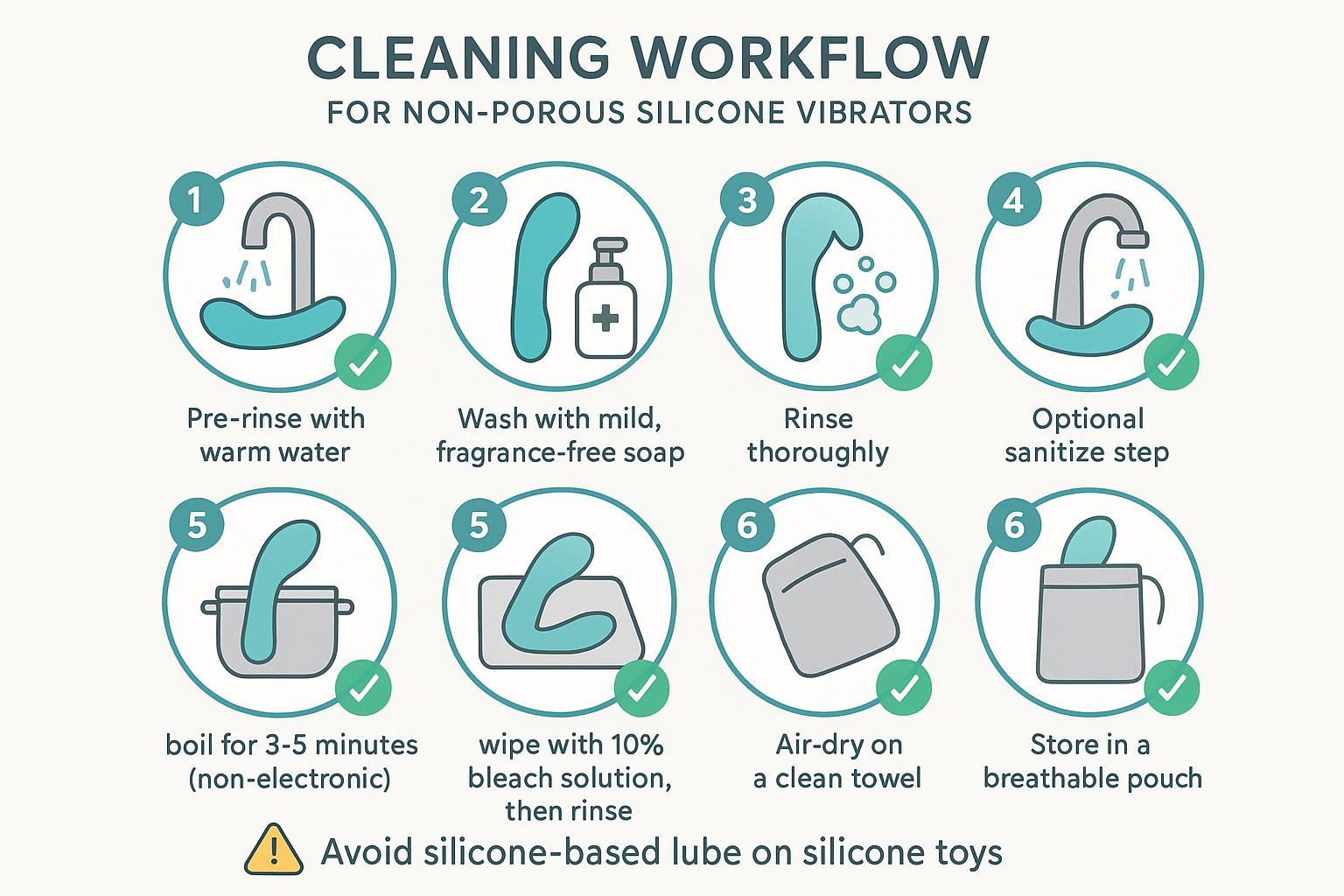
- Pre‑rinse with warm water.
- Wash with mild, fragrance‑free soap; gently lather all surfaces.
- Rinse thoroughly.
- Sanitize when indicated:
- Non‑electronic silicone: boil 3–5 minutes or wipe with 10% bleach solution, then rinse well.
- Motorized toys: surface clean only unless rated waterproof.
- Air‑dry on a clean towel.
- Store in a breathable pouch; keep separate from other materials.
Educational references worth sharing with clients include university pages that recommend cleaning before/after use and using condoms on shared toys (UHS cleaning and sharing advice) and a charity guide distinguishing when condoms are useful for more porous materials (Enhance the UK Sex Toy Safety PDF, 2024). For a fuller walkthrough on workflow and sanitizer choices, see our internal guide on how to clean and sanitize sex toys.
Recommended educational video: “How To Clean Your Sex Toys” explains practical soap‑and‑water basics and material cautions in a neutral, educational format (YouTube: How To Clean Your Sex Toys).
When to retire a toy (especially for sensitive skin)
Replace a device if you notice any of the following: tackiness that doesn’t wash off, cracks or tears, persistent odor, discoloration, a sticky film, or abrasion you can feel with a fingertip. These are red flags for residue retention or material breakdown—both risk factors for irritation. For a deeper dive on lifecycle and risk indicators, see this overview of when to replace a sex toy.
Micro‑cases and educator scripts
Case 1 — Fragrance‑related irritation
- Scenario: A client with eczema reports burning/itching after using a new toy plus a scented cleaner.
- What to do: Pause use; switch to non‑porous silicone vibrators or stainless steel; clean with fragrance‑free soap and warm water; swap to a fragrance‑free, glycerin‑free, water‑based lube; monitor for 48–72 hours. If symptoms persist or worsen, refer to a clinician.
- Script: “Let’s eliminate fragrance exposures and keep your device non‑porous and very clean for a week. If irritation continues, a clinician can check for allergic contact dermatitis.”
Case 2 — Suspected latex sensitivity
- Scenario: A client develops a rash after using latex condoms on toys.
- What to do: Use polyisoprene or polyurethane condoms or nitrile gloves instead; confirm accessories (straps, rings) are latex‑free; document reactions and recommend medical evaluation for severe or systemic symptoms. CDC/NIOSH materials note that latex protein allergy can trigger significant reactions; non‑latex alternatives are preferred (CDC/NIOSH overview of latex‑related PPE choices).
- Script: “Let’s switch to non‑latex barriers and watch for improvement. If you ever notice swelling, hives, or breathing changes, stop and seek urgent care.”
Case 3 — Porous toy cross‑contamination
- Scenario: Partners shared a porous TPE toy without condoms; one developed symptoms afterward.
- What to do: Discontinue sharing or use a new condom per partner/orifice; clean before and after each use; consider replacing the porous device with a non‑porous silicone vibrator. Both UHS and Enhance the UK caution that porous surfaces are harder to sanitize thoroughly (UHS guidance; Enhance the UK PDF).
- Script: “Because porous materials can hold onto moisture and bacteria, a non‑porous silicone option plus barriers when sharing is safer for both of you.”
Quick educator checklist (copy/paste)
- Start with non‑porous silicone vibrators; consider stainless steel or glass for severe sensitivities.
- Choose fragrance‑free toys, cleaners, and water‑based lubricants; avoid silicone lube on silicone toys.
- Clean before and after use; sanitize when indicated; use barriers if sharing or switching orifices.
- Retire any device that looks or feels degraded.
- For persistent irritation or suspected allergy, refer to a clinician for assessment.
Conclusion
For sensitive clients, material, fragrance, and hygiene choices add up. Non‑porous silicone vibrators, paired with fragrance‑free care and thoughtful cleaning, give you a reliable baseline: fewer residues, simpler sanitization, and less guesswork. Offer alternatives like stainless steel and borosilicate glass when you need maximal inertness, and keep the workflow simple and repeatable. That consistency—plus timely replacement when wear appears—keeps exploration comfortable and safer for sensitive skin.
FAQs
Q1: How can I tell if a toy is truly non‑porous silicone?
Look for explicit “silicone” or “platinum‑cured silicone” in materials, care instructions that match non‑porous expectations, and a smooth, non‑tacky finish. If the toy is non‑motorized silicone but “can’t be boiled,” ask the manufacturer why.
Q2: Are non‑porous silicone vibrators always better than ABS, steel, or glass?
Not always “better,” but often the most versatile. For severe sensitivities, steel or glass can be excellent because they’re very inert. ABS is common in handles and is easy to clean.
Q3: What’s the difference between “fragrance‑free” and “unscented”?
Fragrance‑free contains no fragrance chemicals; unscented can include masking fragrance to neutralize smell. For sensitive users, prefer fragrance‑free.
Q4: Which lube should I pair with non‑porous silicone vibrators?
A fragrance‑free, glycerin‑free, water‑based lube. Avoid silicone‑based lube on silicone toys.
Q5: How often should I sanitize, not just clean?
Sanitize after illness, before sharing, after anal use, and periodically for peace of mind. For non‑electronic silicone, boiling 3–5 minutes is effective; otherwise use a diluted bleach rinse and rinse thoroughly.
Q6: What barriers should clients use if they share toys?
New condoms per partner and per orifice; nitrile gloves as needed. For porous toys, barriers are especially important.
Q7: How do I know when to replace a toy?
If it smells, feels sticky, shows cracks/tears, or discolors—retire it. These are signs of breakdown and residue retention.
Q8: What if a client suspects allergic contact dermatitis?
Pause use, remove all fragrance exposures, clean gently with fragrance‑free soap and water, and refer to a clinician if symptoms persist or worsen.
Q9: Can clients with latex allergies use non‑porous silicone vibrators safely?
Yes—the toy material is separate from barrier choice. Use latex‑free barriers (polyisoprene/polyurethane condoms or nitrile gloves) and confirm accessories are latex‑free.
Q10: Are glass toys safe for sensitive skin?
Borosilicate glass is non‑porous and smooth; it’s often well tolerated. Advise clients to inspect for chips before each use.
Additional internal examples and reading
- Explore example listings of non‑porous silicone vibrators to compare materials and care notes: a multi‑function silicone model and a rabbit‑style silicone vibrator.
- Cleaning deep‑dive: How to properly clean and sanitize your sex toys.
- Lubricants category: Hypoallergenic, fragrance‑free water‑based lubricants.
- Lifecycle guidance: Why old sex toys could be risky and when to replace them.
Sources and further reading (selected)
- University of Rochester UHS — materials, cleaning, and sharing guidance: UHS sex toy materials and hygiene
- Enhance the UK (2024) — material porosity and condom guidance: Sex Toy Safety PDF
- FDA — biocompatibility endpoints for mucosal‑contact devices: FDA biocompatibility basics
- Peer‑reviewed dermatology — fragrance contact allergy: Fragrance allergy review, 2024; Allergic contact dermatitis overview, 2023
- Health Canada — fragrance allergen labeling thresholds: Cosmetics labeling guidance
- CDC/NIOSH — non‑latex alternatives for sensitive individuals: Latex‑related PPE considerations