Choosing the right G‑spot rabbit vibrator isn’t just about grabbing the most powerful device on the page. If you’re an experienced user upgrading for stronger dual stimulation, the best results come from matching the vibrator’s curve, insertable length, clitoral arm geometry, and motor quality to your anatomy and preferences. This guide explains how to choose a G‑spot rabbit vibrator with precision—so you can get consistent internal pressure and reliable clitoral contact, plus easy care and safety.
Key takeaways
- Prioritize fit first: a pronounced upward curve and a shaft length that matches your comfort range usually make G‑spot contact more reliable.
- Independent dual motors help you personalize intensity inside and outside without compromising pressure.
- Choose non‑porous, body‑safe silicone and default to water‑based lube unless the product says silicone lube is compatible.
- Check waterproofing/IP rating and cleaning instructions; “submersible” is different from “splashproof.”
- Verify usability details—noise, controls, travel lock, charging style, and runtime—before you buy.
The fast path: how to choose a G‑spot rabbit vibrator in five steps
A quick framework for experienced users who want stronger, better‑fitting dual stimulation.
- Step 1: Map your fit—decide on curve firmness, insertable length (roughly 10–15 cm for many users), and girth you enjoy.
- Step 2: Align the clitoral arm—match arm length and flexibility to your clitoral‑vaginal (C–V) distance; consider suction when alignment is tricky.
- Step 3: Choose motors—favor rumbly profiles and dual independent motors for control and pressure resilience.
- Step 4: Confirm materials & lube—non‑porous silicone; water‑based lube by default.
- Step 5: Check waterproofing & usability—IP rating or clear “submersible” claim; review charging, noise, and travel lock.
Quick checklist
- Curve: gentle, pronounced, or sculpted bulge for G‑spot pressure?
- Insertable length: within your comfortable range (often 10–15 cm)?
- Diameter/girth: moderate stretch you enjoy?
- Clitoral arm: flexible enough to reach your anatomy consistently?
- Motors: dual independent control? Rumbly feel preferred?
- Material: body‑safe, non‑porous (e.g., silicone)?
- Lube: water‑based planned?
- Waterproofing: rated IPX7+ or clearly “submersible” for easy cleaning?
- Usability: noise ≤50–60 dB; magnetic USB; travel lock?
Map your fit: curve, insertable length, and girth
To optimize G‑spot contact, think about how the shaft’s geometry interacts with your anatomy. The G‑spot region is on the anterior (front) vaginal wall, typically about 1–2 inches (2.5–5 cm) inside the opening, and sensation varies from person to person. Health education resources emphasize variability and the “come‑hither” angle toward the belly button; keep personalization front and center. See anatomy explainers from Healthline (2019–2026) and the Cleveland Clinic (2021–2026) for context.
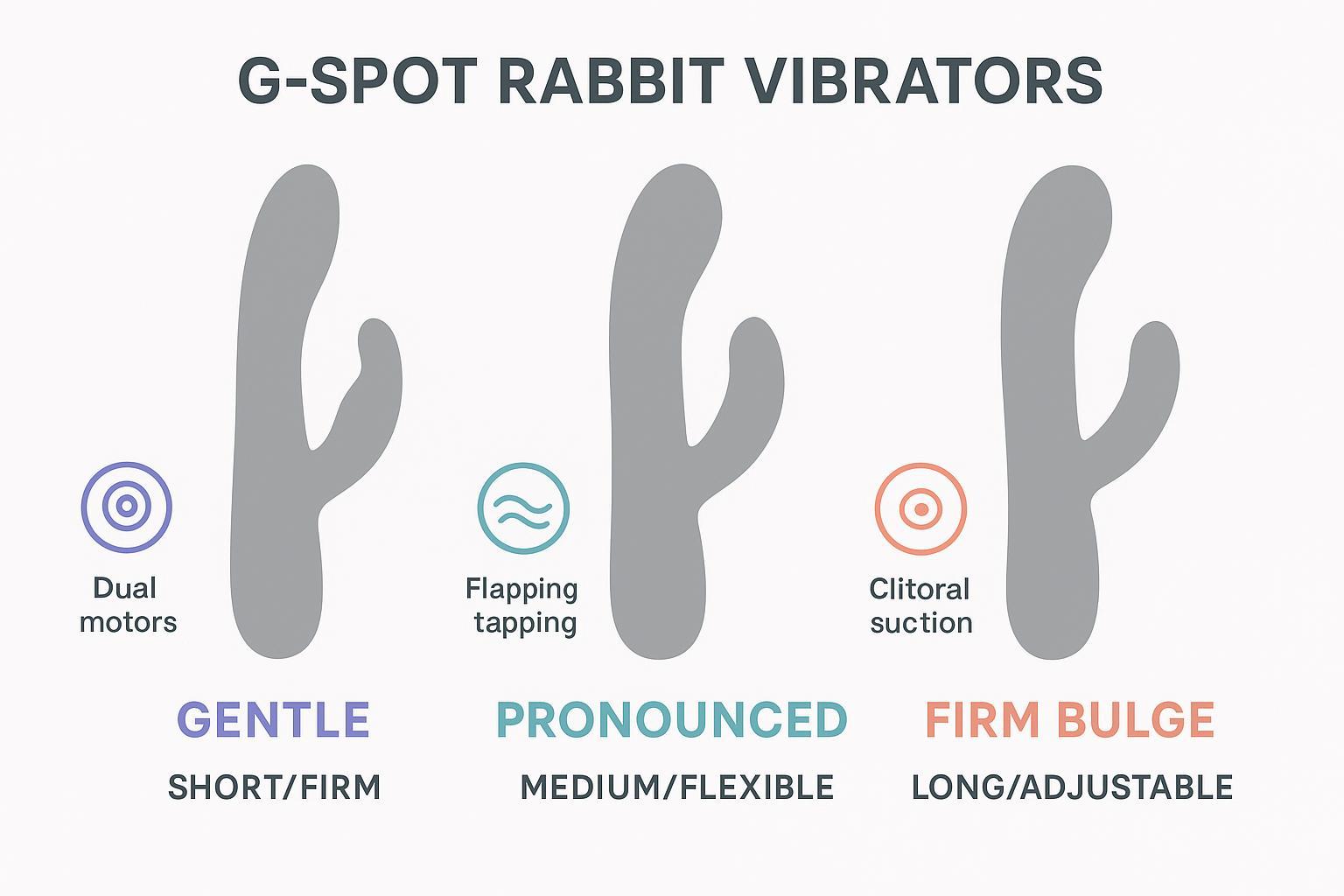
Most upgraders prefer a shaft that’s moderately firm with a pronounced upward curve or sculpted bulge; this helps the toy “find” the anterior wall and maintain pressure under movement. Insertable length comfort ranges vary widely. Many users enjoy around 4–6 inches (10–15 cm) with moderate diameters near 1.25–1.6 inches (3.2–4.1 cm), but your preference may be outside these bands. Vaginal depth changes with arousal and can expand significantly; typical ranges are discussed by Healthline’s guide to vaginal depth and the Cleveland Clinic’s overview.
Measurement ranges (typical comfort bands)
| Parameter | Practical range for many users | Notes |
|---|---|---|
| Insertable length | 10–15 cm (4–6 in) | Choose less/more based on comfort and where your G‑spot region feels responsive. |
| Diameter/girth | 3.2–4.1 cm (1.25–1.6 in) | Pick narrower for precision, wider for fuller pressure. |
| Curve profile | gentle → pronounced → bulged | More pronounced profiles improve anterior wall contact for many upgraders. |
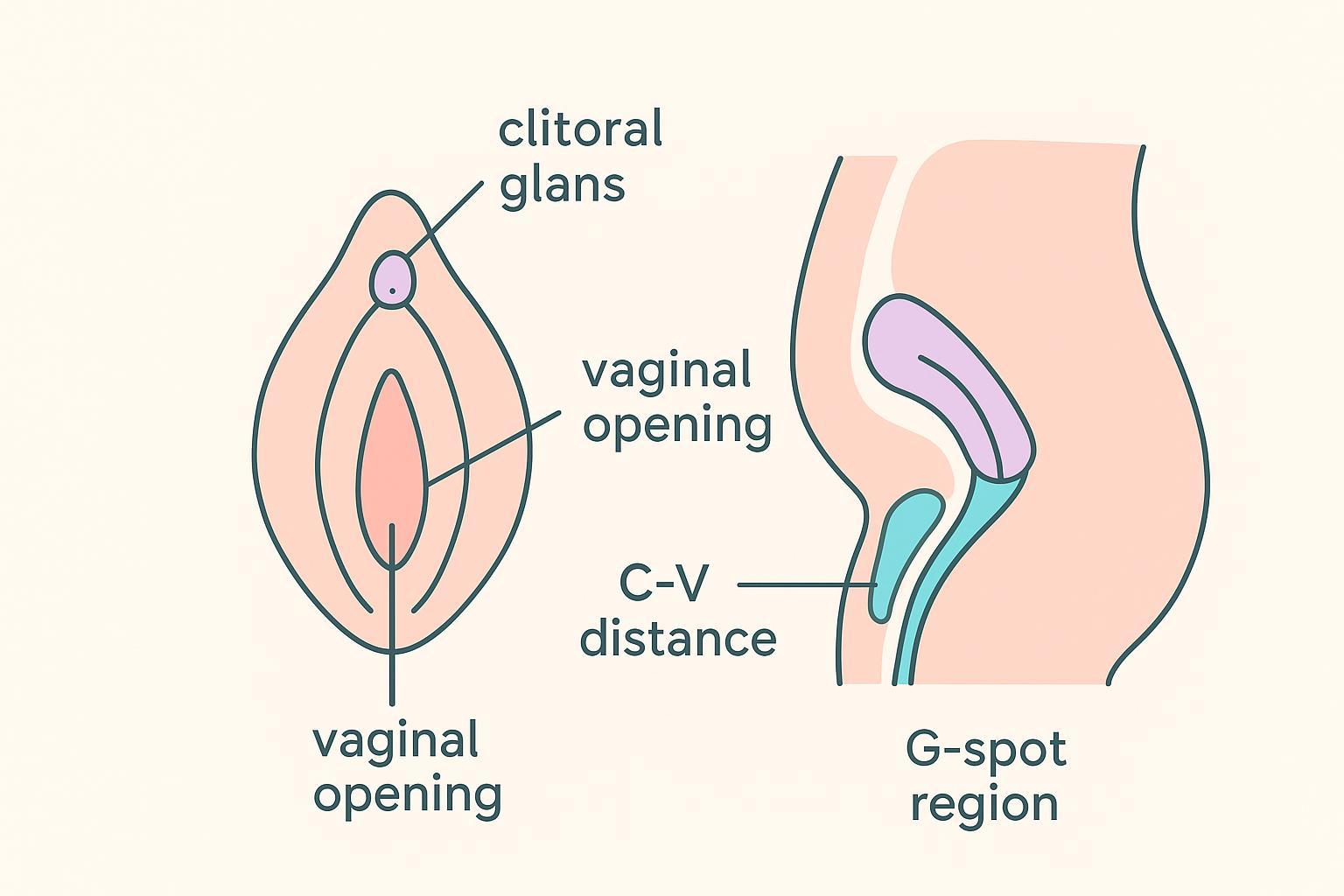
The diagram above shows a simple way to estimate the clitoral‑to‑vaginal (C–V) distance, which influences whether the external arm consistently reaches your clitoris while the shaft targets your G‑spot. You don’t need clinical precision—just a practical sense of whether you tend toward a shorter or longer reach.
Align the clitoral arm for reliable dual contact
The external arm’s length, flexibility, and angle are critical. If your C–V distance is shorter, a firmer, shorter arm can give clearer pressure without folding away. If it’s longer, favor a more flexible or slightly longer arm to maintain contact as you change positions.
When alignment is difficult, consider external clitoral suction. Suction cups are less sensitive to arm length and can lock onto the clitoris even if the shaft’s position shifts. For a three‑in‑one design mixing internal tapping and external suction, see the vibrator with flapping vibration and clitoral suction, which combines internal tapping/vibration with suction intensity control.
Motors and sensation quality: rumbly vs. buzzy, and dual control
Experienced users often prefer rumbly (lower‑frequency) motors because they deliver deeper sensations that carry through tissue and maintain presence under pressure. Buzzy profiles skew toward higher frequency and surface‑level feel, which can be effective for pinpoint clitoral focus but may feel shallow for internal pressure. Mainstream editorial explains these differences and how dual stimulation benefits from independent control; see Women’s Health’s vibrator guides (2024–2026) for a plain‑language overview.
Independent dual motors let you set internal and external intensities separately, or even turn one off. That flexibility helps you adapt to changing sensitivity and alignment.
Runtime and charging expectations
| Feature | Typical expectation | Notes |
|---|---|---|
| Charging style | Magnetic USB | Use the provided cable; align pins securely. |
| Charge time | ~1–2.5 hours | Varies by battery size and charger. |
| Runtime | ~50–120 minutes | Higher intensities reduce runtime; dual motors draw more power. |
| Travel lock | Press/hold (often 3–5 s) | Check the manual to avoid accidental activation. |
Materials, lube, cleaning, and waterproofing
Favor non‑porous, phthalate‑free, body‑safe materials such as high‑quality silicone. Water‑based lube is the simplest default for silicone toys and cleans easily. Medical guidance emphasizes gentle, unscented products and avoiding irritants; see Cleveland Clinic’s overview of lubricants. For shared use, add barriers (e.g., condoms) and clean before/after use as a routine step; Bedsider’s sexual health articles note practical care norms.
Silicone‑on‑silicone lube compatibility remains debated in industry blogs. Unless your product explicitly states compatibility, default to water‑based lube. Some blogs have run informal experiments (e.g., CaraSutra’s 2023 silicone‑on‑silicone test), but these are not medical‑grade studies; follow manufacturer instructions.
For cleaning, use warm water and mild soap; toy cleaners are optional. Avoid submersion unless the device is rated for it.
Lube compatibility at a glance
| Lube type | With silicone toys | Pros | Cons |
|---|---|---|---|
| Water‑based | Recommended default | Easy to clean; widely compatible | May dry faster—reapply as needed |
| Silicone‑based | Avoid unless product permits | Long‑lasting; condom‑safe | Potential material interaction; harder to clean |
| Oil‑based | Generally avoid | Slick feel | Can degrade latex; residue; harder to clean |
Waterproofing and IP ratings (plain English)
IEC IPX ratings indicate water resistance levels. In short: IPX4 = splash‑resistant; IPX6 = resistant to strong water jets; IPX7 = submersible to 1 m for ~30 minutes; IPX8 = submersible beyond IPX7 under manufacturer‑specified conditions. See standards documentation for definitions: IEC 60529 summaries. In practice, “submersible” devices are easier to clean in sinks or baths. Always follow product‑specific care instructions and keep charging ports dry.
Watch: Cleaning basics for sex toys
A concise, educational overview can reinforce good habits. Here’s a non‑competitor video that summarizes cleaning steps and lube considerations: Sex toy cleaning and care basics (YouTube). Follow your product manual over any general video guidance.
Example: applying the framework to a flapping G‑spot rabbit
Disclosure: KissSelf is our product.
Let’s apply the framework to a flapping G‑spot rabbit design. A model with an upward curve and rhythmic flapping/tapping can deliver consistent anterior wall contact while the external arm stimulates the clitoris.
- Curve and firmness: A pronounced curve helps map to the G‑spot region and maintain pressure under movement.
- Motors and modes: Dual stimulation with separate vibration and flapping/tapping patterns allows tailoring sensation quality; modes typically range broadly (e.g., multiple vibration and flapping modes).
- Charging and runtime: Many designs use magnetic USB charging with around ~2 hours to charge and ~50–60 minutes of use at mixed intensities.
- Waterproofing: Submersible/waterproof claims, when present, simplify cleaning; confirm the product page and manual.
- Noise: Typical listings show ≤50–60 dB, which is audible but manageable behind closed doors.
If your anatomy benefits from a tongue‑style flapping tip and IPX7‑rated waterproofing, see the tongue G‑spot flapping vibrator. If alignment with a vibrating arm is inconsistent, a suction option like the G‑spot rabbit with clitoral suction can improve external contact while the internal arm taps or vibrates. Prefer tapping over suction? Consider the G‑spot rabbit with clitoral tapping.
Troubleshooting fit and performance
If the clitoral arm slips away under pressure, try a more flexible arm or reduce insertable length by a centimeter or two; changing angles can help the arm settle naturally onto the clitoris. If internal pressure feels weak, look for a firmer shaft or a design with flapping/tapping that builds rhythmic contact. For noise concerns, check product specs for decibel estimates and consider thicker silicone sheathing (which can dampen sound slightly but may diffuse vibration).
Verification steps:
- At rest, does the arm make clitoral contact without needing a full thrust? If yes, alignment is likely good.
- Under mild pressure, does the shaft maintain contact with the anterior wall? If yes, curve/firmness are suited to you.
- Do independent motors let you balance internal/external intensity without losing pressure? If yes, you’ve matched power to fit.
At‑a‑glance: which feature to choose and why
| Feature | Choose it when… | What it delivers |
|---|---|---|
| Pronounced curve or bulge | You want stronger, consistent G‑spot pressure | Reliable anterior wall contact |
| Flexible clitoral arm | Your C–V distance is longer or variable | Maintains contact across positions |
| Independent dual motors | You need granular control inside/outside | Personalized intensities and patterns |
| Flapping/tapping internal tip | Pressure alone isn’t enough | Rhythmic contact that “finds” the spot |
| Clitoral suction | Alignment with an arm is challenging | Stable external contact with adjustable suction |
| Submersible (IPX7+) | You prefer sink/bath cleaning | Easier cleaning; follow care instructions |
FAQs
- What does “how to choose a G‑spot rabbit vibrator” really come down to? It’s about fit, motor quality, and safety. Match the curve and insertable length to your body, ensure the clitoral arm reaches comfortably, favor independent motors, and choose body‑safe materials with clear care guidance.
- How do I estimate my C–V distance without tools? Use a mirror or comfortable position to note the space from the clitoral glans to the vaginal opening. If it looks longer, pick a more flexible/longer arm or consider suction.
- Is rumbly always better than buzzy for the best G‑spot rabbit vibrator? Not always. Rumbly tends to feel deeper and maintain presence under pressure, but some users prefer buzzy for pinpoint clitoral focus. Choose based on your sensation preferences.
- Can I use silicone lube with silicone toys? Default to water‑based lube unless the product explicitly states silicone lube compatibility. Follow the manual over general advice.
- What’s the difference between splashproof and submersible? Splashproof (e.g., IPX4) handles light water exposure; submersible (IPX7/IPX8) allows immersion under defined conditions. Only submerge if the device is rated and ports are sealed.
- How loud are dual‑motor rabbits? Listings often quote ≤50–60 dB. Real‑world noise rises with intensity and pressure. Look for dB specs on product pages and test at home to confirm comfort.
- How should I clean and store my vibrator? Warm water and mild soap; dry thoroughly. Store in a lint‑free pouch. If shared, add barrier methods and clean before/after use.
- What runtime should I expect? Around ~50–120 minutes, depending on intensity, motor type, and patterns. Dual motors draw more power.
- Does waterproofing affect safety? It affects cleaning convenience. Waterproof devices are easier to wash, but still keep charging ports dry and follow the manual.
- Where can I learn more about materials and care? See Cleveland Clinic’s lubricant overview and general sexual health articles on routine cleaning, plus KissSelf’s own guides like A beginner’s guide to using vibrators.
Next steps
If you’re ready to apply this framework, browse the full range in KissSelf’s vibrators category and filter for curved shafts, flexible arms, dual independent motors, and IPX7+ waterproofing. Choose the combination that fits your anatomy and sensation preferences, and you’ll know you’ve found the right match when clitoral contact and G‑spot pressure feel immediate and steady without constant repositioning.
Author: A sex educator and product specialist focused on anatomy‑aware, safety‑first guidance for choosing and caring for pleasure devices.