“4-in-1” describes a grouped design; it does not tell you how every setting works or how the device should be cleaned. The more useful starting point is to separate three things: physical functions, available modes and care instructions.
It is easy to mix them together. You see a curved body, several buttons and two different mode counts, then expect the number in the name to explain the whole device. It cannot. A shape, a movement and a charging method describe different aspects of the same object.
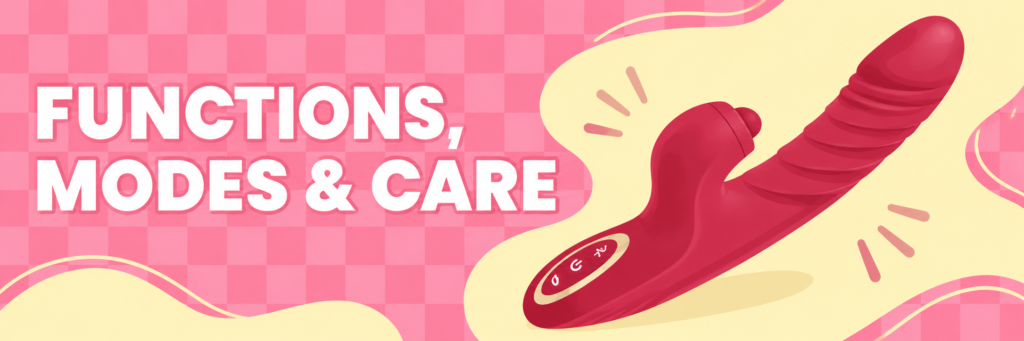
This guide uses KissSelf’s red 4-in-1 model as a documentation example. It explains the specifications stated in the listing and distinguishes them from information that still needs the model’s instructions. It is not a performance test, a clinical assessment or a recommendation.
First, separate the function from the pattern
A function describes a type of action. In this listing, mechanical movement, vibration and pulsing suction are described separately. A mode is a setting or pattern within a function. The terms are related, but they are not interchangeable.
The current description lists 7 movement modes and 10 vibration modes. That does not establish 70 independent combinations, 17 intensity levels or a specific sequence of button presses. Those are different claims, and each would need its own documentation.
The fourth element in the “4-in-1” name is not explicitly defined in the text reviewed for this guide. Rather than assigning a fourth mechanism from the appearance alone, read the name as the product label and use the detailed description for individual facts.
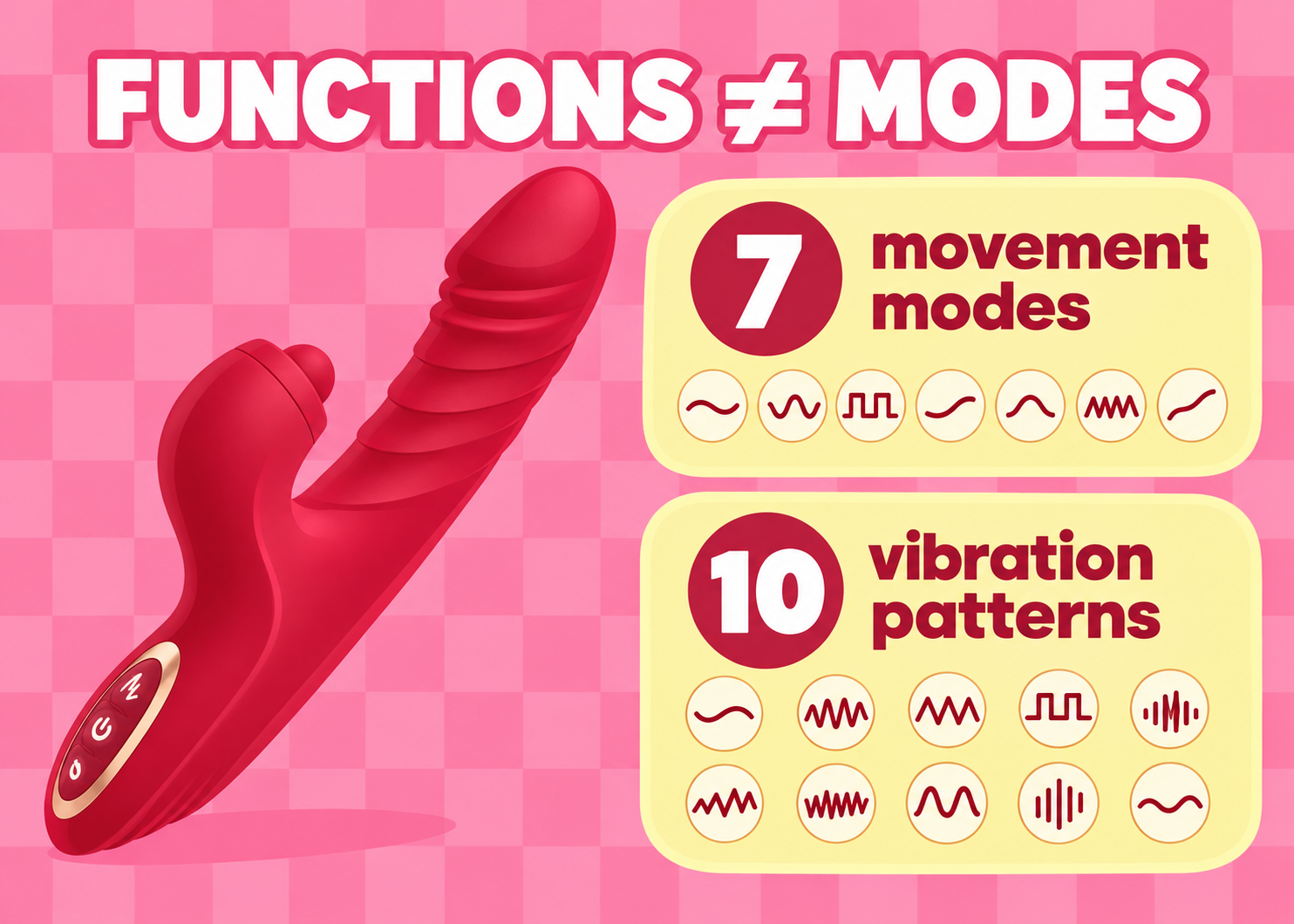
What the listing actually identifies
| Listed detail | What it tells you | What it does not establish |
|---|---|---|
| 7 movement modes | The listing describes seven settings for telescoping movement. | Movement distance, force, speed or the exact control sequence. |
| 10 vibration modes | Ten vibration settings are stated. | Ten separate strength levels or any measured vibration output. |
| Pulsing suction opening | A separate external pressure-based function is described. | A verified pressure measurement or an independently documented mode count. |
| Silicone | This is the material named in the specifications. | A material certification, medical-device approval or suitability for every individual. |
| USB rechargeable | The power source is described as rechargeable through USB. | A particular connector, charger rating, charging time or runtime. |
Scroll the table sideways to read all three columns.
This distinction keeps an ordinary specification from turning into an unsupported promise. A number can identify an option without measuring its output. A material name can identify a surface without certifying the whole product.
Buttons explain less than a control sequence
The product photograph shows a three-button control area. That is an observation about the image, not a complete operating guide. A short press, long press and repeated press may have different effects, but their assignments cannot be established from a symbol alone.
The useful instructions are the sequence for switching on, identifying each control, switching functions off and stopping the device completely. If a lock or memory feature is not documented, do not assume it exists. Likewise, this model’s listing does not establish App control or internet access.
Keep the exact model instructions with the device. If a button behaves differently from those instructions, record which button was pressed and what happened, rather than treating a different product’s tutorial as a substitute. The customer-help page provides a starting point for support questions.
Read the water claim before planning the cleaning method
The short feature list uses “100% waterproof,” while the detailed description refers to a water-resistant body and supplied guidance. The text reviewed does not state an IP code or a complete immersion procedure. A general adjective therefore cannot settle the cleaning conditions.
The IEC 60529 description identifies the IP Code as a system for classifying enclosure protection. It is a reference for what such a classification means—not evidence that this model has been tested to a particular rating.
The practical distinction is between the surface-cleaning method, water exposure permitted for the housing and care of the charging area. Ask for those details together. Our guide to water-resistance claims and their limits explains why a rating and a general cleaning instruction answer different questions.
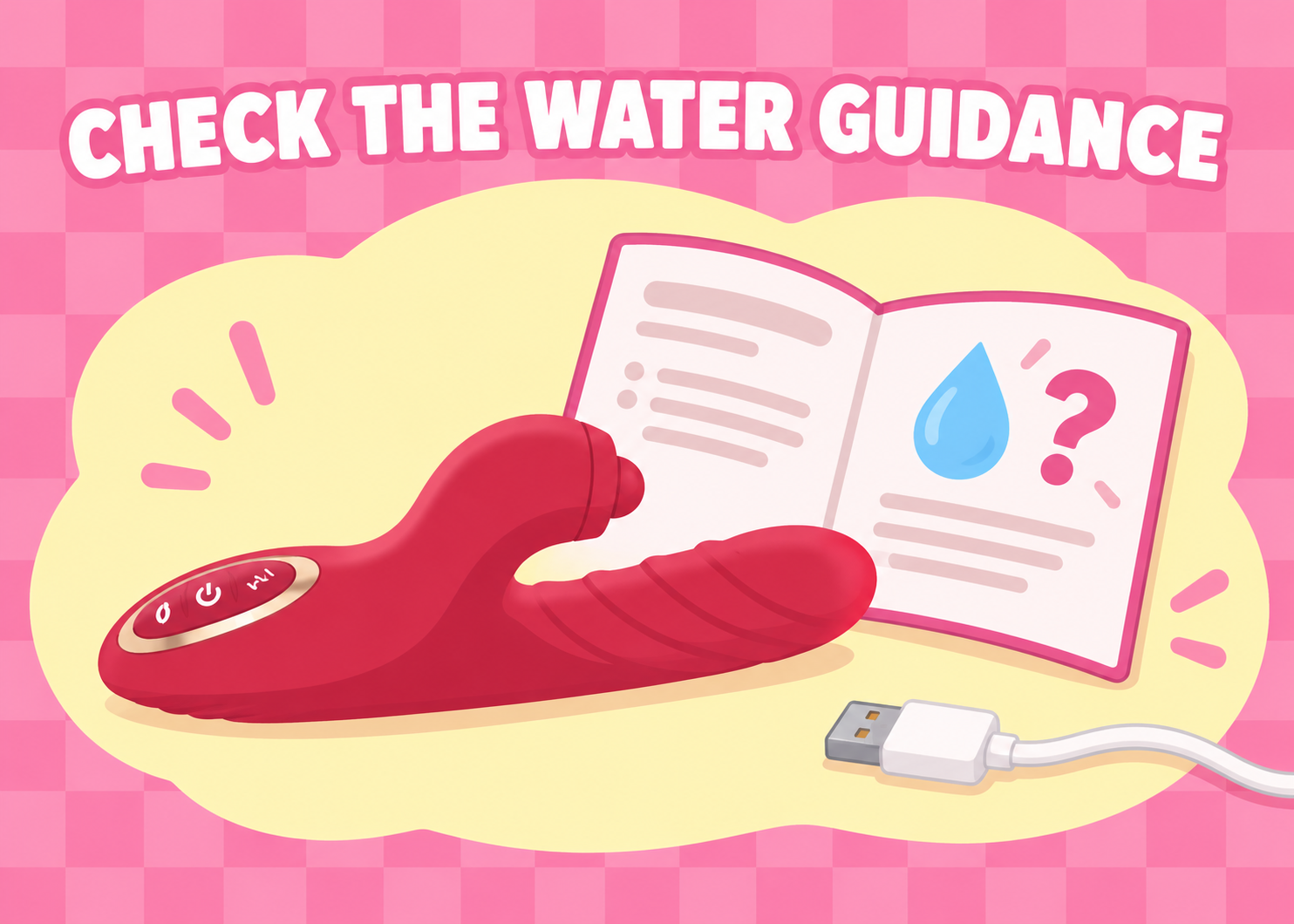
A care routine has several separate jobs
The product description calls for cleaning before and after use, complete drying and separate storage. Those steps should remain distinct: removing residue, allowing the device to dry and protecting it during storage are not the same task.
Do not infer that a seam is a removable joint, or that silicone construction makes an electronic device suitable for boiling, a dishwasher or an improvised disinfectant. The model’s approved method must account for its internal components as well as the outer material. The explanation of fixed and removable parts is useful background when identifying which pieces are intended to separate.
For charging, use the model’s specified connection and power requirements, and follow its instructions for the charging area. A USB label alone does not supply the missing voltage, current or drying procedure. Keep a copy of the guidance rather than trying to reconstruct it from the listing each time; our care and charging checklist separates those records.
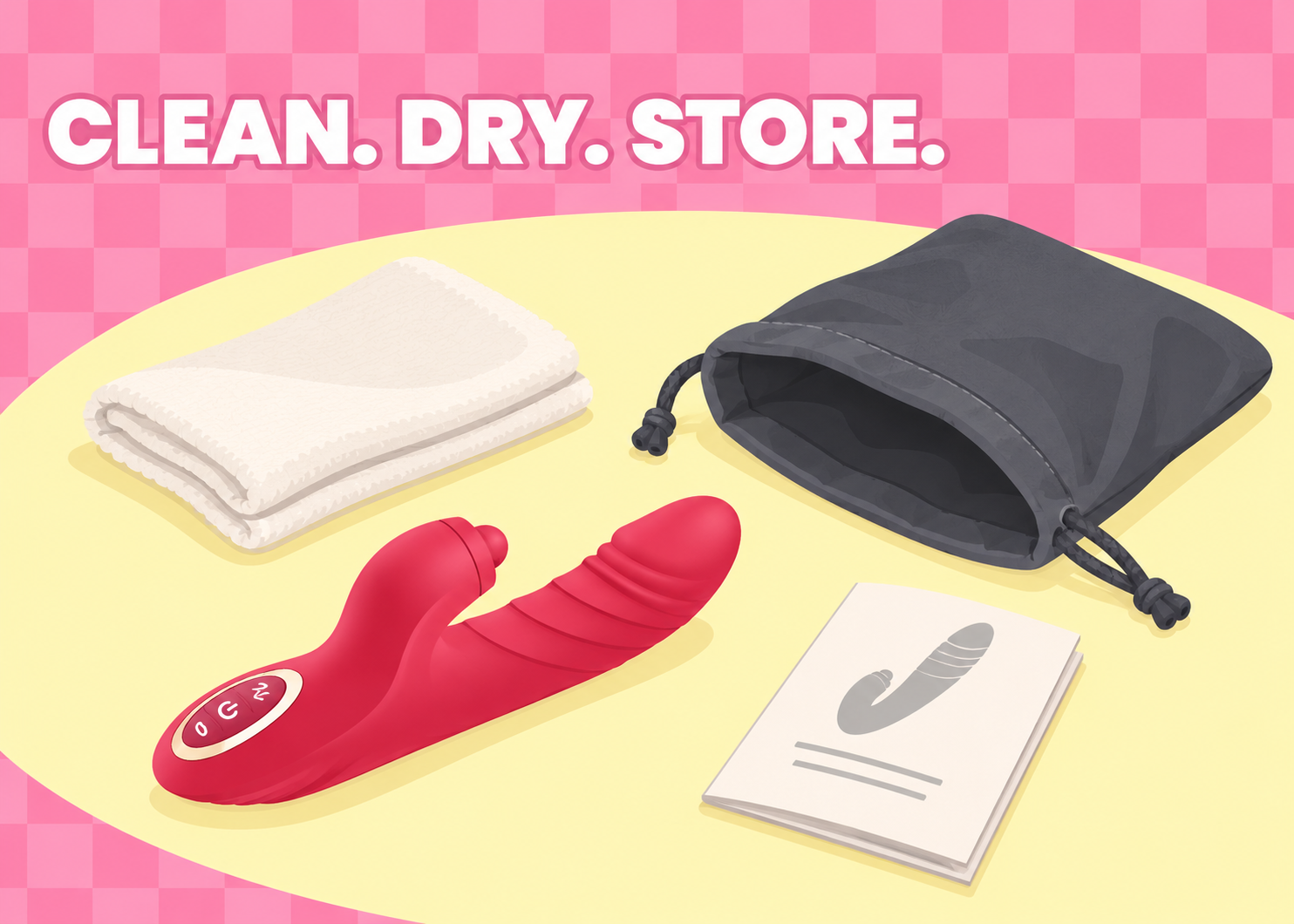
Shared use adds a hygiene question
If an intimate device is shared, cleaning and barriers require separate attention. Chelsea and Westminster Hospital NHS guidance advises avoiding shared toys, or washing them or using a new condom when another person uses them. A care illustration does not demonstrate that cleaning has eliminated every infection risk.
Where a barrier is used, check its instructions and compatibility. The NHS condom guidance specifically warns against oil-based lubricant with latex condoms. That is a barrier-compatibility point; it does not replace the device manufacturer’s material instructions.
The information worth keeping together
A useful model record is short: the exact name, the instruction document, the control sequence, the permitted cleaning method and the charging specification. Add any written clarification you receive about water exposure or removable parts.
For this model, the listing establishes the stated mode counts, named material and rechargeable power description. It leaves other questions open. If those affect care or operation, ask support for the specific missing instruction, including the model name and the exact detail you need. No private usage description is necessary for a basic documentation question.
A little clarity
Frequently asked questions
Clear answers about the label, settings and care information.
01Does “4-in-1” identify four independently controlled motors?
No. The phrase alone does not define the internal mechanisms or independent controls. The reviewed listing does not document four separate motors.
02Are 7 movement modes and 10 vibration modes the same as 70 combinations?
No. Separate counts do not establish that all settings can be combined independently. A combination total needs explicit documentation.
03Does the silicone description establish medical-grade certification?
No. The current specifications name silicone, but the material description alone is not a certification or a clinical assessment.
04Can this guide confirm that the whole device can be submerged?
No. The reviewed text does not provide an IP code or complete immersion conditions. Obtain the model-specific water and cleaning guidance.
05Are the illustrated booklet and pouch included?
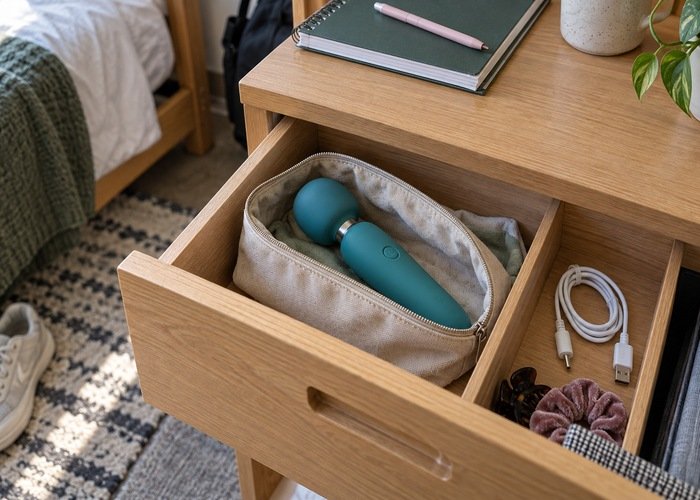
The illustrations are explanatory. They do not establish package contents; the actual contents must be confirmed from the model documentation.
A multi-function label becomes easier to understand once each claim has a clear job. Keep the action, its settings and the care requirements separate—and let the actual instructions, rather than the number in the name, explain how the device is operated and maintained.