A harness-compatible dildo has to do more than fit the body. It has to fit the hardware between the body and the toy. That means the base has to sit securely in the O-ring, the shaft cannot be so heavy that it drags the harness down, and the material has to stay comfortable once lube, movement, and body heat change the feel. Buyers who focus only on length or shape often miss the real reason a setup feels awkward: the harness and toy are working against each other.
This guide breaks the decision into the three details that affect control most: base shape, O-ring fit, and weight balance. Planned Parenthood’s main guide to sex toys and safer use is useful because it keeps the conversation grounded in material, comfort, and cleaning instead of fantasy language. Once a dildo is used with a harness, those practical factors matter even more because the toy is no longer guided only by the hand.
If you are sorting through the KissSelf shop or comparing options after reading curved vs straight dildo differences, think of the harness as part of the toy, not as a separate accessory. The best harness-compatible setup is one that stays predictable under movement, remains easy to clean, and lets both partners make smaller, calmer adjustments.
What makes a dildo harness-compatible
The first requirement is a real base. A dildo that ends in a narrow suction cup or a decorative flare may look close enough in a product photo, but harness use asks more of the base than solo use does. The flange has to resist pull, twisting, and forward pressure. If the base is too soft, too small, or too rounded, the toy can creep through the O-ring or tilt downward instead of staying centered.
Healthline’s guide on using a dildo safely explains why material, shape, and intended use matter before penetration begins. For harness use, intended use is especially important. A dildo that works well in the hand may still be frustrating in a harness because the base was never designed to anchor against a strap system.
That is why readers should compare the toy and the harness together. A stable toy in the wrong ring can feel loose. A good ring with the wrong base can feel like it is pinching the flange. Compatibility is not about brand names matching. It is about geometry matching.
Base shape: round flares, suction cups, and flat anchor plates
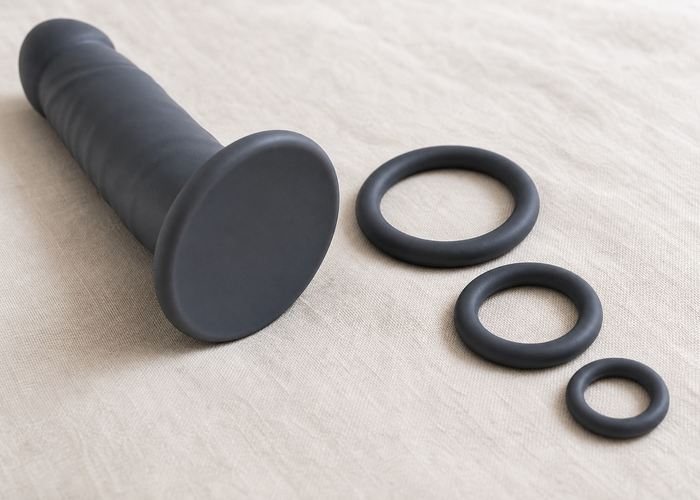
Base shape changes how the pressure spreads across the front of the harness. A flat anchor plate often sits more quietly because it creates a wider contact zone behind the O-ring. A rounded suction cup can still work, but it may create a smaller pressure point and can tilt if the cup is deep or unusually soft. A strongly domed base may look smooth but can act like a hinge once the shaft starts moving.
The practical test is simple: imagine the O-ring pressing into the base during thrust and withdrawal. Will the ring catch a clear flange edge, or is it relying on friction alone? If it is mostly friction, the toy may rotate or slip. That can turn a good shaft shape into a frustrating session because both people feel the misalignment.
The existing strap-on beginner setup guide and vibrating strap-on buyer’s guide are useful internal references because they show how quickly comfort depends on the system, not just the insertable part. A base that behaves well for ten slow motions is more valuable than one that only looks good lying still.
O-ring fit is about stability, not tightness for its own sake
People often describe harness fit like a strength problem: tighter ring, tighter straps, tighter everything. That mindset creates wobble more often than it fixes it. The ring should hold the base securely while still letting the shaft sit in a natural line. If the O-ring is too small for the base, the harness may distort and push the shaft upward or downward. If the ring is too large, the toy may nod forward with each movement.
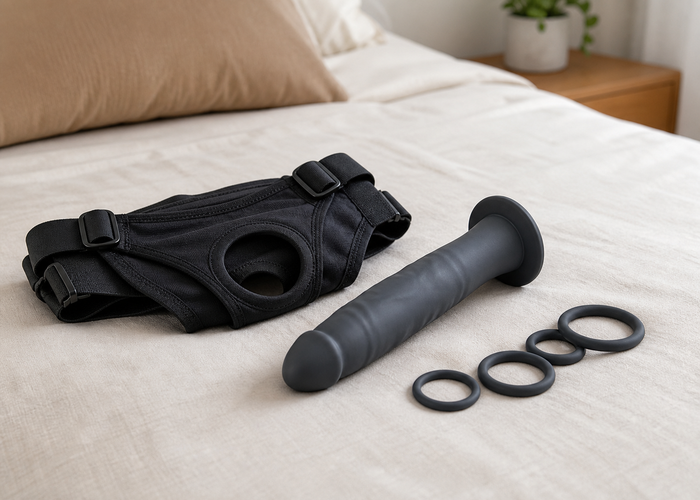
Interchangeable rings are useful because they let one harness work with different base widths. When you compare rings, check the inside diameter, the firmness of the ring material, and whether the ring sits flat against the harness panel. The correct ring should hold the base without making the flange fold oddly. It should also let the user remove the toy without a wrestling match at cleanup time.
If you are considering a smaller shaft, our internal guide to choosing a small strap-on dildo can help match the toy to experience level. Many first-time users confuse “bigger” with “more secure.” In reality, a lighter shaft with a stable base often feels more controlled than a larger shaft that constantly tugs the harness off center.
Weight balance changes the whole feel of the harness
Weight balance decides whether the toy stays where the hips send it or keeps lagging behind. A heavy shaft can pull the front panel downward, create pressure on the lower straps, and make the user overcompensate with the pelvis. A very top-heavy design can also feel less precise because the upper portion wants to drop once movement begins.
This is one reason that a simple, medium-firm silicone shaft often works better than a dramatic design for first harness use. The user needs to feel what the front of the harness is doing. If the toy swings or drags, the learning curve gets steeper. The goal is not to eliminate sensation or movement. It is to keep the system readable.
When readers move from solo dildos to harness use, this is usually the biggest surprise: the toy does not only need to feel good inside the body; it also needs to behave well outside it. Stability is its own form of comfort.
Material, lube choice, and barrier planning
Material affects both comfort and care. Planned Parenthood’s toy guide says not to use silicone lube with silicone toys unless the product guidance says it is safe or a condom is separating the materials. Their South Texas explainer on why lube matters also notes that water-based lube is a flexible starting point because it generally works well with toys and condoms and cleans up easily. For many harness users, that makes water-based lube the easiest first choice.
If a toy will be shared between partners or between body sites, barriers and cleaning become part of the compatibility question. CDC guidance for women who have sex with women notes that shared sex toys should be cleaned and barriers considered, and Healthline’s article on sex toys and STI risk explains how fluids and skin contact can make sharing more complicated than people assume. The easiest safety habit is to decide before the session whether a condom will go over the toy and when it will be changed.
A harness setup should not make cleanup harder. If the base has deep grooves that trap lube where the O-ring presses, you need to know that before buying it. A body-safe material is most useful when it is also simple to wash thoroughly.
How to test a new harness-and-toy combination before penetration
Lay the harness flat, install the ring, seat the dildo, and then pull gently in three directions: forward, down, and upward. Watch whether the base stays centered. Put the harness on over clothing first and make a few slow hip movements. The toy should not rattle, spin, or sag dramatically. If it does, do not tell yourself the body will somehow solve it later.
Next, check whether the straps need to be overtightened to keep the toy in place. If the whole system only works when everything feels harsh, the mismatch is probably in the toy-ring-base relationship, not in your determination. A good system should feel snug, not punishing.
The same testing mindset appears in our article on shape and leverage with different dildo styles. Controlled movement teaches you more than fantasy projection does. A small pre-use test can save a whole evening from preventable frustration.
A quick comparison table
| Decision point | What to prefer | Why it helps |
|---|---|---|
| Base edge | Clear flange or flat anchor area | Gives the O-ring something stable to hold |
| O-ring fit | Secure without distorting the base | Improves alignment and reduces wobble |
| Shaft weight | Manageable for the harness panel | Prevents drag and overcompensation |
| Material | Nonporous and easy to wash | Makes cleanup and sharing safer |
| Lube plan | Compatible with toy and barrier choices | Reduces friction without creating material problems |
| First test | Over clothing, with slow movement | Reveals fit issues before penetration begins |
Common buying mistakes
The first mistake is choosing only by shaft appearance. A realistic head, a dramatic curve, or a textured shaft does not guarantee harness stability. The second mistake is assuming a suction cup automatically means harness compatibility. Some suction cups sit well in O-rings; others wobble because the cup behaves like a bowl instead of an anchor. The third mistake is ignoring weight. A heavier toy is not automatically more advanced. It can simply be harder to steer.
The fourth mistake is forgetting that the harness itself needs to be part of the plan. If you already own a harness, measure the ring or check whether alternate rings are available before you buy the toy. If you do not own one yet, use the toy’s base shape to guide the harness choice instead of buying both in isolation.
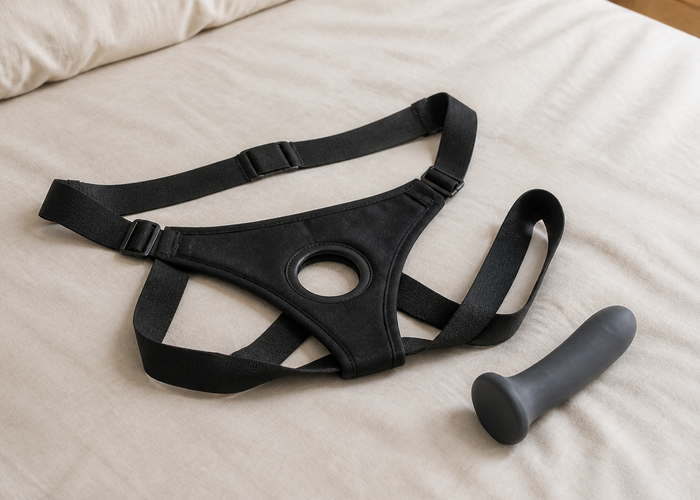
How shaft length and firmness change front-panel control
Length and firmness matter because they change leverage. A longer shaft does not just reach farther; it also creates a longer lever pulling on the base and front panel. If the toy is firm and heavy, even small movements can amplify that pull. A shorter or moderately sized shaft often feels more precise because less force travels through the harness when the hips move.
Firmness matters too. A very firm toy can transfer movement directly, which some users like, but that same directness can make every angle mistake more noticeable. A softer toy may feel more forgiving, especially when the wearer is still learning how the harness responds. Neither is universally better. The point is to match firmness to experience, communication, and the amount of control the user wants to feel.
Readers who want the least complicated first setup often do well with a medium-firm toy, a clear flange, and a moderate shaft length. That combination teaches the harness without burying the lesson under extra leverage or extra softness.
Partner communication and pacing
Harness comfort depends on feedback. The wearer feels strap tension and drag. The receiving partner feels angle, depth, and pressure. Those are not the same sensations, so spoken check-ins matter. Agree before starting that small corrections are normal. “Higher,” “slower,” “less depth,” or “pause” should sound like useful data, not criticism.
A new harness-and-toy combination usually benefits from a slower pace than either partner expects. Faster movement makes wobble harder to diagnose because several variables change at once. Slow movement makes it easier to feel whether the base is stable, whether the shaft angle is right, and whether more lube or a different position would help. If the toy only feels workable at high speed, the setup is probably compensating for a fit issue instead of solving it.
Calm pacing also reduces the temptation to overtighten the straps. A stable, readable setup is what makes partnered movement more enjoyable later.
Storage and maintenance after the session
Aftercare is part of compatibility too. Remove the toy from the harness, wash both according to their materials, and inspect the base where the O-ring pressed. That area can collect lube or lint more easily than the shaft alone. A toy that is easy to clean by itself can become less appealing if the base repeatedly traps residue after harness use.
Let straps dry fully before closing them into a drawer or pouch, and keep the dildo stored separately if the manufacturer recommends it. Good maintenance preserves fit as much as material. A stretched-out ring, a dirty flange, or a damp harness front panel will change how stable the system feels the next time you use it.
When to change the ring instead of the toy
Sometimes the toy is fine and the ring is the mismatch. If the base shape feels right in the hand but the harness still twists, try another ring size or material before replacing the dildo. A firmer ring may hold a flat base better. A slightly larger ring may let a thick flange sit naturally instead of folding. Swapping the ring is often cheaper and more effective than abandoning a toy that already suits the body.
This is another reason interchangeable hardware is useful. It gives the system room to adapt as you learn what base widths and shaft weights actually work for you.
FAQ
Does a suction-cup base always work with a harness?
No. Some suction cups are stable enough, but others are too rounded or too soft to sit firmly in an O-ring.
Should the O-ring feel extremely tight?
No. It should feel secure, but a ring that distorts the base or twists the harness can create more instability, not less.
What material is easiest for beginners?
Many beginners prefer nonporous silicone because it is common, easy to clean, and usually compatible with straightforward care routines when paired with the right lubricant.
Is heavier always better for harness play?
No. Extra weight can pull the harness off line and make hip movements less precise. Control matters more than drama.
The best harness-compatible dildo is not the one with the most dramatic shape. It is the one whose base, O-ring fit, and shaft weight work together so the harness stays readable under movement. Once that system is stable, shape and sensation become easier to enjoy instead of harder to manage.