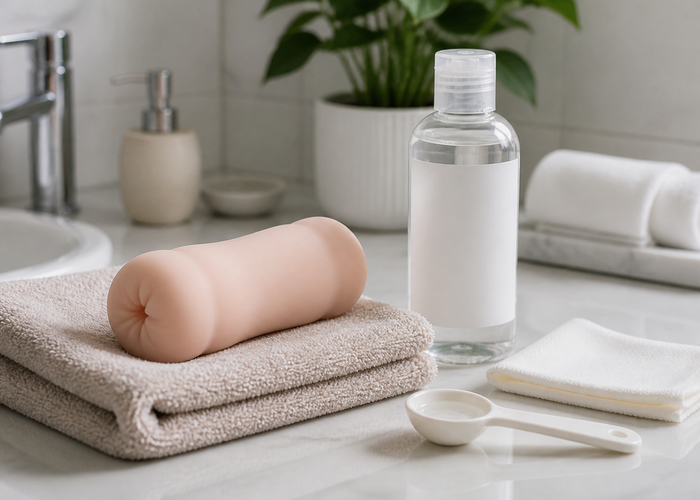
Figuring out how much lube for a stroker sounds simple until the experience feels too dry, too slippery, too sticky, or too hard to clean. The right amount is not a single universal number. It depends on the sleeve material, texture depth, opening style, session length, temperature, and whether the toy is open-ended or closed-ended. A small amount can be perfect for a smooth sleeve and nowhere near enough for a deeply textured canal.
The safest habit is to start small, spread evenly, test slowly, then reapply before friction appears. Lubricant should reduce drag, not flood the toy. Too little lube can create uncomfortable friction. Too much lube can reduce texture, leak from the case, make grip awkward, and leave more residue to clean. The sweet spot is controlled glide.
This guide is written for soft sleeve accessories, strokers, and related KissSelf products. It is non-medical and practical: choose compatible lubricant, use enough to protect the material and your skin, and clean the toy thoroughly afterward. If you are still comparing formats, browse the wider Pocket Pussies category and these tips on mastering male masturbators to see how sleeve design changes the feel.

Start with a measured mindset
For many soft sleeve toys, a teaspoon-sized starting amount is more sensible than a large squeeze. Put the lubricant where friction begins: near the entrance and just inside the canal. Spread it with clean fingers or by gently compressing the sleeve if the design allows. If the toy is long, textured, or closed-ended, add a little deeper inside rather than placing everything at the opening.
Do not judge the amount before the toy warms slightly. Some water-based lubricants feel thicker at first and spread better after a minute. Some sleeves feel grippier when dry and smoother once the lubricant reaches the texture. Begin slowly and let the material tell you what it needs.
If you hear squeaking, feel pulling, or notice tackiness, pause and reapply. Do not push through friction. Friction can irritate skin and can also stress soft materials over time.
Why water-based lubricant is usually the starting point
Water-based lubricant is often the safest default because it is easy to clean and widely compatible. Public health guidance from the City of Long Beach Health Department notes that water-based and silicone-based lubricants are compatible with latex condoms, while oil-based lubricants can weaken latex. For soft sleeve toys, water-based formulas are also easier to rinse away.
Silicone lubricant lasts longer, but it may not be appropriate for every soft toy material. Some silicone or TPE-like materials can be affected by incompatible lubricants. If the product instructions specify water-based lubricant, follow that instruction. If instructions are unclear, use water-based lubricant until you can confirm compatibility. The NHS sexual health guide is also a useful reminder that comfort, condoms, and clear product instructions all matter more than chasing the slickest formula.
Oil-based products are not a good default for many strokers. They can be harder to clean, may trap residue, and can create material or condom compatibility problems. A slick feeling at the beginning is not worth long-term odor or breakdown issues.
Material and texture change the amount
A smooth sleeve usually needs less lubricant because there are fewer texture valleys to coat. A ribbed, noduled, chambered, or suction-style sleeve may need more because the lubricant must reach the high-friction areas. A tight entrance may need a small extra amount at the opening, while a loose open-ended sleeve may lose lubricant faster and require reapplication.
Temperature matters too. A cold sleeve can feel firmer and less forgiving. Warming the outside gently with warm water, if the product allows it, can help the material flex. Do not use boiling water, microwaves, or high heat. Heat can damage soft materials and create unsafe hot spots.
If you use a cased stroker, check whether lubricant collects between the sleeve and case. Too much lubricant outside the sleeve can make the case slippery and harder to control. The goal is lubrication inside the contact area, not a slick shell. If you want to compare enclosed designs with more open textures, KissSelf’s realistic vibrating male masturbator tips show how case style changes pressure and cleanup.
Open-ended vs closed-ended strokers
Open-ended strokers are easier to rinse and may be easier to lubricate evenly because air and water can pass through. They may also lose lubricant more quickly from the far end. Closed-ended strokers can feel more sealed and cushioned, but they may trap moisture and residue if cleaning is rushed.
For open-ended toys, start at the entrance, add a small amount through the far end if needed, and expect some reapplication. For closed-ended toys, use less at first, spread more carefully, and pay extra attention to cleaning and drying. A closed end that stays wet becomes an odor risk. Brook’s practical page on condoms and sexual health basics is also a good refresher if your setup includes barriers and you need to stay mindful of lubricant compatibility.
Common lube mistakes
| Mistake | What happens | Better habit |
|---|---|---|
| Using a huge first squeeze | Texture disappears and cleanup gets messy | Start small and reapply |
| Using incompatible silicone or oil formulas | Material may degrade or retain residue | Use water-based unless instructions say otherwise |
| Ignoring tackiness | Friction and irritation increase | Pause, add water or more lube |
| Cleaning only the entrance | Residue stays deeper inside | Rinse the full canal |
| Storing damp | Odor and material problems develop | Dry fully before storage |
Reapplication without overdoing it
Water-based lubricant can dry as water evaporates. That does not mean the product failed. Add a few drops of water or a small fresh amount of lubricant, then continue. Reapplication works better when done early. If you wait until the toy feels sticky, you may need more product and more cleanup.
If the stroker becomes too slippery, stop and wipe excess from the outside. Do not try to hold a slick case harder and continue. Grip tension can make the experience less comfortable and less controlled. Keep a towel nearby so adjustments are easy.
For longer sessions, plan reapplication as normal maintenance. It is not a sign that the toy is wrong or that you used too little at the start. It is simply how water-based formulas behave.
Cleaning after lubricant use
Clean the sleeve promptly after use. Healthline’s guide to sex toy cleaning explains that cleaning depends on toy material and manufacturer directions. For soft sleeves, rinse gently but thoroughly, use a cleaner or mild soap if allowed, and avoid harsh scrubbing that can tear texture. For a broader toy-care checklist, compare your routine with KissSelf’s guide to cleaning sex toys safely.
Pay attention to corners, ridges, and closed ends. Residue that hides in texture can become sticky or odorous later. If the toy can be turned inside out safely, follow the product instructions. If it cannot, use water flow and gentle compression to rinse the canal.

Drying and storage
Drying is where many users lose the hygiene battle. A sleeve can look clean while moisture remains inside. Let air move through the canal when possible. Use a clean drying rack or towel, keep the toy away from dust, and do not seal it in a pouch until it is fully dry. Closed-ended sleeves may need more time. MedlinePlus also keeps a general sexual health resource collection that can be useful when irritation or hygiene questions go beyond what a single product card covers.
Some soft materials benefit from renewal powder, but only use products recommended for that material. Do not use random household powders. Store sleeves separately from other soft toys so materials do not stick, transfer oils, or collect lint. If you own several strokers, label pouches or keep them in separate breathable bags.
How to find your personal amount
Make one variable change at a time. Try the same lubricant with a small amount, then a moderate amount. Try adding water during use. Try warming the sleeve externally if allowed. Try distributing lubricant deeper before starting. If you change lubricant, amount, temperature, and toy all at once, you will not know what improved or worsened the feel.
If irritation occurs, stop using the product, clean gently, and give your skin time. Persistent discomfort, rash, or pain deserves medical attention. Lubricant should make a stroker easier to use; it should not become something you tolerate.
A simple amount test for the first week
For the first week with a new stroker, treat lubricant amount like a small experiment. On the first use, start with a modest amount and note whether the sleeve feels dry within a few minutes. On the second use, add a little more at the beginning or distribute it deeper. On the third, try adding a few drops of water during use before adding more lube. These small comparisons teach you more than guessing.
Keep the same lubricant during the test. If you change the formula and the amount at the same time, you will not know which change helped. Also keep the cleaning routine the same. A sleeve that was not fully rinsed or dried after the first use can feel different on the second use because old residue changes texture.
How texture changes sensation
Deep texture needs more even coverage, not necessarily a huge amount. Ribs, beads, chambers, and suction-style features create tiny high-friction points. If lubricant stays only near the entrance, the toy can feel smooth at first and then suddenly dry deeper inside. Spread lubricant along the canal as much as the design safely allows.
Smooth sleeves are different. Too much lubricant can make them feel vague because there are fewer texture points to begin with. A smooth sleeve often performs better with a smaller amount that is refreshed occasionally. The amount should preserve feedback, not erase it.
Partnered use and cleanup boundaries
If a partner is involved, talk about lubricant before the toy appears. Decide whether condoms will be used, which lubricant is compatible, and who handles cleanup. These details sound practical because they are. They prevent awkward pauses and reduce the chance of grabbing an oil-based product that does not belong with latex condoms or a soft toy. If you still need a product-specific starting point, KissSelf’s own lube guide is a useful companion read.
Use a towel and keep the bottle reachable. Reapplication should be easy enough that nobody tries to continue through friction. If the outside of the case becomes slick, pause and wipe it. A slippery case can encourage a tighter grip, which can make the experience less relaxed.
Odor prevention starts before storage
Most odor problems begin with residue or moisture, not with the toy itself. Lubricant left in texture can become sticky. Water left in a closed canal can create a damp smell. Rinse until the surface feels clean, then dry longer than you think is necessary. If the toy is closed-ended, angle it so water can drain.
Do not store the sleeve in a sealed pouch immediately after washing unless it is fully dry. A breathable drying period is safer. Keep it away from dusty shelves while drying, and avoid using paper towels that shed fibers. A clean microfiber cloth and open air are usually better.
When to replace lubricant or the sleeve
Replace lubricant if the bottle has expired, changed smell, separated, or become cloudy when it was not originally cloudy. Replace or retire a sleeve if it becomes sticky after cleaning, develops tears, keeps odor despite thorough cleaning, or changes texture in a way that makes it hard to rinse. Maintenance has limits; sometimes replacement is the hygienic choice.
Good stroker care is not complicated, but it does reward consistency. Use the right type of lubricant, add it in controlled amounts, clean the full surface, dry completely, and store the sleeve separately. Those habits keep the toy more comfortable and easier to trust.
FAQ
Can I use too much lube in a stroker?
Yes. Too much can reduce texture, leak from the case, make grip harder, and leave more residue to clean.
What type of lube is best for strokers?
A plain water-based lubricant is usually the safest starting point unless the product instructions recommend something else.
Why does my stroker feel sticky halfway through?
Water-based lubricant can dry during use. Add a few drops of water or a small fresh amount before friction increases.
How do I prevent odor?
Rinse thoroughly, remove residue from texture, dry the full canal completely, and store the toy separately in a clean place.
The answer to how much lube for a stroker is a routine, not a fixed number. Start with a modest amount, spread it where friction happens, reapply before dryness begins, and clean the sleeve fully afterward. Good lubrication is part pleasure, part maintenance, and part respect for the material.