Proper toy hygiene isn’t just about cleanliness — it’s a direct line to your long-term health, and most people are getting it wrong.
The connection between poorly cleaned intimate devices and recurrent infections is well-documented. Bacterial vaginosis and yeast infections can both be triggered or reintroduced through contaminated surfaces, particularly when toys aren’t fully dried or are stored without protection. What makes this problem persistent is something called biofilm — a thin, adhesive layer of microorganisms that clings to surfaces and resists ordinary rinsing. Once biofilm establishes itself on an intimate surface, casual cleaning with water alone won’t break it down. You need the right sex toy cleaner, applied correctly and consistently, to disrupt that microbial layer before it becomes a recurring health issue.
Porous materials like jelly, PVC, and rubber can harbor bacteria in microscopic pits even after surface washing, according to the International Society for Sexual Medicine. This is a critical distinction. Older-generation toys — the soft, flexible “jelly” devices — have a texture that looks smooth to the naked eye but functions like a sponge at the microscopic level. No amount of scrubbing fully clears those interior spaces. That’s why the industry has increasingly shifted toward body-safe, non-porous materials like medical-grade silicone, which resist bacterial buildup structurally rather than relying entirely on cleaning protocols.
Modern high-tech devices add another layer of complexity. Motorized components, charging ports, and intricate surface textures mean that aggressive cleaning methods can damage the device while still failing to sanitize it properly. The approach that worked for a basic silicone toy doesn’t translate to a precision-engineered device with textured ridges and electronic seals.
Understanding why different materials demand different care is the foundation for everything that follows — and it starts with understanding what certain common cleaning shortcuts actually do to your toy at a molecular level.
The Science of Silicone: Why Alcohol is Your Toy’s Worst Enemy
Alcohol destroys premium silicone at a molecular level — and most people don’t notice the damage until it’s already compromising their health.
The question “can you use alcohol on silicone” comes up constantly, and the short answer is: not if you want your device to last. Medical-grade silicone consists of a cross-linked polymer network — flexible, non-porous, and body-safe precisely because of its stable chemical structure. Alcohol, particularly isopropyl alcohol at common household concentrations, disrupts that structure. As Dr. Evan Goldstein of Bespoke Surgical warns, using harsh household soaps or alcohol-based cleaners can cause “pitting” or “melting” of high-quality silicone. That pitting isn’t cosmetic — those micro-craters become bacterial reservoirs that no amount of future cleaning can fully address.
The critical distinction here is between sanitizing and preserving. Alcohol is an effective sanitizer on hard, non-reactive surfaces like metal or glass. On silicone, however, it evaporates quickly while leaving the surface compromised. You’re trading short-term germ reduction for long-term material degradation — a bad deal when the device sits against your most sensitive tissue.
“Body-safe” is also widely misunderstood. The term refers to biocompatibility — the material won’t leach toxins under normal use. It says nothing about chemical resistance. A toy that is non-porous and hypoallergenic by design can still be chemically destabilized by the wrong cleaner. In practice, even one or two alcohol exposures can dull a silicone surface and begin weakening its integrity.
The long-term cost matters too. Premium silicone devices range from $80 to well over $200. Replacing them prematurely because of avoidable solvent damage is a significant and entirely unnecessary expense.
⚠️ Warning: Never use rubbing alcohol, hand sanitizer, or bleach solutions directly on silicone toys. These solvents accelerate surface degradation and create conditions that are harder to clean — not easier. Stick to pH-balanced, toy-specific cleaners or mild fragrance-free soap and water.
The same logic applies as device complexity increases. Simple silicone shapes are forgiving enough to wash under a faucet — but motorized toys with mechanical components introduce a whole new set of vulnerabilities that require an equally precise approach.
Protecting the Tech: Cleaning Suction and Rotation Devices
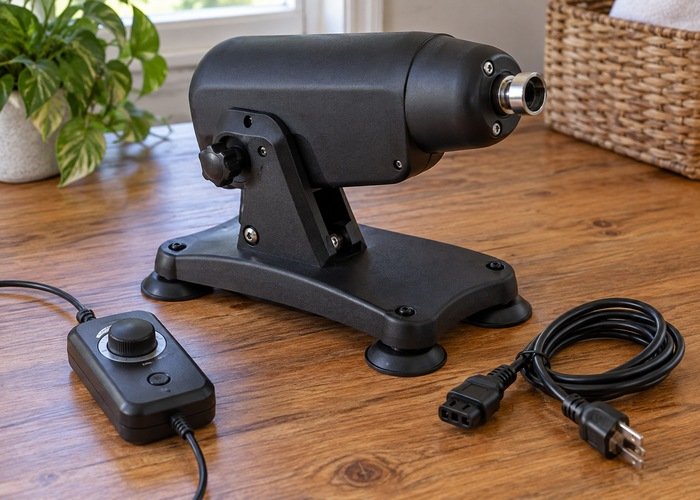
High-tech pleasure devices demand a fundamentally different cleaning approach — one that accounts for motors, sensors, and seals that standard hygiene advice simply wasn’t designed to protect.
The single most damaging mistake owners make is treating “water-resistant” and “waterproof” as the same thing. They aren’t. A water-resistant device can handle light splashing during use; submerging it — even briefly — risks water ingress through charging ports, seam lines, and pressure-relief valves. Once moisture reaches the internal circuitry, the damage is often invisible until the device simply stops working.
Boiling water is even more destructive. As noted by Mayo Clinic sexual health guidelines, boiling water can degrade internal motors and waterproof gaskets — and it puts lithium-ion batteries at direct risk of thermal stress and failure. This is especially critical for suction toys and automatic rotation devices, where the internal chambers and mechanical interfaces are precision-engineered. Heat exposure warps the polymer seals that keep everything watertight in the first place, creating the very vulnerability you were trying to eliminate.
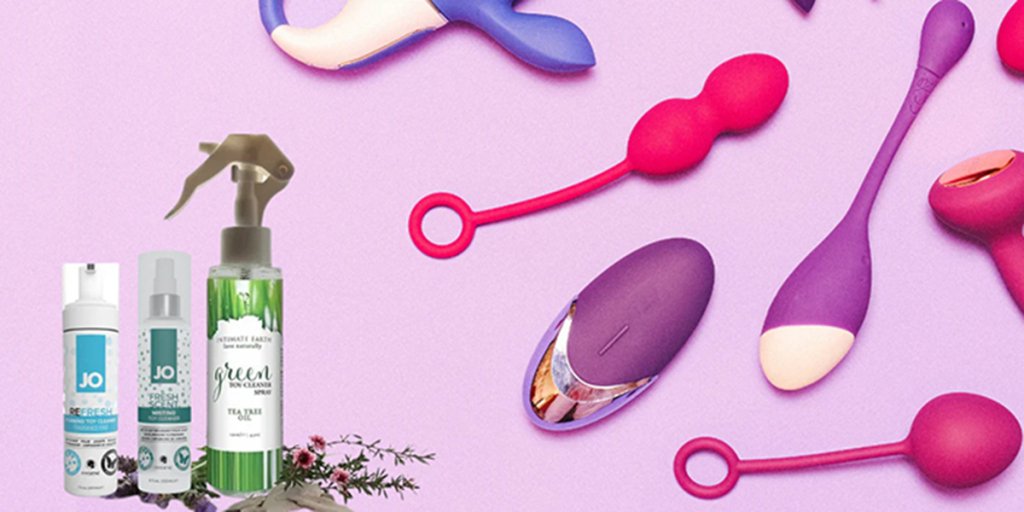
Cleaning internal chambers — the textured sleeves inside automatic masturbators, for example — presents its own challenge. Rinsing alone rarely reaches every fold or contour, and scrubbing risks micro-tears in delicate materials. If you want to clean your sex toy so you can enjoy it for years rather than months, the cleaning method must match the device’s mechanical complexity. A rinse-free antimicrobial spray applied directly into the chamber, then air-dried, eliminates residue without introducing moisture to vulnerable electrical components. It’s a cleaner that works with the device rather than against it.
For anyone building a proper care routine around complex devices, understanding how to store them correctly is just as important as how you clean them — temperature, humidity, and packaging all affect long-term integrity.
That said, even the best spray cleaner is only as effective as its formulation. What actually makes a cleaner suitable for intimate devices — and why common household soaps often fall short — is worth examining closely.
The Role of Specialized Sex Toy Cleaners
Dedicated sex toy cleaners are not a luxury — they’re the most reliable tool for anyone serious about how to correctly clean and store sex toys without accelerating material degradation.
What makes a cleaner truly “specialized” comes down to two non-negotiable properties: pH balance and antimicrobial action. The human body maintains a vaginal pH between 3.8 and 4.5 — a delicate range that common hand soap, typically sitting at pH 9–10, immediately disrupts. That alkalinity doesn’t just irritate sensitive tissue; it can also break down the surface coatings on body-safe materials over repeated use. As the Mayo Clinic notes, a pH-balanced, rinse-free sex toy cleaner is the recommended alternative to maintain the integrity of advanced mechanical components.
Here’s what sets specialized formulas apart:
- pH-balanced formula. Engineered to match intimate tissue chemistry, these cleaners sanitize without stripping protective surface treatments or irritating sensitive skin during the next use.
- Antimicrobial agents. Targeted active ingredients neutralize bacteria, yeast, and pathogens that standard soap can leave behind — particularly important for porous anal toys or seamed designs where microbes can hide.
- Spray-and-wipe convenience. For frequent users, a no-rinse spray eliminates the risk of water infiltrating charging ports or motor housings — a problem explored in the previous section. One spritz, a clean cloth, and the job is done in under 30 seconds.
- Concentrated, eco-conscious formulas. A single concentrated bottle can dilute into multiple full-size batches, reducing plastic waste and cost-per-clean significantly compared to buying single-use wipes repeatedly.
Understanding what a cleaner actually does at a chemical level changes how you think about your entire maintenance routine. The next logical step is building that knowledge into a repeatable system — which is exactly where a structured cleaning protocol becomes essential.
Step-by-Step: The Correct Way to Clean Your Collection
Sex toy hygiene science confirms what many owners overlook: the moments immediately after use — and the habits between uses — determine whether a toy stays safe or becomes a liability.
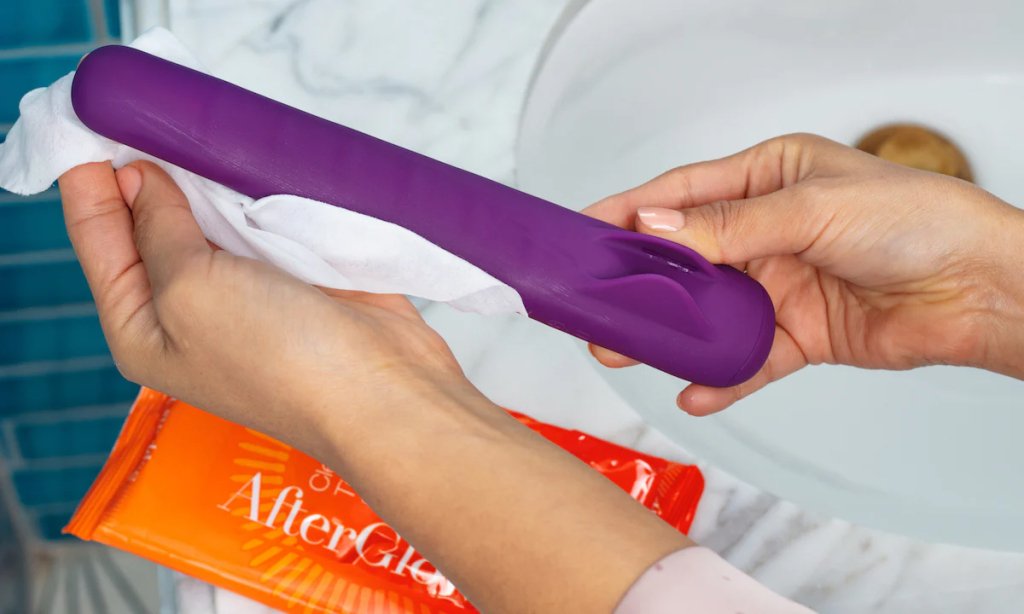
1. Pre-cleaning: The immediate post-use wipe.Don’t wait. Bodily fluids begin bonding to porous and non-porous surfaces within minutes. Immediately after use, wipe the toy with a damp cloth or a dedicated toy-safe wipe to remove surface residue before it sets. This step isn’t a substitute for deep cleaning — it’s preparation for it. Products made from body-safe materials like medical-grade silicone are easier to wipe down effectively because residue doesn’t anchor into the surface.
2. Deep cleaning: The weekly or monthly maintenance cycle.Frequency matters more than intensity. According to The Pelvic People, toys used frequently should be thoroughly washed before and after every use with warm water and a fragrance-free, antibacterial soap — or a specialized cleaner. Non-motorized, body-safe silicone toys can be boiled for 3–5 minutes or run through the top dishwasher rack (no detergent) for a monthly deep reset.
3. Drying: Why air-drying on a towel is a bacteria trap.A damp towel introduces new contamination. Terry cloth fibers harbor bacteria and release lint that sticks to silicone’s naturally tacky surface — a property noted by University of Utah Health. Instead, air-dry toys upright or elevated on a clean, dry surface, allowing full airflow before storage.
4. Final inspection: Checking for tears or degradation.Never skip the visual check. Run a finger along seams, tips, and textured areas. Micro-tears trap bacteria that no amount of cleaning will fully reach. Any sign of cracking, discoloration, or unusual odor means the toy should be retired — not rewashed. This step also sets you up for what comes next: because even a perfectly cleaned toy can be compromised by how it’s stored.
Storage Solutions: Preventing Environmental Degradation
Proper storage is just as critical as proper cleaning — environmental exposure between uses quietly destroys toys that survive the wash cycle just fine.
The single most overlooked threat to your collection isn’t bacteria. It’s dust.
According to University of Utah Health, improper storage leads to “environmental degradation,” where accumulated dust and lint create a sandpaper-like texture on toy surfaces. Those micro-abrasions aren’t cosmetic — they create microscopic grooves where bacteria and pathogens can embed themselves, undermining every cleaning step covered earlier.
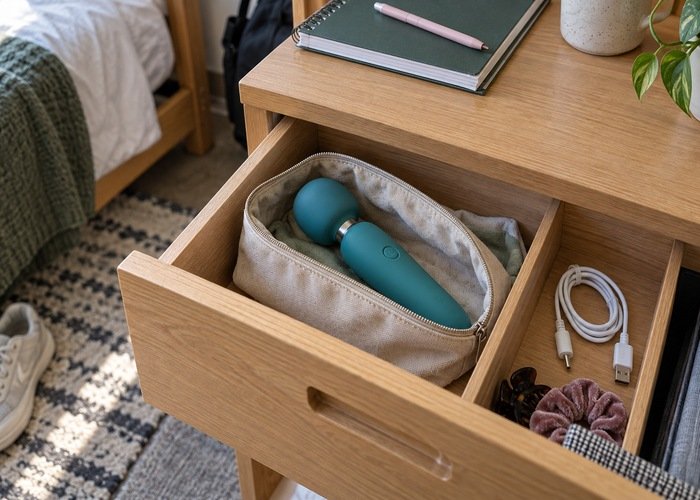
Chemical migration compounds the problem. Silicone toys stored in direct contact with other silicone items can chemically bond or leach plasticizers into each other over time. For anyone investing in body-safe silicone toys, this means each piece needs its own dedicated pouch or compartment — not a shared drawer where toys press against one another.
Storage material matters significantly here. Lint-free silk or satin pouches are the gold standard because they’re non-abrasive, breathable, and don’t shed fibers that could degrade surfaces. Cotton bags, by contrast, constantly shed lint particles that settle into surface texture over time.
Pro-Tip: Individual satin pouches cost as little as $2–$5 each and are the single most cost-effective upgrade for medical grade silicone care. Label each pouch if you maintain a larger collection to prevent accidental contact between incompatible materials.
Climate control rounds out a complete storage strategy. Heat accelerates material breakdown, especially in silicone and thermoplastic elastomers, while humidity creates the moist environment that microorganisms thrive in. A cool, dry drawer or dedicated storage box — away from bathroom steam — preserves both material integrity and surface hygiene between uses.
How well any of these strategies work, however, depends on what your toy is actually made from — and that’s where material science changes everything.
Material Matters: Porous vs. Non-Porous Care
Not all sex toy materials age the same way — and the gap between porous and non-porous options determines how long a toy remains truly safe to use.
The material your toy is made from sets a hard ceiling on how clean it can ever get. This is the foundational reality that shapes every care decision you make after cleaning and storage are handled.
- Jelly/PVC | Highly porous; traps bacteria and cannot be sterilized. Use with a condom every time, and replace regularly.
- TPE/TPR | Porous and soft; absorbs moisture and body fluids. Cover with a condom; not compatible with boiling or harsh chemical cleaning.
- Medical-grade silicone | Non-porous and body-safe; can be boiled or run through a dishwasher (top rack, no soap) for full sterilization between partners.
- ABS hard plastic | Non-porous; wipe-clean and generally durable, though surface scratches can create micro-harbors for bacteria over time.
- Stainless steel / borosilicate glass | Non-porous; the easiest materials to fully sterilize and the longest-lasting with proper care.
Identifying your toy’s material is the first practical step. Jelly toys typically feel soft and have a noticeable chemical smell; TPE feels similar but is usually marketed as “skin-like.” Medical-grade silicone, such as the material used in body-safe vibrating options, is firmer, odorless, and carries certification language on its packaging.
The condom rule exists for a reason. The International Society for Sexual Medicine confirms that porous materials are nearly impossible to fully sterilize — meaning bacteria, mold, and even traces of STIs can survive standard washing inside microscopic pores. Placing a fresh condom over a porous toy before each use creates a protective barrier that cleaning alone cannot replicate.
Porous toys also carry an unavoidable shelf-life limitation. No matter how carefully you clean them, degradation is continuous — plasticizers leach out, surfaces micro-crack, and bacterial load compounds over time. Replacing porous toys on a regular cycle isn’t optional; it’s a safety baseline. Non-porous materials like medical-grade silicone, by contrast, can last years when stored and cleaned correctly — a point worth keeping in mind as you build out your complete hygiene routine.
The Bottom Line: Your Hygiene Checklist
Toy care ultimately comes down to four non-negotiable habits — and skipping any one of them quietly shortens the lifespan of materials you paid good money for.
As Dr. Evan Goldstein puts it, “Cleaning your toys isn’t just about hygiene; it’s about the longevity of the medical-grade materials.” That framing matters. Every choice you make — cleaner type, storage method, material selection — either protects or degrades your investment over time.
The four core rules are straightforward, but each one has a reason behind it:
- Always use a specialized, alcohol-free toy cleaner. Alcohol and harsh soaps break down silicone surfaces at the molecular level, creating micro-pits where bacteria accumulate. A pH-balanced, alcohol-free formula cleans effectively without compromising material integrity. This applies whether you’re caring for a body-safe silicone toy or any other non-porous option.
- Never boil motorized or electronic devices. Heat destroys internal motors and circuit boards. For vibrators, app-connected toys, and anything with a charging port, antimicrobial spray is the correct tool — full stop. Boiling is reserved exclusively for non-motorized, non-porous toys made from silicone, glass, or stainless steel, as covered in earlier sections.
- Store each toy individually in a lint-free bag. As discussed, open-air storage invites dust, humidity, and chemical cross-contamination when dissimilar materials touch. Individual pouches eliminate all three risks simultaneously.
- Replace porous toys on a regular schedule. Jelly, PVC, and TPE materials cannot be fully sterilized — period. No cleaning method reaches bacteria embedded in the material itself. The long-term safety case for upgrading to non-porous alternatives is well established, and that transition is the single highest-impact decision you can make for your health.
Even if you’ve been making some of these mistakes, the fix is straightforward. The next section covers the questions that come up most often once people start rethinking their routine — including a few surprising ones.
Frequently Asked Questions About Toy Care
Good toy care habits are built partly on accurate information — and a few stubborn myths keep circulating that quietly damage both toys and the people using them.
Can I put my toy in the dishwasher?
It depends on the toy, but for most people the answer is no. While boiling-safe silicone, stainless steel, and borosilicate glass can technically handle high temperatures, dishwasher cycles introduce detergent residue, and the heat can melt delicate internal gaskets and damage lithium-ion batteries in motorized toys. A thorough hand wash with warm water and mild soap accomplishes the same sanitizing goal without the risk.
How often should I clean my toy if I use a condom over it?
Every single time, without exception. A condom reduces — but does not eliminate — the transfer of fluids and bacteria to the toy surface. Microscopic tears in the condom, improper removal, or contact at the base still leave residue behind. Consistent cleaning after every session remains the standard regardless of barrier method use, as sex toy hygiene guidance consistently confirms.
Is it okay to use toy cleaner as a lubricant?
Absolutely not. Toy cleaners are formulated to break down organic material and often contain antibacterial agents that are not body-safe when used internally. Using a cleaner as a lubricant risks irritation, disrupted pH balance, and potential damage to mucous membranes. Always keep these two products entirely separate.
What should I do if my toy starts feeling sticky?
Stickiness is a sign that the material is degrading — a common issue with lower-grade silicone blends and jelly-rubber toys. No amount of cleaning reverses polymer breakdown, and a deteriorating surface can harbor bacteria in ways a smooth toy cannot. Retire the toy immediately. If you’re unsure whether your current toys use body-safe materials, that’s the right question to investigate before your next purchase.