Knowing how to store sex toys correctly is one of the most overlooked yet consequential aspects of intimate health — and getting it wrong puts both your devices and your body at risk.
Most people tuck their intimate devices into a drawer and think nothing more of it. In practice, that casual habit exposes high-performance materials to a surprisingly hostile environment. Open-air storage invites dust, lint, and pet dander to settle directly onto surfaces that will later come into contact with mucous membranes. These particles don’t just sit inertly — they create a scaffold for microbial growth between uses, even on a device that was cleaned before storage.
“Proper storage isn’t just about organization; it’s about preventing ‘biofilm’ buildup on your most intimate devices.” — Dr. Evan Goldstein, a specialist in intimate health
Intimate device stewardship is the concept that ownership of these products carries an ongoing responsibility — not unlike caring for a medical instrument. This framing matters because it shifts the mindset from “where do I put this?” to “how do I protect this?” The distinction is meaningful. A silicone toy stored carelessly on a nightstand accumulates the same airborne contaminants as any other surface in your home, and those contaminants don’t vanish with a quick rinse.
High-tech stimulators compound the stakes considerably. Devices with precision-engineered motors, rechargeable batteries, and multi-material construction are vulnerable to more than just surface contamination. Improper storage can accelerate material degradation, compromise charging contacts, and — as covered in depth when examining aging toy risks — shorten the functional lifespan of premium products significantly. The cost of neglect isn’t abstract; it’s measured in both dollars and health outcomes.
Understanding what’s actually happening at a material chemistry level is where this conversation gets critical. The next section examines why certain silicone formulations can quite literally destroy each other when stored in contact — a phenomenon with real consequences for anyone with more than one device in their collection.
The Chemistry of ‘Silicone Plague’ and Material Migration
Poor sex toy storage and hygiene habits can silently destroy your most expensive devices through a chemical process most owners never see coming.
Silicone plague describes the tackiness, surface degradation, and partial melting that occurs when porous-sensitive materials make prolonged contact with incompatible substances. According to the Sexual Health Alliance, silicone toys are particularly vulnerable to this reaction when stored in direct contact with other silicone items — even if they are made by the same manufacturer.
How it Happens:
- Surface tension breakdown — Two silicone items pressed together create a micro-seal where plasticizers and chemical additives begin migrating across the boundary
- Additive transfer — Lower-grade silicone compounds leach softening agents onto neighboring surfaces, altering their molecular structure
- Tackiness onset — The receiving material develops a sticky, degraded texture that cannot be reversed through cleaning
- Accelerated porosity — Once the surface integrity is compromised, the toy becomes harder to sanitize effectively, compounding hygiene risks
Chemical migration is the core mechanism at work. Even medical-grade elastomers — typically the safest option, as outlined in guides to body-safe material selection — can degrade when neighboring materials off-gas volatile compounds over time. Heat and compression accelerate this process significantly.
⚠️ WARNING: Never store two silicone toys in direct contact. Even brief storage can initiate material migration that permanently damages both items.
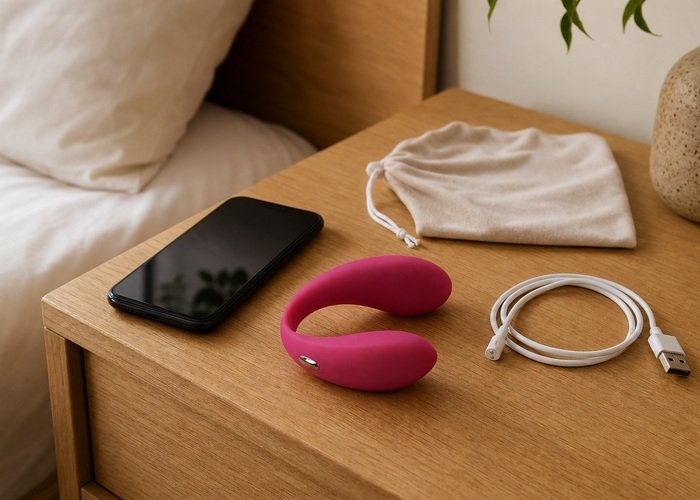
Individual breathable barriers are the practical solution. Wrapping each toy separately in a satin or cotton pouch prevents surface contact while still allowing air circulation — critical for preventing moisture buildup that invites bacterial growth. Sealed plastic bags, on the other hand, trap humidity and can accelerate the very degradation you’re trying to prevent.
Material incompatibility is only one layer of the storage problem. Environmental conditions — particularly light exposure and temperature — introduce their own category of damage, which we’ll break down next.
Environmental Threats: UV Rays and Micro-Fissures
Maintaining silicone adult toys isn’t just about cleaning — where and how you store them determines whether the material stays structurally sound for years or quietly degrades between uses.
UV exposure is one of the most underestimated enemies of high-quality elastomers. According to the International Journal of Sexual Health, direct sunlight and UV radiation can degrade 100% of medical-grade silicone over time, producing micro-fissures — hairline cracks invisible to the naked eye that compromise the entire surface layer.
Micro-fissures aren’t just a cosmetic issue. Once those cracks form, they become bacteria traps that even thorough cleaning cannot fully address. Standard surface disinfection reaches the outer layer but cannot penetrate fractures at the microscopic level, meaning pathogens can survive wash cycles and accumulate over repeated uses. For anyone selecting body-safe materials for intimate use, this structural vulnerability is a compelling reason to prioritize proper storage from day one.
Temperature extremes compound UV damage significantly. The environmental “enemies” of medical-grade devices include:
- Direct sunlight — can trigger UV-induced polymer breakdown and surface oxidation
- Heat above 104°F (40°C) — can soften and distort elastomer structures, accelerating material fatigue
- Humidity fluctuations — can promote microbial growth and cause surface tackiness in porous blends
- Cold below 32°F (0°C) — can make silicone brittle and prone to cracking under pressure
- Indirect light exposure — even ambient UV through windows can cause cumulative photodegradation
A cool, dark storage environment — ideally between 60°F and 77°F — is highly recommended, not a casual recommendation. In practice, a dedicated fabric pouch inside a drawer or lidded box satisfies all of these conditions simultaneously, as storage experts consistently confirm.
Long-term structural damage from environmental neglect tends to be irreversible. By the time discoloration or surface tackiness becomes visible, micro-fissure networks have already formed. And while material integrity matters greatly, it’s only one piece of the longevity puzzle — the internal components demand equal attention.
Maintaining the Pulse: Battery Health for High-Tech Motors
Neglecting battery care for advanced vibrators and suction devices is one of the fastest ways to permanently degrade motor performance — long before the device shows any visible damage.
Battery health is motor health. In multi-function devices with tapping, thrusting, or suction mechanisms, the lithium-ion battery doesn’t just power the device — it regulates the precision of every intensity setting. A weakened battery means weaker motors, inconsistent cycles, and a shortened device lifespan overall.
Lithium-ion vulnerability is the core issue here. Unlike standard alkaline batteries that simply drain and get replaced, lithium-ion cells degrade when stored in a depleted state. This is called “deep discharge,” and it’s particularly damaging for high-draw motors found in triple-action and advanced suction devices. Once a lithium-ion cell drops below a critical voltage threshold, capacity loss becomes permanent — no amount of charging reverses it.
Tech Tip: According to Battery University (Cadex Electronics), lithium-ion batteries used in portable devices should be stored at approximately 50% charge to minimize electrochemical stress during inactivity. Storing a device fully charged or fully drained both accelerate long-term degradation.
The 50% charge rule is especially relevant for seasonal or occasional-use items. If a device sits unused for weeks or months, a full charge creates sustained voltage stress on the cell, while an empty battery risks deep discharge. Fifty percent is the sweet spot for preserving both capacity and cycle count.
A practical 3-step battery maintenance checklist for stored devices:
- Before storing: Charge the device to roughly 50%, then power it completely off — not just idle.
- During storage: Check charge levels every 4–6 weeks for devices stored long-term, topping back up to 50% if needed.
- Before use: Charge fully before the first session after any extended storage period to recalibrate the battery management system.
Protecting your device’s power source is just as important as protecting its exterior. And speaking of protection — if you’re wondering where to hide sex toys in a small apartment while still maintaining proper care routines, creative storage solutions can address both discretion and device longevity at once.
Discreet Solutions for Small Space Living
Smart storage in a small apartment means finding systems that protect your toys, preserve your privacy, and don’t eat up precious square footage — all at once.
Urban living demands creativity. Standard nightstand drawers often lack proper airflow, and open-air surfaces invite the exact dust and lint buildup that, according to wellness expert research, can trap moisture against a toy’s surface and accelerate biofilm formation. The solution isn’t to hide toys carelessly — it’s to hide them strategically.
Four storage archetypes work consistently well for small-space dwellers:
- Hollow decorative books — Stacked on an open shelf, they’re invisible in plain sight. Line the interior with a breathable cotton pouch to prevent material contact and allow minimal airflow.
- Locked storage trunks — A vintage trunk at the foot of the bed doubles as seating and offers genuine security. Opt for one with ventilation slats or leave it slightly ajar when toys are stored long-term.
- Lockable vanity cases — These offer compartmentalized organization, built-in locks, and a discreet cosmetics-bag appearance. They’re one of the most practical options for keeping different toys separated and identifiable at a glance.
- Under-bed rolling drawers — Shallow and slide-away, these keep toys off surfaces while maintaining enough air circulation to discourage humidity buildup.
The ‘Privacy vs. Airflow’ trade-off is real, and worth acknowledging directly. Fully sealed containers — think hard-shell cases with rubber gaskets — offer maximum discretion but can trap residual humidity if a toy isn’t bone-dry before storage. Lockable vanity cases strike a middle ground: structured enough for privacy, but not airtight. A common question that comes up here is can I store different sex toys together — and the short answer is no. Materials like silicone can react when touching, degrading both surfaces over time. Individual pouches inside a shared case solve this neatly. For toys with intricate components, checking material compatibility before storage is a step worth taking.
Of course, even the best storage system fails if a toy goes in unclean — which is exactly where the next consideration begins.
The Post-Use Protocol: Hygiene Before Storage
Proper storage only works when it begins with thorough cleaning — bacteria don’t wait, and a damp toy sealed in a bag is a contamination event waiting to happen.
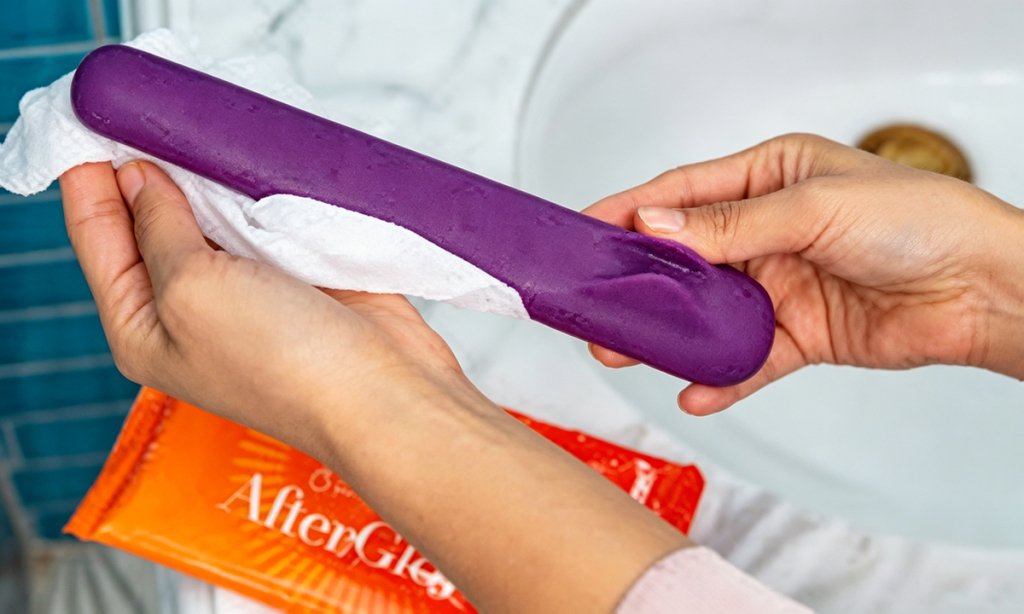
Dry before you store. Moisture trapped inside a storage pouch creates the ideal environment for microbial growth, and no pouch material is immune. After rinsing, pat your toy dry with a lint-free cloth and allow it to air-dry completely — ideally for 15–30 minutes — before placing it in any bag or container. This single step is one of the most skipped and most consequential in the entire care routine.
Multi-functional textures require extra attention. Flapping mechanisms and suction nozzles have narrow channels and flexible folds where residue accumulates after every use. According to Spencer’s cleaning guidance, these internal channels need targeted flushing — running warm water directly through suction ports and using a soft-bristle brush on textured flaps — rather than a simple surface wipe.
Standard soap has real limits. As Dr. Evan Goldstein notes, “Biofilm is a thin, robust layer of bacteria that is difficult to remove with standard soap and water.” Once biofilm establishes itself on a toy’s surface — a phenomenon sometimes called silicone plague in body-safe material communities — routine washing won’t eliminate it. This is especially relevant for toys used with multiple partners or stored infrequently.
Specialized toy cleaners do more than sanitize. pH-balanced, toy-specific formulas are designed to break down biofilm without degrading material integrity. Harsh household cleaners can cause micro-abrasions on body-safe toy materials like medical-grade silicone, creating the very surface irregularities that harbor future bacterial growth.
Warning: Never store a toy while it’s still damp. Sealed moisture accelerates bacterial and mold growth, rendering even premium storage bags ineffective.
Once your toys are genuinely clean and fully dry, the next challenge becomes how to store multiple pieces without letting different materials interact — which is exactly where organization strategy becomes essential.
Organizing Your Collection: Can Different Toys Coexist?
Storing multiple toys together is one of the most common storage mistakes — and the most preventable source of material damage, chemical transfer, and sex toy biofilm buildup in any collection.
The short answer: different toys can coexist, but they must never touch each other.
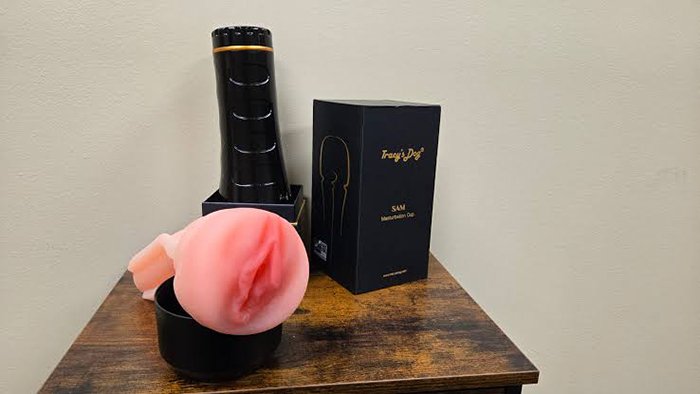
The ‘One Bag, One Toy’ Rule is the gold standard for premium collections. According to the Sexual Health Alliance, individual breathable cotton or satin pouches prevent chemical migration and preserve medical-grade materials. Even toys made from identical materials can trap residual moisture against each other when bagged together — creating the warm, airless conditions where bacterial biofilm thrives.
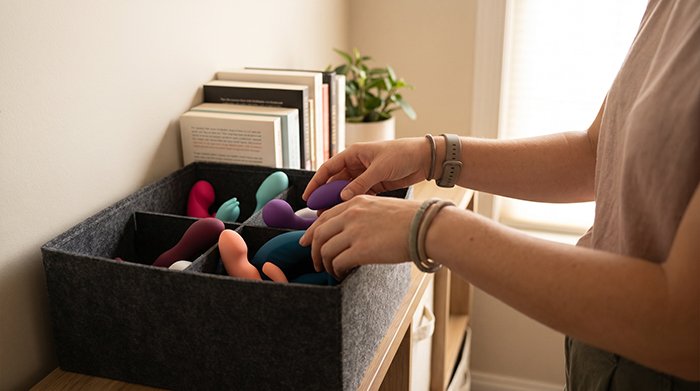
Multi-compartment organizers offer a practical middle ground for larger collections. Fabric-divided cases, lockable storage boxes with separate slots, and drawer organizers with removable dividers all allow multiple items to share a single storage space without surface contact. The key rule: no material should press against another, even through a shared pouch wall.
Categorizing by material makes rotation and selection faster while preventing cross-contamination. A simple three-tier system works well in practice:
| Material Type | Storage Requirement | Risk Factor |
|---|---|---|
| Silicone | Individual breathable pouch; never contact other silicone | Chemical degradation, surface bonding |
| TPE/TPR | Sealed, individual bag; keep away from all other materials | Porous surface absorbs residue; degrades quickly |
| Glass/Metal | Padded pouch or hard case; store separately | Physical chipping if items knock together |
For toys with electronic components or specialized materials, individual storage is non-negotiable — shared pouches can trap heat and accelerate motor wear.
Labeling and rotation rounds out a smart organizational system. Simple fabric tags or small adhesive labels noting material type and last-cleaned date prevent guesswork. Rotating which items you reach for regularly also distributes wear more evenly across your collection, extending the lifespan of everything you own.
Good organization habits connect directly to the broader science of toy longevity — and the next section distills those principles into a concise set of rules every owner should keep top of mind.
The Bottom Line: Protecting Your Intimate Wellness Investment
Your storage habits directly determine how long your toys last, how safe they remain, and whether your investment holds its value over time.
After covering the full care cycle — from post-use cleaning to collection organization — the key principles compress into a short, actionable framework. Here’s what the evidence consistently points to:
- Never let silicone touch silicone. Two silicone surfaces in direct contact can chemically bond and degrade, softening and warping both toys permanently. Always separate them with individual pouches or a fabric barrier.
- Store in a dark, cool, dry environment. UV exposure creates micro-fissures — microscopic surface cracks documented by the International Journal of Sexual Health — where bacteria accumulate and become nearly impossible to fully remove. A drawer, box, or opaque bag cuts this risk significantly.
- Maintain a 50% charge for motorized toys. Lithium-ion batteries left fully depleted or constantly topped off at 100% degrade faster. A partial charge before storage preserves cell health and extends motor life, as noted in general toy care guidance.
- Dry completely before storing in a breathable pouch. Sealing moisture inside creates an anaerobic environment where bacteria and mold thrive. Air-dry on a clean towel, then store in fabric — never airtight plastic — to allow residual moisture to escape.
The single most protective habit is also the simplest: keep each toy separate, dry, and away from light.
For toys made from body-safe materials like medical-grade silicone, these steps aren’t optional extras — they’re what keep those premium surfaces performing as intended, month after month.
Storage care isn’t complicated, but it does raise specific questions in practice. The most common ones — from whether Ziploc bags are safe to what a sticky texture actually signals — are worth addressing directly.
Frequently Asked Questions About Adult Toy Care
Smart storage decisions start with having the right answers — these common questions cover the gaps that most care guides overlook, so your toys stay safe, hygienic, and fully functional.
How often should I check on stored toys?
A monthly check is a practical minimum. Inspect batteries for corrosion, confirm seals on pouches or cases are intact, and look for any surface changes like discoloration or tackiness. Toys stored for longer periods benefit from a quick wipe-down before use, even if they appear clean.
Can I use plastic Ziploc bags for storage?
Plastic bags are a common shortcut — but they trap moisture and restrict airflow, creating exactly the humid environment that encourages bacterial growth. Non-porous materials like medical-grade silicone require consistent airflow to remain hygienic, according to Kissself Material Standards. Breathable fabric pouches or dedicated storage cases are the better call.
What should I do if a toy feels sticky?
Stickiness signals material breakdown — a sign the surface is degrading and potentially off-gassing chemicals. Wash the toy immediately with mild soap and warm water, then assess whether the tackiness persists after drying. If it does, retirement is the responsible choice; a degraded surface cannot be fully sanitized and poses a safety concern, especially for body-safe material users who prioritized non-toxic options from the start.
How do I clean the suction nozzle of a Kissself device before storing?
Rinse the nozzle opening thoroughly with warm water to clear any residue, then use a mild, toy-safe cleanser around the rim and interior lip. Allow it to air-dry completely — pointed downward if possible — before capping or pouch-storing the device. Never store with moisture trapped inside the nozzle chamber.
The science is clear: consistent, informed care routines protect both your health and your investment. Choosing products built from certified body-safe materials, like Kissself’s medical-grade silicone line, gives your storage habits the best possible foundation to work from.