Most people approach anal play as a stretching exercise. That framing is the first mistake — and it explains why so many beginners quit before they ever find their groove.
The real barrier isn’t size. It’s muscle physiology. According to the International Society for Sexual Medicine (ISSM), the internal anal sphincter is an involuntary muscle — meaning you cannot consciously command it to relax the way you flex a bicep. It responds to signals from your autonomic nervous system, not your willpower. This is precisely why bearing down harder or breathing through gritted teeth produces diminishing returns.
The internal anal sphincter requires gradual, neurologically-driven relaxation — not force — to release without discomfort.
Here’s where vibration changes the entire equation. Low-frequency vibration sends a continuous stream of sensory input to the nervous system, essentially overwhelming the tension-holding reflex. Think of it as a conversation with a muscle that doesn’t speak your language: vibration is the translator. Static stretching, by contrast, triggers a protective contraction response — the body reads sustained pressure as a threat and tightens accordingly. Active relaxation through vibration works with your nervous system rather than against it.
This distinction matters enormously when you’re selecting your first toy. A quality starter piece made from body-safe materials like medical grade silicone paired with a gentle vibration setting creates the conditions your internal sphincter actually needs to release safely.
The practical result? Beginners who start with a vibrating toy typically report a faster transition from anxious tension to relaxed confidence — turning what feels like an impossible threshold into a learnable, repeatable skill.
That progression from beginner confidence to genuine advancement is exactly what a structured anal training kit is designed to support — and understanding how to use one correctly is where most people unlock the next level.
Anal Training Kits: Moving Beyond the Beginner Plateau
As established earlier, relaxation is the real foundation of anal training — but relaxation alone won’t get you far without a structured progression plan. That’s where a well-designed training kit changes everything.
Discover: Why Graduated Sets Work Better Than Guesswork
Jumping straight to a larger size is one of the most common — and most preventable — mistakes beginners make. A graduated training kit offers a sequence of incrementally sized plugs that allow the sphincter muscles and surrounding tissue to adapt progressively over time. According to the International Society for Sexual Medicine, gradual relaxation and desensitization of nerve endings is essential for a safe, comfortable experience. Skipping sizes shortcuts that process and increases injury risk.
- Start with the smallest size in the kit and spend at minimum several sessions there
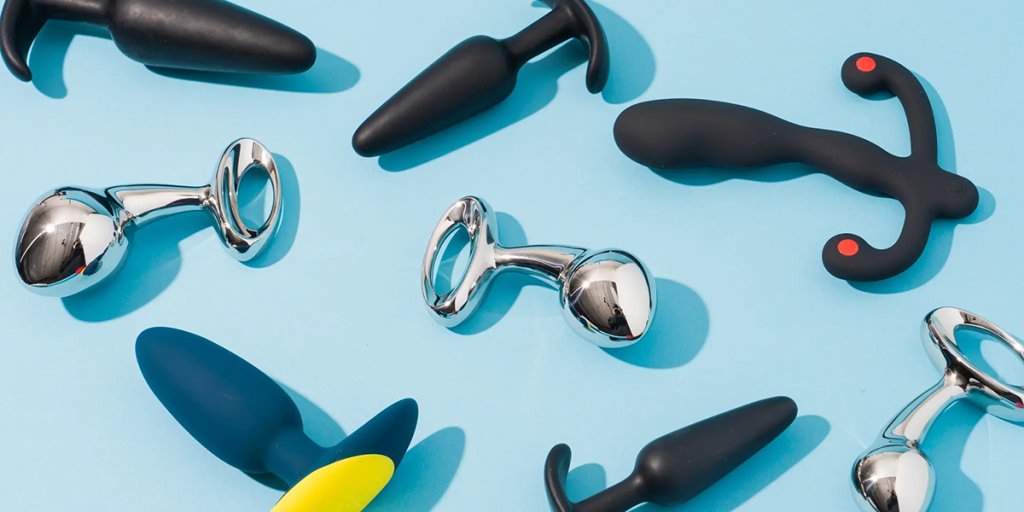
- Look for tapered tips that ease initial insertion and flared bases — non-negotiable safety features that prevent toys from being drawn fully inward
- Learn how to avoid common toy-related accidents before you ever open the packaging
Apply: Weaving Vibration Into Your Training Routine
Vibration transforms passive insertion into active muscle conditioning. Rather than simply holding a plug in place, using a vibrating plug encourages rhythmic muscle response, which accelerates neuromuscular adaptation.
- Begin sessions on the lowest vibration setting to promote involuntary relaxation
- Gradually increase intensity as comfort builds within a single session
- Alternate between static and vibrating modes to train both holding and releasing responses
Manage: Knowing When to Size Up
Readiness to progress isn’t about time alone — it’s about consistent, effortless comfort. A practical rule: if a plug can be inserted and worn with zero discomfort for 15–20 minutes across multiple sessions, it’s time to consider the next size. Questions like how long can you safely wear a butt plug matter here — extended wear beyond 2–3 hours isn’t recommended, regardless of size or experience level.
- Track comfort levels, not just duration
- Never advance during a session that started with any resistance or discomfort
- Listen to post-session feedback from your body: soreness signals slowing down, not pushing through
Before progressing further, it’s worth considering what your training tools are actually made of — because the material inside your body matters just as much as the shape.
Material Matters: The Non-Negotiable Case for Medical-Grade Silicone
Once you’ve built a consistent training routine, the next variable that can derail your progress — or your health — is what your toys are actually made of. Material selection isn’t a preference; it’s a safety decision.
The rectum is a high-bacterial environment with a permeable mucosal lining, which means what you put inside it matters enormously. Porous materials like PVC, jelly rubber, and TPE contain microscopic channels that trap bacteria, mold, and chemical residues. No amount of washing removes them. According to the International Society for Sexual Medicine (ISSM), non-porous materials are the only responsible choice for anal use — and the Mayo Clinic reinforces that medical-grade silicone is the single recommended standard for exactly this reason.
The only truly body safe butt plug is one made from 100% non-porous, medical-grade silicone — nothing less.
| Material Type | Porous? | Safety Rating |
|---|---|---|
| Medical-grade silicone | No | ✅ Highest — sterilizable |
| ABS hard plastic | No | ✅ Safe — surface-cleanable |
| Stainless steel / glass | No | ✅ Safe — fully sterilizable |
| TPE / TPR | Yes | ⚠️ Moderate risk — replace regularly |
| PVC / jelly rubber | Yes | ❌ Unsafe — harbors bacteria permanently |
Decoding “Body-Safe” Labels
Marketing language muddies the water here. Terms like “skin-safe,” “phthalate-free,” or “premium rubber” carry no regulatory standard. What matters is the specific material listed. If a product description doesn’t explicitly state 100% medical-grade silicone, assume it isn’t. For a deeper breakdown of how to evaluate materials before buying, this guide on non-porous toy materials cuts through the jargon effectively.
Cleaning High-Tech Vibrating Devices
Non-electronic silicone toys can be boiled for 3–5 minutes or run through the dishwasher (top rack, no soap) for full sterilization. Vibrating devices with electronics require a different approach: wash thoroughly with mild soap and warm water, then wipe down with a 10% isopropyl alcohol solution. Never submerge motors unless the toy is rated fully waterproof.
Once your materials are dialed in, the conversation shifts from protection to performance — specifically, what targeted vibration can unlock deeper inside the body.
The Male G-Spot: Targeted Prostate Massage with Vibration
With your materials sorted and your training routine underway, it’s worth zooming in on one of the most compelling reasons male users pursue anal training in the first place: prostate stimulation. Understanding the anatomy here isn’t just interesting — it’s the difference between generic sensation and genuinely transformative experiences.
The prostate gland sits roughly 2–3 inches inside the rectum, toward the belly button. As anal surgeon Dr. Evan Goldstein explains:
“The prostate is often referred to as the ‘male G-spot’ because it is rich in nerve endings and can produce intense, full-body orgasms when stimulated correctly.”
That density of nerve endings is exactly why vibration — rather than simple pressure — unlocks a qualitatively different response. Consistent pressure creates a sensation of fullness, which is pleasurable on its own. Vibration, however, sends rhythmic pulses through the surrounding pelvic floor musculature, reaching the prostate indirectly but effectively. Think of it as the difference between resting a hand on a speaker versus turning the music on.
This distinction — fullness versus targeted vibration — matters enormously in practice. A plug worn passively works the sphincter muscles and builds tolerance. A vibrating plug with varied intensity modes actively engages deeper tissue, encouraging blood flow and nerve activation in the prostate region. Over time, this consistent stimulation contributes to what many describe as full-body orgasms — climaxes that originate deeper in the pelvis rather than being localized.
One practical consideration that often comes up: how long to wear a butt plug during a prostate-focused session. Starting with 15–20 minutes allows the pelvic floor to relax fully, giving vibration time to work without fatigue setting in. Longer isn’t automatically better — quality of relaxation matters more than duration.
Once you understand what you’re targeting and why vibration reaches it, the logical next step is mastering how to use these tools correctly — from lube selection to insertion mechanics.
How to Use a Vibrating Butt Plug: A Step-by-Step Protocol
Getting the technique right matters just as much as choosing the right toy. A vibrating anal plug used incorrectly can cause discomfort or even minor injury, while the same toy used with proper method delivers exactly the targeted stimulation covered in the previous section. Follow this protocol to make every session both safe and effective.
Step 1: Prepare with the Right Lube
Water-based lubricant is the only acceptable choice for silicone toys — oil-based or silicone-based formulas degrade medical-grade silicone over time, compromising both the material and your body’s safety. Apply generously to both the plug and the anal opening. The anal canal produces no natural lubrication, so more is always better here.
Pro-Tip: Reapply lube every few minutes during longer sessions. A dry plug creates friction against delicate rectal tissue, which is the leading cause of micro-tears and discomfort.
Step 2: Master the Push vs. Pull Mechanic
A common pattern is for beginners to push aggressively inward, which triggers the external sphincter to clench. The more effective approach is the opposite: bear down gently (as if exhaling against resistance), which relaxes the sphincter and allows the plug to seat itself naturally. Insert slowly, pause at any resistance, breathe, and continue. Speed works against you here.
For a visual walkthrough of this technique, the Sex Toys Ahoy tutorial on YouTube breaks down each stage clearly and without judgment.
Step 3: Use Vibration Modes Intentionally
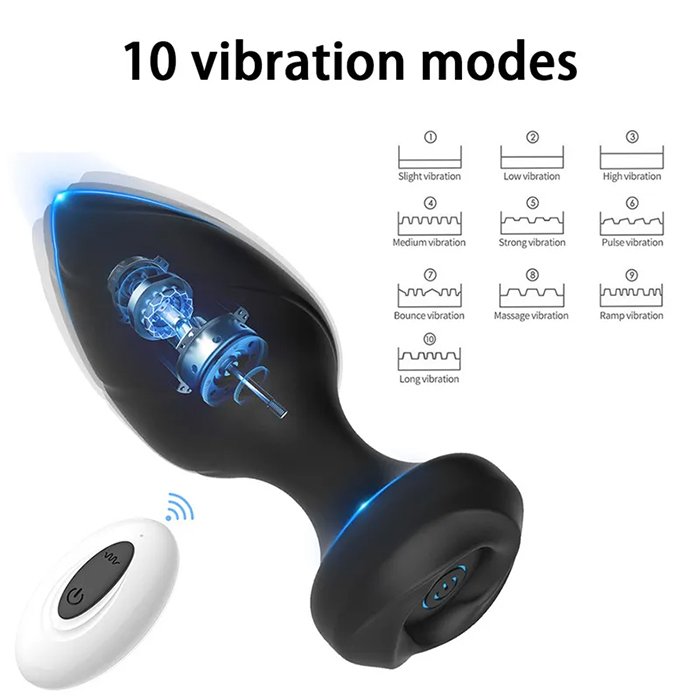
Once inserted, start at the lowest vibration setting and gradually work upward. Each step increases stimulation to the nerve-rich tissue surrounding the prostate and perineum. Pulse and wave patterns are particularly effective for locating your personal “sweet spot” — the sensation point where muscular response and pleasure align. Cycle through patterns methodically rather than jumping straight to maximum intensity.
Step 4: Never Skip the Flared Base Check
Before inserting any plug, confirm the flared base extends at least one inch wider than the widest point of the toy. The rectum creates a natural vacuum-like pull, and a toy without a proper base can migrate inward entirely — a medical emergency. This principle applies whether you’re selecting body-safe vibrating options or any other insertable toy.
With technique established, the next logical question is: how long should you actually wear it?
Wearability and Safety: How Long is Too Long?
Q: How long can a beginner safely wear a vibrating plug?
For new users, 15–20 minutes is the recommended ceiling. The anal sphincter is a muscle — and like any muscle, it fatigues. Starting short and gradually increasing session length over several weeks is the safest path forward. Advanced users who have trained consistently may comfortably extend wear to 45–60 minutes, but that ceiling only comes with time and body awareness.
Q: What are the signs that it’s time to stop?
Listen to your body. Common signals of over-stimulation or tissue fatigue include a burning or aching sensation, involuntary muscle cramping, numbness, or irritation around the sphincter. If vibration intensity feels less pleasurable and more uncomfortable, that’s your cue to end the session. Pushing past discomfort is never worth the risk of micro-tears or inflammation — both of which can disrupt future prostate massage sessions and overall anal wellness.
Q: Is it safe to sleep with a plug inserted?
No. Sleeping with any plug inserted — vibrating or otherwise — is widely discouraged by sexual health professionals. Prolonged unconscious wear removes your ability to monitor sensation changes, significantly increasing the risk of tissue damage, loss of sphincter tone, and circulatory issues. This applies to all plug types, regardless of size or material. Just as you’d choose body-safe materials for any toy, choosing appropriate wear time is equally non-negotiable.
Q: Weighted vs. vibrating — which is better for extended wear?
Weighted plugs create passive, low-stimulation muscle engagement and are sometimes preferred for slightly longer training sessions. Vibrating plugs deliver more intense stimulation, which means tissue fatigue can arrive sooner. Use vibration for targeted, shorter sessions; reserve weighted plugs for gradual endurance work.
Safety Checklist Before Every Session
- ✅ Limit wear to 20 minutes max if you’re a beginner
- ✅ Stop immediately at any sign of pain, burning, or numbness
- ✅ Never wear a plug while sleeping — no exceptions
- ✅ Choose body-safe silicone to reduce irritation risk
- ✅ Clean and inspect your toy before and after each use
- ✅ Take rest days between sessions to allow muscle recovery
According to Indiana University’s Center for Sexual Health Promotion, nearly 50% of men and 30–40% of women have engaged in anal play — underscoring just how widespread the practice is, and how urgently standardized safety guidelines around wear time are needed.
Safe wear time isn’t a limitation — it’s the foundation that makes long-term anal wellness and pleasure actually sustainable. Respect those boundaries, and your body will thank you every session.
Key Takeaways
- Start with the smallest size in the kit and spend at minimum several sessions there
- Look for tapered tips that ease initial insertion and flared bases — non-negotiable safety features that prevent toys from being drawn fully inward
- Learn how to avoid common toy-related accidents before you ever open the packaging
- Begin sessions on the lowest vibration setting to promote involuntary relaxation
- Gradually increase intensity as comfort builds within a single session