You might hear someone claim that Sex Toy Addiction is a growing problem, but experts still debate if this is a real medical condition. Imagine a friend who uses sex toys frequently and wonders if their behavior is unhealthy. Medical research recognizes compulsive sexual behavior, but not sex toy use itself as an addiction. Recent surveys show how common sex toy use is among adults:
- Over half of people in six European countries have owned a sex toy.
- In Germany, 53% of women and 37% of men have used one.
- Younger adults report higher usage than older adults. Healthy sexual behavior, including sex toy use, is normal unless it causes harm or distress. Always question bold claims and look for scientific evidence.
Key Takeaways
- Sex Toy Addiction is not recognized as a medical condition. Experts debate its validity, focusing instead on compulsive sexual behavior.
- Addiction involves loss of control and distress, not just frequent use. Healthy sexual behavior is normal unless it causes harm.
- Moral panic can distort perceptions of sexual behaviors. Question sensational claims and seek scientific evidence.
- Stigma around sex toy use can lead to shame. Understanding your behavior helps reduce stigma and promotes healthy sexuality.
- Healthy sex toy use includes pleasure and stress relief. Harmful use may involve anxiety, guilt, or physical discomfort.
- If you feel distress or negative effects from sex toy use, consider talking to a healthcare provider for support.
- Stay informed by seeking reliable information from health professionals and reputable sources. Critical thinking is key.
- Using sex toys can enhance sexual health. Regular use does not equate to addiction, so focus on how it affects your life.
What Is Addiction?

Addiction is a term you hear often, but its true meaning can be confusing. You might wonder if using something frequently, like a sex toy, means you are addicted. To understand this, you need to look at how medical experts define addiction.
Clinical Definition
The DSM-5 describes addiction as a disorder involving substances or specific behaviors. Gambling disorder is the only behavioral addiction recognized alongside substance addictions, such as alcohol or drugs. Both types share features like cravings and withdrawal symptoms. The ICD-11 takes a broader approach, grouping impulse control disorders together. It highlights repeated failure to resist impulses that bring short-term rewards, even when you know they may cause long-term harm. This means not every repeated behavior counts as an addiction.
Substance vs. Behavioral
You can see the differences between substance and behavioral addictions in the table below:
| Criteria | Behavioral Addiction | Substance Addiction |
|---|---|---|
| Physical Signs | Absent | Present |
| Symptoms | Similar symptoms and consequences | Similar symptoms and consequences |
| Craving | Present in behavioral addiction | Present in substance addiction |
| Withdrawal Symptoms | Psychological withdrawal may occur | Physical withdrawal symptoms are common |
| Tolerance | Increased engagement in the behavior needed | Increased substance use needed |
| Conflict | Leads to personal or interpersonal conflict | Leads to personal or interpersonal conflict |
| Relapse | Resumption of behavior after attempts to abstain | Resumption of substance use after attempts to abstain |
Imagine a teenager who spends hours playing online games. He feels anxious when he cannot play and needs more time each week to feel satisfied. He may experience psychological withdrawal, but he does not show physical symptoms like those seen in drug addiction. This example shows how behavioral addictions differ from substance addictions.
Popular Misuse
Many people use the word “addiction” loosely. You might hear someone say they are “addicted” to chocolate or social media. In sexual health, this misuse can lead to confusion and stigma. Some believe that frequent sex toy use means Sex Toy Addiction, but medical experts do not support this idea unless the behavior causes harm or distress.
Note: Misunderstandings about addiction can lead to unnecessary worry or shame. You should know the facts before labeling yourself or others.
Here are some common misconceptions about addiction in sexual health:
- Many think sex addicts do not care about others, but most want to repair relationships.
- Treatment is not just about abstinence; it helps you understand healthy sexual boundaries.
- Sex addiction does not mean someone is a sex offender.
- High sexual interest is not the same as addiction; addiction involves loss of control.
- People with sex addiction often want to stop but feel unable to.
- Sex addiction affects all genders, not just men.
- Labels like ‘sex addiction’ or ‘porn addiction’ are sometimes misused to judge behaviors that do not fit personal standards.
- Addiction is not an excuse for bad behavior; everyone is responsible for their actions.
If you use sex toys often, you may wonder if you have Sex Toy Addiction. Remember, addiction is more than frequent use. It involves loss of control, distress, and negative impact on your life. You should focus on understanding your behavior and seek help only if you feel it is causing harm.
Sex Toy Addiction in Context
Is It Recognized?
You might wonder if Sex Toy Addiction is a real diagnosis in the medical world. Experts have debated this question for years. When you look at the main diagnostic manuals, you see that they do not recognize Sex Toy Addiction as a distinct disorder. The table below shows how leading sources address this topic:
| Evidence | Description |
|---|---|
| DSM-5 | Sexual addiction was rejected for inclusion in the DSM-5, as stated by Darrel Regier, vice-chair of the DSM-5 task force, indicating that it was not considered ready to be classified as an addiction. |
| ICD-11 | The ICD-11 includes ‘compulsive sexual behavior disorder’ but does not classify it as an addiction, aligning with the WHO’s stance against recognizing sex addiction. |
| DSM-5-TR | The most recent version of DSM-5-TR published in March 2022 does not recognize sexual addiction as a diagnosis. |
You see that even though people talk about Sex Toy Addiction, the most trusted medical guides do not list it as a separate condition. Instead, they focus on broader issues like compulsive sexual behavior.
Research Overview
Researchers have studied sexual behaviors for decades. However, the latest research does not specifically classify Sex Toy Addiction as a clinical condition. You find that most studies focus on compulsive sexual behavior or hypersexuality, not on the use of sex toys alone. Here are some key points from recent research:
- The latest research does not specifically classify sex toy addiction as a clinical condition.
- Hypersexuality, which is related to compulsive sexual behavior, is debated and not formally recognized in the DSM-5.
- There is insufficient empirical evidence to support the classification of hypersexuality or sex addiction as a clinical condition.
- The concept of sex addiction is controversial, with some experts linking it to emotional states like anxiety and depression rather than a distinct disorder.
- The term ‘sexual addiction’ emerged in the context of compulsive sexual behavior management in the 1980s.
- Patrick Carnes’ work introduced the concept to a broader audience, but it was based more on clinical case reports than empirical evidence.
- Efforts to establish diagnostic criteria for sexual addiction have been made, but hypersexuality is still not included in the DSM-5.
When you look at the ICD-11, you find a diagnosis called Compulsive Sexual Behavior Disorder (CSBD). This disorder describes a pattern where a person cannot control intense, repetitive sexual urges or behaviors. These behaviors can include sex with others, masturbation, pornography use, cybersex, and other repetitive sexual activities. However, the ICD-11 does not mention sex toy use as a separate category. Instead, it groups all repetitive sexual behaviors together.
Note: If you use sex toys often, this does not mean you have a disorder. Medical professionals look for patterns of distress, loss of control, and harm to daily life before making any diagnosis.
Real-World Example
Imagine a college student named Alex. Alex uses sex toys several times a week. He worries that this habit might be unhealthy. However, Alex keeps up with his studies, enjoys time with friends, and does not feel distressed by his behavior. In this case, Alex’s use does not fit any recognized disorder. If Alex started missing classes, felt unable to stop, or experienced distress, a mental health professional might look for signs of compulsive sexual behavior, not Sex Toy Addiction.
Ongoing Debate
You see a lack of consensus among scientists and clinicians. Some believe that repetitive sexual behaviors, including frequent sex toy use, can become problematic. Others argue that labeling these behaviors as addictions can create unnecessary stigma. The debate continues, with many experts calling for more research and clearer definitions.
| Classification Source | Description |
|---|---|
| DSM-5 | No specific criteria for sex addiction; may be referred to as compulsive sexual disorder or hypersexuality. |
| ICD-10-CM | Diagnosis code F91.8 for ‘other conduct disorders’ includes sex addiction. |
| ICD-11 | Code 6C72 for ‘Compulsive Sexual Behavior Disorder’ (CSBD) allows for diagnosis of sex addiction. |
You should know that the scientific community has not reached a final answer. Most experts agree that more research is needed before Sex Toy Addiction can be recognized as a clinical condition.
Evidence and Expert Views
Studies on Sex Toy Use
You might wonder how common sex toy use is and whether frequent use leads to problems. Researchers have tracked patterns of use over several decades. The data shows that sex toy use has become much more common, especially among women and people of different sexual orientations.
| Study Period | Percentage of Women Using SEAs | Sexual Orientation Group |
|---|---|---|
| 1950s-1970s | Rare and unappreciable | General Population |
| 1980s | 26% | General Population |
| 2005 | 33% | Women who have sex with women |
| 2008-2014 | ~50% | General Population |
| Recent | 70.6% (WSW) and 79.7% (WSWM) | Women who have sex with women and men |
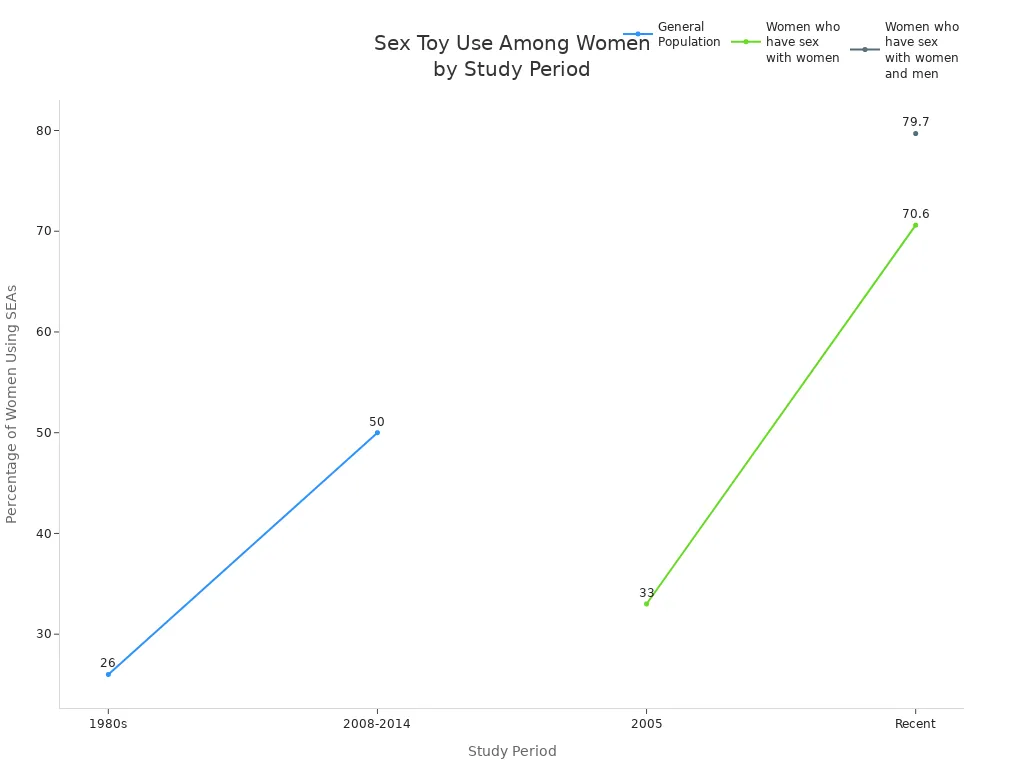
You can see that sex toy use has increased over time. Today, most women in some groups report using them. This rise does not mean that Sex Toy Addiction is widespread. Instead, it shows that attitudes toward sexual health and pleasure have changed.
Researchers have also looked for signs of addiction, such as withdrawal symptoms or tolerance. They often study people with compulsive sexual behavior disorder (CSBD) or problematic pornography use (PPU). The table below shows how often people in these groups report symptoms like irritability or trouble sleeping when they try to stop certain sexual behaviors.
| Withdrawal Symptoms | Associated with CSBD (%) | Associated with PPU (%) |
|---|---|---|
| Frequent sexual thoughts difficult to stop | 65.2 | 43.3 |
| Increased overall arousal | 37.9 | 29.2 |
| Difficult to control level of sexual desire | 57.6 | 31.0 |
| Irritability | 37.9 | 25.4 |
| Frequent mood changes | 33.3 | 22.6 |
| Sleep problems | 36.4 | 24.5 |
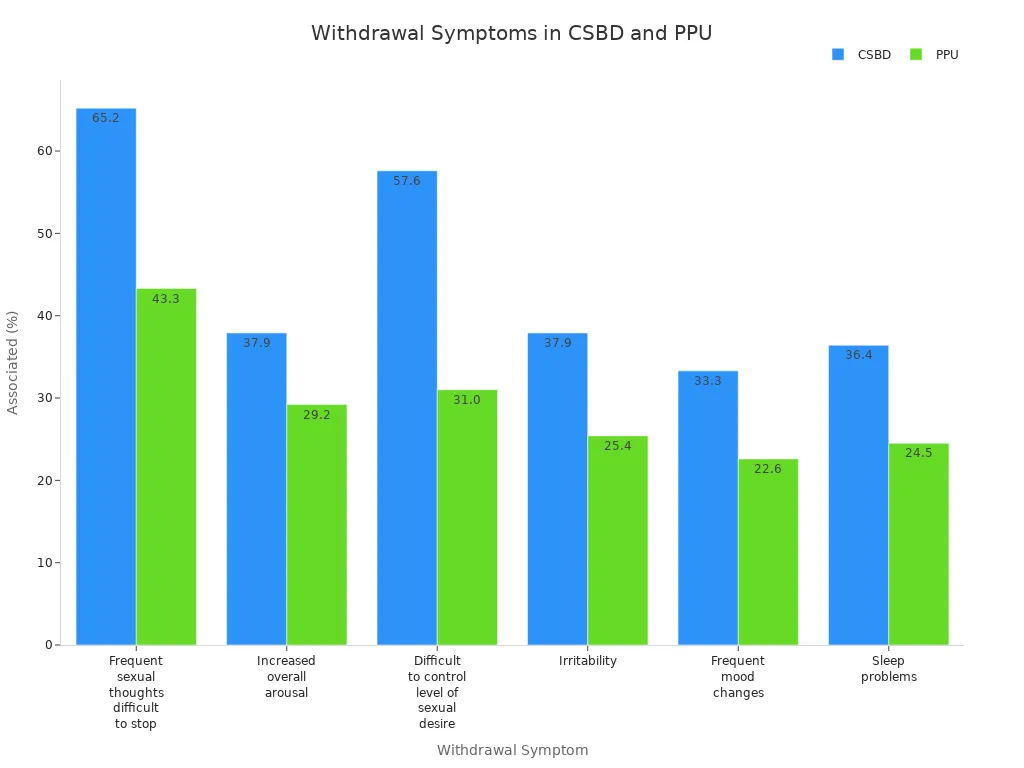
You should note that these symptoms relate to broader patterns of compulsive sexual behavior, not to sex toy use alone. Most studies do not find evidence that using sex toys by itself leads to withdrawal or tolerance in the way substance addictions do.
Expert Opinions
Sex therapists and psychologists have studied the effects of frequent sex toy use. They raise some concerns, but they also point out that most people use sex toys without harm.
- About 16.5% of women report mild and temporary genital desensitization after using vibrators.
- Some users notice numbness in the clitoris after frequent, high-intensity use.
- A few people worry about becoming reliant on vibrators for orgasm.
- Some therapists mention that frequent use might affect desire for partnered sex.
- Psychological dependence on the ease and intensity of stimulation from vibrators can happen for a small number of users.
Most experts agree that these effects are usually mild and temporary. You can reduce the risk by taking breaks or changing how you use sex toys.
Many experts dispute the idea of Sex Toy Addiction. They explain that addiction involves compulsive behavior and negative consequences, which do not match typical sex toy use. You might enjoy using sex toys often, but this does not mean you have lost control or face harm.
- Selina Nguyen, a sex therapist, says that relying on sex toys does not mean you have an addiction. Addiction means you cannot control your behavior, which is not what most people experience.
- The American Association of Sexuality Educators, Counselors, and Therapists (AASECT) states that there is not enough evidence to call sex toy use a mental disorder.
You should remember that sex toys can enhance pleasure and reduce stress. Using them regularly does not mean you have Sex Toy Addiction. Experts encourage you to focus on how your behavior affects your life, not just how often you use a product.
Why Question Sex Toy Addiction?
Moral Panic
You may notice that society often reacts strongly to new sexual behaviors or technologies. This reaction is called moral panic. It happens when people believe something threatens social values, even if the risk is small or misunderstood. History shows several examples:
- Moral panic over pedophilia in the 1970s led to harsh backlash against groups that challenged age of consent laws.
- The day-care sex-abuse hysteria in the 1980s and early 1990s caused widespread fear among parents, even though many accusations were later proven false.
- The satanic panic of the 1980s and 1990s resulted in wrongful convictions based on false claims of ritual abuse.
- The HIV/AIDS panic in the 1980s spread misinformation and fear, often fueled by dramatic media coverage.
Media coverage can make these panics worse. For example, news stories once treated sex robots as harmless novelties. Later, the same media described them as dangerous, linking them to crime and social decline. The jelly bracelet hysteria in 2003 also shows how media can turn a harmless trend into a source of fear. When you see headlines about Sex Toy Addiction, remember that sensational stories often exaggerate risks and create unnecessary panic.
Stigma
Stigma means society judges or shames people for certain behaviors. Sex toy use faces different forms of stigma in many cultures. You might feel embarrassed or worry about what others think. The table below shows common types of stigma:
| Form of Stigma | Description |
|---|---|
| Tribal Stigma | Stigma from belonging to a group, such as women, who are often marginalized. |
| Abominations | Stigma about products with explicit or suggestive shapes. |
| Blemishes of Character | Stigma from the belief that using these products is immoral. |
Stigma can have real effects on your life:
- You may feel shame or embarrassment about using sex toys.
- Fear of judgment from friends, family, or partners can stop you from exploring your sexuality.
- Societal norms and poor sex education often lead to misunderstandings about sexual health.
- Sex toys can help people with physical challenges, but stigma may prevent them from seeking these benefits.
When you question the idea of Sex Toy Addiction, you help reduce stigma and support a healthier view of sexuality.
Misunderstanding Sexual Health
Many people misunderstand sexual health, which leads to confusion about what is normal. You might hear the word “addiction” used to describe any frequent sexual behavior. This can cause shame and guilt, making it harder for you to seek help or understand your own needs.
Some common misunderstandings include:
- The label of addiction can make you feel ashamed, even if your behavior is healthy.
- People often confuse sex addiction with compulsive sexual behaviors, leading to mislabeling normal interests as problems.
- Healthy sexual curiosity has often been treated as a disorder in the past, which adds to the stigma around sex toys.
You should know that healthy sexual behavior looks different for everyone. Questioning labels and seeking accurate information helps you make informed choices about your sexual health.
Recognizing Problematic Use

Healthy vs. Harmful
You might wonder how to tell if your sex toy use is healthy or if it could become harmful. Most people use sex toys safely and enjoy the benefits, but some risks exist. You can look for certain signs to help you decide if your habits support your well-being.
A healthy relationship with sex toys often includes:
- Using toys for pleasure, stress relief, or curiosity
- Feeling comfortable and positive about your experiences
- Practicing good hygiene and safety habits
- Respecting your own boundaries and those of any partners
Harmful use may involve:
- Ignoring pain, injury, or discomfort during or after use
- Feeling anxious, guilty, or distressed about your behavior
- Using toys in risky situations or in ways that could cause harm
- Not being able to stop even when you want to
You should also consider the physical, biological, and chemical risks. Between 1995 and 2006, nearly 6,800 people in the U.S. visited emergency rooms due to sex toy-related injuries. Some toys may contain chemicals like phthalates, which can affect your health. To reduce risks, follow these steps:
- Check for labels such as ‘phthalate-free’ and ‘BPA-free’ to ensure safety.
- Avoid toys with strong odors, as these may signal unsafe materials.
- Choose quality products from trusted sources that focus on safety.
You can also protect yourself by:
- Washing toys before and after use with warm water and mild soap
- Using cleaning methods that match the toy’s material
- Storing toys in a clean, dry place
Tip: If you notice redness, swelling, or pain after using a toy, take a break and consult a healthcare provider if symptoms persist.
Case Study Table
| Case | Description | Outcome |
|---|---|---|
| Jamie uses a silicone toy, cleans it after each use, and feels happy and relaxed. | Healthy use; no distress or injury. | Positive sexual health. |
| Taylor uses a toy with a strong odor, never cleans it, and feels burning after use. | Harmful use; possible chemical and hygiene risks. | Physical discomfort and anxiety. |
When to Seek Help
You may feel unsure about when to reach out for support. Mental health professionals suggest seeking help if you experience:
- Negative feelings about your use of vibrators or sex devices
- Ongoing worries about your body or sexual experiences
- Engaging in risky behaviors with sexual enrichment aids
- Problems with intimacy or concerns from your partner
- Health or safety issues that do not improve
If you notice that your sex toy use causes distress, interferes with daily life, or leads to physical harm, talking to a healthcare provider or therapist can help. You deserve to feel safe and confident about your sexual health. Remember, seeking help is a sign of self-care, not weakness.
Note: Most people use sex toys without problems. If you have questions or concerns, professionals can offer guidance and support tailored to your needs.
Critical Thinking and Resources
Evidence-Based Approach
You face a flood of information about sex toy use and addiction online. Some sources may seem trustworthy, but not all provide accurate or balanced facts. To make informed decisions, you need to think critically about what you read.
Start by looking at who wrote the information. Health professionals, researchers, and educators usually offer more reliable advice than anonymous internet posts. Peer-generated content, like online product reviews, often feels trustworthy because it comes from people who have used the products. This type of feedback, called electronic word-of-mouth (eWOM), can help you learn from others’ experiences. However, keep in mind that only a small group of users leave reviews. These reviewers often had very positive or very negative experiences, which can create a skewed picture. Balanced opinions are less common, so you should not rely on reviews alone.
Tip: When you read online reviews or articles, ask yourself:
- Who wrote this?
- What is their background?
- Are they trying to sell something?
- Do they provide evidence or cite studies?
Imagine you want to learn if frequent sex toy use leads to addiction. You find a forum post where someone claims it ruined their life. You also see a medical article that says there is no scientific proof of sex toy addiction. The forum post shares a personal story, but the medical article uses research and expert opinions. You should give more weight to the article with scientific backing.
You can also use a checklist to evaluate information:
- Check the author’s credentials.
- Look for references to scientific studies.
- Compare information from several sources.
- Watch for extreme language or emotional stories.
- Avoid sources that try to scare or shame you.
Where to Learn More
You can find trustworthy information about sexual health and addiction from reputable organizations and educational programs. These resources help you understand your body, make safe choices, and seek help if needed.
| Resource Type | Description |
|---|---|
| Adolescent Sexual Health Education Program | Offers comprehensive education to help you learn about pregnancy prevention, STI risks, and how to access health services. |
| Publications | Shares research on improving how young people view sexual health services and tracks changes in sexual health education. |
You can also talk to healthcare providers, school counselors, or sexual health educators. They can answer your questions and guide you to reliable resources. Many public health websites and community clinics offer free or low-cost information sessions.
Note: Learning about sexual health is a lifelong process. Stay curious, ask questions, and seek out evidence-based answers. This approach helps you make choices that support your well-being and confidence.
You should always question claims about sex toy addiction and look for scientific evidence. Medical experts recognize some sexual disorders, but they do not list sex toy addiction as one. If you feel unsure, talk to a healthcare provider. For example, if you notice distress or harm from your habits, seek help. Remember:
- Trust facts, not fear.
- Support open, non-judgmental conversations about sexual health.
Stay curious and think critically. Your well-being matters most.
FAQ
Can you get addicted to sex toys?
You cannot get addicted to sex toys in the medical sense. Experts do not recognize sex toy addiction as a clinical disorder. If your use causes distress or problems, consider talking to a professional.
How do you know if your sex toy use is unhealthy?
You should look for signs like distress, physical discomfort, or trouble stopping even when you want to. Healthy use feels positive and does not interfere with your daily life.
Do sex toys cause physical harm or desensitization?
Most people use sex toys safely. Some users report mild numbness or temporary desensitization. You can reduce risks by taking breaks and using toys as directed.
Should you feel ashamed for using sex toys?
You should not feel ashamed. Sex toy use is common and can support sexual health. Shame often comes from stigma or misinformation, not from the behavior itself.
When should you seek help for sex toy use?
You should seek help if you feel anxious, guilty, or notice negative effects on your health or relationships. Professionals can offer support and guidance.
Are there safe ways to use sex toys?
You can use sex toys safely by cleaning them before and after use, choosing body-safe materials, and following instructions. Always listen to your body and stop if you feel pain.
Can frequent sex toy use affect your relationships?
Frequent use does not always harm relationships. You should communicate openly with partners about your needs and concerns. Healthy communication supports intimacy.
Where can you find reliable information about sexual health?
You can find trustworthy information from healthcare providers, sexual health educators, and reputable public health websites. Avoid sources that use fear or shame.