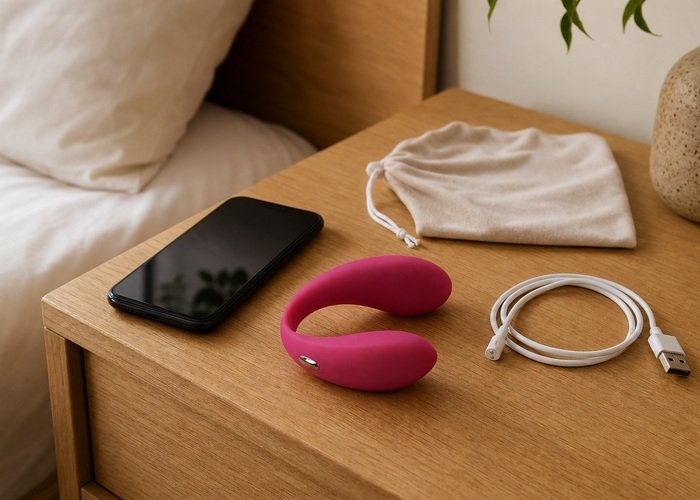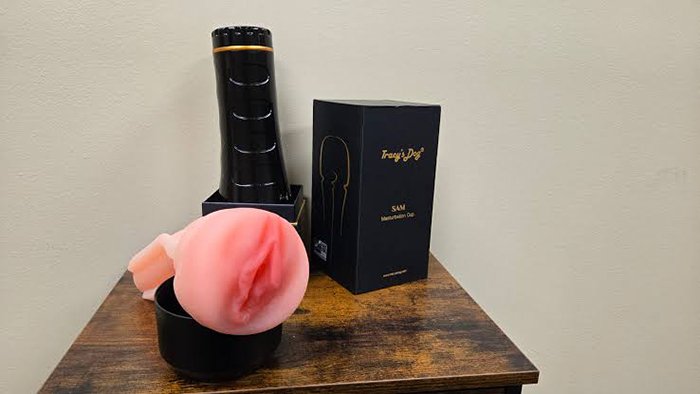
Sexual wellness technology has quietly undergone a revolution — and the humble vibrator is no longer the ceiling of what’s possible. For decades, the standard buzzing motor defined the category. Today, that’s starting to look like a first draft.
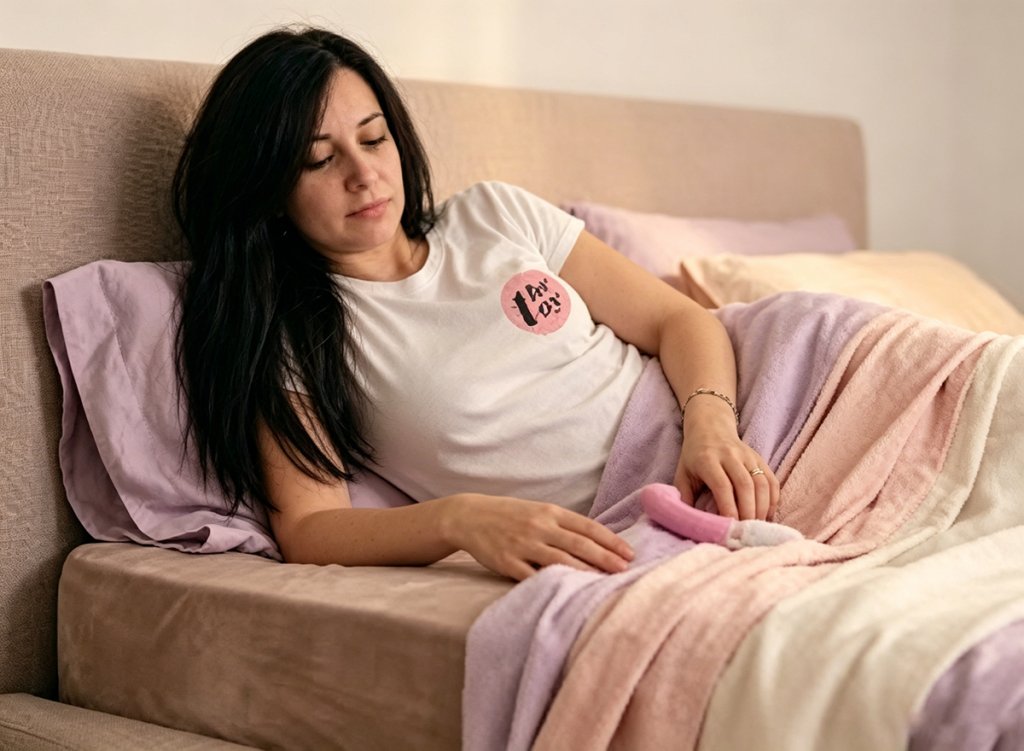
The core limitation of conventional vibration is simple: it’s surface-level. High-frequency buzz stimulates nerve endings at the skin’s surface, but it doesn’t replicate pressure, rhythm, or the layered sensation of actual touch. Worse, prolonged exposure to intense vibration can cause temporary desensitization — a well-documented phenomenon sometimes called vibratory habituation — where the body essentially tunes out repetitive input. What once felt electric starts to feel like background noise.
The shift underway isn’t just about more power — it’s about smarter, more human-centered stimulation.
That’s why a new generation of devices is emerging around the concept of mechanical realism: engineering that mimics the dynamics of touch rather than merely amplifying sensation. From wave-motion mechanics to automated thrusting massagers that replicate rhythmic physical pressure, these devices are designed to engage the body on multiple levels simultaneously. This is the foundation of what researchers and designers are calling the Blended Experience — the layered combination of pressure, movement, and sensation that no single-note buzzer can achieve. According to Kiss Self, 45% of women use vibrators specifically to address arousal difficulties and achieve climax — a signal that the demand for more effective solutions is very real.
Understanding why these mechanical advances work the way they do starts with the science behind how the body actually responds to touch — and that’s exactly where we’re headed next.
The Science of Mechanical Flapping: Mimicking the Human Touch
Understanding why mechanical flapping pleasure technology represents such a meaningful leap forward starts with a simple, often-overlooked truth about anatomy. According to research from the Kinsey Institute, over 70% of women require clitoral stimulation to reach orgasm — internal penetration alone simply isn’t enough for most people. Yet for decades, toy design continued to prioritize internal sensation, leaving external stimulation as an afterthought.
Flapping technology is a direct answer to that gap.
Tapping vs. Flapping: Not the Same Motion
It’s easy to assume all percussive stimulation works the same way, but the distinction matters. Tapping delivers quick, repetitive point-contact strikes — brief and localized, like a finger drumming on a surface. Flapping, by contrast, involves a broader, sweeping oscillation that generates rhythmic pressure across a wider surface area. The motion is closer to the natural movement of a partner’s hand or tongue — fluid, consistent, and layered with both contact and release in each cycle.
That distinction is what makes flapping feel less mechanical and more intuitive to the body.
How Rhythmic Pressure Changes the Experience
The clitoris responds powerfully to sustained, rhythmic stimulation — not just intensity. Flapping mechanisms replicate this by delivering controlled waves of pressure that build gradually rather than overstimulating from the first moment. In practice, this means the body has time to respond and climb toward climax in a way that feels organic rather than forced.
The best stimulation isn’t always the strongest — it’s the most consistent, and flapping technology finally gives external arousal the engineering attention it deserves.
For anyone exploring this for the first time, it helps to start with the basics of external stimulation before layering in more complex motion patterns. Once the external mechanics are understood, the next logical question becomes: what happens when you pair that clitoral precision with equally engineered internal movement? That’s exactly where automated thrusting enters the picture.
Automated Thrusting: Engineering the Perfect Internal Rhythm
Manual stimulation is physically demanding, inconsistent, and — let’s be honest — rarely maintains the precise rhythm needed to build sustained arousal. Automated thrusting devices solve this problem through engineering, not effort.
The Physics Behind the Motion
Where manual movement relies on muscle endurance and concentration, automated thrusting operates through a precision motor system designed to deliver consistent, repeatable strokes. Variable stroke lengths — typically ranging from short, focused pulses to longer, deeper movements — allow users to dial in the exact depth and rhythm that targets the G-spot most effectively. In practice, the body responds more intensely to rhythmic consistency than to powerful but erratic motion. Automation delivers exactly that.
Rotation adds another dimension entirely. A rotating head doesn’t just move back and forth — it applies circular pressure against the anterior vaginal wall, where the G-spot and surrounding deep tissue respond to sustained contact. This multidirectional stimulation engages nerve pathways that linear movement alone simply can’t reach.
Manual vs. Automated Thrusting: A Direct Comparison
| Feature | Manual Effort | Automated Thrusting |
|---|---|---|
| Rhythm consistency | Variable, fatigues over time | Constant, motor-driven |
| Stroke depth control | Approximate | Precise, programmable |
| Rotation capability | Difficult to sustain | Continuous, motorized |
| Dual-zone stimulation | Requires two hands | Built-in, simultaneous |
| Physical demand | High | None |
Achieving the Blended Orgasm
The real breakthrough of automated dual-action devices is their ability to pursue what ISSM identifies as the blended orgasm — simultaneous stimulation of the clitoris and G-spot that produces a more intense, full-body response than either zone can achieve alone. This requires a device that maintains consistent internal thrusting while delivering external stimulation without interruption. Manual alternatives simply can’t sustain both effectively.
Automated thrusting doesn’t just replicate human movement — it improves on it by removing the variables that make manual stimulation inconsistent.
For a closer look at how dual-action designs are engineered for this purpose, these simultaneous stimulation devices demonstrate what targeted internal and external coverage looks like in practice.
Of course, motion is only part of the sensory picture. What many users don’t yet realize is that temperature plays an equally powerful role — and that’s precisely where advanced heating vibrators introduce a physiological dimension that no amount of mechanical precision can replicate on its own.
The Thermal Advantage: Why Advanced Heating Changes Everything
While previous sections explored how mechanical flapping and automated thrusting answer the question of how do thrusting vibrators mimic human movement, there’s another dimension that’s equally critical — temperature. Cold silicone against warm skin is an immediate sensory disconnect. Advanced heating technology closes that gap, and the physiological effects go far deeper than simple comfort.
Vasodilation: Warmth That Works With Your Body
Heat triggers vasodilation — the widening of blood vessels — which directly increases blood flow to the pelvic region. More blood flow means greater engorgement, heightened nerve responsiveness, and more intense arousal. This isn’t a minor perk; it’s a fundamental shift in how the body engages with stimulation. As cognitive neuroscientist Dr. Nan Wise explains, “The integration of heat technology in adult toys mimics human body temperature, which increases blood flow to the pelvic region and enhances tissue sensitivity.” The science is clear: warmth is arousal infrastructure.
Realism at 37°C: The Temperature of Human Connection
The human body maintains a core temperature of approximately 37°C (98.6°F), and modern heating elements in premium devices are engineered to match exactly that. The result is a tactile experience that registers as genuinely human to the nervous system. This level of thermal realism, combined with the mechanical precision driving today’s designs, represents a meaningful convergence of biology and engineering.
Enhanced Sensitivity: The Skin’s Thermal Response
Warmed tissue is simply more sensitive tissue. Heat activates thermoreceptors in the skin, lowering the stimulation threshold and amplifying tactile feedback from every mechanical movement. On the other hand, cold or room-temperature silicone can create mild vasoconstriction — the opposite effect — reducing sensitivity before stimulation even begins. Choosing a device with integrated heating isn’t just about comfort; it’s about optimizing the body’s own response system.
The logical next frontier, of course, is putting precise control over all these variables — heat, rhythm, intensity — directly in the user’s hands through intelligent, app-driven interfaces.
The Future of Control: AI and Prompt-Based Pleasure
Thermal comfort and automated rhythm — explored in previous sections — are impressive on their own. But the next frontier isn’t just what a device does. It’s how intelligently it responds to you.
Generative AI is reshaping personalization across virtually every category, and intimate technology is no exception. Multi-functional rotating adult toys increasingly ship with companion apps capable of learning preferences, adjusting patterns in real time, and accepting user-defined inputs that go far beyond a simple speed dial. Think of it as prompting your device the same way you’d prompt an AI tool — with intention and structure.
According to a generative AI guide from JCCAA, effective AI prompts fall into five core categories that translate surprisingly well into customizing intimate experiences:
- Context — Set the scene. Are you winding down after a stressful week, or building toward something more intense? App interfaces now allow mood-based presets that calibrate intensity accordingly.
- Action — Define the mechanical behavior. Specify thrusting depth, rotation speed, or flapping frequency as distinct, adjustable variables.
- Tone — Dial in the overall sensation quality. Gentle and wavelike, or firm and escalating? Many apps offer gradient controls rather than fixed modes.
- Format — Choose how the experience is structured. A timed sequence, a looping pattern, or a responsive mode that shifts based on biometric feedback.
- Constraints — Set limits. Maximum intensity caps, heat thresholds, or session duration — boundaries that keep the experience comfortable and intentional.
The devices that will define the next decade aren’t the ones with the most features — they’re the ones that listen best.
This kind of structured customization pairs naturally with dual-stimulation designs already engineered to target multiple pleasure points simultaneously. When mechanical precision meets responsive AI, the result isn’t just automation — it’s genuine personalization at scale.
If questions are forming about practicalities — noise levels, cleaning routines, or how these systems actually work day-to-day — the next section addresses exactly that.
Frequently Asked Questions About Advanced Pleasure Tech
Still have questions before diving into the world of multi-sensory automation? These are the most common concerns — answered clearly.
Are automated thrusting massagers louder than standard vibrators?
Not necessarily. In practice, mechanical thrusting does add some operational noise compared to a basic single-motor vibrator. However, modern multi-functional devices are engineered with noise-dampening housings and precision motors that keep sound levels manageable. The trade-off in sensation is overwhelmingly worth it for most users.
How do I maintain and clean devices with mechanical moving parts?
Cleaning is simpler than it sounds. Most reputable devices feature removable, waterproof sleeves that detach for thorough washing with warm water and toy-safe cleaner. For the motorized body itself, a damp cloth wipe-down is typically sufficient. Always check manufacturer guidelines — mechanical components generally shouldn’t be fully submerged.
Can heating elements be turned off independently?
Yes — and this is a key design feature worth prioritizing. According to Kissself Technical Specifications, multi-functional devices often feature independent motors for flapping, thrusting, and heating, letting users customize every element of their session separately. Want warmth without motion? Done. Prefer thrusting without heat? Also easy. That modularity is what separates genuinely advanced devices from gimmicky alternatives.
What makes a ‘blended’ experience different from a standard one?
A blended experience engages multiple sensory pathways simultaneously — thermal comfort, mechanical stimulation, rhythmic pressure — rather than relying on a single type of input. Research into multisensory haptic technology confirms that layering sensory inputs produces responses that no single stimulus can replicate alone. As explored in earlier sections, this is the neurological core of why automation outperforms manual effort. For a deeper look at why anatomy-specific design matters here, this breakdown of pleasure gaps is worth reading.
The bottom line: Advanced pleasure tech isn’t complicated to use — it’s complicated to engineer. Your job is simply to explore it.
Key Takeaways
- Context — Set the scene. Are you winding down after a stressful week, or building toward something more intense? App interfaces now allow mood-based presets that calibrate intensity accordingly.
- Action — Define the mechanical behavior. Specify thrusting depth, rotation speed, or flapping frequency as distinct, adjustable variables.
- Tone — Dial in the overall sensation quality. Gentle and wavelike, or firm and escalating? Many apps offer gradient controls rather than fixed modes.
- Format — Choose how the experience is structured. A timed sequence, a looping pattern, or a responsive mode that shifts based on biometric feedback.
- Constraints — Set limits. Maximum intensity caps, heat thresholds, or session duration — boundaries that keep the experience comfortable and intentional.