Many people with vaginas experience queefing, which is a normal and natural occurrence. You do not need to feel embarrassed or ashamed. The misconception that queefing is the same as passing gas often creates unnecessary stigma. Gynecologists and sex therapists confirm that queefing results from air being released from the vagina and does not indicate a problem. As shown below, queefing happens to a significant portion of people:
| Study Population | Age Range | Percentage Reporting Queefing |
|---|---|---|
| Mostly-white Dutch women | 45-85 | 12.8% |
| Iranian women | 18-80 | 20% |
| Mixed populations (literature review) | N/A | Up to 69% |
You can talk about queefing openly to help break the silence and reduce shame.
Key Takeaways
- Queefing is a natural and common release of air from the vagina, not related to digestive gas or health problems.
- Many people experience queefing during sex, exercise, or daily activities, so you are not alone.
- Queefing does not produce odor and is harmless unless accompanied by pain, unusual discharge, or foul smell.
- Open and honest conversations with partners and friends help reduce embarrassment and build trust.
- Using humor and clear communication can make talking about queefing easier and strengthen relationships.
- Pelvic floor exercises and controlled breathing can help reduce the frequency of queefing.
- Seek medical advice if queefing happens often without activity, causes pain, bleeding, or other unusual symptoms.
- Responding with empathy and without judgment supports others and helps break the stigma around queefing.
Queefing Basics
Definition
Queefing, also known as vaginal gas, vaginal flatulence, or vaginal wind, refers to the involuntary release of trapped air from the vagina. You may notice a sound similar to flatulence, but queefing does not involve the digestive system. Medical professionals define queefing as a common and harmless bodily function. It often occurs during sexual activity, exercise, tampon use, or pelvic exams. The process happens when air becomes trapped inside the vaginal canal and then escapes, producing a noticeable sound. Most people experience queefing at some point, and it rarely signals a health problem.
Causes
You may experience queefing for several reasons. The most common causes include:
- Sexual activity, especially with thrusting movements, can push air into the vagina.
- Exercise, such as yoga or core workouts, stretches the vaginal walls and allows air to enter.
- Insertion of objects, like tampons or menstrual cups, can introduce air.
- Weak pelvic floor muscles may make it easier for air to become trapped and released.
- Certain body positions or anatomical variations can increase the likelihood of air entering the vagina.
The vaginal walls are elastic and closely aligned. When you move, the walls may fold or the vaginal opening may act like a valve, trapping air inside. Increased pressure from activities like sex or exercise then forces the air out, resulting in the characteristic sound. Pelvic floor muscle tone and body mass index can also influence how easily air becomes trapped or released.
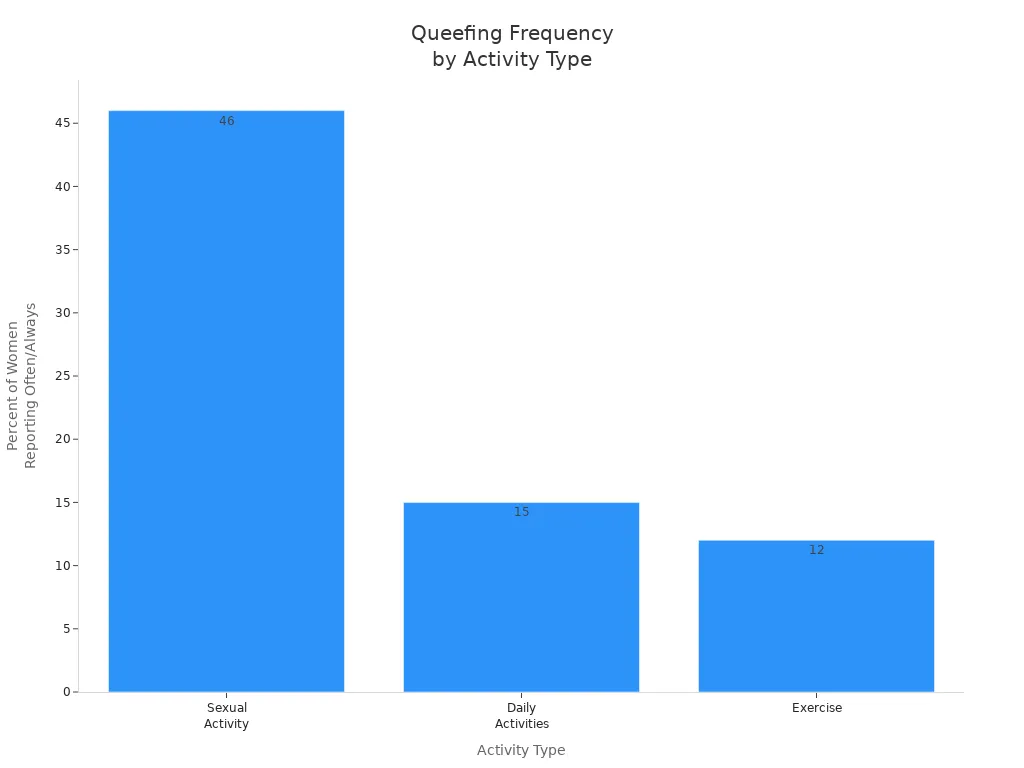
You are not alone if you notice queefing during daily life. Clinical studies show that queefing occurs most often during sexual activity, but it can also happen during exercise or routine activities:
| Activity Type | Percentage of Women Reporting Queefing Often or Always |
|---|---|
| Sexual Activity | 46% |
| Daily Activities | 15% |
| Exercise | 12% |
Sound and Odor
You may feel concerned about the sound or odor associated with queefing. The sound results from air escaping the vaginal canal, which can resemble flatulence from the digestive tract. However, queefing does not produce any odor because it does not involve waste gases or bacteria. The air released is simply atmospheric air that entered the vagina during movement or activity.
Note: If you ever notice a strong or foul odor, especially one that smells like fecal matter, or if you experience pain, unusual discharge, or signs of infection, consult a healthcare provider. These symptoms may indicate a rare but serious condition, such as a rectovaginal fistula or pelvic organ prolapse. In the absence of these symptoms, queefing remains a normal and harmless occurrence.
Normalcy
How Common
You might wonder how often queefing happens. Most people with vaginas experience it at some point in their lives. Medical literature and expert commentary confirm that queefing is a common occurrence. You may notice it more during sexual activity, exercise, or even daily movements. Certain sexual positions and movements can increase the likelihood, but no position guarantees prevention. Anatomical differences and vaginal lubrication levels also play a role in how prone you are to queefing. You should know that this is a natural part of having a vagina and does not mean anything is wrong with your body.
Medical View
Gynecologists and sexual health experts describe queefing as the sound or sensation of air escaping the vagina, often during activities that introduce air into the vaginal canal. They clarify that queefing is not related to digestive gas and is odorless, making it distinct from flatulence. Experts emphasize that queefing is a harmless and natural bodily function. You do not need to feel embarrassed or ashamed. Medical professionals encourage you to adopt an open, shame-free attitude toward queefing. They also note that certain factors, such as anatomical differences or vaginal lubrication, can influence how often you experience it.
Tip: If you feel embarrassed, remember that experts view queefing as a normal part of life for anyone with a vagina. You do not need to take special steps to prevent it.
When to Seek Help
In most cases, queefing does not require medical attention. However, you should watch for certain symptoms that may indicate an underlying condition. Seek advice from a healthcare provider if you notice any of the following:
- Queefing occurs frequently or while you are at rest.
- You experience leaking urine or stool inside the vagina.
- You notice abnormal discharge, itching, or pain.
- You have symptoms such as urinary incontinence or vaginal bulging.
- You have a history of pelvic organ prolapse or vaginal delivery and notice new or bothersome symptoms.
These signs may suggest pelvic floor dysfunction, a vaginal fistula, or other medical issues that require evaluation. If you feel unsure, consulting a healthcare provider can give you peace of mind and help you address any concerns.
Embarrassment
Social Stigma
You may feel embarrassed about queefing because of persistent social myths and stigma. Many people grow up hearing jokes or negative comments about bodily sounds, which can make you feel self-conscious. Society often treats natural bodily functions as taboo, especially those related to sexual health. This stigma can lead you to believe that queefing is something to hide or feel ashamed about. You might worry about being judged or laughed at if someone hears the sound during intimate moments or exercise. These fears are common and understandable, but they do not reflect the reality of how normal queefing is.
Emotional Impact
Embarrassment about queefing can affect your self-esteem and sexual confidence. Psychological studies show that:
- Embarrassment often increases anxiety and reduces sexual self-confidence.
- Adolescents report frustration and embarrassment about sexual performance and bodily responses, including queefing.
- Negative beliefs, such as thinking “I’m doing something wrong,” can lower your confidence.
- Embarrassment and low self-confidence can make it harder to talk about sexual difficulties with partners.
- Barriers to communication include awkwardness, fear of hurting your partner’s feelings, fear of judgment, and low self-confidence.
- Some people tolerate sexual difficulties silently, which can increase anxiety and keep confidence low.
- Open communication with partners can reduce anxiety, normalize sexual difficulties, and improve relationship quality.
You may notice that embarrassment can create a cycle. The more you worry about queefing, the less likely you are to talk about it, which can make you feel even more isolated or anxious.
Overcoming Shame
You can take practical steps to overcome shame and normalize queefing in your life. Try these strategies:
- Practice breathing and pelvic floor muscle techniques. Dr. Barbara DePree, a gynecologist, suggests that you avoid holding your breath during stretches or yoga. Breathe deeply, relax your body as you exhale, and perform a Kegel exercise before inhaling again. Practicing these techniques privately can help you gain control and reduce noise.
- Address emotional responses with self-care. Research shows that symbolic acts, like touching up your makeup, can help you “save face” and bounce back from embarrassment. This approach works better than hiding or withdrawing.
- Start conversations with trusted partners or friends. Sharing your experiences can help you realize that queefing is common and nothing to be ashamed of.
- Remind yourself that queefing is a normal bodily function. You do not need to apologize for it or feel embarrassed.
Tip: Open communication with your partner can provide reassurance, help solve problems, and strengthen your relationship. You deserve to feel comfortable and confident in your body.
Talking to Partners

Starting the Talk
Bringing up queefing with your partner may feel awkward at first, but you can approach the conversation with confidence and clarity. Open communication about bodily functions demonstrates maturity and strengthens your relationship. You set the tone for comfort and acceptance when you address queefing directly.
Here are some practical steps and sample phrases to help you start the conversation:
- Normalize the experience:
Begin by framing queefing as a natural part of sexual activity. You might say,”Sometimes during sex, air gets trapped and makes a funny sound. It’s totally normal and nothing to worry about.” - Use humor to ease tension:
Light-heartedness can make the topic less intimidating. Try,”If you hear a weird noise, don’t worry—it’s just my body making music!” - Express your feelings honestly:
Share your emotions to invite empathy. For example,”I used to feel embarrassed about queefing, but I’ve learned it’s just a normal thing that happens.” - Encourage open dialogue:
Let your partner know you value honest conversations.”I want us to be able to talk about anything, even the silly stuff our bodies do.”
Sex educators recommend several communication techniques for discussing queefing with a partner:
- Normalize queefing as a natural bodily function.
- Maintain open and honest conversations to foster comfort.
- Embrace humor and laugh together.
- Stay positive and confident about your body.
- Use practical strategies, such as pelvic floor exercises, if you wish to reduce occurrences.
- Choose sexual positions that minimize air entrapment.
- Incorporate background noise, like music, to mask sounds if it helps you feel more at ease.
- Celebrate body acceptance and encourage open dialogue to break taboos.
Handling Reactions
Partners may react to queefing in different ways. Some may feel embarrassed, while others might laugh or even find it endearing. You can prepare for a range of responses and guide the conversation toward understanding and support.
| Aspect | Evidence Summary |
|---|---|
| Partner Reactions to Queefing | Responses vary: some partners feel embarrassed or bothered, others laugh it off or find it exciting. Men’s reactions range from turn-off to amusement or even a queef fetish. Women’s feelings range from embarrassment to humor and acceptance. |
| Counseling Advice | Counselors recommend positive responses, avoiding criticism, and using humor to ease tension. Partners should be supportive and patient, maintaining a sex-positive atmosphere. |
| Practical Responses | Women are advised not to apologize; men are encouraged to laugh it off and make playful comments. Taking breaks to release air and continuing intimacy in other ways is recommended. |
When your partner reacts, you can respond in ways that promote comfort and trust:
- If your partner laughs, join in. Shared humor can turn awkwardness into connection.
- If your partner seems embarrassed, reassure them.”It happens to everyone with a vagina. It’s just air, nothing more.”
- If your partner asks questions, answer honestly.”It’s not related to digestive gas, and it doesn’t mean anything is wrong.”
- If your partner feels uncomfortable, suggest taking a short break or changing positions.
You do not need to apologize for queefing. Instead, focus on maintaining a positive and supportive atmosphere. Your openness can help your partner feel more at ease and reduce any tension.
Building Comfort
Building comfort around queefing in your relationship takes time and patience. You can use several strategies to foster trust and openness:
- Start slowly and gently:
Introduce the topic in a relaxed setting, not during a stressful moment. Ease into the conversation and allow trust to grow. - Take small steps:
Begin with light discussions or jokes before moving to more personal experiences. This gradual approach helps both of you adjust. - Embrace imperfections:
Accept that bodies make noises and mistakes happen. Laughing together about these moments can reduce anxiety and normalize the experience. - Plan ahead:
If you anticipate queefing might occur, discuss it beforehand. Setting expectations can make the experience less surprising and more manageable. - Focus on intimacy, not perfection:
Remind yourself and your partner that pleasure and connection matter more than flawless performance.
Experts highlight that open communication about bodily functions, including queefing, reflects emotional maturity and strengthens trust. You might even create a playful agreement—like a “fart pact”—to normalize these conversations. Humor and empathy help you connect over sensitive topics and foster a body-positive environment. Honesty about your body signals honesty about your emotions, laying the foundation for a healthy, trusting relationship.
Tip: The more you talk openly about queefing, the easier it becomes. Your willingness to discuss it can help your partner feel comfortable, too. Over time, you both build a relationship where acceptance and trust come naturally.
Discussing with Friends
Sharing Experiences
You may feel unsure about bringing up sensitive topics like bodily sounds with friends. However, sharing your experiences can help you realize that you are not alone. Choose a comfortable setting, such as a private conversation or a relaxed group chat. You can start by mentioning a funny or awkward moment and see if others relate. Many people appreciate honesty and vulnerability, especially when it comes to natural body functions. When you share your story, you invite others to open up as well.
- Start with a light comment:
“Has anyone ever had something weird happen during yoga or at the gym?” - Use a recent experience as an entry point:
“I had the funniest thing happen during my workout yesterday…”
You set the tone for openness when you speak first. Your friends may respond with their own stories, which can help everyone feel more comfortable.
Using Humor
Humor can break the ice and reduce embarrassment in social conversations. When you laugh at yourself, you show confidence and help others relax. Psychologists have found that using humor to address awkward moments can make them less intimidating. For example, one story tells of a woman who faced health issues after suppressing natural bodily functions. Her experience highlights the importance of authenticity and self-acceptance. By joking about these moments, you encourage your friends to see them as normal and not shameful.
Tip: If you feel nervous, try making a playful comment about the situation.
“Well, my body decided to play its own soundtrack today!”
Exposure to these conversations, paired with laughter, helps you and your friends become less anxious about similar experiences. Humor reframes the moment as a shared human experience, not a source of shame.
Supporting Each Other
Support from friends can make a big difference in how you feel about your body. When someone shares an embarrassing story, respond with empathy and encouragement. Avoid making jokes at their expense or dismissing their feelings. Instead, offer reassurance and let them know you understand.
- Listen without judgment.
- Share your own experiences if you feel comfortable.
- Remind each other that everyone has awkward moments.
You can create a supportive environment by validating each other’s feelings. This approach helps reduce stigma and builds trust within your friend group.
Remember: Open, honest conversations about natural body functions help everyone feel more confident and accepted.
Healthcare Conversations

Why It Matters
Discussing intimate health topics with your healthcare provider can feel intimidating. However, open communication about your body supports your overall well-being and helps reduce stigma. You should know that most providers receive training to create a nonjudgmental environment. This approach encourages you to share concerns without fear of embarrassment.
- Trapped air in the vagina is a normal occurrence, often happening during sex, exercise, or when using certain products.
- Most of the time, this is harmless and odorless.
- If you notice unusual symptoms, such as a foul odor that resembles stool or abnormal discharge, you should speak up. These signs could indicate a rare but serious condition called a vaginal fistula, which requires medical attention.
- Early conversations with your provider allow for prompt diagnosis and treatment if needed.
- Open dialogue about sexual health helps providers identify potential issues and improves your care experience.
Note: Your willingness to discuss all aspects of your health, even those that feel awkward, empowers you and helps your provider deliver the best care possible.
Asking Questions
You may feel nervous about bringing up sensitive topics, but you can prepare to make the conversation easier. Use these strategies to ask questions confidently:
- Write down your questions before your appointment. This step ensures you remember everything you want to discuss.
- Practice saying your questions out loud. Rehearsing can help you feel more comfortable during the visit.
- Bring a trusted friend or family member if you need support. They can help you ask questions and remember the answers.
- Use clear, direct language. For example, you might say, “I’ve noticed air escaping from my vagina during certain activities. Is this normal?”
- Remember that your provider has likely heard similar questions before. You are not alone in your experiences.
Tip: If you feel embarrassed, remind yourself that your provider’s goal is to help you. No question about your health is too small or too awkward.
What to Expect
When you talk to your healthcare provider about intimate concerns, you can expect a supportive and informative experience. Here is how you can prepare and what you might encounter:
- Know the reason for your visit and what you hope to achieve.
- Take notes during your appointment about diagnoses, treatments, or instructions.
- Ask your provider to explain why they recommend certain tests or treatments, including possible side effects.
- Inquire about alternative options if you want to explore different approaches.
- Expect that some providers may say no treatment is necessary for normal symptoms. However, if you want more support, ask about referrals to specialists such as physical therapists.
- Do not hesitate to seek a second opinion or consult other wellness professionals, including acupuncturists or massage therapists.
- Clarify the plan for follow-up visits and how to contact your provider with additional questions.
Remember: You have the right to advocate for your health. Stay proactive and seek answers until you feel satisfied with your care.
Responding to Others
Empathy
When someone shares a concern about a sensitive topic, your response can make a significant difference. You can create a supportive environment by practicing empathy. Here are steps you can follow to respond with understanding:
- Prepare Yourself: Take a moment to reflect on your own feelings. Think about what you want to say so you feel confident and clear.
- Use “I” Statements: Express your thoughts without placing blame. For example, you might say, “I appreciate you trusting me with this.”
- Listen Actively: Show that you are engaged. Maintain eye contact, nod, and ask open-ended questions. Summarize what you hear to confirm your understanding.
- Acknowledge Feelings: Let the person know you recognize their emotions. You could say, “I can see that this made you feel uncomfortable.”
Tip: When you listen without interrupting, you help the other person feel safe and respected.
Avoiding Judgment
You can help reduce embarrassment by responding without judgment. Many people worry about being laughed at or criticized when they talk about bodily functions. To avoid making judgmental comments, try these strategies:
- Normalize the experience. Remind yourself and others that bodily noises are natural and nothing to be ashamed of.
- Be kind to yourself and others. Accept that these moments happen to everyone.
- Communicate openly. If you have sensitivities, let others know and ask for non-judgmental responses.
- Use humor carefully. Laughing together can ease tension, but avoid making jokes at someone’s expense.
- Discuss these topics outside of intimate moments. This helps prevent misunderstandings and builds trust.
Remember: Your words can either reinforce shame or help someone feel accepted.
Encouraging Openness
You can encourage open conversations by setting a positive example. When you respond with empathy and without judgment, you show others that it is safe to talk about personal topics. Here are some ways to foster openness:
- Share your own experiences if you feel comfortable. This can help others feel less alone.
- Ask open-ended questions, such as, “How did that make you feel?” or “What would help you feel more comfortable?”
- Offer reassurance. Remind the person that everyone has awkward moments and that these experiences do not define them.
Openness leads to stronger relationships and greater self-acceptance. When you respond supportively, you help break down stigma and create a more understanding community.
Managing Queefing
Pelvic Floor Exercises
You can take proactive steps to manage vaginal air release by strengthening your pelvic floor muscles. Physical therapists recommend starting with a thorough assessment to identify whether muscle tightness, weakness, or coordination issues contribute to the problem. A trained pelvic floor physical therapist can guide you through exercises that target these areas.
Kegel exercises form the foundation of pelvic floor training. To perform a Kegel, tighten your pelvic floor muscles as if you are stopping the flow of urine. Hold the contraction for up to five seconds, then relax. Aim for three sets of 10 repetitions each day. Over time, this routine helps you develop better muscle control and awareness. Physical therapists also suggest combining lengthening, relaxation, and coordination exercises. This approach improves both strength and flexibility, which can reduce the frequency of air release during daily activities.
Tip: Consistency matters. Regular practice of pelvic floor exercises leads to noticeable improvement in muscle tone and control.
Prevention Tips
You can minimize the chances of experiencing vaginal air release during sex or exercise by following several preventive measures:
- Schedule an evaluation with a pelvic floor physical therapist to determine the root cause.
- Practice guided retraining to develop control and awareness of your pelvic floor and pressure management system.
- Incorporate a mix of lengthening, relaxation, strengthening, and coordination exercises into your routine.
- Address contributing factors such as constipation, pelvic organ prolapse, or hormonal changes.
- Gradually retrain positions that trigger air release, such as certain yoga poses, by starting with pelvic floor work in those positions and progressing under professional supervision.
Physical therapists emphasize the importance of gradual progression. Begin with simple positions and increase complexity as your control improves. During sexual activity, experiment with different positions to find those that reduce air entry. Using adequate lubrication and moving slowly can also help. For exercise, focus on controlled breathing and avoid holding your breath during strenuous movements.
Note: Prevention strategies work best when tailored to your unique anatomy and lifestyle. Professional guidance ensures you use the most effective techniques.
When to Get Help
Most cases of vaginal air release do not require medical intervention. However, you should seek professional help if you notice any of the following:
| When to Seek Professional Help for Vaginal Air Release | Explanation |
|---|---|
| Distressingly frequent occurrences | May indicate an underlying issue |
| Pain | Could signal infection or structural problems |
| Bleeding | May suggest infection or other pathology |
| Abnormal discharge | Can indicate vaginal infections |
| Urinary symptoms | Frequent or painful urination or incontinence may point to pelvic floor disorders |
| Suspected fistula | Rarely, a fistula between the vagina and colon, rectum, or urinary tract requires prompt evaluation |
Obstetricians and gynecologists specialize in diagnosing and treating these conditions. If you experience symptoms outside the typical context of sex or exercise, or if you feel concerned about changes in your body, schedule an appointment. Early evaluation ensures you receive the right care and peace of mind.
Remember: Your health and comfort matter. Do not hesitate to reach out to a specialist if you have concerns.
- Queefing is a normal physiological event that happens to many people during sex, stretching, or exercise.
- You do not need to feel embarrassed, as it is harmless and not a sign of any health problem.
- Acceptance and open, respectful communication with partners help reduce any negative psychological impact.
Open conversations about queefing create a supportive environment, reduce stigma, and improve sexual health. When you laugh off these moments and talk honestly, you foster intimacy and self-acceptance. Use these strategies to support yourself and others, building confidence and healthy communication.
FAQ
What should you do if you queef during sex?
Stay calm and remember that queefing is normal. You can laugh it off or acknowledge it with your partner. If you feel uncomfortable, take a short break or change positions. Open communication helps both of you feel at ease.
Can you prevent queefing during exercise?
You can reduce queefing by practicing pelvic floor exercises and controlled breathing. Avoid holding your breath during movements. If certain positions trigger queefing, modify your routine or consult a pelvic floor specialist for personalized advice.
Is queefing a sign of a health problem?
Queefing usually does not indicate a health issue. If you notice pain, unusual discharge, or a foul odor, contact your healthcare provider. These symptoms may signal an underlying condition that needs medical attention.
How can you talk to your partner about queefing?
Start the conversation in a relaxed setting. Use humor or simple explanations. For example, say,
“Sometimes my body makes noises during sex. It’s normal and nothing to worry about.”
Encourage open dialogue to build trust and comfort.
Does queefing mean you have weak pelvic floor muscles?
Not always. Queefing can happen to anyone with a vagina, regardless of muscle strength. However, weak pelvic floor muscles may increase the frequency. Pelvic floor exercises can help improve muscle tone and control.
Should you feel embarrassed about queefing?
You do not need to feel embarrassed. Queefing is a natural bodily function. Most people with vaginas experience it. Open conversations and humor can help reduce shame and normalize the experience.
When should you see a doctor about queefing?
See a doctor if you experience queefing with pain, bleeding, abnormal discharge, or urinary symptoms. These signs may indicate a medical issue. Early evaluation ensures you receive the right care.
Can you stop queefing completely?
You may not be able to stop queefing entirely. You can reduce its frequency with pelvic floor exercises, controlled breathing, and position changes. If queefing causes distress, seek advice from a pelvic floor specialist.