
Image Source: pexels
Initiate Sex with a focus on open communication and mutual consent. You create comfort and trust when you respect your partner’s feelings and boundaries. Emotional connection grows stronger when both partners feel valued. Consider these benefits of mutual consent:
- You build trust and respect together.
- Emotional intimacy increases, which leads to more fulfilling experiences.
- Open communication and respect enhance satisfaction in your relationship.
You can use both verbal and non-verbal cues to express your intentions and ensure ongoing consent.
Key Takeaways
- Prioritize open communication to build trust and respect with your partner.
- Understand that consent is an ongoing conversation, not a one-time agreement.
- Use both verbal and non-verbal cues to express your intentions and gauge your partner’s comfort.
- Create a comfortable environment to enhance intimacy and relaxation.
- Be aware of your emotional readiness and your partner’s needs before initiating sex.
- Encourage honest sharing of desires and boundaries to improve satisfaction.
- Always check in with your partner to confirm consent and ensure mutual comfort.
- Address barriers like anxiety or fear of rejection through open dialogue and support.
Understanding Consent
What Is Consent
Consent forms the foundation of any healthy sexual relationship. You give consent when you express a clear, voluntary agreement to participate in a specific sexual act at a specific time. This agreement must come without pressure, manipulation, or influence from substances. You can withdraw consent at any moment, and your partner must respect your decision.
Key Elements
Tip: Always check in with your partner. Consent is not a one-time conversation.
- Consent must be explicit and enthusiastic.
- You cannot give consent if you are incapacitated or under the influence.
- Sex without consent is classified as rape in many countries.
- There are no ‘grey’ areas—if someone does not say “no,” it does not mean “yes.”
- Acting without consent is punishable by law in many regions.
For more on legal definitions, see RAINN or Planned Parenthood.
Myths
Many people hold misconceptions about consent. These myths can lead to confusion and harm. The table below highlights common misunderstandings and how often people agree with them:
| Misconception | Percentage of Agreement | Gender Difference |
|---|---|---|
| Consent must be given at each step | Women: 27% Men: 19% | Women more likely to agree |
| Consent for one time is consent for future | Women: 75% Men: 64% | Women more likely to disagree |
| Getting a condom indicates consent | 37% | N/A |
| Taking off clothes indicates consent | 35% | N/A |
| Nodding in agreement indicates consent | 24% | N/A |
| Engaging in foreplay indicates consent | 22% | N/A |
| Not saying ‘no’ indicates consent | 19% | N/A |
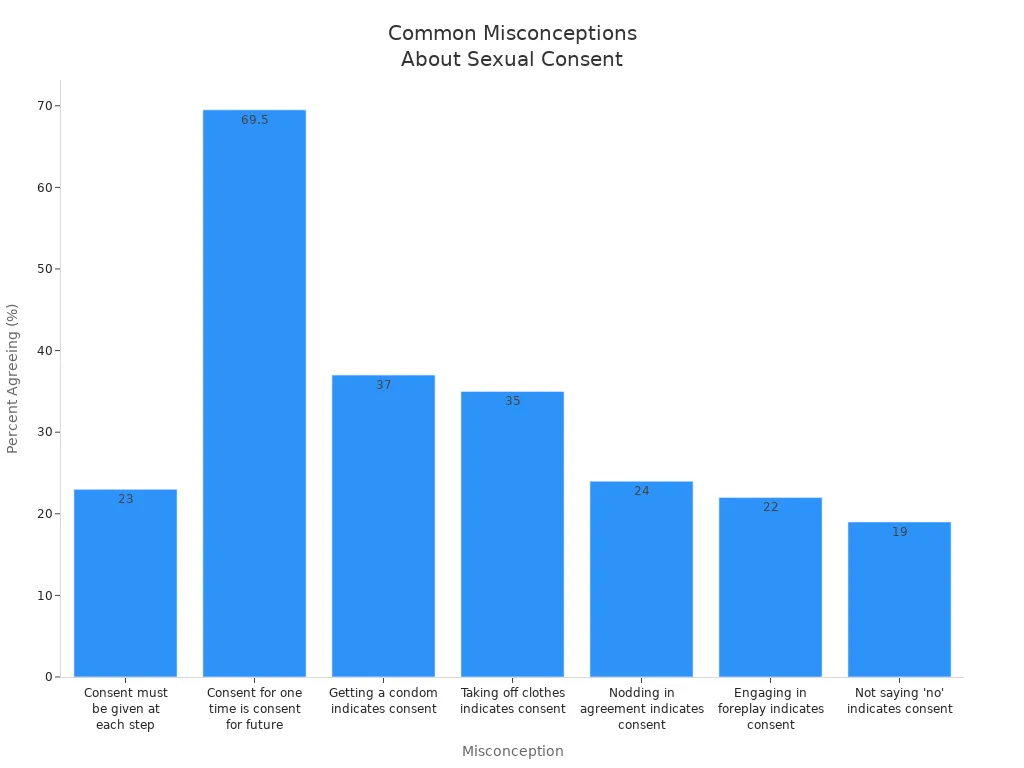
Note: Many people experience pressure or coercion. Traditional sexual scripts and willful violations often lead to consent violations.
Why Consent Matters
Safety
You protect yourself and your partner when you prioritize consent. Clear agreements reduce the risk of harm, trauma, or legal consequences. You create a safe space for intimacy by ensuring both parties feel comfortable and respected.
Trust
Mutual trust and respect grow when you practice consent. Open conversations about boundaries and desires strengthen your emotional connection. Studies show that effective sexual communication improves well-being, especially for women. For more insights, visit Love Is Respect or NSVRC.
Recognizing Consent
Verbal Cues
You can recognize consent through direct, enthusiastic words. Listen for clear statements like “yes,” “I want to,” or “absolutely.” The table below shows examples:
| Type of Consent | Examples | Indicators |
|---|---|---|
| Verbal Consent | “Yes,” “I want to,” “Absolutely” | Clear permission expressed verbally |
Non-Verbal Cues
Non-verbal signals also play a role. You might notice your partner making eye contact, moving closer, or touching you affectionately. These actions can indicate comfort and willingness.
| Type of Consent | Examples | Indicators |
|---|---|---|
| Non-Verbal Consent | Eye contact, moving closer, nodding | Actions that indicate willingness or comfort |
Case Study: You and your partner are watching a movie. Your partner leans in, makes eye contact, and gently touches your hand. You ask, “Would you like to go further?” Your partner smiles and says, “Yes, I want to.” This scenario shows both non-verbal and verbal consent.
If you feel unsure, always ask. Open communication ensures both you and your partner feel safe and respected.
Initiate Sex: Methods
How to Initiate Sex
Low-Stakes Approaches
You can Initiate Sex in ways that feel natural and comfortable for both you and your partner. Low-stakes approaches reduce pressure and encourage open communication. For example, you might start with gentle touches, a warm hug, or a soft kiss. These actions help you gauge your partner’s interest without overwhelming them.
- Send a flirty text during the day to build anticipation.
- Sit close and make eye contact while watching a movie.
- Compliment your partner’s appearance or express appreciation for their presence.
Tip: Move at your own pace. Allow intimacy to develop naturally. Pay attention to your partner’s non-verbal cues, such as relaxed breathing or leaning in closer.
Case Study:
You and your partner finish dinner together. You reach for their hand and gently squeeze it, then say, “I really enjoy spending time with you.” Your partner smiles and squeezes back. This simple gesture opens the door for further intimacy without pressure.
Spontaneity
Spontaneous moments can add excitement and authenticity when you Initiate Sex. You might notice a playful mood or a shared laugh that creates the right atmosphere. Responding to these moments shows attentiveness and respect for your partner’s feelings.
- Suggest a sudden dance in the living room.
- Whisper something playful or affectionate.
- Lean in for a kiss when you feel a spark.
Case Study:
After a long walk, you and your partner collapse on the couch, laughing. You catch their eye, share a smile, and lean in for a kiss. The moment feels genuine and unforced, making both of you comfortable.
Setting the Mood
Environment
A comfortable environment can make it easier to Initiate Sex and ensure both partners feel relaxed. You can use several strategies to create an inviting atmosphere:
- Use soft, dim lighting to set a calming tone.
- Play gentle music that you both enjoy.
- Add subtle scents like lavender or vanilla.
- Arrange soft blankets and pillows for physical comfort.
- Keep the room at a comfortable temperature.
- Share a quiet meal or light snacks together.
- Use soft textures to enhance touch.
- Keep the space tidy and organized.
- Turn off electronic devices to minimize distractions.
Note: A clean, cozy space helps both partners relax and focus on each other. For more ideas, visit Scarleteen or Planned Parenthood.
Playful Flirting
Playful flirting can break the ice and build anticipation. You might tease your partner with a wink, a gentle touch, or a whispered compliment. Flirting helps you communicate desire without words and can make Initiate Sex feel more natural.
- Send a playful message or inside joke.
- Use body language, such as leaning in or touching your partner’s arm.
- Compliment your partner’s scent or style.
Case Study:
You send your partner a text that says, “Can’t stop thinking about you.” Later, you brush their hair aside and whisper, “You look amazing tonight.” These small gestures create a sense of intimacy and excitement.
Creative Initiation
Notes & Messages
Creative methods like notes and messages can add novelty and deepen emotional connection. You might leave a handwritten note on your partner’s pillow or send a thoughtful message during the day. These actions show care and attention, making your partner feel valued.
| Evidence Type | Description |
|---|---|
| Bids for Connection | Creative initiation methods like unique rituals or signals enhance emotional intimacy and connection between partners. |
| Emotional Connection | Small gestures deepen emotional connections, demonstrating care and fostering trust. |
| Simple Acts Impact | Small and simple acts can reignite romance and maintain connection, emphasizing their importance in relationships. |
- Leave a note with a compliment or a playful suggestion.
- Send a message recalling a favorite shared memory.
- Create a private signal or code word for intimacy.
Case Study:
You tuck a note into your partner’s bag that reads, “Looking forward to tonight.” Your partner finds it later and sends you a smiley face emoji. This exchange builds anticipation and strengthens your bond. For more creative ideas, check out Love Is Respect or Reddit Relationships.
Sensual Activities
Sensual activities can help you Initiate Sex in a way that feels safe and enjoyable. You might offer a massage, take a warm shower together, or explore each other’s favorite touches. These activities focus on pleasure and connection, not just the end goal.
- Give your partner a gentle back or shoulder massage.
- Suggest sharing a bath or shower.
- Explore sensual touch, focusing on what feels good for both of you.
Tip: Tune into your partner’s reactions. Consent must remain ongoing and enthusiastic. If your partner seems unsure, pause and check in.
Case Study:
You notice your partner looks tense after a long day. You offer a massage, asking, “Would you like me to help you relax?” Your partner agrees, and you use slow, gentle strokes. This shared experience can lead to deeper intimacy if both partners feel comfortable.
Comparing Initiation Methods
| Method | Popularity (Surveyed) | Effectiveness (Reported) | Emotional Impact |
|---|---|---|---|
| Flirty Texts | High | Moderate | Builds anticipation |
| Romantic Atmosphere | High | High | Increases comfort |
| Playful Flirting | Moderate | High | Boosts excitement |
| Notes & Messages | Moderate | High | Deepens connection |
| Sensual Massage | Moderate | High | Enhances relaxation |
Small, consistent gestures often have the greatest impact on relationship satisfaction. You do not need grand gestures to Initiate Sex successfully. Focus on what feels authentic for you and your partner.
For more tips and real-life stories, visit Scarleteen’s Sex & Relationships or join discussions on Reddit r/sex.
Emotional Readiness
Before you initiate sex, you need to assess your emotional readiness. This step helps you build trust and ensures that both you and your partner feel secure. Emotional readiness involves understanding your own feelings, recognizing your partner’s needs, and creating a safe environment for intimacy.
Self-Check
Anxiety
You may feel nervous or anxious before initiating sex. This reaction is common and does not mean you lack confidence. Anxiety can stem from fear of rejection, past experiences, or uncertainty about your partner’s response. You can manage anxiety by practicing self-awareness and grounding techniques.
- Take a few deep breaths to calm your mind.
- Reflect on your reasons for wanting intimacy.
- Remind yourself that open communication reduces misunderstandings.
If anxiety persists, consider talking to a counselor or joining a support group. Online communities like r/relationships on Reddit offer peer support and advice.
Comfort
You need to feel comfortable with yourself and your partner. Comfort comes from knowing your boundaries and respecting your partner’s limits. When you feel at ease, you can express your desires more clearly and respond to your partner’s cues.
- Ask yourself if you feel safe and respected.
- Check if you can talk openly about your feelings.
- Notice if you feel relaxed in your partner’s presence.
A recent survey found that 68% of people believe emotional comfort is essential for satisfying sexual experiences. You can find more information about emotional comfort and relationships at The Gottman Institute.
Connection
Emotional Intimacy
Emotional intimacy forms the backbone of a healthy sexual relationship. You build this intimacy through respect, support, and honest communication. When you feel emotionally safe, you are more likely to initiate sex and enjoy the experience.
Emotional safety is especially important for women. If you sense a lack of respect or support, you may hesitate to express your desires. Open conversations about feelings and boundaries help you and your partner create a secure space for intimacy.
Studies show that sexual thoughts can increase romantic interest and help you overcome fears of rejection. This mindset encourages you to take positive steps toward closeness and connection.
Partner’s Needs
You should always consider your partner’s emotional state. Pay attention to their mood, stress levels, and comfort. Ask gentle questions to check in, such as, “How are you feeling today?” or “Is there anything you want to talk about?”
| Emotional Readiness Check | Why It Matters |
|---|---|
| Self-awareness | Helps you understand your needs |
| Partner check-in | Builds trust and connection |
| Open communication | Reduces misunderstandings |
If you notice your partner seems distant or stressed, offer support instead of pushing for intimacy. You can find more guidance on emotional readiness and healthy relationships at Love Is Respect and Scarleteen’s Relationships Board.
Remember: Emotional readiness is a shared responsibility. You and your partner both deserve to feel safe, valued, and connected.
Communicate Intentions

Clear communication helps you and your partner understand each other’s desires and boundaries. You can express your intentions using both words and actions. This approach builds trust and makes intimacy more enjoyable for both of you.
Express Desire
Honest Sharing
You should share your feelings and desires openly. Honest conversations about what you want can reduce misunderstandings and increase satisfaction. For example, you might say, “I would like to be close to you tonight,” or “I enjoy it when you touch me here.” These statements help your partner know what you want and feel more confident responding.
Open discussions about preferences, such as foreplay or fantasies, can deepen your connection and make both of you feel valued.
A recent survey found that couples who talk about their sexual needs report higher relationship satisfaction. You can find more tips on honest sharing at Scarleteen’s Communication Guide.
Affection
Showing affection can make your partner feel loved and desired. Simple gestures, such as holding hands, hugging, or giving compliments, can set a positive tone. You might say, “I love being close to you,” or “You make me feel special.” These words and actions help you Initiate Sex in a way that feels safe and inviting.
| Expression Method | Example Phrase or Action | Effectiveness (Survey %) |
|---|---|---|
| Verbal | “That feels good.” | 78% |
| Verbal | “Touch me here.” | 65% |
| Physical | Hugging, gentle kisses | 82% |
| Written | Leaving a note or message | 54% |
Non-Verbal Signals
Eye Contact
Eye contact can communicate desire without words. When you look into your partner’s eyes, you show interest and invite connection. Many people find this approach less intimidating than speaking directly. For example, holding your partner’s gaze during a quiet moment can signal your intentions clearly.
Gentle Touches
Gentle touches, such as placing your hand on your partner’s arm or back, can express affection and desire. These actions often feel natural and help you gauge your partner’s comfort level. If your partner responds positively, you can continue. If they seem unsure, pause and check in.
“There are two methods of communicating intimacy, verbal and physical. While verbal communication is important, many people may find it challenging to express feelings verbally, leading them to communicate through physical means.”
Case Study:
You and your partner sit together after a long day. You reach out, gently touch their hand, and make eye contact. Your partner smiles and leans closer. This exchange shows how non-verbal signals can create intimacy without pressure.
For more real-life stories, visit Reddit r/sex or Scarleteen’s Relationships Board.
Start the Conversation
Timing
Choose the right moment to talk about intimacy. You should pick a time when both of you feel relaxed and free from distractions. Setting aside time for these conversations shows respect and care. You might say, “Can we talk about how we feel about our intimacy?” or “Is now a good time to share what I enjoy?”
- Create a safe and intentional space for discussion.
- Check in with your partner to ensure they feel comfortable.
- Reassure your partner that you want to enhance mutual enjoyment.
Comfort
Comfort matters when you start conversations about sex. You can make your partner feel safe by listening without judgment and encouraging honest feedback. If you sense hesitation, let your partner know that you value their feelings and want to move at a pace that works for both of you.
| Conversation Starter | Purpose |
|---|---|
| “How do you feel about our intimacy?” | Opens dialogue about needs |
| “Is there anything you want to try?” | Encourages sharing fantasies |
| “What makes you feel most comfortable?” | Builds trust and safety |
You can find more guidance on starting these conversations at Love Is Respect’s Communication Tips and join discussions on Twitter #SexPositive.
Confirm Consent
Confirming consent is essential for a healthy sexual experience. You must ensure that both you and your partner feel comfortable, respected, and fully informed before moving forward.
Ask Clearly
Direct Questions
You should use direct questions to confirm your partner’s willingness. Clear communication prevents misunderstandings and shows respect for boundaries. You can ask, “Are you comfortable with this?” or “Do you want to keep going?” These questions invite honest responses and make it easier for your partner to express their feelings.
| Best Practice | Description |
|---|---|
| Clear Communication | Consent must be given with confidence and enthusiasm; conversations about comfort levels are essential. |
| Informed Agreement | Each participant must be informed and agree to each sexual act, ensuring no miscommunication occurs. |
| Ability to Withdraw | Consent can be rescinded at any time, and this must be respected, especially under changing conditions. |
Tip: Always check in with your partner, especially if you notice any hesitation or change in mood. For more guidance, visit Scarleteen’s Consent Guide.
Comfort
You create comfort by making space for open dialogue. Encourage your partner to share their thoughts and feelings. Let them know that you value their comfort as much as your own. If your partner seems unsure, pause and ask, “Is this okay for you?” This approach builds trust and reassures your partner that their boundaries matter.
Enthusiastic Agreement
Signs
Enthusiastic agreement means your partner shows clear excitement and desire. You might notice verbal affirmations like “Yes, I want this,” or positive body language such as smiling, leaning in, or initiating touch. Enthusiastic consent goes beyond the absence of a “no”—it involves active participation and genuine interest.
- Enthusiastic agreement is marked by clear and excited consent, not just a lack of resistance.
- It ensures mutual desire, preventing misunderstandings.
- This approach strengthens communication and trust between partners.
| Best Practice | Description |
|---|---|
| Enthusiastic | Consent should be enthusiastic, indicating genuine excitement and engagement from all parties. |
| Specific | Each act requires its own consent; prior agreement does not imply consent for future activities. |
If you sense uncertainty, pause and check in. You should never assume consent based on silence or passive behavior.
When to Pause
You need to pause if your partner seems distracted, quiet, or hesitant. Take a moment to ask how they feel. Waiting for enthusiastic agreement ensures that both of you feel safe and respected. If your partner does not respond with excitement, it is best to stop and revisit the conversation later.
Handle Hesitation
Respectful Response
When you notice hesitation, respond with respect. Let your partner know that their feelings are valid and that you appreciate their honesty. You can say, “Thank you for telling me how you feel,” or “We can stop anytime.” This response creates a safe space for open communication.
- Engage in regular check-ins to understand each other’s preferences and initiation styles.
- Try different initiation methods, such as verbal requests or gentle touch, to see what feels right for both of you.
- Build anticipation for intimacy over time rather than expecting immediate results.
Support
Support your partner by encouraging honest conversations about needs and concerns. Set aside time to discuss feelings about sex, which can help reduce misunderstandings and strengthen your emotional connection. Establish a safe space where both of you can express yourselves without fear of judgment.
| Best Practice | Description |
|---|---|
| Freely Given | Consent should be given without pressure or manipulation, ensuring a willing agreement. |
| Reversible | Consent is a continual conversation; anyone can change their mind at any time during the interaction. |
| Informed | All parties must understand what they are agreeing to, ensuring consent is based on full knowledge. |
For more resources on handling hesitation and building trust, visit Love Is Respect’s Consent Resources or join discussions on Reddit r/sex.
Limits & Preferences
Discuss Boundaries
Likes & Dislikes
You strengthen your relationship when you discuss sexual boundaries openly. You and your partner should collaborate to establish clear limits and preferences. This process helps you meet each other’s needs and avoid misunderstandings. Healthy sexual boundaries include consent, respect, and understanding of what each person enjoys or dislikes. Dulcinea Pitagora, a respected sex therapist, highlights that these boundaries are essential for optimal physical and mental health.
- Talk about what you like and dislike before intimacy.
- Share your comfort levels with different activities.
- Respect your partner’s preferences and communicate your own.
Implicit boundaries often include not engaging in sexual activity with someone who is intoxicated or has a sexually transmitted infection. Explicit boundaries may involve requiring consent before any sexual touch and using protection during sex. You create a safer and more satisfying experience when you clarify these limits.
Tip: Use simple language and ask direct questions. For example, “Is there anything you don’t want to do?” or “What makes you feel good?” This approach encourages honest sharing.
Ongoing Consent
Consent is not a one-time agreement. You must treat it as an ongoing conversation throughout your sexual relationship. Continuous communication fosters a supportive environment for expressing desires and boundaries. You should check in regularly, especially if you try something new or notice a change in your partner’s comfort level.
| Key Point | Explanation |
|---|---|
| Ongoing Dialogue | Continuous communication fosters a supportive environment for expressing desires and boundaries. |
| Clarification | Refining language and mutual understanding enhances control and safety during sexual interactions. |
| Nonverbal Cues | Reading nonverbal signals is as crucial as verbal communication in ensuring consent and comfort. |
You can learn more about ongoing consent and healthy boundaries at Planned Parenthood.
Adjusting
Feedback
Feedback plays a vital role in maintaining comfort and satisfaction. You should encourage your partner to share their thoughts during and after intimacy. Positive feedback helps you understand what works, while constructive feedback guides you to adjust your approach.
| Key Point | Explanation |
|---|---|
| Mutual Understanding | Knowing what both partners want and agree to is essential for positive sexual experiences. |
| Anticipation | The ability to anticipate the content of sexual activity contributes positively to the experience. |
You can ask, “Did you enjoy that?” or “Would you like to try something different next time?” These questions show that you value your partner’s experience and want to improve together.
Changes
Preferences and boundaries can change over time. You should remain flexible and open to adjusting your approach. If your partner expresses discomfort or wants to try something new, respond with understanding and support. Tuning into nonverbal cues, such as body language or facial expressions, is crucial for respecting boundaries.
| Key Point | Explanation |
|---|---|
| Ongoing Consent | Consent should be an ongoing conversation, not just a one-time agreement. |
| Nonverbal Communication | Tuning into a partner’s nonverbal cues is crucial for respecting boundaries. |
Remember: Your willingness to adapt strengthens trust and intimacy. Regular check-ins and honest feedback help you build a relationship where both partners feel safe and valued.
For more guidance on adjusting boundaries and preferences, visit Scarleteen’s Relationships Board.
Overcoming Barriers
Many people face barriers when they try to Initiate Sex. You might experience fear of rejection, anxiety, or low libido. These challenges are common and can affect your confidence and emotional well-being. Understanding these barriers and learning how to address them can help you build a more satisfying and trusting relationship.
Fear of Rejection
Coping
Fear of rejection often stops you from expressing your desires. You may worry about being vulnerable or misunderstood. This fear can lead to defensive behaviors or trust issues. To cope, focus on self-acceptance and remind yourself that rejection does not define your worth.
- Practice positive self-talk before approaching your partner.
- Set realistic expectations for the outcome.
- Remember that everyone feels vulnerable at times.
Tip: Rejection is a normal part of relationships. It gives you a chance to learn and grow.
Communication
Open communication reduces the impact of rejection. Share your feelings with your partner and ask about their needs. When you express yourself honestly, you create space for understanding and support.
| Common Barriers | How to Address Them |
|---|---|
| Fear of vulnerability | Practice open conversations |
| Trust issues | Build trust through small actions |
| Defensive behaviors | Use empathy and active listening |
You can find support and advice from communities like Scarleteen’s Relationships Board or Reddit r/relationships.
Anxiety
Easing Nerves
Anxiety can cause emotional distress, tensed muscles, or even panic attacks. You might feel nervous about performance or uncertain about your partner’s desires. To ease nerves, try evidence-based techniques:
- Use deep breathing or relaxation exercises.
- Focus on the present moment with mindfulness.
- Reframe negative thoughts with cognitive approaches.
- Practice under low-pressure situations to build confidence.
Mindfulness and emotion-focused strategies help you manage anxiety and enjoy intimacy.
Support
Support from your partner or a professional can make a big difference. Talk openly about your worries and ask for reassurance. If anxiety persists, consider seeking help from a therapist or joining online support groups such as Reddit r/sex or Love Is Respect.
Case Study:
You feel anxious before intimacy. You tell your partner, “I’m feeling nervous tonight.” Your partner listens and suggests taking things slow. Together, you practice deep breathing and focus on gentle touch. This approach helps you relax and enjoy the experience.
Low Libido
Initiation Tips
Low libido can make it difficult to Initiate Sex. You may feel frustrated or disconnected. Addressing low libido often starts with education and communication. Learn about sexual desire and talk openly with your partner.
- Discuss your feelings and listen to your partner’s perspective.
- Explore stress management techniques like journaling or meditation.
- Consider adjusting medications if they affect your sex drive.
- Seek professional help if needed, such as sex therapy or couples counseling.
Comfort Strategies
Comfort strategies help you and your partner reconnect. Try focusing on non-sexual intimacy, such as cuddling or sharing a relaxing activity. Hormone therapy may help if menopause affects your libido. Individual or couples therapy can address emotional issues and improve communication.
| Strategy | Benefit |
|---|---|
| Education & communication | Reduces anxiety, builds trust |
| Stress management | Improves mood and desire |
| Therapy | Addresses emotional barriers |
| Medication/hormone review | Supports physical well-being |
For more information, visit Planned Parenthood’s Sexual Health or join discussions on Twitter #SexPositive.
Case Study:
You notice a drop in your desire for sex. You talk with your partner and decide to focus on emotional closeness. Together, you try new ways to connect, such as taking walks or sharing massages. Over time, your comfort and intimacy improve.
If Unsure
When you feel uncertain about moving forward with intimacy, you should prioritize clarity and emotional safety. Uncertainty is common and signals the need for open dialogue. You can use practical strategies to pause, clarify intentions, and maintain trust.
Pause & Clarify
If you or your partner feel unsure, take a moment to pause. This step helps prevent misunderstandings and ensures both of you feel respected.
Open Questions
You can use open-ended questions to check in with your partner. These questions invite honest responses and encourage ongoing consent.
- Ask, “Are you comfortable with this?”
- Say, “Would you like to keep going?”
- Check, “Is there anything you want to talk about before we continue?”
Open communication about boundaries should be part of every intimate moment. You show respect when you ask for feedback and listen carefully.
You should also pay attention to non-verbal cues. If your partner seems withdrawn or disengaged, stop and check in. Consent must remain clear, ongoing, and voluntary, especially if either of you feels uncertain or under the influence.
Safe Space
Creating a safe space allows both partners to express feelings without fear of judgment. You can foster this environment by validating each other’s emotions and revisiting expectations.
- Validate your partner’s feelings, even if they differ from your own.
- Revisit expectations to ensure alignment.
- Use agreed-upon signals to indicate a need for a break.
- Take a timeout if emotions run high.
- Check in before resuming intimacy.
| Safe Space Practice | How It Helps |
|---|---|
| Validating feelings | Maintains emotional safety |
| Revisiting expectations | Ensures mutual understanding |
| Using signals for time-outs | Prevents escalation of discomfort |
| Active listening | Fosters trust and empathy |
You can find more guidance on creating safe spaces for intimacy at Scarleteen’s Communication Guide.
Wait or Try Later
Sometimes, the best choice is to wait. You do not need to rush intimacy. Respecting each other’s pace strengthens your relationship.
Respect “Not Now”
If your partner says “not now,” respect their decision without pressure. Consent can be withdrawn at any time, and comfort should always come first.
- Acknowledge your partner’s feelings.
- Offer reassurance that you value their boundaries.
- Suggest revisiting the conversation when both of you feel ready.
“Not now” does not mean “never.” It means you care enough to wait for mutual readiness.
Keep Talking
Ongoing communication keeps your connection strong. You can continue discussing boundaries, desires, and comfort levels over time.
- Engage in regular check-ins about intimacy.
- Encourage your partner to share thoughts and feelings.
- Use communication exercises to address barriers.
You build trust when you keep the conversation open. For more strategies on healthy sexual communication, visit Love Is Respect’s Resources or join discussions on Reddit r/sex.
You can initiate sex with respect and confidence by following these steps:
- Engage in ongoing conversations about intimacy.
- Choose a neutral, comfortable setting for discussions.
- Ask your partner how they prefer to be approached, using verbal or physical cues.
- Rekindle desire with playful banter, sensual massage, or creative activities.
Trust grows when you communicate openly and address barriers together. Clear, honest dialogue fosters emotional safety and deeper connection. When you prioritize mutual consent and adapt to each other’s needs, you build lasting intimacy and satisfaction.
FAQ
How do you know if your partner wants to have sex?
You should look for clear verbal agreement and positive non-verbal cues. If your partner says “yes” or initiates touch, you can proceed. Always ask if you feel unsure. For more, visit Planned Parenthood’s Consent Guide.
What should you do if your partner seems hesitant?
You should pause and ask how your partner feels. Respect their boundaries and offer support. Never pressure them. Open communication builds trust and safety. Learn more at Love Is Respect.
Can you withdraw consent after saying yes?
Yes, you can withdraw consent at any time. You have the right to change your mind, even during intimacy. Your partner must respect your decision immediately. For legal information, see RAINN.
What are some ways to initiate sex without words?
You can use gentle touches, eye contact, or playful flirting. Non-verbal signals like leaning in or holding hands can show interest. Always check your partner’s response. If unsure, ask directly.
How do you talk about sexual boundaries with your partner?
Start with simple questions about likes and dislikes. Use statements like, “I feel comfortable with…” or “I prefer not to…” Encourage your partner to share. A table can help organize preferences:
| Activity | Comfortable | Not Comfortable |
|---|---|---|
| Kissing | ✅ | |
| Massage | ✅ | |
| Oral sex | ✅ |
What if you feel nervous about initiating sex?
You can practice deep breathing or talk with your partner about your feelings. Start with low-pressure activities like cuddling. Support from your partner helps reduce anxiety. For tips, visit Scarleteen’s Relationships Board.
Is it okay to schedule intimacy?
Yes, scheduling intimacy can help both partners feel prepared and comfortable. You can use calendars or private signals. Many couples find that planning increases anticipation and reduces stress.
Where can you find more resources on healthy sexual communication?
You can explore Scarleteen, Love Is Respect, and Reddit r/sex for expert advice, real-life stories, and community support.