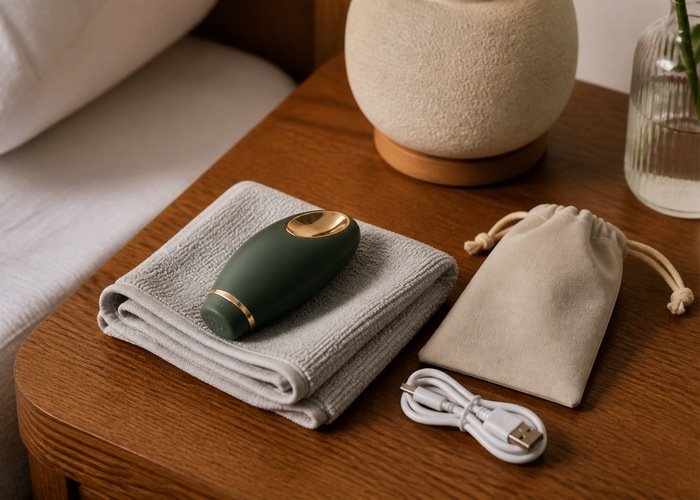
Talking about a sensitive topic is easier when the goal is understanding instead of momentum. This guide on how couples talk about intense fetishes treats the conversation as a real intimacy skill: choose the moment carefully, separate curiosity from obligation, and make room for both interest and limits without shame.
Many couples freeze because the subject feels larger in private fantasy than it does in ordinary language. A calmer approach is to talk through context, body comfort, privacy, and what a partner would need in order to feel safe enough to stay curious. That is the same low-pressure logic behind the pressure-free readiness guide and the awkward-free toy conversation.
Good communication also benefits from reality-based health framing. The NHS sexual health guidance and CDC condom-use guidance both reinforce the value of consent, protection, and clear signals, which matter just as much when the topic is emotional as when it is practical.
That matters because many couples are not blocked by a lack of desire. They are blocked by the fear that one awkward sentence will create obligation, embarrassment, or a mystery they cannot easily walk back. A good opening lowers that risk by letting the conversation stay exploratory and reversible.
It also helps to remember that a sensitive talk does not need to prove sophistication. It needs to keep both people regulated enough to stay curious. Plain wording, slower pacing, and permission to pause usually create more honesty than a perfectly polished speech.
That softer pace is not a compromise. It is often the reason the conversation becomes useful enough to revisit. When people feel they can answer honestly without being cornered, they usually offer better detail about what feels appealing, what feels risky, and what still needs more time.

Fantasy is information, not a contract
Many people can describe an intense fantasy more easily than they can describe the real conditions that would make it feel safe. In real relationships, that difference matters because partners often hear the emotional weight of a topic before they hear the nuance behind it.
The healthiest conversations begin when both partners treat the fantasy as a starting point for curiosity rather than a demand for instant performance. A slower, more practical conversation keeps both people connected to what is actually welcome instead of what sounds dramatic in theory.
That mindset keeps the talk honest because nobody has to pretend that wanting to discuss something means they already want to do it tonight. When readers want a lower-pressure example of how that sounds in practice, the pressure-free readiness guide is a useful companion.
The same conversation benefits from body-aware realism. If a topic might eventually involve toys, positions, or a different pace, it helps to pair the talk with the awkward-free toy conversation and outside basics such as NHS sexual health guidance.
Another reason to slow down is that shame often makes people speak in absolutes. They overstate certainty, understate discomfort, or hide the part of the idea that actually interests them. A calmer section of the conversation gives that nuance room to appear.
That nuance is usually where the real compatibility question lives. Partners may discover they do not disagree about the subject as much as they disagree about pacing, privacy, pressure, or whether the fantasy should stay mostly verbal. Once that is named, the talk becomes more workable.
If the talk is going well, there is still no prize for speeding it up. Letting the topic breathe is often what reveals the boundary, desire, or fear that actually matters. That slower rhythm makes later decisions feel earned instead of improvised.
Translate the fantasy into real-world pieces
A fantasy usually contains several smaller ingredients such as power, pace, words, positions, privacy, or the feeling of being chosen. In real relationships, that difference matters because partners often hear the emotional weight of a topic before they hear the nuance behind it.
Once couples name those pieces, they can keep the parts that feel welcome and leave the parts that do not. A slower, more practical conversation keeps both people connected to what is actually welcome instead of what sounds dramatic in theory.
That is how a big scary topic turns into a practical conversation with choices instead of pressure. When readers want a lower-pressure example of how that sounds in practice, the awkward-free toy conversation is a useful companion.
The same conversation benefits from body-aware realism. If a topic might eventually involve toys, positions, or a different pace, it helps to pair the talk with the bedroom setup checklist and outside basics such as CDC condom-use guidance.
Another reason to slow down is that shame often makes people speak in absolutes. They overstate certainty, understate discomfort, or hide the part of the idea that actually interests them. A calmer section of the conversation gives that nuance room to appear.
That nuance is usually where the real compatibility question lives. Partners may discover they do not disagree about the subject as much as they disagree about pacing, privacy, pressure, or whether the fantasy should stay mostly verbal. Once that is named, the talk becomes more workable.
If the talk is going well, there is still no prize for speeding it up. Letting the topic breathe is often what reveals the boundary, desire, or fear that actually matters. That slower rhythm makes later decisions feel earned instead of improvised.
Readiness changes with the body, the room, and the relationship moment
People often confuse curiosity with readiness because both can feel exciting in theory. In real relationships, that difference matters because partners often hear the emotional weight of a topic before they hear the nuance behind it.
Real readiness includes time, emotional bandwidth, privacy, body comfort, and a plan for stopping without embarrassment. A slower, more practical conversation keeps both people connected to what is actually welcome instead of what sounds dramatic in theory.
Checking those conditions out loud makes the conversation safer than relying on enthusiasm alone. When readers want a lower-pressure example of how that sounds in practice, the bedroom setup checklist is a useful companion.
The same conversation benefits from body-aware realism. If a topic might eventually involve toys, positions, or a different pace, it helps to pair the talk with the KissSelf shop and outside basics such as Planned Parenthood sex toy basics.
Another reason to slow down is that shame often makes people speak in absolutes. They overstate certainty, understate discomfort, or hide the part of the idea that actually interests them. A calmer section of the conversation gives that nuance room to appear.
That nuance is usually where the real compatibility question lives. Partners may discover they do not disagree about the subject as much as they disagree about pacing, privacy, pressure, or whether the fantasy should stay mostly verbal. Once that is named, the talk becomes more workable.
If the talk is going well, there is still no prize for speeding it up. Letting the topic breathe is often what reveals the boundary, desire, or fear that actually matters. That slower rhythm makes later decisions feel earned instead of improvised.

Agree on words for pause, not just words for yes
The most useful scripts are often the least dramatic ones: slow down, not yet, can we change the angle, or I like the idea but not this version. In real relationships, that difference matters because partners often hear the emotional weight of a topic before they hear the nuance behind it.
Having those phrases ready lowers pressure because nobody has to improvise while already feeling vulnerable. A slower, more practical conversation keeps both people connected to what is actually welcome instead of what sounds dramatic in theory.
That clarity matters even more when the topic is emotionally charged or linked to a long-held private fantasy. When readers want a lower-pressure example of how that sounds in practice, the KissSelf shop is a useful companion.
The same conversation benefits from body-aware realism. If a topic might eventually involve toys, positions, or a different pace, it helps to pair the talk with the Guide section and outside basics such as Healthline cleaning guide.
Another reason to slow down is that shame often makes people speak in absolutes. They overstate certainty, understate discomfort, or hide the part of the idea that actually interests them. A calmer section of the conversation gives that nuance room to appear.
That nuance is usually where the real compatibility question lives. Partners may discover they do not disagree about the subject as much as they disagree about pacing, privacy, pressure, or whether the fantasy should stay mostly verbal. Once that is named, the talk becomes more workable.
If the talk is going well, there is still no prize for speeding it up. Letting the topic breathe is often what reveals the boundary, desire, or fear that actually matters. That slower rhythm makes later decisions feel earned instead of improvised.
Debriefing after the talk is part of the talk
Some conversations feel productive in the moment but stir up worry later if nobody checks back in. In real relationships, that difference matters because partners often hear the emotional weight of a topic before they hear the nuance behind it.
A brief follow-up lets each partner say what felt exciting, what felt confusing, and what should remain fantasy for now. A slower, more practical conversation keeps both people connected to what is actually welcome instead of what sounds dramatic in theory.
That debrief protects trust because it proves the relationship matters more than whether the fantasy moved forward quickly. When readers want a lower-pressure example of how that sounds in practice, the Guide section is a useful companion.
The same conversation benefits from body-aware realism. If a topic might eventually involve toys, positions, or a different pace, it helps to pair the talk with the pressure-free readiness guide and outside basics such as ACOG safer-sex advice.
Another reason to slow down is that shame often makes people speak in absolutes. They overstate certainty, understate discomfort, or hide the part of the idea that actually interests them. A calmer section of the conversation gives that nuance room to appear.
That nuance is usually where the real compatibility question lives. Partners may discover they do not disagree about the subject as much as they disagree about pacing, privacy, pressure, or whether the fantasy should stay mostly verbal. Once that is named, the talk becomes more workable.
If the talk is going well, there is still no prize for speeding it up. Letting the topic breathe is often what reveals the boundary, desire, or fear that actually matters. That slower rhythm makes later decisions feel earned instead of improvised.
Quick decision table
| Situation | Better move | Why it helps |
|---|---|---|
| A fantasy sounds exciting but nobody knows what part matters most | Break it into smaller ingredients | It reveals whether the real interest is power, pace, words, toys, or simply novelty |
| One partner feels curious but not ready | Name curiosity without committing | This keeps the conversation open without turning it into pressure |
| A topic feels too intense for tonight | Choose a lower-stakes version or stop | It protects trust and keeps the body from being dragged faster than consent |
| The conversation lingers awkwardly later | Schedule a short debrief | Follow-up keeps emotional aftercare inside the process |
Aftercare for the conversation itself
A useful talk can still leave one or both partners feeling exposed. That does not mean the conversation went badly. It means the subject touched something vulnerable enough to deserve a softer landing.
A short follow-up later can do a lot of repair work: what felt clear, what felt activating, what should stay fantasy, and what tiny next step feels realistic. If the topic might eventually include products or setup changes, the bedroom setup checklist can help keep the practical side calm as well.
Aftercare also protects against the most common misunderstanding: assuming silence means agreement. A follow-up gives each person a second chance to say yes, no, maybe, not yet, or yes only if the context changes. That second chance is often what keeps the first talk from turning into a source of pressure.
This follow-up does not need to be dramatic. A few calm sentences the next day are often enough. The point is to confirm that both people still feel respected once the heat of the moment has passed and the conversation can be heard more clearly.
That extra check-in may feel small, but it often determines whether the subject becomes easier or harder to revisit later.
FAQ
Does talking about a fetish mean we have to try it?
No. Conversation is not a contract. It is a way to understand what feels interesting, what feels off-limits, and what might need more time.
What if one partner is curious and the other is not?
Treat the mismatch as information, not failure. Couples can still learn from the fantasy even if it stays fantasy.
Why separate fantasy from reality?
Because the turn-on may come from only one part of the idea, while the full real-life version may not feel safe, kind, or practical.
Is aftercare only for the physical experience?
No. A hard conversation can need emotional aftercare too, especially when the topic touches shame, fear, or long-held private desires.
Why the smaller conversation often leads to the better outcome
Big topics can tempt couples into thinking they need a big decision. Usually they do not. They need a version of the conversation that keeps both people honest enough to stay present.
A simpler question often carries the discussion further: what part of this idea feels appealing, what part feels off, and what would help us stay connected while we sort that out? Once those answers exist, the taboo usually stops feeling like a single frightening object.
Trust grows when nobody has to perform certainty
Trust is not built by pretending to know exactly what will happen next. It is built by showing that curiosity, limits, and mixed feelings can all be spoken aloud without punishment. That is the real value of learning how couples talk about intense fetishes in a grounded way.
That grounded approach also creates better future conversations. Once a couple has one experience of discussing something taboo without shame or panic, later topics usually feel less dangerous. The relationship learns that honesty can arrive without immediate consequence.
Curiosity stays healthier when it can slow down
People often assume curiosity needs momentum or it will disappear. In practice, curiosity often becomes more trustworthy when it survives a pause, a night’s sleep, and a second conversation in calmer language. If it still feels good after that, partners can move forward with more confidence.
Seen that way, a good conversation does not end with a verdict. It ends with better information. Better information about readiness, better information about what the fantasy actually means, and better information about how each partner wants to be cared for while they keep talking.