The open-ended vs closed-ended stroker decision matters more than many buyers expect. The far-end opening changes airflow, pressure feel, lube behavior, cleanup speed, drying time, and even how forgiving the toy feels when technique is still developing. Two sleeves can look similar on a product page and behave very differently once one traps air and moisture while the other lets both pass through.
This article compares those two designs in practical terms: Which one is easier to rinse? Which one feels easier to control? Which one tends to need more lube? Which one is easier for a beginner who still wants to understand texture instead of fighting a suction effect? The answer depends less on marketing adjectives and more on how the sleeve handles pressure, airflow, and drying.
If you already read our guide on how much lube a stroker needs, this article is the next layer. Lube amount matters, but the sleeve design changes how long that lube stays where you want it, how the texture feels through it, and how much cleanup work remains at the end. A better match between design and routine usually matters more than chasing the most intense listing language.
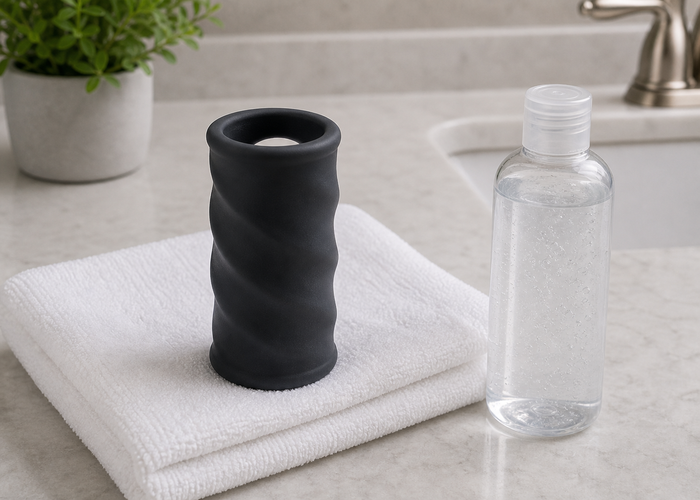
What “open-ended” and “closed-ended” actually change
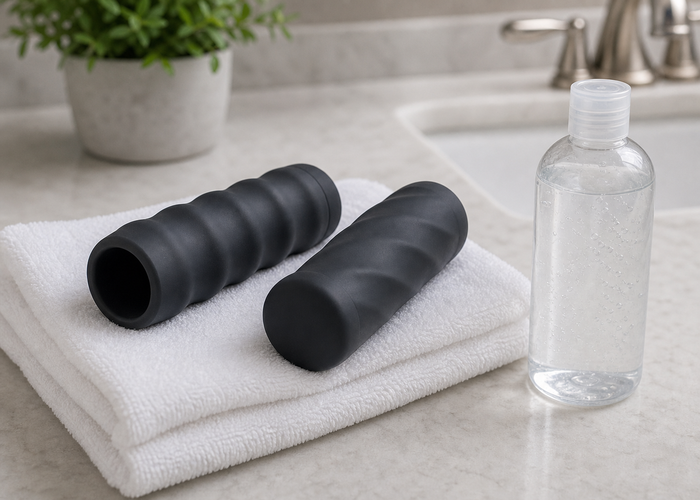
An open-ended stroker has an exit path at the far end of the sleeve. Air can move through more freely, water can flush through more directly during cleanup, and the user can often see whether the canal is actually dry. A closed-ended stroker seals the far end, which can create a more enclosed sensation but also changes pressure and moisture behavior.
That difference is not automatically about intensity. Some people find open-ended sleeves easier to control because the airflow makes the feel more predictable. Others like the enclosed sensation of a closed-end toy because it can feel fuller or more cushioned. The best choice depends on whether you value ventilation and easy rinsing more than a contained feel.
Readers who browse the male masturbator category or the wider KissSelf shop should treat the far-end design as a first-screen filter, not a minor spec buried after texture and color. It changes daily ownership more than many decorative features do.
Pressure control and suction feel
An open-ended sleeve usually gives the user more airflow forgiveness. If you grip the case more tightly or move faster, pressure still changes, but the far opening can keep the feel from becoming abruptly sealed. That often makes the toy easier for beginners who are still figuring out hand pressure, pace, and how much lube they actually need.
A closed-ended sleeve can feel more enclosed because air has fewer places to go. For some users, that feels more immersive. For others, it makes the sleeve harder to read because a small grip change can create a larger pressure change than expected. That is not automatically a flaw. It just means the design asks for more deliberate control.
Our internal beginner resource on what a male masturbator is and how to start is helpful here because it frames comfort as a skill, not just a product feature. If you already know you tend to grip too hard, an open-ended design may let you learn with fewer surprises.
Lube behavior is different in each design
Lube does not sit in an open-ended sleeve the same way it sits in a closed-ended one. An open-ended design may lose lubricant faster from the far side, especially if the sleeve is very smooth or the user moves quickly. That can mean more small reapplications, but it can also mean less pooling. A closed-ended design may hold lube inside more effectively at first, but that same retention can make cleanup slower and can hide residue if the user rushes the rinse.
Planned Parenthood’s toy guide and the Long Beach Health Department’s lubricant fact sheet both support the idea that compatible toy lubricant matters as much as the amount. Water-based lube is usually the easiest place to start because it works with many toys and is easier to wash away. When readers compare sleeves, they should ask not only “How intense will this feel?” but also “How will this handle the lube I actually use?”
For many owners, the best routine is to start with a modest amount, spread it evenly, and reapply before friction becomes noticeable. That is true in both designs, but open-ended sleeves often reward lighter, more frequent adjustments while closed-ended sleeves reward careful distribution from the beginning.
Cleanup is where the difference becomes obvious
Cleanup is usually easier with an open-ended sleeve because water can pass through the whole canal without hitting a dead end. That makes it simpler to rinse out lube, soap, and any trapped residue. It also makes visual inspection easier because you can often hold the sleeve to light and see whether water or debris remains.
Closed-ended sleeves can still be cleaned well, but they ask for more patience. Water can collect at the sealed end, and the last bit of moisture can be harder to drain. Healthline’s guide on cleaning sex toys correctly keeps repeating the same lesson that applies here too: a toy is only as clean as the area you actually rinse and dry. If a sleeve is closed-ended, “good enough” cleaning is more likely to miss the deepest part.
CDC prevention pages for washing sex toys after use and Healthline’s article on sex toys and STI transmission both reinforce the broader hygiene principle: shared toys, used toys, and damp toys need more respect than people think. The easier a sleeve is to clean, the easier it is to keep good habits consistently.
Drying time and odor prevention
Drying is where many sleeves fail long before the material itself wears out. A closed-end canal can trap droplets deep inside, especially if the user rinses quickly and stores the toy too soon. That trapped moisture can lead to odor, tackiness, or a sleeve that feels “off” even when the outer surface seems dry. Open-ended sleeves are usually easier to air out because both ends help release moisture.
This does not mean open-ended always wins. It means closed-ended requires a stronger drying routine. Use a clean towel on the exterior, let the sleeve sit where air can move, and avoid sealing it inside a pouch before you are confident the canal is dry. The same habit appears in our article on choosing and keeping a sleeve clean: maintenance is not glamorous, but it is what makes a favorite toy stay usable.
Medical News Today’s overview of penis sleeves and related use considerations is a useful reminder that soft materials need realistic care routines. A sleeve that stays damp too often does not become more premium. It just becomes harder to trust.
Which design is easier for beginners?
For many beginners, open-ended sleeves are easier because they simplify three things at once: airflow, rinsing, and drying. A user can learn how much grip and lube feel right without also managing a sealed-end pressure change. That said, some beginners prefer the more enclosed feel of a closed-end toy because it can feel fuller or less “open” emotionally. Preference is real, but so is the maintenance burden.
If you want the easiest ownership path, open-ended often has the edge. If you want a more enclosed feel and are willing to slow down during cleaning and drying, a closed-ended design can still be a good match. The wrong choice is not the design itself. It is buying one without thinking about how you actually maintain it.
The same practical lens applies if you compare sleeves to other products in the high-tech masturbator category. More features do not solve basic cleanup habits. Design only helps if the owner can actually keep the toy ready for the next use.
Comparison table
| Decision point | Open-ended stroker | Closed-ended stroker |
|---|---|---|
| Airflow | More ventilation and easier pressure release | More enclosed feel with stronger pressure changes |
| Lube behavior | May need more small reapplications | Can hold lube longer but may pool |
| Rinsing | Usually faster to flush through | Requires more deliberate internal rinsing |
| Drying | Easier to air out fully | More likely to trap moisture at the sealed end |
| Beginner handling | Often easier to read and control | Can feel more intense but less forgiving |
What to check before buying
Check whether the sleeve material is easy to rinse, whether the opening size suits your comfort level, and whether the case design lets you remove the sleeve for full cleaning. If the toy uses a hard outer case, ask yourself whether the case improves control or only looks sleek in photos. A slippery case can make even a good sleeve harder to manage.
If you want a routine that stays simple, pair the sleeve with a water-based lube from the KissSelf lube section, keep a towel nearby, and decide where the sleeve will dry before you start. The best product is not the one that sounds most extreme. It is the one you will actually clean and dry properly every time.
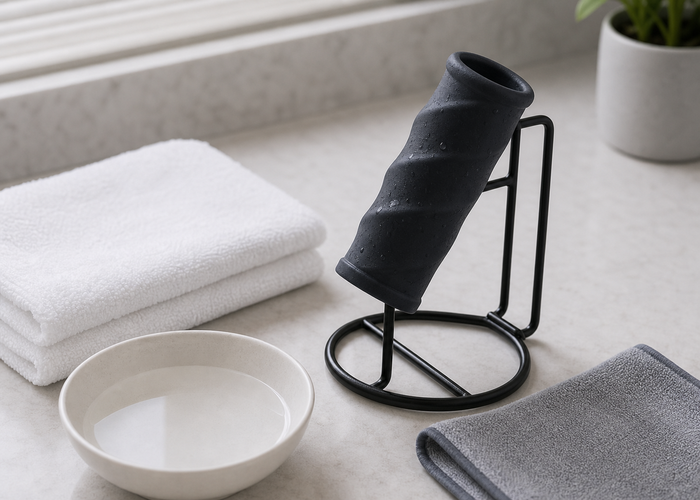
How texture and case design can change the comparison
Texture can change the open-versus-closed decision more than buyers realize. A highly textured sleeve with deep ridges or chambers may benefit from the easier rinsing of an open end because residue can hide in those deeper sections. A smoother sleeve may be easier to manage even when it is closed-ended because fewer texture pockets hold moisture. That means the far-end design should be read together with the canal texture, not by itself.
Case design matters too. Some strokers come in a rigid shell that improves grip and discretion, while others are meant to be used as the sleeve alone. A good case can make handling easier. A bad one can make the toy harder to clean because it traps lube or hides the sleeve’s outer surface. If the sleeve only works well when trapped inside a slippery case, that is not a feature for every owner.
The practical question is simple: after use, can you remove the sleeve, rinse it thoroughly, and inspect both the inside and outside without feeling annoyed? If not, the ownership burden may outweigh any sensation advantage.
A first-week comparison routine
If you are deciding between designs, use the first week like a small experiment. On day one, note how the toy feels at the start, after a few minutes, and during cleanup. On day two, pay attention to whether you needed more lube than expected. On day three, focus only on drying time and odor the next day. A toy can feel excellent during use and still become the wrong long-term choice if the cleanup routine keeps irritating you.
Keep the lubricant, towel setup, and cleanup steps as consistent as possible during those comparisons. That way you can tell whether the design itself is helping or hurting. Owners who make several changes at once often end up blaming the wrong variable.
A useful stroker is not just the one that feels intense in the first five minutes. It is the one whose airflow, cleanup, drying, and storage habits still make sense after the novelty wears off.
Travel, discretion, and shelf-life concerns
Some buyers prefer closed-ended designs because they seem neater to store, while others prefer open-ended sleeves because they dry faster in shared spaces. Think honestly about where the toy will live. If you need to rinse, dry, and put it away without leaving it exposed for long, the faster-drying design may fit your life better even if another design sounds more exciting on paper.
Discretion also affects maintenance. A sleeve that gets hidden while still damp because you are rushing to clear a counter will age worse than one you can dry properly without stress. The design that fits your environment is often the one that stays cleaner and feels better over time.
When to replace a sleeve instead of troubleshooting longer
Not every problem is fixable with more lube or a better drying rack. If a sleeve keeps holding odor after careful cleaning, feels sticky after it is fully dry, shows tears around the opening, or no longer feels predictable because the material has changed, replacement may be the better choice. That is especially true for closed-ended designs where hidden wear can keep collecting moisture.
A sleeve should become easier to trust as your routine improves. If better habits still do not restore a clean, comfortable feel, the product may simply be at the end of its useful life.
FAQ
Does open-ended mean weaker sensation?
Not necessarily. It usually means more airflow and a different pressure profile, not automatically less sensation.
Is closed-ended harder to clean?
Usually yes, because water and moisture have fewer paths out of the deepest part of the sleeve.
Which design uses more lube?
Open-ended sleeves may lose lube faster and need small reapplications, while closed-ended sleeves may keep lube inside longer but can also trap excess.
Which one is better for beginners?
Many beginners find open-ended sleeves easier because the pressure and cleanup are usually more forgiving.
The open-ended vs closed-ended stroker choice is really a decision about airflow, pressure control, and cleanup honesty. Choose the design that matches how carefully you want to rinse, dry, and manage lube. A sleeve that fits your maintenance habits will feel better for longer than one chosen only for hype.