A penis pump losing suction usually feels like a mystery at first: the cylinder seems placed correctly, the pump handle moves, but the pressure fades before you can build a steady vacuum. In most cases the cause is not dramatic. It is usually a small leak at the body seal, a dry or folded gasket, a valve that is not fully seated, too much hair under the rim, or a cylinder angle that changes as the hand pump is used.
This guide treats suction loss as a practical maintenance problem rather than a reason to force harder pumping. A penis pump works by creating negative pressure around the penis, and medical sources such as the Mayo Clinic overview of penis pumps emphasize using the device as directed and stopping if pain, numbness, or bruising occurs. The goal is a comfortable seal, a controlled vacuum, and a calm routine you can repeat.
Before troubleshooting, wash your hands, inspect the device in good light, and separate the parts you can safely remove. If the pump has electrical components, keep them away from running water unless the product page and user manual specifically say that section is waterproof. For shopping context, you can compare product categories in the KissSelf shop, but treat this article as a care checklist rather than a replacement for your device manual.
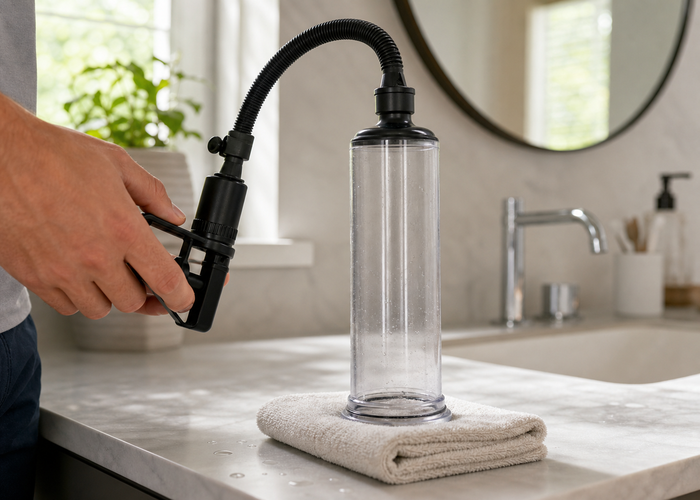
Start by deciding where the leak is happening
Do not begin by pumping harder. Stronger pumping can hide the leak for a moment while increasing discomfort. Instead, separate the problem into two possibilities. The first is a device leak: air enters through the hose, valve, cylinder connection, release button, or gasket even when the pump is tested away from the body. The second is a body seal leak: the device works in a dry test, but loses suction when placed against skin.
A simple empty-cylinder test helps. Place the soft base of the cylinder against a folded towel or your palm, pump gently, and listen for a hiss. If the vacuum fades instantly, inspect the valve and gasket before thinking about shaving, posture, or lube. If the empty test holds but the body test fails, focus on hair, angle, skin folds, lube placement, and cylinder size.
Keep the test gentle. The FDA guidance on external penile rigidity devices treats vacuum limiters and device controls as important safety features, so any troubleshooting routine should preserve the intended pressure limits instead of bypassing them.
The four common body-seal problems
The first seal problem is hair under the rim. Even a few short hairs can create a tiny air channel. You do not necessarily need a completely shaved area, but the rim needs a smooth contact zone. Trim if needed, then clean loose hair from the skin and from the gasket before trying again.
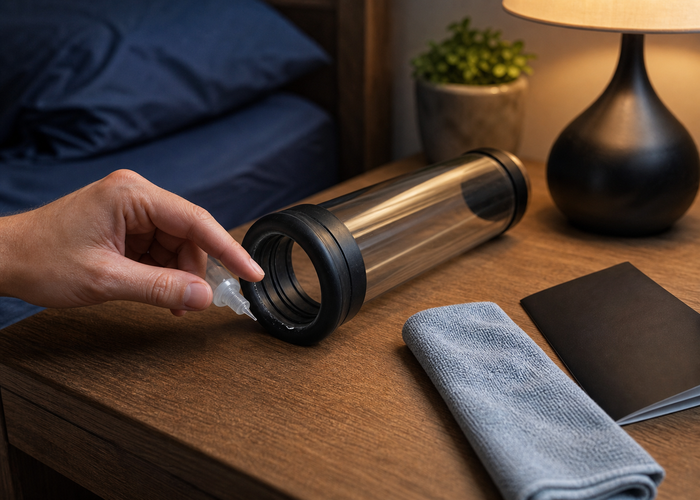
The second problem is a dry gasket. A soft base ring can grip poorly if it is completely dry. A pea-sized amount of water-based lubricant around the rim can help the seal without making the cylinder slide out of position. Use a thin film, not a thick ring. Too much lubricant can make the base skate across the skin and break suction as soon as the hand pump moves.
The third problem is angle. Many users place the cylinder straight at first, then tilt it while squeezing the pump bulb or handle. That small change can lift one side of the gasket. Hold the cylinder with one hand at the base, not high on the tube, and pump with the other hand slowly enough that the cylinder does not wobble.
The fourth problem is cylinder fit. If the cylinder opening is far too wide for the area it must seal, the gasket may need more skin contact than is comfortable. If it is too narrow, the rim may sit on tissue instead of around it. Fit problems are not solved by force. They are solved by choosing the correct cylinder size, using the correct soft ring, or choosing a different style.
Valve, hose, and release-button checks
If the empty-cylinder test fails, move to the air path. A hose that looks attached may still be partly loose. Push each connection in firmly but gently, then check for cracks, flattened sections, or stretched ends. A hose that has hardened with age can leak at the connector even if it has no visible hole.
The release valve is another common culprit. If lint, dried lubricant, or mineral residue keeps the release button slightly open, pressure will fade quickly. Wipe the valve area with a damp cloth, let it dry, and test again. Do not poke deep into valve openings with sharp tools; that can turn a cleaning problem into a permanent leak.
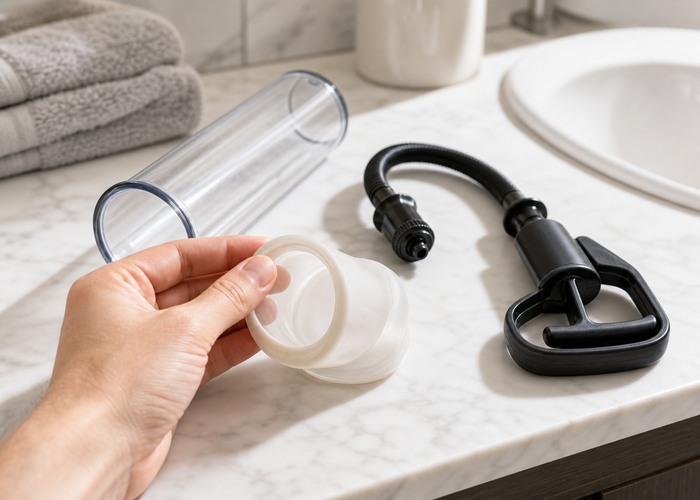
If your pump uses a removable gasket, inspect both sides. Look for folds, tears, shiny worn spots, or a section that no longer sits flat. A gasket that is inserted backward or twisted can feel normal in the hand but fail under pressure. Reseat it carefully, then run the towel test before putting the pump near the body.
Use the right lubricant in the right place
For most toy and condom compatibility situations, water-based lubricant is the cautious default. A public health lubricant fact sheet from the City of Long Beach Health Department notes that water-based and silicone-based lubricants are condom-compatible, while oil-based products can weaken latex condoms. For pump seals, water-based lube is also easier to wash away from gaskets and skin.
Place the lube where it helps the seal: on the soft base ring and the skin contact area. Avoid flooding the valve, hose connector, or pump mechanism. If lubricant reaches the valve, it can mix with lint and create a slow leak. After use, clean away residue before it dries into a sticky film.
If you also use personal lubricants with other toys, keep a small compatibility habit: check whether the toy material is silicone, TPE, ABS plastic, glass, or another material, then follow the product manual. Healthline’s sex toy cleaning guide also reinforces cleaning according to material and manufacturer instructions, which matters when lubricants and soft parts meet.
A quick diagnostic table
| Symptom | Most likely cause | First check | Do not do this |
|---|---|---|---|
| Vacuum fades during towel test | Valve, hose, or gasket leak | Reseat removable parts and listen for hiss | Do not increase pressure to compensate |
| Vacuum holds in towel test but not on skin | Hair, angle, dry rim, or size mismatch | Trim contact area and use a thin lube film | Do not force an uncomfortable cylinder fit |
| Seal breaks when pumping handle moves | Cylinder wobble | Hold the base steady with the other hand | Do not pump fast with one hand only |
| Suction drops after cleaning | Moisture or residue in valve/gasket | Dry parts fully and inspect valve area | Do not store wet parts in a closed case |
Safety stop signs
Stop immediately if you notice pain, numbness, cold skin, blue or purple discoloration, or bruising that appears quickly. Do not treat discomfort as proof the device is working. Mayo Clinic’s patient guidance lists bruising, pain, and numbness among possible risks, especially if a device is used too long or with too much pressure.
Timing also matters. Follow the device’s own use limit. If you are using a constriction ring with a pump, follow medical guidance and product directions carefully. Do not sleep with a ring on, do not use a rigid ring you cannot remove easily, and seek care if swelling or discoloration does not resolve after removal.
People with bleeding disorders, reduced sensation, certain penile conditions, or those taking blood-thinning medication should be especially cautious and may need medical guidance before using vacuum devices. This article can help locate mechanical causes of suction loss, but it cannot decide whether a pump is medically appropriate for a specific person.
Cleaning and storage after troubleshooting
Once the leak is fixed, clean the parts that touched skin or lubricant. Let soft rings dry fully before storage. Store the cylinder where it will not be crushed, and keep the gasket away from sharp items or dusty drawers. If your routine also includes male masturbators or other soft-sleeve products, separate porous soft materials so oils and residue do not migrate between items.
A recurring seal issue is often a storage issue in disguise. A gasket pressed under heavy objects can deform. A hose kinked in the same place can crack. A valve stored with dried lubricant can stick. Treat the pump like a small appliance with soft medical-style parts, not like a hard plastic accessory that can be tossed anywhere.
Build a repeatable pre-use routine
The easiest way to prevent suction problems is to make the same short check every time. Place the cylinder, hose, pump handle, and lubricant within reach before beginning. Look at the gasket in bright light. Press the release valve once so you know it moves freely. Run one gentle empty-cylinder test. If the device passes that test, you have already ruled out many mechanical leaks.
Next, prepare the skin contact area. Dry skin can be difficult to seal, but wet skin can also make the base slide. Aim for clean, dry skin with only a thin lubricant film where the rim meets the body. If you trimmed hair, wipe away loose clippings before placing the cylinder. Tiny hairs can behave like little air channels under the gasket.
When you begin, increase pressure slowly. A gradual vacuum gives you time to notice whether the seal is stable. If the cylinder rocks, reset it rather than trying to correct the angle while continuing to pump. If suction fades after every reset, stop and return to the empty-cylinder test. Moving back and forth between device checks and body checks keeps the process logical.
When suction loss means the device is worn out
Not every leak deserves endless troubleshooting. Soft parts age. Clear plastic can develop hairline cracks after drops or heat exposure. Hoses can stretch at the connector. A release valve can become unreliable after repeated residue buildup. If the same part fails multiple tests after cleaning and reseating, replacement is safer than improvising.
Do not patch a pressure device with household glue, tape, rubber bands, or makeshift valves. Those fixes can fail suddenly or interfere with release controls. If the product has replacement gaskets or hoses, use the correct parts. If it does not, retiring the device is wiser than using a pump that cannot hold a predictable vacuum.
If the pump was recently purchased and has never held suction, document the problem with a dry test and contact customer support through the site’s contact page. Clear notes help: “The cylinder loses vacuum during an empty towel test after the gasket is reseated” is more useful than “it does not work.”
Partnered use and communication
If a partner is helping, agree on stop words and hand signals before using the device. The person holding the pump handle may not feel what the wearer feels. A simple “pause,” “release,” or tap signal prevents confusion. The wearer should always be able to ask for pressure release immediately, without explaining first.
Partnered troubleshooting should stay practical. One person can stabilize the cylinder base while the other operates the pump, but nobody should chase a seal by pushing hard into the body. If two careful attempts fail, stop and inspect the equipment. Pressure devices reward patience more than enthusiasm.
What a good seal feels like
A good seal does not feel like a sudden trap. It feels gradual, stable, and controllable. You should be able to pause, release pressure, and reset without panic. If the pump jumps from no pressure to intense pressure, check whether you are pumping too quickly or whether the release mechanism is sticky. A reliable pump lets you make small changes.
Noise can also help. A soft change in pump resistance is normal as vacuum builds. A constant hiss, a squeak at the gasket, or a rhythmic leak that follows every squeeze points toward an air path. Use those sounds as information. Turn off fans, music, and running water during troubleshooting so you can hear what the device is doing.
Track your adjustments. If trimming hair improved the seal but did not solve it, write that down mentally. If reseating the valve fixed the towel test, write that down too. Troubleshooting becomes frustrating when every attempt feels random. A short sequence—device test, gasket check, body seal, lube film, angle—keeps the problem small.
Common myths about suction problems
One myth is that a stronger pump always works better. In reality, a stronger pump with a bad seal often creates more discomfort without solving the leak. Another myth is that suction loss means the user is “doing it wrong.” Most seal problems come from ordinary mechanical details: a hose, a valve, a gasket, an angle, or a mismatch between cylinder and body.
A third myth is that all lubricant helps equally. Thick layers can worsen sliding. Oil-based products may create cleanup and condom issues. A thin, water-based film is usually the more controlled choice for the gasket area. Finally, some users assume leaks mean they need to buy a completely different product immediately. Sometimes that is true, but it is worth ruling out removable parts and storage damage first.
When to seek medical advice
If you are using a penis pump for erectile dysfunction, post-surgery recovery, or another health-related reason, keep your clinician’s instructions ahead of internet advice. Medical use may involve timing, pressure, ring use, and frequency guidelines that differ from casual product experimentation. If suction problems lead you to over-pump, stop and ask for guidance instead of escalating pressure on your own.
Seek care promptly if pain, swelling, numbness, discoloration, or bruising is significant or does not resolve. A pump is supposed to be controllable. If the device cannot be released easily, or if a constriction ring cannot be removed, treat that as urgent rather than waiting it out.
FAQ
Why does my penis pump lose suction immediately?
If it loses suction during an empty towel test, suspect the valve, hose, release button, or gasket. If it holds during that test but fails on the body, suspect hair, angle, dry skin contact, too much lubricant, or cylinder fit.
Can I use lubricant to improve the seal?
Yes, a thin film of water-based lubricant around the soft gasket can help. Avoid using so much that the cylinder slides or lubricant enters the valve.
Is it safe to pump harder when suction fades?
No. Pumping harder can increase discomfort and bruising while hiding the underlying leak. Find the leak first, then use the device within its instructions.
When should I replace the gasket?
Replace it if it is torn, permanently flattened, sticky, cracked, or no longer sits evenly in the cylinder base.
A penis pump losing suction is usually fixable when you slow down and isolate the leak. Check the device first, then the body seal, then your lube and storage habits. A steady, comfortable seal beats extra force every time.