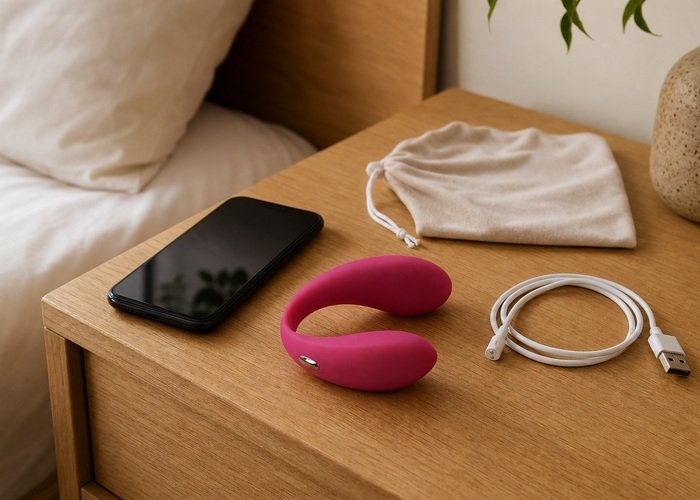
Feeling curious but a little nervous about trying a vibrator for the first time? You’re not alone. A calm, step-by-step approach can turn uncertainty into confidence. This guide is written for women new to solo play, with practical tips on choosing a vibrator for beginners, setting up your first session, staying safe, and caring for your device without fuss.
Key takeaways
- Start low and slow. Begin with gentle, external stimulation and only increase intensity when your body feels ready.
- Use water-based lubricant for broad compatibility and comfort, and test the toy on your forearm to learn the sensation first.
- Clean before the first use and after every session, following material and waterproof guidance from the maker and sexual-health services.
- Avoid sharing without barriers. If you share or switch between body parts, use a new condom on the toy.
- Stop if you feel pain, numbness, or bleeding. Consider speaking with a healthcare professional if discomfort persists.
What counts as a vibrator for beginners
A beginner-friendly vibrator is simple, gentle, and easy to control. Many first-timers prefer compact shapes and soft, body-safe materials that focus on external pleasure.
- Form factors: Think small bullet vibrators that focus on the clitoral area, or compact rabbit styles that can provide external stimulation while offering the option to explore more when you’re ready. Smaller devices feel less intimidating and are easier to maneuver.
- Controls and settings: Look for intuitive buttons and a low starting intensity. Multiple patterns can be nice to have, but what matters most is an easy way to start softly and pause quickly.
- Materials and build: Medical-grade silicone and ABS plastic are common, skin-friendly choices when sourced from reputable sellers. Non-porous materials are easier to clean and maintain.
- Noise and privacy: Quieter devices can help you relax if you’re concerned about privacy. Rechargeable batteries reduce the hassle of cords or replacements.
If you’re wondering where to place the toy, think of external zones first—the clitoral hood, labia, and inner thighs—before considering anything internal. We’ll map those zones shortly.
Before you start privacy prep and lube
Give yourself a comfortable setup so your brain and body can settle.
- Privacy and timing: Choose a time when you won’t be interrupted. Dim lights, play soothing music, or hop into a warm shower beforehand—whatever helps you relax.
- Charge and read: Charge your device fully and skim the instructions. Confirm whether it’s waterproof and how to clean it.
- Clean pre-use: Even out of the box, give it a quick wash following the care notes below. This helps remove residues from manufacturing or packaging.
- Lube matters: Water-based lubricant pairs well with most toy materials and condoms. It reduces friction and makes gentle exploration feel smoother and more comfortable.
- Learn the sensation: Turn the toy on and try it on your forearm first. Notice the range between the lowest and next-low setting. This makes the first intimate contact less surprising.
External anatomy focus zones
Use these as guideposts rather than rigid instructions. Every body is different—your comfort is the priority.
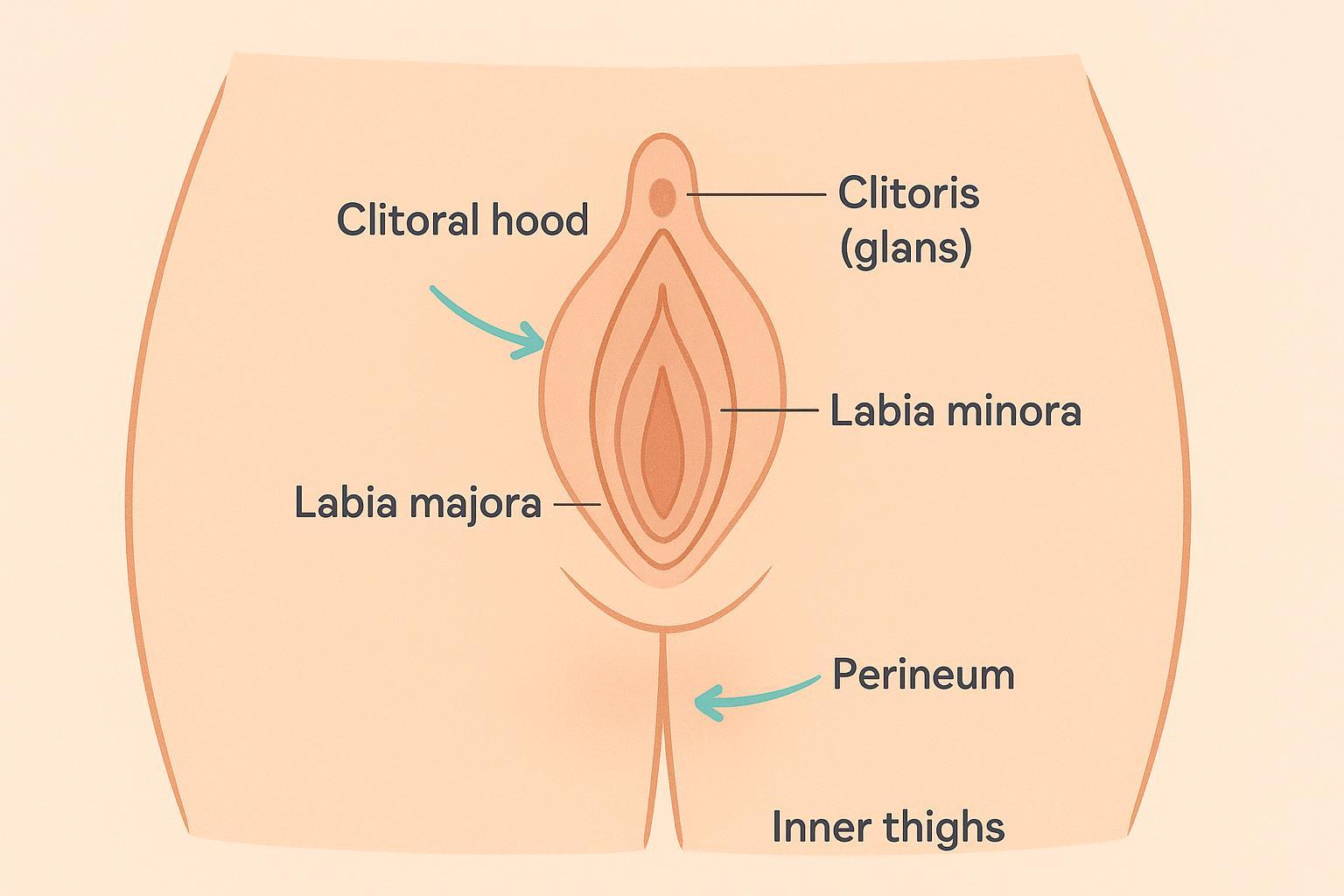
- Clitoral hood and glans: Many beginners enjoy indirect pressure on the clitoral hood first before moving to direct contact on the clitoral glans.
- Labia majora and minora: Glide along the inner and outer labia with a thin layer of lube. Think of it as a warm-up.
- Perineum and inner thighs: Gentle passes here can heighten arousal without overwhelming intensity.
Safety essentials you should know
A few evidence-based basics can prevent irritation and help you feel secure.
- Hygiene and cleaning: Clean your device after every use with warm water and mild unscented soap or a compatible toy cleaner, and dry it with a lint-free towel. Non-waterproof toys should be wiped down rather than submerged. Guidance from UK sexual health service SH:24 explains these basics clearly in their resource on how to clean your sex toys.
- Barriers and sharing: If you share toys or switch between body parts, cover the toy with a condom and change it when moving between orifices. This is a standard harm-reduction step recommended by services like SH:24’s condom guidance on how condoms work and using condoms correctly.
- Anal safety rule: Only use toys with a flared base for anal play to prevent retention and consider covering the toy with a condom. The International Society for Sexual Medicine reinforces this flared-base rule in their overview of anal sex risks and avoidance strategies.
- Stop if it hurts: Pain, bleeding, or persistent numbness are signs to pause. If symptoms persist, it’s reasonable to consult a healthcare professional. The Cleveland Clinic’s overview of masturbation offers normalization and when to seek care.
- Pregnancy context: In healthy pregnancies, many forms of sexual activity—including with sex toys—are generally safe unless a clinician has advised otherwise. The American College of Obstetricians and Gynecologists addresses this in their pregnancy sex safety explainer. If you have complications or questions, talk with your ob-gyn.
Materials and care at a glance
Use this quick summary alongside your product’s instructions.
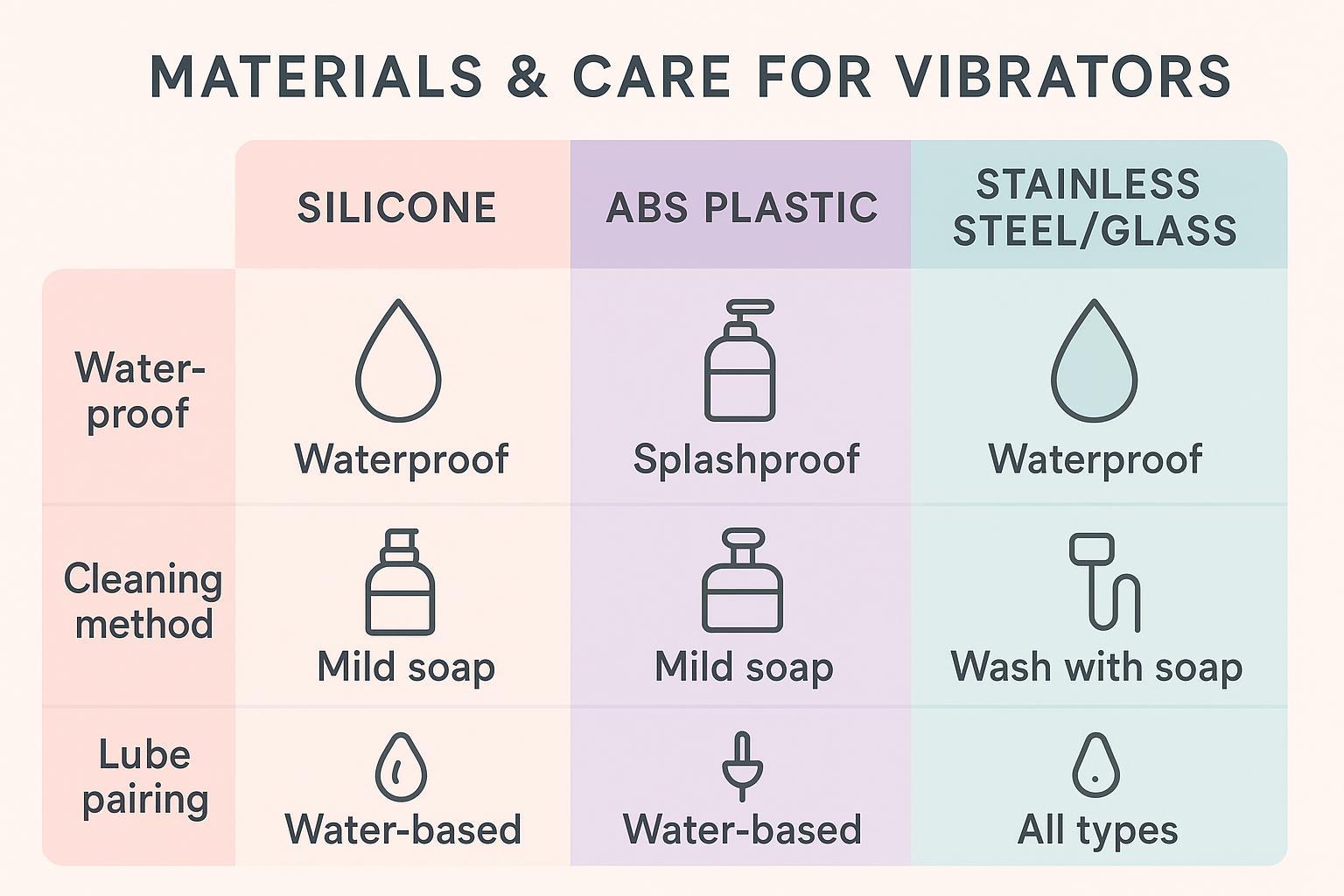
| Material | Typical feel | Waterproof note | Cleaning basics | Lube pairing notes |
|---|---|---|---|---|
| Silicone | Soft, flexible, non-porous | Often water resistant or waterproof depending on model | Warm water and mild unscented soap; do not submerge non-waterproof electronics; dry lint-free | Water-based lube is a safe first choice; if using silicone lube, verify manufacturer guidance and spot-test |
| ABS plastic | Firm, smooth, non-porous | Varies by device design | Wipe or wash per rating; mild unscented soap; avoid soaking if not sealed | Water-based or silicone lubes are typically condom-safe; avoid oil-based with latex condoms |
| Stainless steel or glass | Very firm, non-porous, easy to sanitize | No electronics when used as pure material | Soap and water; some pieces can be boiled if no electronics; follow maker guidance | Water-based or silicone lubes work well; avoid oil with latex condoms |
Notes: When general rules conflict with manufacturer instructions, follow the device’s manual.
Try this gentle first session
Think of this as a guided practice. You’re gathering information about what your body likes.
- Set the scene for comfort. Close the door, silence notifications, and dim the lights. Keep a towel and water-based lube within reach. Take a few deep breaths to settle your body.
- Clean and test. Give your toy a quick wash, dry it, and turn it on in your hand. Test the lowest setting on your forearm to sense the intensity. Add a pea-sized amount of lube to the external area.
- Start with external touch. Trace the inner thighs and labia with the toy at the lowest intensity. Rest the tip near the clitoral hood with indirect contact for 30–60 seconds, then lift away. Notice sensations before returning.
- Adjust slowly. If you want more, try the next intensity or a gentle pattern for brief intervals. Alternate touch and pauses, breathing normally. If anything feels too strong, step back to the previous setting or take a break.
- Aftercare. When you’re done—whether you reached climax or simply explored—wash the toy, dry it, and store it dust-free. Sip water, and jot down a couple of notes about what felt pleasant and what didn’t.
Practical example for context
Disclosure: Kissself is our product.
If you’re curious about a dual-stimulation shape, you might explore a compact option with soft silicone and multiple low-intensity patterns. A neutral example is this dual-stimulation rabbit vibrator for beginners. You can ignore advanced features at first and simply use the gentlest external mode around the clitoral hood and labia, keeping sessions short and pressure light. When ready—weeks or months later—you could experiment with internal exploration, but there’s no rush. External pleasure alone is a complete experience.
Two micro-scenarios to build confidence
External-only exploration
Prefer to keep things fully external for now? Great. Warm up with your hand and lube, then rest the vibrator over the clitoral hood through thin fabric or a fingertip if direct contact feels intense. Gradually remove the buffer when you want slightly more sensation. Keep sessions brief to avoid numbness.
Partner-assisted curiosity
If you have a trusted partner and want to involve them, agree on signals for stop, slow, or more. Ask them to hold the toy at the lowest setting against the labia while you guide their hand. You stay in control of pace and placement. Check in every minute or two—short, frequent feedback beats long, silent guesses.
Practice prompt and quick checklist
Consider a five-minute exploratory session. Your only goal is to notice what your body tells you. What locations felt most pleasant—clitoral hood, inner labia, perineum, inner thighs? Which intensity felt calm rather than overwhelming? If anything hurt or felt numb, pause and give your body time. Persistent pain or bleeding warrants a conversation with a healthcare professional.
Quick beginner checklist
- Device charged, cleaned, and verified for waterproof rating
- Water-based lube within reach and a towel nearby
- Lowest setting tested on your forearm first
- Start with external zones and increase only if it feels good
- Clean and dry the toy after use and store dust-free
Optional video beginner setup and safety
Prefer visual learning? Search for a reputable sexual-health educator’s “Beginner vibrator setup and safety” walkthrough on YouTube. Look for demonstrations that prioritize low settings, water-based lube, and clear cleaning instructions. Avoid videos that skip safety steps or make unrealistic promises.
FAQs
Does using a vibrator affect sensitivity
Temporary numbness can happen if intensity is too high or contact is continuous in one spot. Taking breaks, using lower settings, and keeping sessions shorter usually resolves this. If numbness persists after rest, consider a longer break and consult a clinician.
Which lubricant should I use with a vibrator for beginners
Water-based lubricant is a conservative, widely compatible choice with most toy materials and condoms. If you prefer silicone-based lube, check your device’s instructions and spot-test for compatibility. Avoid oil-based lubricants with latex condoms.
How often should I clean my vibrator
Clean before the first use and after every session. Use warm water and mild unscented soap, avoiding submersion for non-waterproof toys. Dry with a lint-free towel and store in a pouch or dust-free area. UK service SH:24 outlines these principles in their guide to cleaning sex toys.
Can I share my vibrator with a partner
Yes, with precautions. Cover the toy with a condom when sharing and change it before switching between partners or body parts. This harm-reduction approach is consistent with sexual-health guidance like SH:24’s explanations of how condoms work.
Is it normal to feel anxious about trying a vibrator
Absolutely. Many people feel nervous their first time. Normalization helps—large US surveys report that vibrator use among women is common and linked with positive sexual experiences. See 2009 research by Herbenick and colleagues summarized on PubMed.
Can I use a vibrator during pregnancy
Often yes, if your pregnancy is uncomplicated and your clinician hasn’t advised against sexual activity. The American College of Obstetricians and Gynecologists discusses general safety in their pregnancy sex guide. If you have concerns or symptoms, check with your ob-gyn.
What if I feel pain while using the vibrator
Stop immediately. Pain isn’t a sign to push through—it’s information. Reduce intensity, increase lubrication, or change placement. If pain or bleeding continues, consider consulting a healthcare professional.
When should I try internal stimulation
Only when you feel ready. Many beginners enjoy external stimulation for weeks or months before exploring internal sensation. If you try internal play, add more lube and keep intensity low. For anal exploration, use only toys with a flared base and consider a condom.
How can I keep sessions private
Choose quieter devices, play gentle background noise, and plan when you won’t be interrupted. Store your toy in a pouch or drawer and keep a quick-clean kit—unscented wipes, towel—ready to reset the space.
How long should a first session last
There’s no right length. Five to fifteen minutes is plenty for learning what feels good. Short and sweet helps prevent overstimulation while you build confidence.
Next steps
You’ve learned how to identify a vibrator for beginners, set up your space, start gently, and care for your toy. When you’re ready to explore shapes and settings, you can browse beginner vibrator options to compare sizes, materials, and features at your own pace.
References note
Key safety and health information in this guide reflects guidance from sexual-health authorities and peer-reviewed research, including SH:24 on toy cleaning and condom use, the International Society for Sexual Medicine on anal safety with flared bases, the Cleveland Clinic on masturbation and wellbeing, ACOG on pregnancy and sex, and findings summarized on PubMed from Herbenick et al. Inline links above point to the original sources.