Yes, you can cum more by improving your diet and habits. Studies show that eating eggs daily may increase semen volume, and following a Mediterranean diet helps enhance semen quality through foods rich in antioxidants and healthy fats.
Tip: Try adding eggs and more vegetables to your meals for a simple boost.
Check your progress against typical semen volume statistics:
| Measure | Value |
|---|---|
| Average Semen Volume | 1.25–5 mL |
| Mean Semen Volume | 3.0 mL |
Small, practical changes lead to real improvement. Take control and start your journey today.
Key Takeaways
- Eating a Mediterranean diet rich in fruits, vegetables, and healthy fats can enhance semen quality.
- Stay hydrated by drinking 8 to 10 cups of water daily to support semen production.
- Incorporate key nutrients like zinc, vitamin C, and omega-3s into your diet for better semen health.
- Limit processed foods, sugary drinks, and alcohol to protect your reproductive health.
- Engage in moderate exercise regularly to improve hormone levels and semen quality.
- Aim for 7.5 to 8 hours of quality sleep each night to support semen production.
- Practice stress management techniques like mindfulness or yoga to maintain healthy semen volume.
- Track your progress by measuring semen volume and adjusting your habits for optimal results.
Semen Volume Basics
What Is Semen Volume
Semen volume refers to the amount of fluid you ejaculate during orgasm. This fluid contains sperm and other substances that support sperm health and movement. You can measure semen volume in milliliters (mL). Most men fall within a medically accepted range:
- Normal semen volume is between 1.25 to 5 milliliters.
If you want to track your progress, you can use a small measuring cup or a semen collection container. For example, if you notice your volume is consistently below 1.25 mL, you may want to consider making dietary or lifestyle changes. Staying hydrated and eating nutrient-rich foods can help you maintain a healthy range.
Why It Matters
You might wonder why semen volume matters. Many people believe that more semen means better fertility, but clinical research shows a different picture. Semen volume does not directly influence fertility. Instead, sperm count, motility (how well sperm move), and morphology (the shape of sperm) play a bigger role in your ability to conceive. For instance, you can have a low semen volume but still have a high sperm count, which is crucial for fertility. Sperm motility and morphology also determine how effectively sperm reach and fertilize an egg.
If you want to Cum More for personal satisfaction or confidence, focusing on healthy habits can help. However, if your goal is to improve fertility, you should pay attention to overall sperm health, not just volume. You can ask your healthcare provider for a semen analysis if you have concerns about fertility.
Myths vs. Facts
Many myths surround semen volume and how to increase it. Here are some common misconceptions and the facts behind them:
- High semen volume is often thought to be beneficial, but there is a limit to its effectiveness.
- Only one sperm typically fertilizes an egg, and excessive sperm can lead to polyspermy, which is not advantageous.
- Frequent ejaculation does not increase semen volume, despite some beliefs.
- A study indicated that while frequent ejaculation may improve sperm motility, it does not affect the volume of semen.
If you want to make practical changes, focus on proven methods like staying hydrated, eating a balanced diet, and managing stress. Avoid chasing quick fixes or unproven supplements. You can see real improvements by making small, consistent changes to your daily routine.
Diet Tips to Cum More
Hydration
You need to prioritize hydration if you want to Cum More. Water makes up a large part of semen, so your body relies on proper fluid intake to produce healthy semen. Dehydration can lower semen volume, reduce sperm motility, and even make erections more difficult. You should aim for at least 8 to 10 cups of water each day. Carry a reusable water bottle and refill it regularly. If you exercise or spend time in hot environments, increase your water intake.
Here is a quick reference table to help you understand the impact of hydration on semen production:
| Hydration Factor | Effect on Semen Volume and Quality |
|---|---|
| Proper Hydration | Supports optimal semen production and sperm motility |
| Dehydration | Leads to lower semen volume, poor sperm motility, and erection issues |
| Daily Water Recommendation | 8–10 cups per day for reproductive health |
Tip: Start your morning with a glass of water and set reminders to drink throughout the day. This simple habit can help you Cum More and improve your overall health.
Key Nutrients
Certain nutrients play a vital role in semen production and quality. You should focus on getting enough of these nutrients through your diet to Cum More.
Zinc
Zinc supports sperm cell function, motility, and morphology. You can find zinc in oysters, pumpkin seeds, grass-fed beef, and eggs. Try adding pumpkin seeds to your oatmeal or salads. Grill grass-fed beef for dinner once a week. Zinc also helps with hormone regulation, which is important for sexual health.
Vitamin C
Vitamin C acts as a powerful antioxidant. It protects sperm cells from damage and supports healthy semen production. You can get vitamin C from citrus fruits, strawberries, bell peppers, and dark leafy greens. Make a smoothie with spinach, oranges, and strawberries for a nutrient boost. Vitamin C also helps your immune system, which benefits your reproductive health.
L-Arginine
L-Arginine is an amino acid that promotes nitric oxide production. Nitric oxide improves blood flow, which can enhance semen production and erectile function. Foods high in arginine include turkey, peanuts, and chickpeas. Prepare a turkey sandwich for lunch or snack on roasted chickpeas. L-Arginine also supports muscle recovery, making it a good choice if you exercise regularly.
Omega-3s
Omega-3 fatty acids have anti-inflammatory effects and improve sperm quality and reproductive mechanisms. You can find omega-3s in fatty fish like salmon, sardines, and mackerel. Add grilled salmon to your dinner menu or toss sardines into a salad. Omega-3s also support heart health, so you get multiple benefits from including them in your diet.
Here is a table summarizing the key nutrients and their benefits for semen production:
| Nutrient | Benefits for Semen Production and Quality |
|---|---|
| Zinc | Supports sperm function, motility, and morphology |
| Vitamin C | Antioxidant, protects sperm cells, boosts semen production |
| L-Arginine | Promotes nitric oxide, improves blood flow, enhances semen production |
| Omega-3s | Anti-inflammatory, improves sperm quality and reproductive mechanisms |
Note: You can Cum More by including these nutrients in your daily meals. Plan your grocery list around foods rich in zinc, vitamin C, L-arginine, and omega-3s.
Best Foods
You can boost semen volume and quality by choosing the right foods. Nutritionists recommend the following options:
- Oysters, clams, and mussels (high in zinc)
- Fatty fish such as salmon, sardines, and mackerel (rich in omega-3s)
- Dark leafy greens like spinach and kale (source of vitamin C and antioxidants)
- Citrus fruits including oranges, grapefruits, and lemons (vitamin C)
- Turkey, peanuts, and chickpeas (high in arginine)
- Pumpkin and sesame seeds (zinc and healthy fats)
- Grass-fed beef and lean chicken (protein and zinc)
- Low-fat dairy products (protein and minerals)
- Nuts and seeds (healthy fats and micronutrients)
You can create a weekly meal plan that includes these foods. For example, start your day with a spinach and citrus smoothie, enjoy a turkey sandwich for lunch, and prepare grilled salmon for dinner. Snack on pumpkin seeds or peanuts between meals. These choices help you Cum More and support your reproductive health.
Tip: Rotate your protein sources and vegetables to keep your meals interesting and maximize nutrient intake.
Foods to Avoid
You need to pay close attention to what you eat if you want to maximize semen volume. Certain foods and ingredients can harm semen production and quality. Removing or limiting these items from your diet helps you achieve better results.
Processed Foods and Trans Fats
Processed foods often contain trans fats, artificial additives, and preservatives. These substances can lower sperm count and reduce semen quality. You should avoid packaged snacks, frozen meals, and fast food. For example, chips, cookies, and fried chicken from fast-food restaurants contain high levels of unhealthy fats. Instead, choose whole foods like fresh fruits, vegetables, and lean proteins.
Excessive Sugar and Sweetened Beverages
High sugar intake can lead to insulin resistance and hormonal imbalances. These changes may decrease testosterone levels and negatively affect semen volume. You should limit sodas, energy drinks, and desserts with added sugars. Replace sugary drinks with water or herbal tea. If you crave something sweet, eat a piece of fruit instead of candy or cake.
Soy-Based Products
Soy contains phytoestrogens, which mimic estrogen in your body. High consumption of soy-based foods may disrupt hormone balance and lower sperm concentration. You should avoid eating large amounts of tofu, soy milk, and soy protein bars. If you follow a vegetarian or vegan diet, choose alternative protein sources like beans, lentils, or quinoa.
Alcohol and Caffeine
Alcohol can impair testosterone production and reduce semen volume. You should limit alcohol intake to no more than two drinks per day. Caffeine, especially in large amounts, may also affect semen quality. Try to keep coffee and energy drink consumption moderate. Drink water or decaffeinated beverages when possible.
High-Fat Dairy Products
Full-fat dairy products may contain hormones and saturated fats that interfere with reproductive health. You should choose low-fat or non-dairy alternatives. For example, use almond milk instead of whole milk, or select low-fat yogurt over regular versions.
Table: Foods That May Lower Semen Volume
| Food/Ingredient | Why to Avoid | Healthier Alternative |
|---|---|---|
| Processed snacks | High in trans fats, lowers sperm quality | Fresh fruits, nuts |
| Sugary drinks | Disrupts hormones, reduces semen volume | Water, herbal tea |
| Soy products (excess) | Contains phytoestrogens, affects hormones | Beans, lentils, quinoa |
| Alcohol (excess) | Impairs testosterone, lowers semen volume | Limit to 1-2 drinks, water |
| High-fat dairy | Contains hormones, saturated fats | Low-fat or plant-based dairy |
Tip: Start by removing one unhealthy food from your daily routine. Replace it with a nutrient-rich alternative. Over time, these small changes help you Cum More and support your reproductive health.
Lifestyle Habits for More Cum
Exercise
You can improve your semen quality by adopting a balanced exercise routine. Regular physical activity supports hormone regulation and overall reproductive health. However, not all exercise has the same effect on semen parameters. Research shows that moderate exercise benefits your body, but excessive or intense activity, especially cycling, may harm sperm concentration and motility.
| Study | Findings |
|---|---|
| Harvard Study | No significant association between regular exercise and semen parameters; cycling ≥5 hours/week linked to low sperm concentration. |
| Mixed Data | Some studies suggest physical activity improves semen quality, but intense activity may negatively affect parameters. |
| Observational Study | Routine physical activity showed no association with semen parameters; cycling over 5 hours/week linked to decreased sperm concentration. |
| Vaamonde et al. | Extensive exercise training is linked to higher sperm DNA damage compared to moderate exercise. |
| Moderate vs High Intensity | Moderate exercise improved hormone levels without significant changes in testosterone, while high intensity altered hormone levels temporarily. |
| Cycling Impact | Prolonged cycling is associated with lower sperm concentration and motility. |
To get the most benefit, aim for 30 minutes of moderate exercise, such as brisk walking, swimming, or light jogging, five days a week. Avoid cycling for more than five hours per week, as prolonged cycling can reduce sperm concentration. If you enjoy cycling, use a padded seat and take frequent breaks. Rotate your workouts to include strength training and flexibility exercises. This approach helps you maintain optimal hormone levels and supports your goal to Cum More.
Tip: Schedule your workouts in the morning to boost energy and support healthy testosterone production throughout the day.
Sleep
Quality sleep plays a critical role in semen production and reproductive health. Both short and long sleep durations can impair semen quality. Poor sleep quality may also harm semen parameters, including sperm count and motility.
| Finding | Description |
|---|---|
| Sleep Duration | Short and long sleep durations are associated with impaired semen quality. |
| Sleep Quality | Poor sleep quality may adversely affect human semen quality parameters. |
| Sleep Deprivation | Experimental studies show that sleep deprivation can damage sperm acrosomal integrity and DNA integrity. |
| Hormonal Impact | Complete sleep deprivation significantly reduces serum testosterone levels in men. |
| Optimal Sleep Duration | A sleep duration shorter than 7.5 hours was associated with reduced semen quality. |
| Anti-Sperm Antibodies | Optimal sleep duration may correlate with lower levels of anti-sperm antibodies, which are elevated with restricted sleep. |
You should aim for 7.5 to 8 hours of restful sleep each night. Create a consistent bedtime routine by going to bed and waking up at the same time every day. Limit screen time before bed and keep your bedroom cool and dark. If you struggle with sleep, try relaxation techniques such as deep breathing or gentle stretching before bedtime. Quality sleep supports testosterone production and protects sperm DNA integrity.
Note: Track your sleep patterns using a journal or a sleep app. Adjust your routine if you notice frequent fatigue or trouble falling asleep.
Stress
Managing stress is essential for maintaining healthy semen volume and quality. Chronic stress can disrupt hormone balance and negatively affect reproductive function. Studies indicate a connection between stress and semen quality, including volume, but do not conclusively link chronic stress to changes in semen volume. Men undergoing infertility treatment often experience a decline in semen parameters, making it difficult to determine if stress is a cause or consequence. Active coping with stress may negatively impact fertility by increasing adrenergic activation, leading to vasoconstriction in the testes, which can lower testosterone levels and decrease spermatogenesis.
- Psychological stress could be a modifiable factor affecting male fertility.
- Two studies on self-reported daily-life stress showed mixed results regarding its impact on semen parameters. One study found negative associations with sperm motility and concentration, while the other found no direct association but noted decreased fecundability with higher stress scores in men with low semen quality.
- The overall negative association between stress and semen quality raises public health concerns.
You can reduce stress by practicing mindfulness, meditation, or yoga. Set aside time each day for activities you enjoy, such as reading, listening to music, or spending time outdoors. If you feel overwhelmed, talk to a counselor or mental health professional. Building a strong support network with friends and family also helps you manage stress more effectively.
Tip: Try a five-minute guided meditation before bed to calm your mind and support reproductive health.
Pelvic Floor Exercises
You can strengthen your pelvic floor muscles to improve semen volume and sexual performance. The pelvic floor supports your bladder, bowel, and reproductive organs. Strong pelvic muscles help you control ejaculation and may increase the force and volume of your release.
Start with Kegel exercises. First, identify your pelvic floor muscles by stopping your urine midstream. Once you locate these muscles, contract them for five seconds, then relax for five seconds. Repeat this process ten times. Aim to complete three sets daily. You can do Kegels while sitting, standing, or lying down.
Try adding reverse Kegels to your routine. Instead of contracting, focus on relaxing and gently pushing out the pelvic muscles. This technique helps balance muscle tension and improves control.
Here is a simple plan to follow:
- Perform ten Kegel contractions, holding each for five seconds.
- Rest for five seconds between contractions.
- Complete three sets per day.
- Add five reverse Kegels after each set.
Track your progress by noting improvements in ejaculation control and volume. Many men report stronger orgasms and increased semen output after several weeks of consistent practice.
Tip: Set reminders on your phone to practice pelvic floor exercises throughout the day. Consistency leads to better results.
Quit Smoking
You can boost your semen volume and sperm quality by quitting smoking. Cigarette smoke contains toxins that damage sperm cells and reduce semen production. Longitudinal studies show clear improvements after you stop smoking.
- Semen volume increases significantly within three months of quitting.
- Average semen volume rises from 2.48 ml to 2.90 ml.
- Sperm concentration improves from 18.45 million/ml to 22.64 million/ml.
- Total sperm count jumps from 45.04 million to 65.1 million.
These changes reflect better reproductive health and higher chances of conception. You may notice improvements in sexual stamina and overall well-being as well.
To quit smoking, start by setting a quit date. Remove cigarettes and tobacco products from your home and car. Seek support from friends, family, or a healthcare provider. Replace smoking with healthy habits, such as chewing gum, walking, or practicing deep breathing.
Note: Track your progress by recording semen volume and sperm count before and after quitting. Celebrate milestones to stay motivated.
Limit Alcohol
You can protect your semen volume and sperm quality by limiting alcohol intake. Scientific studies show that heavy drinking harms sperm production and reduces testicular volume. Occasional drinkers tend to have better semen parameters than daily consumers.
| Study | Findings |
|---|---|
| Jana et al., 2010 | Alcohol use linked to sperm apoptosis and defects in spermatogenesis. |
| Pajarinen and Karhunen, 1994 | Over one-third of heavy drinkers had partial or complete spermatogenic arrest. |
| Systematic Review | Alcohol intake negatively impacts semen volume, with a reduction of 0.25 ml in low/no alcohol consumers. |
Heavy alcohol use lowers sperm concentration and testicular volume, which can decrease semen volume. Acute alcohol consumption also causes significant drops in semen volume and sperm quality.
You should limit alcohol to one or two drinks per day. Choose water, herbal tea, or non-alcoholic beverages when socializing. If you drink, avoid binge drinking and space out your consumption over the week.
- Replace alcoholic drinks with sparkling water or fresh juice at gatherings.
- Set a weekly limit and track your intake using a journal or app.
- Plan alcohol-free days to support reproductive health.
You can Cum More by adopting these habits and making conscious choices about alcohol consumption.
Tip: If you struggle to reduce alcohol, seek guidance from a healthcare professional or support group.
Ejaculation Habits That Help
Abstaining
You can increase semen volume by adjusting your period of abstinence. Fertility experts recommend abstaining from ejaculation for two to seven days to maximize semen output. Longer abstinence often leads to higher semen volume and sperm count, but it may reduce sperm motility and morphology. For most men, four to five days of abstinence strikes the best balance if you want to boost volume or count. If you have concerns about motility or sperm shape, two days works better.
- Recommended abstinence period: 2–7 days
- Best for volume/count: 4–5 days
- Best for motility/morphology: 2 days
Tip: Track your abstinence periods using a calendar or app. Adjust your schedule based on your goals for semen quality.
Edging
Edging involves delaying orgasm during sexual activity. Many believe this technique helps you Cum More by allowing semen to build up. Research shows that your body does not accumulate semen during edging. If you do not reach climax, your body breaks down and recycles the ejaculate. When you finally orgasm, any semen produced will be expelled. Edging combined with short-term abstinence may increase sperm count, but there is no strong evidence that it directly increases semen volume.
You can practice edging by stopping stimulation just before climax and waiting until the urge subsides. Repeat this process several times before allowing yourself to finish. This technique may help you experience stronger orgasms and better control, but do not expect a significant change in volume.
Note: Use edging as a tool for sexual control and pleasure, not as a guaranteed method for increasing semen output.
Reduce Masturbation
You can influence semen volume by reducing the frequency of masturbation. Scientific studies show that daily ejaculation may lower total sperm count and seminal volume per release, though sperm concentration and motility remain stable. Optimal semen quality often appears after two to three days without ejaculation. However, normal sperm quality is possible even with daily release.
| Ejaculation Frequency | Semen Volume | Sperm Count | Sperm Motility |
|---|---|---|---|
| Daily | Lower | Lower | Stable |
| Every 2–3 days | Higher | Higher | Stable |
Frequent masturbation does not significantly impact male fertility. Regular ejaculation can even improve your chances of conception. If your goal is to maximize semen volume, try spacing out your sessions by two or three days. You can set reminders or use a journal to monitor your habits.
Tip: Experiment with different intervals between ejaculations. Find a routine that fits your lifestyle and supports your reproductive health.
Habits That Lower Semen Volume
Overheating
You need to protect your testicles from overheating to maintain healthy semen volume. The testicles must stay cooler than your core body temperature for optimal sperm production. Everyday habits can raise scrotal temperature and harm semen quality. For example, sitting for long periods, wearing tight underwear, or using heated seats can increase heat exposure. You should choose loose-fitting boxers, take breaks from sitting, and avoid placing laptops directly on your lap.
Research shows that heat exposure leads to apoptosis of spermatogenic cells, increased oxidative stress, and sperm DNA damage. Both animal and human studies confirm that elevated scrotal temperatures decrease semen parameters. Mammalian testicular temperature must remain 3 to 7 °C below body temperature for effective sperm production. Conditions like varicocele, obesity, and prolonged heat exposure lower semen quality. Workers exposed to heat, such as welders and bakers, show reduced seminal quality compared to office workers. Sperm bank samples also reveal lower seminal quality during summer months.
- Heat exposure causes cell death in sperm-producing tissues.
- Oxidative stress increases, damaging sperm DNA.
- Sperm density drops during summer and in heat-exposed occupations.
- Obesity and varicocele raise scrotal temperature, reducing semen quality.
Tip: Wear breathable underwear, avoid hot tubs, and take regular breaks if you work in a warm environment. These steps help you protect your reproductive health.
Drugs and Medications
Certain drugs and medications can lower your semen volume. You should review your prescriptions and discuss concerns with your healthcare provider. Medications for prostate enlargement, such as finasteride and dutasteride, often decrease semen volume. Up to 5% of men experience reduced sperm numbers while using these drugs. Other medications, including some antidepressants, antiepileptics, antibiotics, and blood pressure drugs, may also affect semen production.
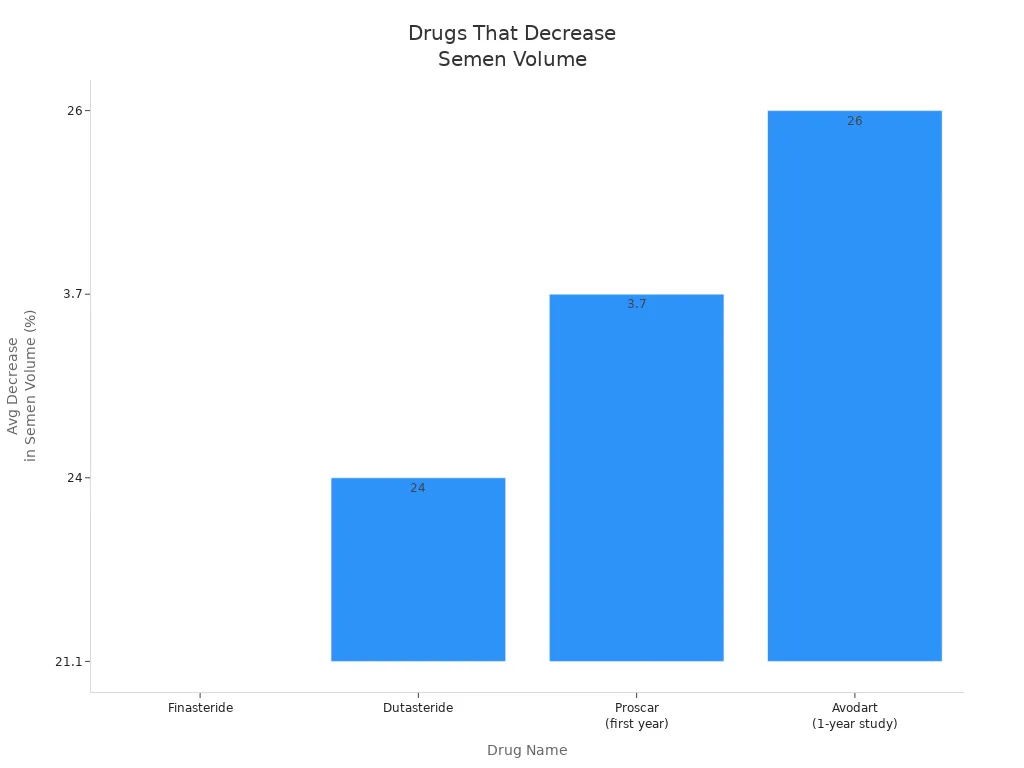
The following table summarizes the average decrease in semen volume for common medications:
| Drug | Average Decrease in Semen Volume | Study Type |
|---|---|---|
| Finasteride | 21.1% | Randomized, placebo-controlled |
| Dutasteride | 24% | Randomized, placebo-controlled |
| Proscar (1 year) | 3.7% | Placebo-controlled |
| Avodart (1 year) | 26% | Clinical evaluation |
You should also watch out for these medications:
- 5-alpha-reductase inhibitors
- Ketoconazole
- Certain antidepressants
- Antiepileptic drugs (carbamazepine, oxcarbazepine, valproate)
- Antiretrovirals
- Some antibiotics
- Blood pressure medications (nifedipine, spironolactone)
- Cimetidine
- Colchicine
- Sulfasalazine
Note: Always consult your doctor before stopping or changing any medication. Ask about alternatives if you notice changes in semen volume.
Poor Diet
Your diet plays a direct role in semen production. Consuming processed foods, excessive sugar, and unhealthy fats can lower semen volume. You should avoid foods high in trans fats and artificial additives. These ingredients disrupt hormone balance and reduce sperm quality. For example, eating fast food, packaged snacks, and sugary drinks regularly can harm your reproductive health.
A poor diet often lacks essential nutrients like zinc, vitamin C, L-arginine, and omega-3 fatty acids. Without these nutrients, your body struggles to produce healthy semen. You should focus on whole foods, lean proteins, and fresh fruits and vegetables. Replace chips and cookies with nuts and seeds. Choose water or herbal tea instead of soda.
| Poor Diet Habit | Impact on Semen Volume | Healthier Alternative |
|---|---|---|
| Processed snacks | Lowers sperm quality | Nuts, seeds, fruit |
| Sugary drinks | Reduces semen volume | Water, herbal tea |
| High-fat fast food | Disrupts hormones | Lean proteins, vegetables |
Tip: Plan your meals ahead and include nutrient-rich foods every day. Small changes in your diet can lead to noticeable improvements in semen volume.
Track Progress
Monitor Changes
You need to track your progress if you want to see real improvements in semen volume. Start by recording your baseline. Use a small measuring cup or a semen collection container to measure the amount of fluid you ejaculate. Write down the volume after each session. Repeat this process for several weeks to spot trends.
For more reliable results, consider using a home fertility testing system. These kits often include measurement cups and simple tools for tracking changes. Some systems feature mini-centrifuges and single-use cartridges for sperm concentration. Clinical trials have validated these methods, so you can trust the results. Always follow the instructions carefully to ensure accuracy.
You can also keep a journal. Note your diet, exercise, sleep, and stress levels each day. Record any changes in your habits. Over time, you will notice patterns that help you adjust your routine for better results.
Tip: Set a reminder on your phone to log your measurements and habits once a week. Consistency helps you see progress.
Set Expectations
You should set realistic goals when working to increase semen volume. Small changes in your diet and lifestyle can make a difference, but results take time. Eating more fruits, vegetables, and whole grains supports healthy semen production. Supplements like zinc and D-aspartic acid may help, but you should use them with caution.
Physical activity, especially pelvic exercises, can improve semen volume. Quitting smoking and reducing alcohol intake also support better results. If you increase the time between ejaculations, you may notice a larger volume during release.
- Eat a nutrient-dense diet with plenty of fruits and vegetables.
- Try supplements only after consulting a healthcare provider.
- Exercise regularly and include pelvic floor exercises.
- Reduce or quit smoking and limit alcohol.
- Space out ejaculations for higher volume.
You may see gradual improvements over several weeks. Do not expect dramatic changes overnight. Track your progress and celebrate small wins.
Note: Every person responds differently. Focus on healthy habits and stay patient.
When to Get Help
You should know when to seek medical advice for concerns about semen volume. Some symptoms require prompt attention from a healthcare professional. If you notice any of the following issues, schedule a visit with your doctor:
| Condition/Symptom | Action |
|---|---|
| Semen remains abnormally thick for more than a day | Seek medical care |
| Pain during urination, frequent urination, or pain during intercourse | Seek medical care |
| Recent unprotected sex with a partner at risk of STIs | Seek medical care |
| Unable to conceive after 6–12 months of trying | Seek medical care |
| Weak ejaculations or less fluid than usual | Speak with a doctor |
| Difficulty getting or maintaining an erection | Speak with a doctor |
| Pain during or after sex | Speak with a doctor |
| Blood in semen | Speak with a doctor |
| Cloudy urine after orgasm | Speak with a doctor |
If you experience pain, blood in semen, or persistent changes in volume, do not wait. Early intervention can prevent complications and support your reproductive health.
Callout: If you have trouble conceiving after a year of regular, unprotected sex, consult a fertility specialist. Professional guidance helps you identify underlying issues and find effective solutions.
Extra Tips and Tools
Supplements
You can enhance your semen volume by adding targeted supplements to your daily routine. Scientific studies have shown that certain supplements can make a measurable difference. For example, L-carnitine has been linked to a significant increase in semen volume. You might also consider N-acetylcysteine (NAC), which has demonstrated improvements in both volume and sperm quality. If you want a more comprehensive approach, combinations like L-arginine aspartate with Pycnogenol have produced notable results in clinical trials.
Here is a table summarizing the effects of popular supplements:
| Supplement | Effect on Semen Volume | Study Reference |
|---|---|---|
| L-carnitine | Significantly increased semen volume | PubMed |
| Chinese herbal supplements | Increased sperm volume by 18% | PubMed |
| NAC | Significant improvement in volume | PubMed |
| L-arginine aspartate + Pycnogenol (Prelox) | Increased semen volume significantly | PubMed |
You can also try natural boosters like Horny Goat Weed or Maca, which have been reported to increase semen volume by up to 50%. Many men find success by combining arginine, lecithin, zinc, and pygeum. For best results, take supplements consistently for at least 8–12 weeks. Always consult your healthcare provider before starting any new supplement, especially if you have underlying health conditions.
Tip: Start with one supplement at a time and track your progress weekly. This approach helps you identify what works best for your body.
Herbs and Natural Aids
You can further support semen production by incorporating specific herbs and natural aids into your regimen. Research highlights several options that deliver measurable benefits. For instance, Ashwagandha has shown a 53% increase in semen volume after 90 days of daily use. Shilajit, when taken consistently, can boost sperm count by over 60%. Tongkat Ali also improves sperm count and motility with a daily intake of 200 mg.
Consider these herbs and their effects:
- Ashwagandha: Take 675 mg daily for 90 days to see a noticeable increase in semen volume.
- Shilajit: Use as directed for 90 days to improve sperm count and overall reproductive health.
- Tongkat Ali: Incorporate 200 mg daily to enhance sperm motility and count.
- Mucuna pruriens, Chlorophytum borivilianum, Eulophia campestris: These herbs, when used together, can significantly increase sperm density and motility after three months.
You can add these herbs to your routine as capsules, powders, or teas. Always follow recommended dosages and consult a healthcare professional for guidance.
Note: Herbal supplements work best when combined with a healthy diet and lifestyle. Track your results to see which options provide the greatest benefit.
Consistency
You need to maintain consistency in your diet, exercise, and supplement routine to achieve lasting improvements in semen volume. Experts agree that regular habits produce the best results. Hydration, balanced nutrition, and daily physical activity all play vital roles. Skipping days or frequently changing your routine can slow your progress.
Follow these steps to stay consistent:
- Drink water throughout the day to prevent dehydration, which can lower semen volume.
- Eat a variety of fruits, vegetables, and lean proteins at every meal.
- Exercise regularly, aiming for at least 30 minutes of moderate activity most days.
- Avoid smoking and limit alcohol to protect reproductive health.
- Take supplements and herbs at the same time each day.
“Improving semen volume is often possible through a combination of healthy lifestyle choices, dietary adjustments, and proper supplementation. Staying hydrated, eating nutrient-dense foods, managing stress, and maintaining an active lifestyle are all powerful ways to boost semen production naturally.”
You can set reminders on your phone or use a journal to track your habits. Celebrate small milestones to keep yourself motivated. Over time, these consistent actions will help you reach your goals and support your overall reproductive health.
You can boost semen volume by eating a nutrient-rich diet with fruits, vegetables, seafood, and dairy. Regular physical activity, including pelvic exercises, supports reproductive health. Start with small changes, such as adding leafy greens to your meals or walking daily. Most men see improvements within a few months of consistent effort.
| Lifestyle Change | Result |
|---|---|
| Mediterranean diet + exercise | Higher sperm quality |
| Sedentary to active routine | Improved sperm counts |
Stay patient and keep healthy habits. If you notice persistent low semen volume or other symptoms, consult a healthcare professional for guidance.
FAQ
How long does it take to see results from dietary changes?
You may notice improvements in semen volume within 2 to 3 months after making consistent dietary changes. Your body needs time to replenish nutrients and optimize sperm production. Track your progress weekly for the most accurate assessment.
Can supplements alone increase semen volume?
Supplements can help if you have nutrient deficiencies, but you should combine them with a balanced diet and healthy lifestyle. For example, zinc or L-carnitine may support semen production, but results improve when you also eat nutrient-rich foods and stay hydrated.
Does age affect semen volume?
Yes, semen volume typically decreases as you age. Men over 40 often experience lower volume due to hormonal changes. You can slow this decline by maintaining healthy habits, such as regular exercise, a balanced diet, and avoiding smoking.
Is it safe to use herbal remedies for semen volume?
Most herbal remedies, like ashwagandha or maca, are safe when used as directed. You should consult your healthcare provider before starting any new supplement, especially if you take medications or have health conditions.
How much water should you drink daily for optimal semen production?
Aim for at least 8 to 10 cups (about 2–2.5 liters) of water each day. Proper hydration supports semen production and overall reproductive health. Increase your intake if you exercise or spend time in hot environments.
Can frequent ejaculation lower semen volume?
Yes, frequent ejaculation can temporarily reduce semen volume. If you want to maximize output, wait 2 to 3 days between ejaculations. This interval allows your body to replenish semen stores.
What foods should you avoid to maintain healthy semen volume?
You should avoid processed snacks, sugary drinks, excessive soy products, and high-fat dairy. These foods can disrupt hormone balance and lower semen quality. Replace them with fresh fruits, vegetables, lean proteins, and healthy fats for better results.